Japan Hospital Antibiotic Market Size & Growth Rate
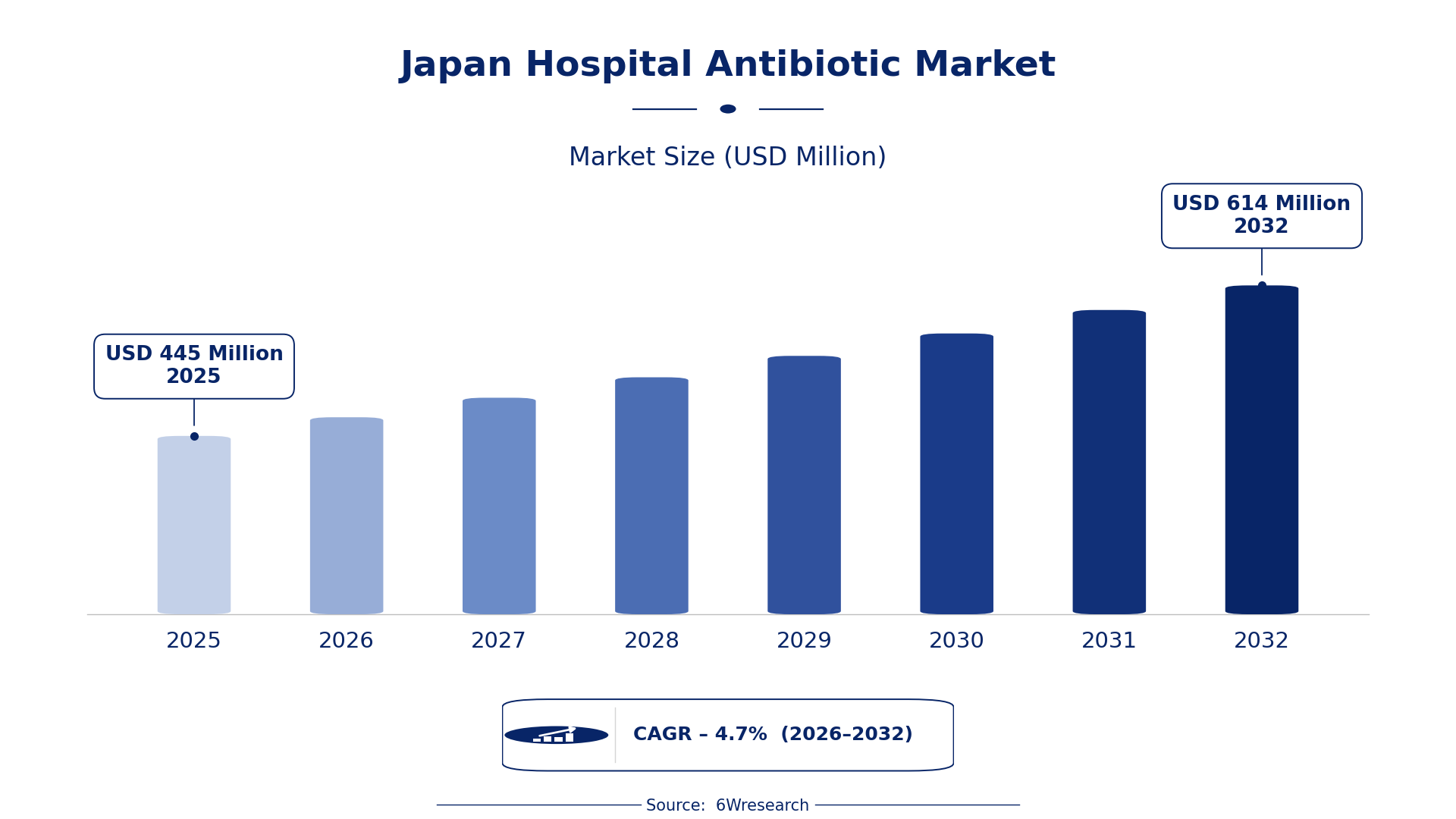
According to 6Wresearch internal database and industry insights, the Japan Hospital Antibiotic Market was valued at USD 445 Million in 2025 and is projected to reach USD 614 Million by 2032, growing at a CAGR of approximately 4.7% during 2026–2032.
Japan Hospital Antibiotic Market Highlights
| Report Metric | Details |
| Report Name | Japan Hospital Antibiotic Market (2026-2032) |
| Market Size 2025 | USD 445 Million |
| Market Size 2032 | USD 614 Million |
| Absolute Growth 2025–2032 | USD 169 Million |
| CAGR 2026–2032 | 4.7% |
| Peak Annual Growth | 6.3% in 2032 |
| Forecast Period | 2026–2032 |
| Historical Data | 2022–2025 |
| Base Year | 2025 |
| Leading Antibiotic Type, 2025 | Broad-Spectrum (37% share) |
| Leading Dosage Form, 2025 | Injectable (41% share) |
| Leading Distribution Channel, 2025 | Hospital Pharmacies (41% share) |
| Leading End User, 2025 | ICU Departments (39% share) |
| Fastest-Growing Antibiotic Type | Narrow-Spectrum (6.5% CAGR) |
| Fastest-Growing Distribution Channel | Medical Suppliers (6.2% CAGR) |
| Fastest-Growing End User | Infectious Disease Units (6.0% CAGR) |
| Growing Sector | critical care |
| Key End Users | hospitals, healthcare providers, ICU departments, pharmacy services |
Japan Hospital Antibiotic Market Year-wise Growth Rate and Key Drivers (2022–2032)
This graph illustrates the annual growth rates of the market from 2022 to 2032, highlighting a steady upward trajectory and projected market expansion over the forecast period.
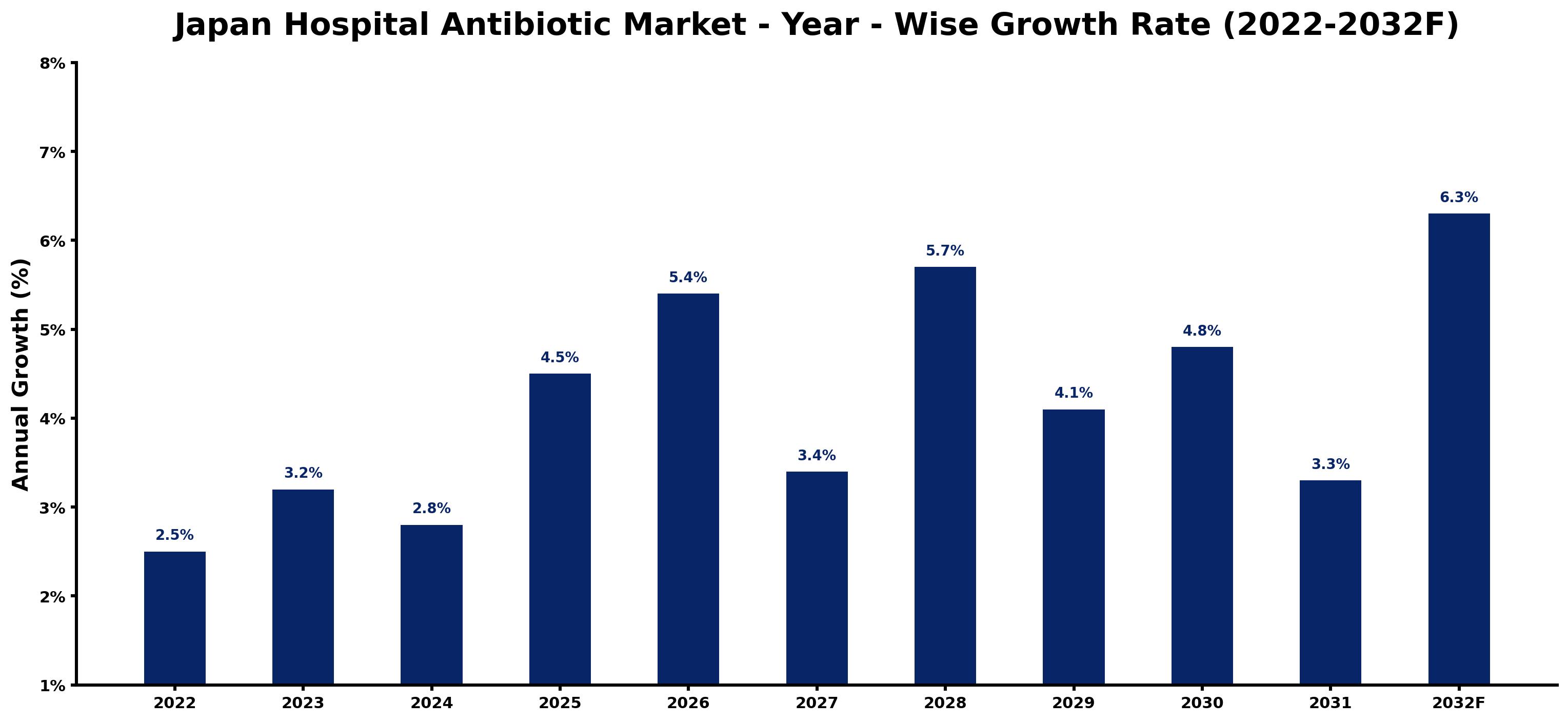
Below, each year's estimated growth is shown next to the factor that most influenced it.
| Year | Estimated Annual Growth (%) | Market Rationale |
| 2022 | 2.5 | The market experienced steady growth due to rising healthcare demands. |
| 2023 | 3.2 | Growth accelerated as hospitals increased antibiotic usage amid higher patient admissions. |
| 2024 | 2.8 | A slight slowdown occurred as hospitals adjusted to previous year’s high usage rates. |
| 2025 | 4.5 | Demand surged as new treatment protocols were implemented across healthcare facilities. |
| 2026 | 5.4 | Growth is anticipated as investments in healthcare infrastructure expand antibiotic availability. |
| 2027 | 3.4 | A slowdown is projected as hospitals face challenges in managing antibiotic resistance. |
| 2028 | 5.7 | Demand is expected to rebound as new antibiotic formulations are introduced to the market. |
| 2029 | 4.1 | Growth is projected to decelerate as healthcare providers focus on cost management strategies. |
| 2030 | 4.8 | Demand will increase as hospitals adopt advanced infection control measures. |
| 2031 | 3.3 | A slowdown is anticipated as antibiotic stewardship programs are reinforced. |
| 2032 | 6.3 | The market will peak with heightened awareness and investments in antibiotic development. |
Note: Market size estimations and growth projections presented in this report are based on 6Wresearch's proprietary forecasting methodology, utilizing the latest available industry data, government publications, and primary research inputs.
Japan Hospital Antibiotic Market Synopsis
Hospital antibiotics are pharmaceutical agents crucial for treating bacterial infections, particularly in critical care settings. According to the Japan Hospital Antibiotic Market is expanding due to an aging population, which constituted 29.3% of the population in 2024, alongside rising healthcare expenditures, which reached JPY 46.7 trillion in 2022. Investments in healthcare infrastructure and initiatives aimed at reducing antibiotic resistance are further driving demand, as hospitals improve their treatment protocols and stock over 200 types of antibiotics in pharmacies.
Market Dynamics Impact Analysis (2026–2032)
| Factor | Type | Impact | Primary Segment Affected |
| Aging population increasing hospital admissions | Driver | High | Broad-Spectrum |
| Increased healthcare expenditure driving antibiotic procurement | Driver | High | Injectable |
| Growing focus on antibiotic stewardship programs | Opportunity | High | Narrow-Spectrum |
| Expansion of ICU facilities to manage severe infections | Opportunity | Medium | ICU Departments |
| Challenges in managing antibiotic resistance | Restraint | High | Beta-Lactam |
| High costs associated with new antibiotic development | Restraint | Medium | Macrolides |
| Limited availability of certain antibiotics | Challenge | High | IV Infusion |
| Stringent regulatory requirements for new antibiotic approvals | Challenge | Medium | Oral Tablets |
Evaluation of Drivers in Japan Hospital Antibiotic Market (2026–2032)
Below are the drivers that matter most for revenue growth, with supporting evidence.
| Drivers | Primary Segment Affected | Why It Matters (Evidence) |
| Rising healthcare expenditures | Broad-Spectrum | Japan's national medical care expenditure reached JPY 46.7 trillion in 2022, leading to increased procurement of antibiotics. |
| High prevalence of infections in hospitals | Injectable | Approximately 30% of hospital admissions involve antibiotic treatment, driving demand for injectable forms in critical care. |
| Increased focus on infection control | Narrow-Spectrum | Recent guidelines promote targeted antibiotic use, increasing demand for narrow-spectrum options in hospitals. |
| Expansion of ICU capacity | ICU Departments | With over 8,100 hospitals, the need for antibiotics in ICUs is critical for managing severe infections effectively. |
| Investment in antibiotic resistance research | Macrolides | The government allocates 1 billion yen annually for research, supporting the development of new antibiotics and treatment methods. |
Spending rises because Japan's national medical care expenditure reached JPY 46.7 trillion in 2022, prompting hospitals to procure more antibiotics. Approximately 30% of hospital admissions involve antibiotic treatment, which boosts demand for injectable forms in critical care settings. Recent guidelines promote the use of narrow-spectrum antibiotics, increasing their adoption among healthcare providers. The expansion of ICU facilities necessitates a steady supply of antibiotics to manage severe infections effectively. Research funding of 1 billion yen allocated annually supports the development of new formulations, driving overall market growth.
Evaluation of Restraints in Japan Hospital Antibiotic Market
The key brakes on demand, and where they bite hardest, are shown below.
| Market Restraint | Primary Segment Affected | Why It Matters (Evidence) |
| Rising antibiotic resistance limiting effectiveness | Beta-Lactam | Increasing resistance rates challenge the effectiveness of commonly prescribed antibiotics, complicating treatment for healthcare providers. |
| High development costs for new antibiotics | Macrolides | The average cost to develop a new antibiotic can exceed billions, which deters investment in new options and slows innovation. |
| Limited access to certain antibiotics due to regulations | IV Infusion | Stringent regulations restrict the availability of some IV antibiotics, impacting procurement processes in hospitals. |
| Healthcare budget constraints affecting procurement | Narrow-Spectrum | Budget limitations in hospitals can hinder the purchase of necessary narrow-spectrum antibiotics, affecting treatment options. |
| Inconsistent adherence to antibiotic stewardship | Injectable | Variability in adherence to stewardship programs can lead to overuse, resulting in increased resistance issues. |
Japan Hospital Antibiotic Market Challenges
Rising production costs for hospital antibiotics strain producers, with raw material prices increasing by 15% over the past year, which cuts into profit margins. A shortage of skilled workers in pharmaceutical manufacturing hampers the ability to meet the growing demand, delaying antibiotic supply for hospitals. Distributors face fierce competition, forcing them to adopt aggressive pricing strategies that can compromise product quality, ultimately eroding buyer trust. Rapid technological advancements in antibiotic development require substantial investment, and many producers struggle to keep pace, creating potential gaps in product availability for healthcare providers.
Trends in the Japan Hospital Antibiotic Market
Below are the shifts with the largest effect on the Japan Hospital Antibiotic Market.
- Launch of Antibiotic Resistance Reduction Initiative: In 2023, Japan initiated a national programme aimed at reducing antibiotic resistance, focusing on stewardship practices. This initiative targets a 20% reduction in unnecessary prescriptions, improving treatment protocols in hospitals.
- Shift towards Narrow-Spectrum Antibiotics: The trend towards narrow-spectrum antibiotics has gained momentum since 2023, as hospitals aim to combat resistance. This shift is evidenced by a 6.5% CAGR in the narrow-spectrum segment, reflecting a growing preference among healthcare providers.
- Increased Use of IV Infusions: Since 2022, the usage rate of IV infusions for antibiotic administration has risen to around 40% in hospitals. This change highlights the need for rapid treatment options in critical care settings, particularly in ICU departments.
- Expansion of ICU Facilities: The focus on expanding ICU facilities began in 2023, driven by rising patient numbers. This expansion is essential for managing severe infections, with hospitals increasing their capacity to treat critical cases.
Investment Opportunities in the Japan Hospital Antibiotic Market
Several openings in the Japan Hospital Antibiotic Market merit attention from investors.
- Investment in ICU Facilities: With Japan's population aging, there is a pressing need for expanded ICU facilities, projected to grow by 10% by 2025. Collaborating with local healthcare providers can facilitate entry into this market.
- Focus on Antibiotic Resistance Research: The Japanese government allocates 1 billion yen annually for antibiotic resistance research, presenting an opportunity for investment in new solutions. Partnering with research institutions can strengthen market presence.
- Development of New Antibiotic Formulations: The gap in effective antibiotics creates opportunities for new formulations, especially in the narrow-spectrum category. Engaging with pharmaceutical developers can facilitate market entry.
- Improvement of Hospital Pharmacy Services: The average hospital pharmacy stocks over 200 types of antibiotics, indicating a need for enhanced services. Investing in pharmacy management solutions can address this growing need.
Government Initiatives in the Japan Hospital Antibiotic Market
The Next-Generation Medical Infrastructure Act, enacted in 2017, improves previous laws by allowing certified bodies to anonymise medical data for research. This measure supports antibiotic development by providing valuable insights into treatment efficacy and patient outcomes, encouraging innovation in hospital settings. The Clinical Trials Act, established in 2018, sets conduct and disclosure rules for clinical research, ensuring that new antibiotics are tested and reported effectively, enhancing safety and efficacy for buyers.
The Pharmaceuticals and Medical Devices Agency (PMDA) plays a critical role in reviewing pharmaceuticals and medical devices. The agency ensures that new antibiotics meet safety and efficacy standards, facilitating timely approvals and improving access for healthcare providers. The Japan Agency for Medical Research and Development (AMED) funds medical research and development, supporting projects that enhance antibiotic therapies.
Future Insight of the Japan Hospital Antibiotic Market
Technological advancements in antibiotic synthesis will reshape treatment options by 2032, enabling faster and more effective therapies. Stewardship programmes will optimise antibiotic use, which is expected to reduce resistance rates significantly. Research funding for antibiotic resistance is projected to reach 2 billion yen annually, driving progress in treatment methodologies. Improved hospital infrastructure will enhance patient care, facilitating a higher number of patients receiving antibiotics and positively impacting healthcare outcomes.
Market Segmentation Analysis
Japan Hospital Antibiotic Market report covers a detailed analysis of the following market segments:
By Antibiotic Type – Broad-Spectrum Leads, Narrow-Spectrum Expected to Grow Fastest
According to Saurav Kr Singh, Senior Research Analyst at 6Wresearch, with 37% of antibiotic type revenue in 2025, Broad-Spectrum was the largest category. Broad-spectrum antibiotics dominate the market due to their critical role in treating diverse infections, particularly in intensive care settings. Their widespread use is highlighted by accounting for 50% of antibiotic prescriptions in hospitals, showcasing their necessity in patient care. The quickest growth will come from Narrow-Spectrum, forecast to expand at a CAGR of 6.5% between 2026 and 2032. Narrow-spectrum antibiotics are experiencing rapid growth as they effectively target specific bacteria, which helps mitigate resistance issues. The promotion of their use by the Japanese Society of Chemotherapy is driving increased adoption in clinical settings. Suppliers must focus on developing narrow-spectrum antibiotics to meet the evolving clinical guidelines and address the growing demand.
By Dosage Form – Injectable Leads and Records the Fastest Growth
Injectable held 41% of the Japan Hospital Antibiotic Market by dosage form in 2025. Injectable antibiotics hold the largest share as they are necessary for severe infections requiring immediate action, particularly in intensive care units. Their critical role in treatment protocols ensures they are the preferred choice among healthcare providers. Injectable is also forecast to expand faster than any other category, at a CAGR of 6.6% over 2026–2032. The injectable segment is also the fastest-growing due to the increasing number of patients requiring urgent antibiotic therapy in hospitals. The average length of hospital stay for patients receiving antibiotics further supports the need for injectable forms. Suppliers must ensure a steady supply of injectable antibiotics to meet the urgent needs of healthcare facilities.
By Distribution Channel – Hospital Pharmacies Lead, Medical Suppliers Expected to Grow Fastest
In 2025, Hospital Pharmacies led the distribution channel split with a 41% share. Hospital pharmacies are the primary distribution channel for antibiotics, ensuring that essential medications are readily available for patient care. With over 8,100 hospitals in Japan, these pharmacies play a vital role in the accessibility of antibiotics. Medical Suppliers are projected to grow fastest, at a CAGR of 6.2% during 2026–2032. Medical suppliers are the fastest-growing distribution channel, as they provide hospitals with essential supplies, including antibiotics, enhancing operational efficiency. This trend indicates a shift towards greater reliance on medical suppliers for effective healthcare delivery. Suppliers should strengthen collaborations with medical suppliers to ensure efficient distribution and maintain a steady supply of antibiotics.
By End User – ICU Departments Lead, Infectious Disease Units Expected to Grow Fastest
ICU Departments accounted for 39% of the market by end user in 2025. ICU departments are the leading end user group, crucial for managing severe infections where timely antibiotic treatment is vital. The high volume of antibiotic usage in these departments reflects the increasing complexity of cases treated in hospitals. Infectious Disease Units are set to record the highest CAGR in this split, 6.0% over 2026–2032. Infectious disease units are the fastest-growing end user segment, driven by their specialised focus on infection management amid rising infectious disease prevalence. This targeted approach significantly increases the demand for specific antibiotic therapies. Suppliers should tailor their offerings to meet the specific needs of infectious disease units to capitalise on this growth opportunity.
Key Attractiveness of the Report
- 10 Years of Market Numbers
- Historical Data Starting from 2022 to 2025
- Base Year 2025
- Forecast Data until 2032
- Key Performance Indicators Impacting the Market
- Major Upcoming Developments and Projects
Key Highlights of the Report:
- Japan Hospital Antibiotic Market Outlook
- Market Size of Japan Hospital Antibiotic Market, 2025
- Forecast of Japan Hospital Antibiotic Market, 2032
- Historical Data and Forecast of Japan Hospital Antibiotic Revenues & Volume for the Period 2022-2032F
- Japan Hospital Antibiotic Market Trend Evolution
- Japan Hospital Antibiotic Market Drivers and Challenges
- Japan Hospital Antibiotic Price Trends
- Japan Hospital Antibiotic Porter's Five Forces
- Japan Hospital Antibiotic Industry Life Cycle
- Historical Data and Forecast of Japan Hospital Antibiotic Market Revenues & Volume By Antibiotic Type for the Period 2022-2032F
- Historical Data and Forecast of Japan Hospital Antibiotic Market Revenues & Volume By Broad-Spectrum for the Period 2022-2032F
- Historical Data and Forecast of Japan Hospital Antibiotic Market Revenues & Volume By Narrow-Spectrum for the Period 2022-2032F
- Historical Data and Forecast of Japan Hospital Antibiotic Market Revenues & Volume By Beta-Lactam for the Period 2022-2032F
- Historical Data and Forecast of Japan Hospital Antibiotic Market Revenues & Volume By Macrolides for the Period 2022-2032F
- Historical Data and Forecast of Japan Hospital Antibiotic Market Revenues & Volume By Dosage Form for the Period 2022-2032F
- Historical Data and Forecast of Japan Hospital Antibiotic Market Revenues & Volume By Oral Tablets for the Period 2022-2032F
- Historical Data and Forecast of Japan Hospital Antibiotic Market Revenues & Volume By Injectable for the Period 2022-2032F
- Historical Data and Forecast of Japan Hospital Antibiotic Market Revenues & Volume By Capsules for the Period 2022-2032F
- Historical Data and Forecast of Japan Hospital Antibiotic Market Revenues & Volume By IV Infusion for the Period 2022-2032F
- Historical Data and Forecast of Japan Hospital Antibiotic Market Revenues & Volume By Distribution Channel for the Period 2022-2032F
- Historical Data and Forecast of Japan Hospital Antibiotic Market Revenues & Volume By Hospital Pharmacies for the Period 2022-2032F
- Historical Data and Forecast of Japan Hospital Antibiotic Market Revenues & Volume By Medical Suppliers for the Period 2022-2032F
- Historical Data and Forecast of Japan Hospital Antibiotic Market Revenues & Volume By Direct Sales for the Period 2022-2032F
- Historical Data and Forecast of Japan Hospital Antibiotic Market Revenues & Volume By Online Medical Stores for the Period 2022-2032F
- Historical Data and Forecast of Japan Hospital Antibiotic Market Revenues & Volume By End User for the Period 2022-2032F
- Historical Data and Forecast of Japan Hospital Antibiotic Market Revenues & Volume By ICU Departments for the Period 2022-2032F
- Historical Data and Forecast of Japan Hospital Antibiotic Market Revenues & Volume By In-Patient Wards for the Period 2022-2032F
- Historical Data and Forecast of Japan Hospital Antibiotic Market Revenues & Volume By Infectious Disease Units for the Period 2022-2032F
- Historical Data and Forecast of Japan Hospital Antibiotic Market Revenues & Volume By Post-surgical Units for the Period 2022-2032F
- Japan Hospital Antibiotic Import Export Trade Statistics
- Market Opportunity Assessment By Antibiotic Type
- Market Opportunity Assessment By Dosage Form
- Market Opportunity Assessment By Distribution Channel
- Market Opportunity Assessment By End User
- Japan Hospital Antibiotic Top Companies Market Share
- Japan Hospital Antibiotic Competitive Benchmarking By Technical and Operational Parameters
- Japan Hospital Antibiotic Company Profiles
- Japan Hospital Antibiotic Key Strategic Recommendations
Market Covered
This report examines the market across the segments below.
By Antibiotic Type
- Broad-Spectrum
- Narrow-Spectrum
- Beta-Lactam
- Macrolides
By Dosage Form
- Oral Tablets
- Injectable
- Capsules
- IV Infusion
By Distribution Channel
- Hospital Pharmacies
- Medical Suppliers
- Direct Sales
- Online Medical Stores
By End User
- ICU Departments
- In-Patient Wards
- Infectious Disease Units
- Post-surgical Units































