Japan Industrial Pumps Market Size & Growth Rate
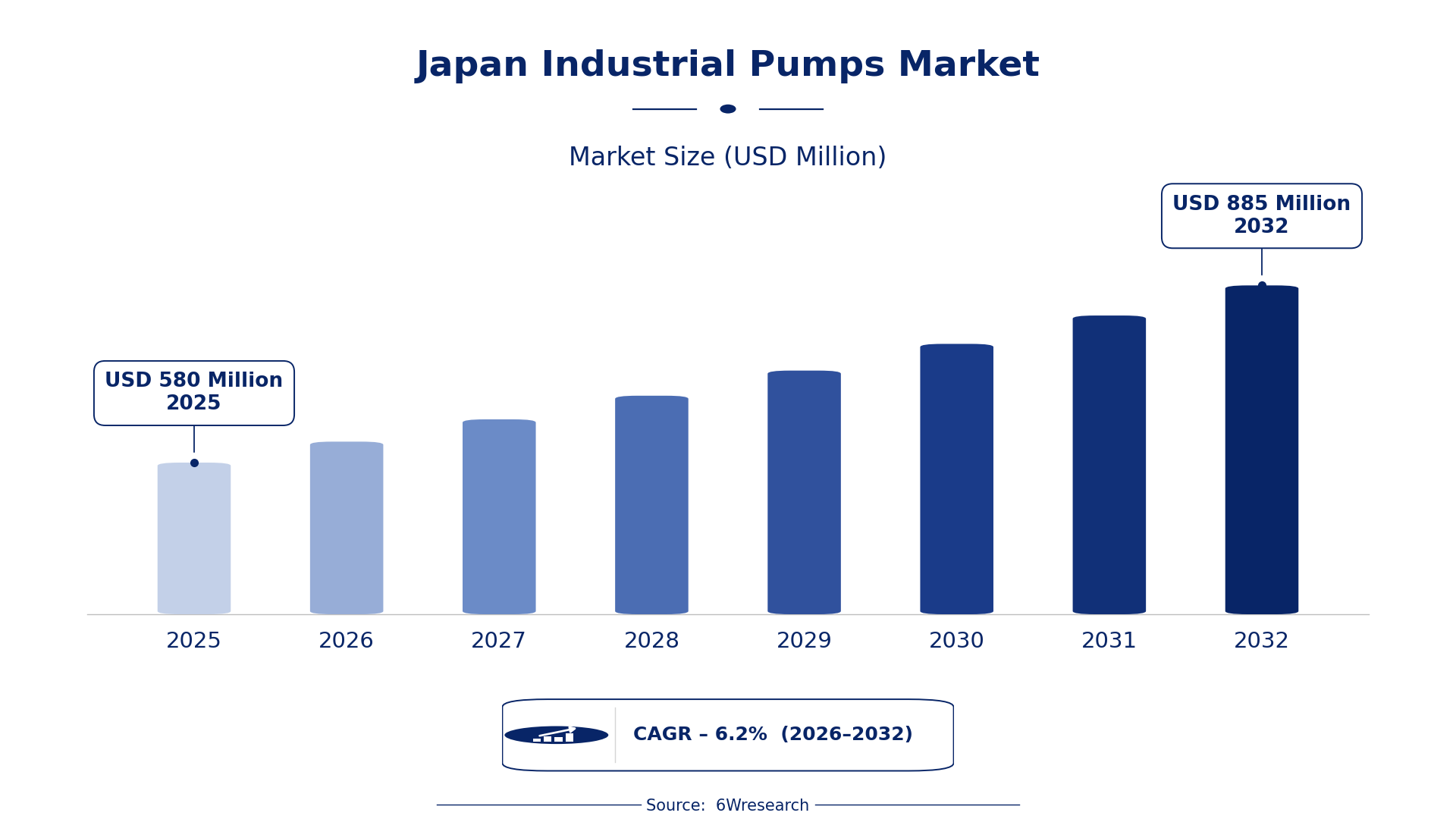
According to 6Wresearch internal database and industry insights, the Japan Industrial Pumps Market was valued at USD 580 Million in 2025 and is projected to reach USD 885 Million by 2032, growing at a CAGR of approximately 6.2% during 2026–2032.
Japan Industrial Pumps Market Highlights
| Report Metric | Details |
| Report Name | Japan Industrial Pumps Market (2026-2032) |
| Market Size 2025 | USD 580 Million |
| Market Size 2032 | USD 885 Million |
| Absolute Growth 2025–2032 | USD 305 Million |
| CAGR 2026–2032 | 6.2% |
| Peak Annual Growth | 7.3% in 2032 |
| Forecast Period | 2026–2032 |
| Historical Data | 2022–2025 |
| Base Year | 2025 |
| Leading Type, 2025 | Positive Displacement (59% share) |
| Leading End-User Industry, 2025 | Oil and Gas (37% share) |
| Fastest-Growing Type | Centrifugal (8.5% CAGR) |
| Fastest-Growing End-User Industry | Water and Wastewater (8.8% CAGR) |
| Growing Sector | Water and Wastewater |
| Key End Users | Oil and Gas, Water Management, Pharmaceutical, Chemical Processing |
Japan Industrial Pumps Market Year-wise Growth Rate and Key Drivers (2022–2032)
This graph illustrates the annual growth rates of the market from 2022 to 2032, highlighting a steady upward trajectory and projected market expansion over the forecast period.
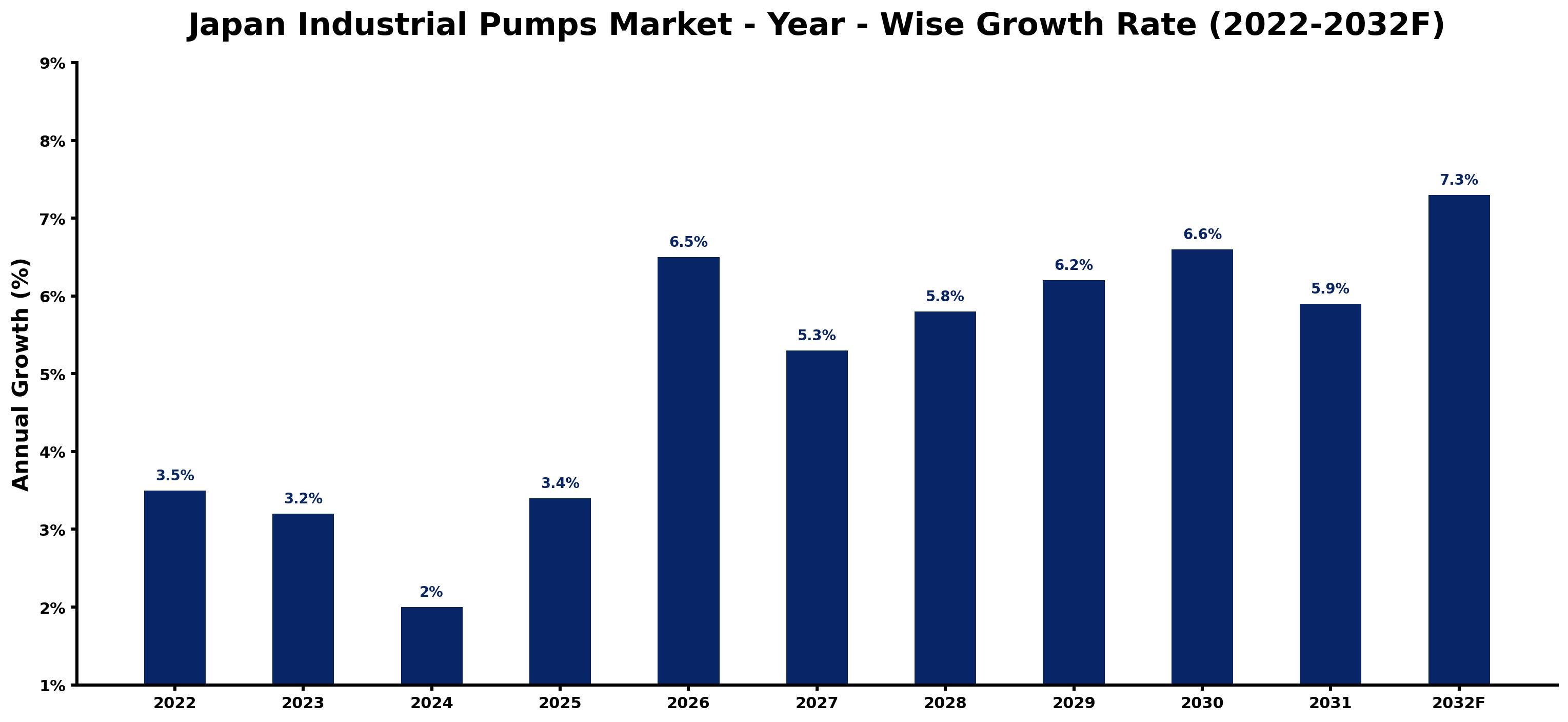
The yearly estimates that follow link every growth rate to its principal driver, so readers can see why the pace changed in each period.
| Year | Estimated Annual Growth (%) | Market Rationale |
| 2022 | 3.5 | Demand was stable due to ongoing energy projects and infrastructure needs. |
| 2023 | 3.2 | Growth slowed as market adjustments occurred following previous investments. |
| 2024 | 2.0 | Continued infrastructure upgrades led to further deceleration in growth rates. |
| 2025 | 3.4 | Increased investments in water infrastructure boosted market activity. |
| 2026 | 6.5 | Rising demand for efficient pumping solutions will drive market growth. |
| 2027 | 5.3 | Growth is expected to slow as the market adjusts to previous high demand levels. |
| 2028 | 5.8 | Infrastructure improvements and energy projects will spur renewed interest. |
| 2029 | 6.2 | Demand from the water sector is projected to increase, supporting market expansion. |
| 2030 | 6.6 | Technological advancements in pumping systems will contribute to growth. |
| 2031 | 5.9 | Market growth is expected to slow as demand stabilises after previous peaks. |
| 2032 | 7.3 | Heightened investments in decarbonisation initiatives will lead to a surge in demand. |
Note: Market size estimations and growth projections presented in this report are based on 6Wresearch's proprietary forecasting methodology, utilizing the latest available industry data, government publications, and primary research inputs.
Japan Industrial Pumps Market Synopsis
Industrial pumps are mechanical devices designed to move fluids by converting mechanical energy into hydraulic energy. The Japan Industrial Pumps Market is growing due to the strong oil and gas sector and ongoing infrastructure projects. Approximately 30% of industrial pump usage in 2022 was in the water and wastewater sector, indicating robust demand from domestic users. Japan's GX Basic Policy aims for JPY 150 trillion in decarbonisation investments over the next decade, creating a pressing need for efficient pumping solutions across various industries.
Market Dynamics Impact Analysis (2026–2032)
| Factor | Type | Impact | Primary Segment Affected |
| Growing investment in water infrastructure projects | Driver | High | Water and Wastewater |
| Stable demand from the oil and gas sector | Driver | High | Oil and Gas |
| Increasing need for efficient pumping solutions | Opportunity | High | Pharmaceutical/Life Sciences |
| Government initiatives to upgrade aging infrastructure | Opportunity | High | Water and Wastewater |
| High costs associated with energy-efficient technologies | Restraint | Medium | Centrifugal |
| Regulatory compliance costs for wastewater treatment | Restraint | Medium | Water and Wastewater |
| Technological challenges in pump efficiency | Challenge | High | Positive Displacement |
| Competition from alternative fluid transport technologies | Challenge | Medium | Centrifugal |
Evaluation of Drivers in Japan Industrial Pumps Market (2026–2032)
These are the developments adding the most demand over the forecast period.
| Drivers | Primary Segment Affected | Why It Matters (Evidence) |
| Investment in water infrastructure upgrades | Water and Wastewater | Japan initiated a program in 2023 to modernise aging water systems, increasing pump demand. |
| Stable energy projects in oil and gas | Oil and Gas | Ongoing energy projects maintain a consistent need for industrial pumps, ensuring steady purchases. |
| Technological advancements in pump efficiency | Pharmaceutical/Life Sciences | The pharmaceutical sector is projected to require more efficient pumping solutions by 2025, driving demand. |
| Regulatory compliance for wastewater treatment | Water and Wastewater | The Ministry of the Environment enforces regulations that necessitate upgrades in wastewater treatment facilities. |
| Decarbonisation investments | Chemicals and Petrochemicals | Japan's GX Basic Policy targets JPY 150 trillion for decarbonisation, spurring demand for efficient pumps. |
The oil and gas sector continues to require stable pump supplies due to ongoing energy projects. The pharmaceutical sector anticipates a demand for more efficient pumping solutions by 2025, driven by technological advancements. Japan's decarbonisation investments will further stimulate market demand.
Evaluation of Restraints in Japan Industrial Pumps Market
These are the pressures that could keep growth below its potential.
| Market Restraint | Primary Segment Affected | Why It Matters (Evidence) |
| High costs associated with energy-efficient technologies | Centrifugal | Investment in energy-efficient pumps can be substantial, limiting adoption among smaller firms. |
| Regulatory compliance costs for wastewater treatment | Water and Wastewater | Meeting the standards set by the Ministry of the Environment can strain budgets for many facilities. |
| Technological challenges in pump efficiency | Positive Displacement | Advancements are necessary to meet evolving industry standards, which can delay projects. |
| Competition from alternative fluid transport technologies | Centrifugal | Emerging technologies may divert investment away from traditional pump systems. |
| Market saturation in established sectors | Oil and Gas | Limited growth opportunities in mature markets can restrict overall market expansion. |
Japan Industrial Pumps Market Challenges
Producers of industrial pumps in Japan face stringent regulations from the Ministry of the Environment, complicating product approvals and extending lead times by up to six months, which raises costs for buyers. Technological advancements are lagging due to high investment requirements, leading many producers to rely on outdated models, thus limiting options for buyers. Material costs have increased by approximately 15% due to global supply chain disruptions, forcing suppliers to raise prices, which directly impacts buyers' budgets. Buyers in the pharmaceutical sector are experiencing delivery delays of up to three months, disrupting their production schedules and project timelines.
Trends in the Japan Industrial Pumps Market
The shifts below are changing how Japan Industrial Pumps Market products are bought and supplied.
- Shift from Traditional to Advanced Pumping Technologies: In 2023, Japan's industrial pump market is shifting towards advanced pumping technologies, particularly in the food and beverage industry. Approximately 30% of industrial pump usage in 2022 was in this sector, indicating a growing trend towards efficiency.
- Transition to Sustainable Pumping Solutions: In 2023, Japan's focus on sustainability is driving a transition towards more energy-efficient pumping solutions. This shift aligns with the country's target of a 46% reduction in greenhouse-gas emissions by 2030, influencing purchasing decisions across industries.
- Emergence of Smart Pumping Systems: The introduction of smart pumping systems began in 2023, improving operational efficiency in various sectors. These systems are expected to see a significant uptake, particularly in the water and wastewater management sector, which accounted for 30% of pump usage in 2022.
- Increased Adoption of ISO 9001 Standards: Since 2023, adherence to ISO 9001 quality standards has become more prevalent among industrial pump manufacturers in Japan. This trend is expected to improve product quality and reliability, appealing to buyers in the oil and gas sector.
Investment Opportunities in the Japan Industrial Pumps Market
The opportunities below stand out in the Japan Industrial Pumps Market for new entrants and existing suppliers.
- Water Infrastructure Upgrades: Japan initiated a programme in 2023 to modernise water infrastructure, creating a demand for industrial pumps. This presents an opportunity for suppliers to engage with local governments and water management facilities.
- Pharmaceutical Sector Growth: With the pharmaceutical sector projected to require more efficient pumping solutions by 2025, suppliers can focus on developing advanced technologies. Collaborating with pharmaceutical manufacturers in regions like Kanto can facilitate market entry.
- Decarbonisation Investments: Japan's GX Basic Policy targets JPY 150 trillion for decarbonisation, increasing demand for efficient pumping solutions. Suppliers should explore partnerships with chemical processing facilities to tap into this opportunity.
- Technological Advancements in Pumping Solutions: The shift towards advanced pumping technologies is evident in the food and beverage sector. Suppliers can invest in innovative solutions to meet the growing demand for efficiency in this industry.
Government Initiatives in the Japan Industrial Pumps Market
The Water Supply Act (1957) sets strict standards for drinking-water quality and supply, impacting industrial pump manufacturers by requiring compliance with these regulations. The Sewerage Act (1958) governs sewerage systems and wastewater treatment, ensuring that facilities meet necessary operational standards, which directly influences pump demand.
The GX Promotion Act (2023) provides a framework for decarbonisation initiatives, benefiting buyers by promoting energy-efficient technologies. The Ministry of the Environment oversees the implementation of these policies, ensuring that wastewater treatment facilities adhere to updated standards, which drives demand for industrial pumps.
Future Insight of the Japan Industrial Pumps Market
Japan's initiative to upgrade ageing water infrastructure will create substantial demand for industrial pumps, particularly in wastewater management facilities. By 2032, the pharmaceutical sector will require more efficient pumping solutions, driving advancements in pump technology. Planned investments of JPY 150 trillion in decarbonisation will motivate suppliers to adopt higher quality standards, such as JIS, ensuring better product reliability. As a result, buyers will benefit from improved operational efficiency and enhanced product performance across various sectors.
Market Segmentation Analysis
Japan Industrial Pumps Market report covers a detailed analysis of the following market segments:
By Type – Positive Displacement Leads, Centrifugal Expected to Grow Fastest
According to Vasudha, AM at 6Wresearch, with 59% of type revenue in 2025, Positive Displacement was the largest category. Positive displacement pumps dominate the market due to their ability to provide precise fluid transfer, essential in applications like chemical processing. Their established presence is reflected in the total installed base of over 2 million units across Japan. The quickest growth will come from Centrifugal, forecast to expand at a CAGR of 8.5% between 2026 and 2032. Centrifugal pumps are experiencing rapid growth as they efficiently handle large volumes of fluids, particularly in the water and wastewater sector, which represented around 30% of pump usage in 2022. This growth is expected to continue as Japan upgrades its aging water infrastructure. Suppliers must focus on developing centrifugal pump technologies to cater to the increasing demand in water treatment applications.
By End-User Industry – Oil and Gas Lead, Water and Wastewater Expected to Grow Fastest
Oil and Gas accounted for 37% of the market by end-user industry in 2025. The oil and gas industry holds the largest market share, driven by consistent demand for pumps that are vital for transporting crude oil and natural gas. Ongoing energy projects in Japan further solidify this segment's importance in the industrial pump market. Over 2026–2032, Water and Wastewater is expected to post the fastest growth, at a CAGR of 8.8%. The water and wastewater sector is the fastest-growing segment, propelled by Japan's commitment to upgrade its aging water infrastructure, which is anticipated to significantly elevate pump demand. The urgency of ensuring clean water supplies underscores the rapid expansion of this sector. Buyers in the water and wastewater sector should prepare for increased competition and advancements in pump technologies.
Key Attractiveness of the Report
- 10 Years of Market Numbers
- Historical Data Starting from 2022 to 2025
- Base Year 2025
- Forecast Data until 2032
- Key Performance Indicators Impacting the Market
- Major Upcoming Developments and Projects
Key Highlights of the Report:
- Japan Industrial Pumps Market Outlook
- Market Size of Japan Industrial Pumps Market, 2025
- Forecast of Japan Industrial Pumps Market, 2032
- Historical Data and Forecast of Japan Industrial Pumps Revenues & Volume for the Period 2022-2032
- Japan Industrial Pumps Market Trend Evolution
- Japan Industrial Pumps Market Drivers and Challenges
- Japan Industrial Pumps Price Trends
- Japan Industrial Pumps Porter's Five Forces
- Japan Industrial Pumps Industry Life Cycle
- Historical Data and Forecast of Japan Industrial Pumps Market Revenues & Volume By Type for the Period 2022-2032
- Historical Data and Forecast of Japan Industrial Pumps Market Revenues & Volume By Positive Displacement for the Period 2022-2032
- Historical Data and Forecast of Japan Industrial Pumps Market Revenues & Volume By Centrifugal for the Period 2022-2032
- Historical Data and Forecast of Japan Industrial Pumps Market Revenues & Volume By End-User Industry for the Period 2022-2032
- Historical Data and Forecast of Japan Industrial Pumps Market Revenues & Volume By Oil and Gas for the Period 2022-2032
- Historical Data and Forecast of Japan Industrial Pumps Market Revenues & Volume By Water and Wastewater for the Period 2022-2032
- Historical Data and Forecast of Japan Industrial Pumps Market Revenues & Volume By Chemicals and Petrochemicals for the Period 2022-2032
- Historical Data and Forecast of Japan Industrial Pumps Market Revenues & Volume By Power Generation for the Period 2022-2032
- Historical Data and Forecast of Japan Industrial Pumps Market Revenues & Volume By Pharmaceutical/Life Sciences for the Period 2022-2032
- Historical Data and Forecast of Japan Industrial Pumps Market Revenues & Volume By Food and Beverage for the Period 2022-2032
- Historical Data and Forecast of Japan Industrial Pumps Market Revenues & Volume By Other End-user Industries for the Period 2022-2032
- Japan Industrial Pumps Import Export Trade Statistics
- Market Opportunity Assessment By Type
- Market Opportunity Assessment By End-User Industry
- Japan Industrial Pumps Top Companies Market Share
- Japan Industrial Pumps Competitive Benchmarking By Technical and Operational Parameters
- Japan Industrial Pumps Company Profiles
- Japan Industrial Pumps Key Strategic Recommendations
Market Covered
The following segment groups are covered in the report.
By Type
- Positive Displacement
- Centrifugal
By End-User Industry
- Oil and Gas
- Water and Wastewater
- Chemicals and Petrochemicals
- Power Generation
- Pharmaceutical/Life Sciences
- Food and Beverage
- Other End-user Industries































