Japan Inflammatory Disease Therapeutics Market Size & Growth Rate
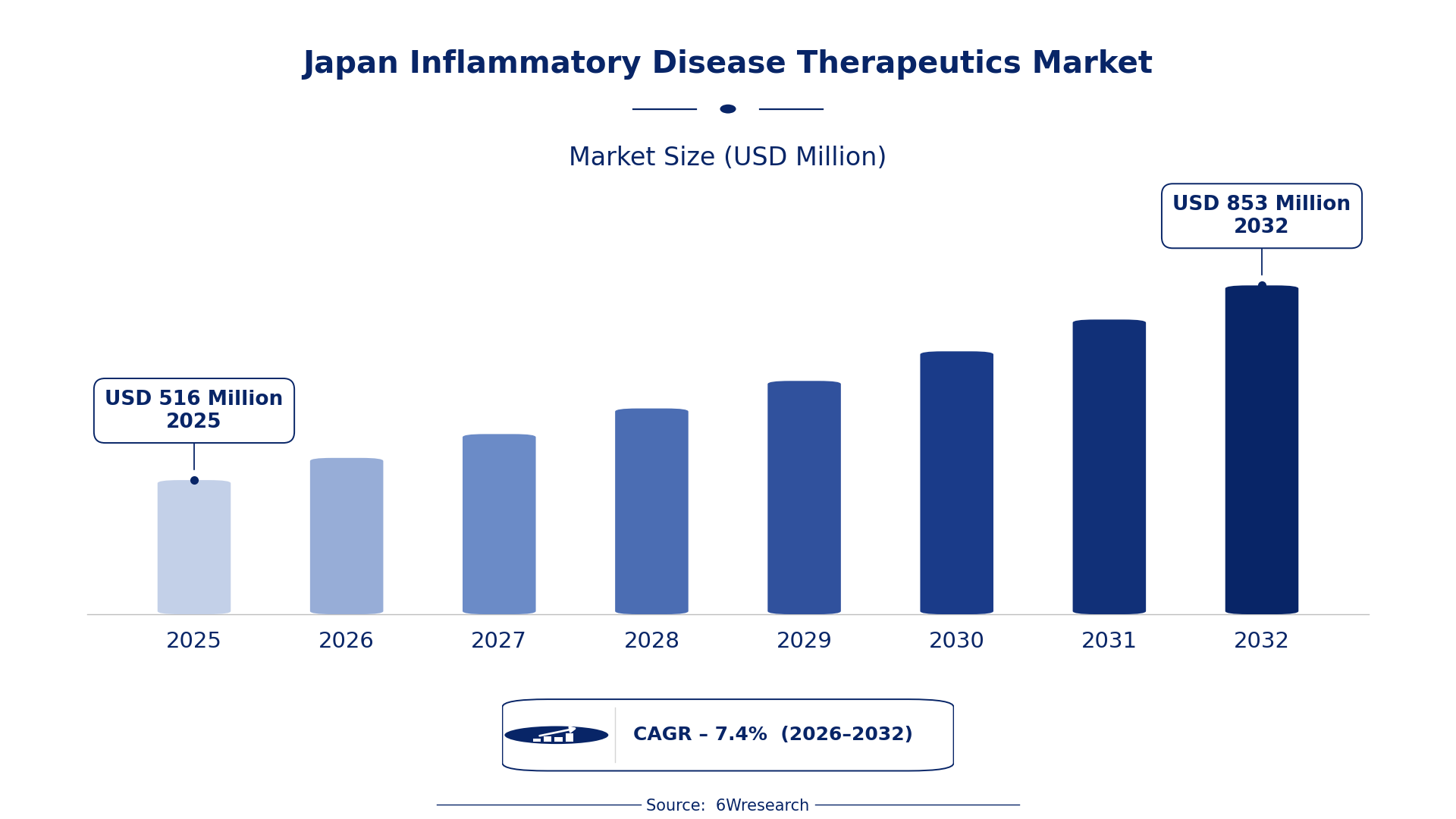
According to 6Wresearch internal database and industry insights, the Japan Inflammatory Disease Therapeutics Market was valued at USD 516 Million in 2025 and is projected to reach USD 853 Million by 2032, growing at a CAGR of approximately 7.4% during 2026–2032.
Japan Inflammatory Disease Therapeutics Market Highlights
| Report Metric | Details |
| Report Name | Japan Inflammatory Disease Therapeutics Market (2026-2032) |
| Market Size 2025 | USD 516 Million |
| Market Size 2032 | USD 853 Million |
| Absolute Growth 2025–2032 | USD 337 Million |
| CAGR 2026–2032 | 7.4% |
| Peak Annual Growth | 8.7% in 2032 |
| Forecast Period | 2026–2032 |
| Historical Data | 2022–2025 |
| Base Year | 2025 |
| Leading Therapy Type, 2025 | Biologics (36% share) |
| Leading Drug Class, 2025 | TNF Inhibitors (44% share) |
| Leading Target Disease, 2025 | Rheumatoid Arthritis (37% share) |
| Leading Distribution Channel, 2025 | Specialty Pharmacies (40% share) |
| Fastest-Growing Therapy Type | Monoclonal Antibodies (10.2% CAGR) |
| Fastest-Growing Drug Class | JAK Inhibitors (9.9% CAGR) |
| Fastest-Growing Target Disease | IBD / Lupus (10.3% CAGR) |
| Growing Sector | chronic disease management |
| Key End Users | healthcare providers, hospitals, specialty pharmacies, patients |
Japan Inflammatory Disease Therapeutics Market Year-wise Growth Rate and Key Drivers (2022–2032)
This graph illustrates the annual growth rates of the market from 2022 to 2032, highlighting a steady upward trajectory and projected market expansion over the forecast period.
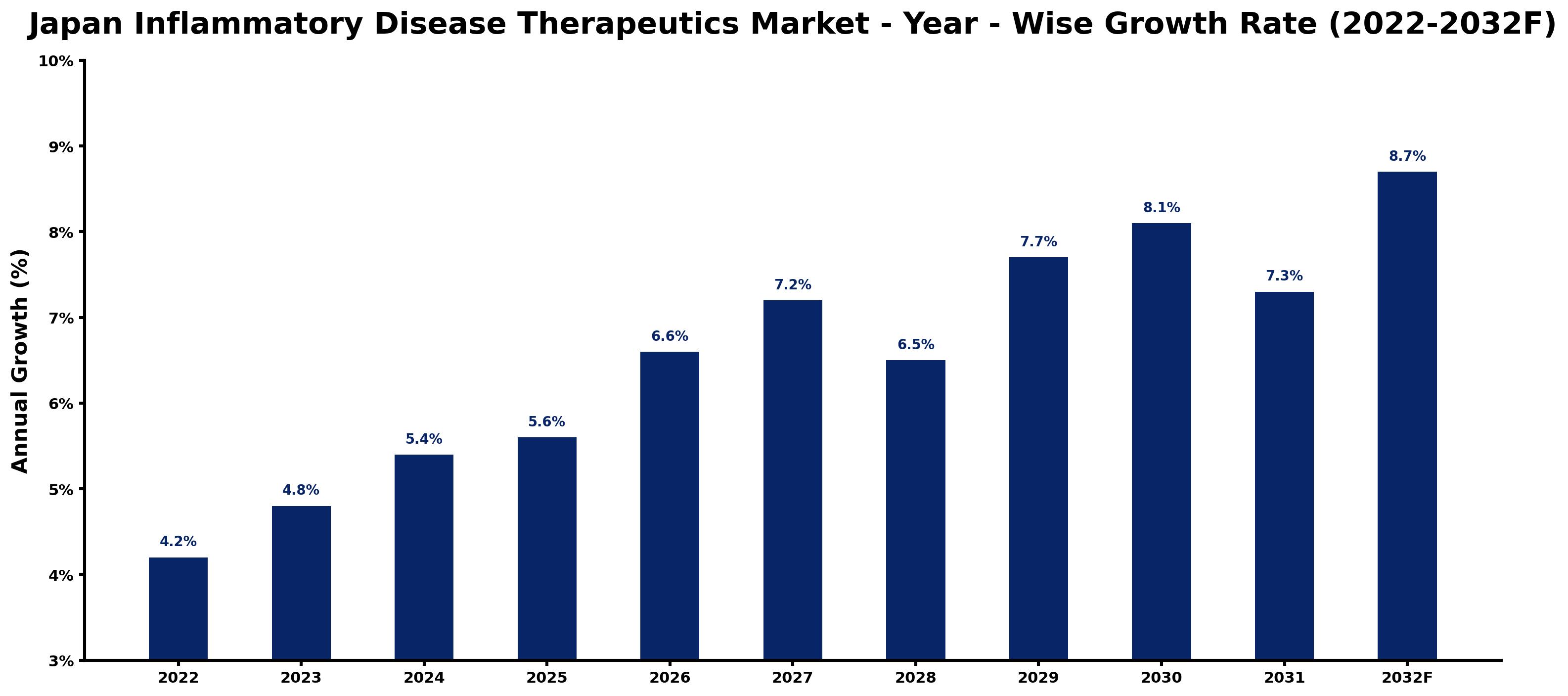
Annual growth estimates for each year appear below with the principal reason behind them, explaining the shifts that set the pace of the market.
| Year | Estimated Annual Growth (%) | Market Rationale |
| 2022 | 4.2 | The market showed steady growth with increasing patient numbers and treatment options. |
| 2023 | 4.8 | Demand rose due to heightened awareness of autoimmune diseases among healthcare providers. |
| 2024 | 5.4 | The introduction of new therapies contributed to stronger market performance this year. |
| 2025 | 5.6 | Growth continued as treatment guidelines from the Japanese Society of Rheumatology were widely adopted. |
| 2026 | 6.6 | The market is expected to expand with more patients receiving biologic therapies through specialty pharmacies. |
| 2027 | 7.2 | An increase in prescriptions for JAK inhibitors is projected to reflect the growing treatment options available. |
| 2028 | 6.5 | Growth is expected to slow slightly as the market matures and competition intensifies among therapies. |
| 2029 | 7.7 | Demand will surge again as hospitals expand their treatment capacities for chronic diseases. |
| 2030 | 8.1 | The market is projected to experience renewed growth driven by advancements in monoclonal antibody therapies. |
| 2031 | 7.3 | A slowdown is expected as market saturation begins to affect growth rates. |
| 2032 | 8.7 | The market is projected to peak with substantial investments in research and development for new treatments. |
Note: Market size estimations and growth projections presented in this report are based on 6Wresearch's proprietary forecasting methodology, utilizing the latest available industry data, government publications, and primary research inputs.
Japan Inflammatory Disease Therapeutics Market Synopsis
Inflammatory Disease Therapeutics include biologics and small molecule drugs used primarily for autoimmune diseases, such as rheumatoid arthritis and inflammatory bowel disease. The Japan Inflammatory Disease Therapeutics Market is expanding due to rising patient numbers, with over 1 million treated for rheumatoid arthritis in 2023, and the increasing adoption of advanced therapies. The Tokyo region, with its high concentration of hospitals, drives demand, supported by ongoing research funding of ¥10 billion for autoimmune disease treatments.
Market Dynamics Impact Analysis (2026–2032)
| Factor | Type | Impact | Primary Segment Affected |
| Growing patient population and treatment options | Driver | High | Biologics |
| Increased adoption of JAK inhibitors | Driver | High | JAK Inhibitors |
| Expansion of specialty pharmacies | Opportunity | High | Specialty Pharmacies |
| Rising investment in clinical trials | Opportunity | Medium | Monoclonal Antibodies |
| High cost of biologic therapies | Restraint | High | Biologics |
| Limited access to advanced treatments in rural areas | Restraint | Medium | Hospital Pharmacies |
| Regulatory compliance challenges | Challenge | High | Biologics |
| Capacity constraints in specialty pharmacies | Challenge | Medium | Specialty Pharmacies |
Evaluation of Drivers in Japan Inflammatory Disease Therapeutics Market (2026–2032)
Key forces behind demand, with the segment each one moves most, are listed below.
| Drivers | Primary Segment Affected | Why It Matters (Evidence) |
| Increasing prevalence of autoimmune diseases | Biologics | With approximately 125 million people in Japan, a large portion suffers from autoimmune diseases, driving demand for effective treatments. |
| Growing awareness of treatment options | JAK Inhibitors | In 2023, prescriptions for JAK inhibitors rose by 15%, reflecting increased awareness among healthcare providers. |
| Expansion of hospital networks | Hospital Pharmacies | The Tokyo region has the highest concentration of hospitals treating inflammatory diseases, improving access to therapies. |
| Investment in research and development | Monoclonal Antibodies | The government allocated ¥10 billion in 2023 for research on autoimmune disease treatments, boosting innovation. |
| Supportive treatment guidelines | TNF Inhibitors | Guidelines from the Japanese Society of Rheumatology encourage the use of TNF inhibitors, increasing their adoption. |
The strongest pull on demand comes from the rising prevalence of autoimmune diseases, with over 1 million patients treated for rheumatoid arthritis in Japan. Increased awareness of treatment options has led to a 15% rise in prescriptions for JAK inhibitors in 2023. The high concentration of hospitals in the Tokyo region improves access to therapies, driving demand. Treatment guidelines have also increased the adoption of TNF inhibitors, contributing to market growth.
Evaluation of Restraints in Japan Inflammatory Disease Therapeutics Market
Several factors work against faster growth; the main ones are summarised below.
| Market Restraint | Primary Segment Affected | Why It Matters (Evidence) |
| High costs associated with biologic therapies | Biologics | Biologics account for over 50% of the market share, making them expensive for patients and healthcare providers. |
| Limited access to advanced treatments in rural areas | Hospital Pharmacies | Patients in rural regions face challenges accessing specialty pharmacies, impacting treatment availability. |
| Complex regulatory compliance requirements | Biologics | Regulatory compliance can delay the introduction of new therapies, affecting market performance. |
| Capacity constraints in specialty pharmacies | Specialty Pharmacies | With over 300 specialty pharmacies, capacity limitations can restrict patient access to necessary treatments. |
| Inconsistent patient adherence to treatment regimens | Biologics | Adherence issues can lead to suboptimal treatment outcomes, affecting overall market performance. |
Japan Inflammatory Disease Therapeutics Market Challenges
High demand for inflammatory disease therapeutics strains supply chains, as over 1 million patients treated for rheumatoid arthritis in 2023 creates pressure on drug availability for hospitals. A shortage of skilled professionals in pharmaceutical manufacturing delays drug development, impacting suppliers' ability to meet the needs of healthcare providers. Rising costs of research and development, with the government allocating ¥10 billion for autoimmune treatments, burden producers and may lead to higher prices for patients. Increased competition among specialty pharmacies for chronic disease management services forces them to lower prices, affecting their profit margins.
Trends in the Japan Inflammatory Disease Therapeutics Market
The shifts below are changing how Japan Inflammatory Disease Therapeutics Market products are bought and supplied.
- Shift in Treatment Modalities: Healthcare providers are increasingly adopting biologics for autoimmune diseases, with over 50% market share in 2023. This shift reflects a growing preference for advanced therapies that offer better patient outcomes.
- Emergence of JAK Inhibitors: In 2023, JAK inhibitors saw a 15% increase in prescriptions, indicating a rising preference among healthcare professionals for these rapid-acting treatments. This trend suggests a shift towards more effective management of inflammatory diseases.
- Expansion of Specialty Pharmacies: The Tokyo region is experiencing a rise in specialty pharmacies, which are essential for managing chronic diseases. With over 300 pharmacies, this expansion improves patient access to targeted therapies.
- Increased Investment in Clinical Trials: The government allocated ¥10 billion for research on autoimmune disease treatments in 2023, driving innovation in the therapeutic field. This funding supports the development of new monoclonal antibodies and other advanced therapies.
Investment Opportunities in the Japan Inflammatory Disease Therapeutics Market
Several openings in the Japan Inflammatory Disease Therapeutics Market merit attention from investors.
- Growth in Specialty Pharmacies: The Tokyo region offers a strong opportunity for investment in specialty pharmacies, with many focused on chronic disease management. This market gap highlights the need for improved access to treatments.
- Investment in Monoclonal Antibodies: With a projected growth rate of 10.2% for monoclonal antibodies, there is a clear opportunity for investment in this segment. The rising demand from healthcare providers suggests a promising market.
- Collaborative Research Initiatives: The government’s ¥10 billion investment in autoimmune disease research creates opportunities for partnerships with research institutions. Collaborating on clinical trials can yield new treatment solutions.
- Expansion of Hospital Networks: The growing number of hospitals in the Tokyo region presents opportunities for suppliers to strengthen their distribution channels. Forming partnerships with these facilities can enhance access to therapies.
Government Initiatives in the Japan Inflammatory Disease Therapeutics Market
The Clinical Trials Act, effective since 2018, updates the regulatory framework for conducting clinical research in Japan. It mandates transparency in clinical trials, ensuring data is disclosed and accessible, which benefits both producers and patients by improving trust in new therapies.
The Pharmaceuticals and Medical Devices Agency (PMDA) oversees the approval of new drugs and monitors post-market safety. It ensures that therapeutic products meet safety and efficacy standards, thereby protecting patients and assisting producers in maintaining compliance.
Future Insight of the Japan Inflammatory Disease Therapeutics Market
Government initiatives will drive improvements in access to biologic therapies, motivating suppliers to pursue innovation. Clinical trials for new monoclonal antibodies will introduce effective treatment options for patients, improving their management of autoimmune conditions. With over 300 specialty pharmacies dedicated to chronic disease management, buyers will benefit from a wider array of services. The implementation of ISO 9001 standards in pharmaceutical manufacturing will ensure higher quality products, fostering confidence among healthcare providers.
Market Segmentation Analysis
Japan Inflammatory Disease Therapeutics Market report covers a detailed analysis of the following market segments:
By Therapy Type – Biologics Lead, Monoclonal Antibodies Expected to Grow Fastest
According to Saurav Kr Singh, Senior Research Analyst at 6Wresearch, the largest therapy type category in 2025 was Biologics, at 36% of revenue. Biologics dominate the market as they are crucial for managing chronic inflammatory diseases, with over 1 million patients treated for rheumatoid arthritis in Japan. The guidelines set by the Japanese Society of Rheumatology further affirm their importance in effective patient management. Monoclonal Antibodies are projected to grow fastest, at a CAGR of 10.2% during 2026–2032. Monoclonal antibodies are witnessing rapid growth due to their ability to target specific pathways in autoimmune diseases, with ongoing clinical trials in major hospitals indicating their increasing adoption. This trend suggests that the lead of biologics will continue to widen as new therapies emerge. Suppliers should prioritise the development of biologics and monoclonal antibodies to meet the rising demand in Japan.
By Drug Class – TNF Inhibitors Lead, JAK Inhibitors Expected to Grow Fastest
TNF Inhibitors accounted for 44% of the market by drug class in 2025. TNF inhibitors lead the market as they are particularly effective in managing symptoms of rheumatoid arthritis, a condition affecting over 1 million patients in Japan. Their established efficacy and widespread use contribute to their dominant market share. The quickest growth will come from JAK Inhibitors, forecast to expand at a CAGR of 9.9% between 2026 and 2032. JAK inhibitors are gaining traction due to their rapid action in treating inflammatory diseases, with a notable 15% increase in prescriptions in 2023. This swift uptake suggests a shift towards more immediate treatment options in the market. Buyers may benefit from the increasing availability of JAK inhibitors as treatment options expand.
By Target Disease – Rheumatoid Arthritis Leads, IBD / Lupus Expected to Grow Fastest
With 37% of target disease revenue in 2025, Rheumatoid Arthritis was the largest category. Rheumatoid arthritis is the primary target for many therapeutics, reflecting the substantial patient population and healthcare focus on this condition. The high prevalence of over 1 million patients receiving treatment underscores its significance in the market. IBD / Lupus is set to record the highest CAGR in this split, 10.3% over 2026–2032. IBD and lupus are emerging as important therapeutic areas, with a growing number of treatments being developed specifically for these conditions. This trend indicates a shift in focus towards addressing a broader range of inflammatory diseases. Suppliers should consider diversifying their product offerings to include therapies targeting IBD and lupus.
By Distribution Channel – Specialty Pharmacies Lead and Record the Fastest Growth
In 2025, Specialty Pharmacies led the distribution channel split with a 40% share. Specialty pharmacies are the main distribution channel for inflammatory disease therapeutics, effectively catering to the needs of patients with chronic conditions. Their concentration in urban areas like Tokyo ensures that patients have prompt access to necessary treatments. Its lead should widen, with a projected CAGR of 10.7% during 2026–2032, the highest in this split. Specialty pharmacies not only lead the market but are also the fastest-growing channel, as their specialised services for chronic disease management draw in more patients. This growth indicates that their role will become increasingly vital in the distribution of therapeutics. Suppliers must strengthen partnerships with specialty pharmacies to enhance distribution and better serve patient needs.
Key Attractiveness of the Report
- 10 Years of Market Numbers
- Historical Data Starting from 2022 to 2025
- Base Year 2025
- Forecast Data until 2032
- Key Performance Indicators Impacting the Market
- Major Upcoming Developments and Projects
Key Highlights of the Report:
- Japan Inflammatory Disease Therapeutics Market Outlook
- Market Size of Japan Inflammatory Disease Therapeutics Market, 2025
- Forecast of Japan Inflammatory Disease Therapeutics Market, 2032
- Historical Data and Forecast of Japan Inflammatory Disease Therapeutics Revenues & Volume for the Period 2022-2032F
- Japan Inflammatory Disease Therapeutics Market Trend Evolution
- Japan Inflammatory Disease Therapeutics Market Drivers and Challenges
- Japan Inflammatory Disease Therapeutics Price Trends
- Japan Inflammatory Disease Therapeutics Porter's Five Forces
- Japan Inflammatory Disease Therapeutics Industry Life Cycle
- Historical Data and Forecast of Japan Inflammatory Disease Therapeutics Market Revenues & Volume By Therapy Type for the Period 2022-2032F
- Historical Data and Forecast of Japan Inflammatory Disease Therapeutics Market Revenues & Volume By Biologics for the Period 2022-2032F
- Historical Data and Forecast of Japan Inflammatory Disease Therapeutics Market Revenues & Volume By Small Molecule Drugs for the Period 2022-2032F
- Historical Data and Forecast of Japan Inflammatory Disease Therapeutics Market Revenues & Volume By Corticosteroids for the Period 2022-2032F
- Historical Data and Forecast of Japan Inflammatory Disease Therapeutics Market Revenues & Volume By Monoclonal Antibodies for the Period 2022-2032F
- Historical Data and Forecast of Japan Inflammatory Disease Therapeutics Market Revenues & Volume By Drug Class for the Period 2022-2032F
- Historical Data and Forecast of Japan Inflammatory Disease Therapeutics Market Revenues & Volume By TNF Inhibitors for the Period 2022-2032F
- Historical Data and Forecast of Japan Inflammatory Disease Therapeutics Market Revenues & Volume By JAK Inhibitors for the Period 2022-2032F
- Historical Data and Forecast of Japan Inflammatory Disease Therapeutics Market Revenues & Volume By Systemic Anti-Inflammatory for the Period 2022-2032F
- Historical Data and Forecast of Japan Inflammatory Disease Therapeutics Market Revenues & Volume By IL-17/IL-23 Blockers for the Period 2022-2032F
- Historical Data and Forecast of Japan Inflammatory Disease Therapeutics Market Revenues & Volume By Target Disease for the Period 2022-2032F
- Historical Data and Forecast of Japan Inflammatory Disease Therapeutics Market Revenues & Volume By Rheumatoid Arthritis for the Period 2022-2032F
- Historical Data and Forecast of Japan Inflammatory Disease Therapeutics Market Revenues & Volume By Psoriatic Arthritis for the Period 2022-2032F
- Historical Data and Forecast of Japan Inflammatory Disease Therapeutics Market Revenues & Volume By IBD / Lupus for the Period 2022-2032F
- Historical Data and Forecast of Japan Inflammatory Disease Therapeutics Market Revenues & Volume By Autoimmune Diseases for the Period 2022-2032F
- Historical Data and Forecast of Japan Inflammatory Disease Therapeutics Market Revenues & Volume By Distribution Channel for the Period 2022-2032F
- Historical Data and Forecast of Japan Inflammatory Disease Therapeutics Market Revenues & Volume By Specialty Pharmacies for the Period 2022-2032F
- Historical Data and Forecast of Japan Inflammatory Disease Therapeutics Market Revenues & Volume By Hospital Pharmacies for the Period 2022-2032F
- Historical Data and Forecast of Japan Inflammatory Disease Therapeutics Market Revenues & Volume By Prescription Stores for the Period 2022-2032F
- Historical Data and Forecast of Japan Inflammatory Disease Therapeutics Market Revenues & Volume By Biotech Distributors for the Period 2022-2032F
- Japan Inflammatory Disease Therapeutics Import Export Trade Statistics
- Market Opportunity Assessment By Therapy Type
- Market Opportunity Assessment By Drug Class
- Market Opportunity Assessment By Target Disease
- Market Opportunity Assessment By Distribution Channel
- Japan Inflammatory Disease Therapeutics Top Companies Market Share
- Japan Inflammatory Disease Therapeutics Competitive Benchmarking By Technical and Operational Parameters
- Japan Inflammatory Disease Therapeutics Company Profiles
- Japan Inflammatory Disease Therapeutics Key Strategic Recommendations
Market Covered
Segments analysed in this report are listed below.
By Therapy Type
- Biologics
- Small Molecule Drugs
- Corticosteroids
- Monoclonal Antibodies
By Drug Class
- TNF Inhibitors
- JAK Inhibitors
- Systemic Anti-Inflammatory
- IL-17/IL-23 Blockers
By Target Disease
- Rheumatoid Arthritis
- Psoriatic Arthritis
- IBD / Lupus
- Autoimmune Diseases
By Distribution Channel
- Specialty Pharmacies
- Hospital Pharmacies
- Prescription Stores
- Biotech Distributors































