Japan Inflammatory Joint Disease Market Size & Growth Rate
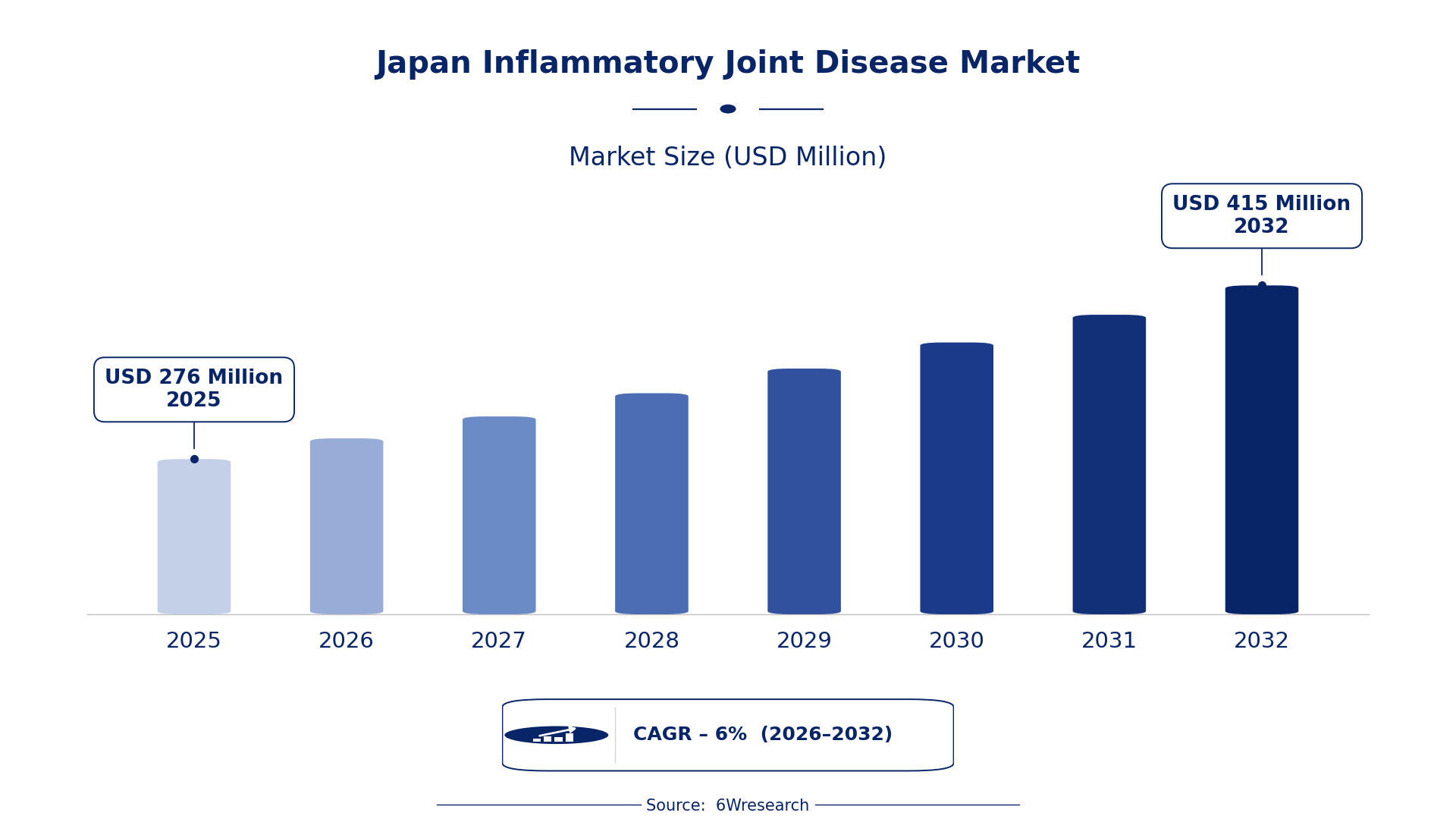
According to 6Wresearch internal database and industry insights, the Japan Inflammatory Joint Disease Market was valued at USD 276 Million in 2025 and is projected to reach USD 415 Million by 2032, growing at a CAGR of approximately 6% during 2026–2032.
Japan Inflammatory Joint Disease Market Highlights
| Report Metric | Details |
| Report Name | Japan Inflammatory Joint Disease Market (2026-2032) |
| Market Size 2025 | USD 276 Million |
| Market Size 2032 | USD 415 Million |
| Absolute Growth 2025–2032 | USD 139 Million |
| CAGR 2026–2032 | 6% |
| Peak Annual Growth | 7.4% in 2028 |
| Forecast Period | 2026–2032 |
| Historical Data | 2022–2025 |
| Base Year | 2025 |
| Leading Joint Disease Type, 2025 | Rheumatoid Arthritis (36% share) |
| Leading Treatment Strategy, 2025 | Biologics / DMARDs (46% share) |
| Leading Diagnostic Tool, 2025 | X-Ray (44% share) |
| Leading Distribution Channel, 2025 | Rheumatology Centers (42% share) |
| Fastest-Growing Joint Disease Type | Psoriatic Arthritis (8.4% CAGR) |
| Fastest-Growing Treatment Strategy | IL Inhibitors (8.0% CAGR) |
| Fastest-Growing Diagnostic Tool | Uric Acid Test (8.5% CAGR) |
| Growing Sector | Healthcare |
| Key End Users | Patients, healthcare providers, rheumatology centers, hospitals |
Japan Inflammatory Joint Disease Market Year-wise Growth Rate and Key Drivers (2022–2032)
This graph illustrates the annual growth rates of the market from 2022 to 2032, highlighting a steady upward trajectory and projected market expansion over the forecast period.
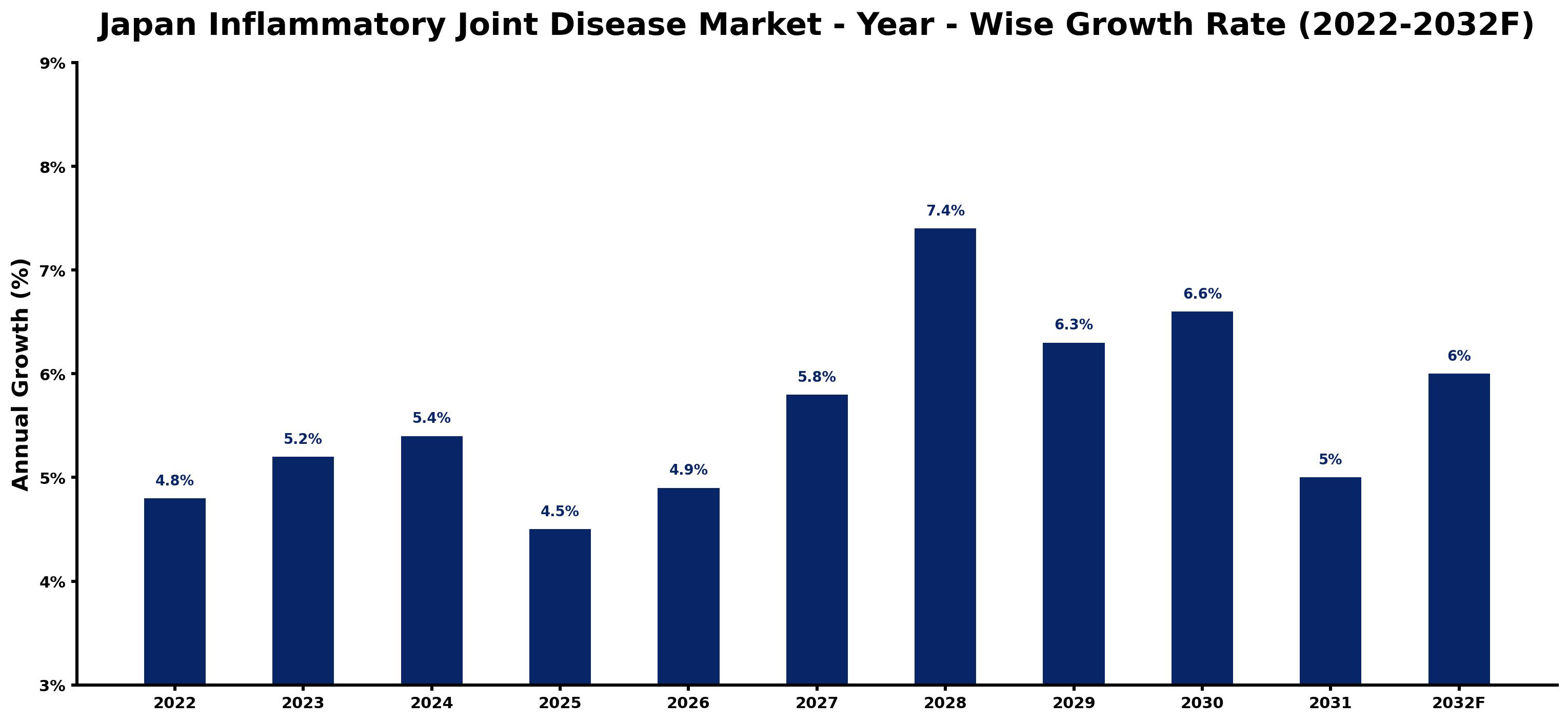
The table below sets out the estimated growth rate for each year and the main factor behind it.
| Year | Estimated Annual Growth (%) | Market Rationale |
| 2022 | 4.8 | The market exhibited a steady growth rate due to increasing awareness of inflammatory joint diseases. |
| 2023 | 5.2 | Demand for advanced treatment options accelerated as more patients sought care in specialized facilities. |
| 2024 | 5.4 | The introduction of new biologics contributed to a further increase in treatment options available. |
| 2025 | 4.5 | Growth slowed as market saturation began to affect the uptake of existing therapies. |
| 2026 | 4.9 | The expansion of rheumatology centers is expected to improve access to treatments, boosting market growth. |
| 2027 | 5.8 | Increased investment in arthritis research will lead to new therapeutic developments, driving demand. |
| 2028 | 7.4 | The peak growth rate is projected to be driven by the introduction of new biologics and treatment strategies. |
| 2029 | 6.3 | Growth is expected to slow as the market begins to stabilise following peak demand for new therapies. |
| 2030 | 6.6 | Continued advancements in diagnostic tools will support rising treatment rates among patients. |
| 2031 | 5.0 | The market will experience a slowdown as competition intensifies among treatment providers. |
| 2032 | 6.0 | Demand is expected to rise again as new therapies enter the market and patient awareness grows. |
Note: Market size estimations and growth projections presented in this report are based on 6Wresearch's proprietary forecasting methodology, utilizing the latest available industry data, government publications, and primary research inputs.
Japan Inflammatory Joint Disease Market Synopsis
Inflammatory Joint Disease encompasses conditions such as rheumatoid arthritis and psoriatic arthritis, which cause inflammation in joints and are diagnosed through clinical evaluation and imaging techniques. The Japan Inflammatory Joint Disease Market is expanding due to the increasing prevalence of these diseases, with approximately 1.2 million diagnosed cases of rheumatoid arthritis in 2023. Demand for advanced biologics and DMARDs is supported by specialized rheumatology centers and a strong healthcare system, driving investment in treatment strategies and improving patient access to care.
Market Dynamics Impact Analysis (2026–2032)
| Factor | Type | Impact | Primary Segment Affected |
| Growing prevalence of rheumatoid arthritis among the aging population | Driver | High | Rheumatoid Arthritis |
| Increased investment in biologics and advanced therapies | Driver | High | Biologics / DMARDs |
| Expansion of rheumatology centers across major urban areas | Opportunity | High | Rheumatology Centers |
| Rising demand for effective diagnostic tools in clinical settings | Opportunity | High | X-Ray |
| Market saturation leading to slower adoption of existing therapies | Restraint | Medium | Biologics / DMARDs |
| Competition among treatment providers affecting pricing strategies | Restraint | Medium | Rheumatoid Arthritis |
| Limited access to biologics for uninsured patients | Challenge | High | Biologics / DMARDs |
| High costs associated with advanced treatment options | Challenge | Medium | Rheumatoid Arthritis |
Evaluation of Drivers in Japan Inflammatory Joint Disease Market (2026–2032)
The main growth drivers and the segments they affect most are set out below.
| Drivers | Primary Segment Affected | Why It Matters (Evidence) |
| Increased prevalence of rheumatoid arthritis | Rheumatoid Arthritis | Approximately 1.2 million people in Japan were diagnosed, creating higher demand for treatments. |
| Growing investment in biologics and DMARDs | Biologics / DMARDs | Over 50% of treatment strategies in rheumatology clinics involve biologics, which drives market growth. |
| Expansion of specialized rheumatology centers | Rheumatology Centers | With over 300 centers in Japan, access to treatment is improving for patients. |
| Rising demand for advanced diagnostic tools | X-Ray | X-ray imaging is used in 90% of rheumatology practices, improving diagnosis accuracy. |
| Increased awareness of inflammatory joint diseases | Psoriatic Arthritis | The prevalence of psoriatic arthritis is rising, prompting more patients to seek treatment. |
Spending rises because the healthcare system supports a significant number of individuals diagnosed with inflammatory joint diseases, leading to increased demand for treatments. Investment in biologics is substantial, with a considerable portion of treatment strategies in rheumatology clinics involving these therapies. The growth of specialized rheumatology centers improves patient access to care, resulting in higher treatment rates. The use of advanced diagnostic tools, such as X-ray imaging in most practices, enhances diagnostic accuracy, prompting more patients to seek timely interventions. As awareness of inflammatory joint diseases rises, more individuals pursue effective treatment options, contributing to market expansion.
Evaluation of Restraints in Japan Inflammatory Joint Disease Market
The following restraints limit how fast demand can grow.
| Market Restraint | Primary Segment Affected | Why It Matters (Evidence) |
| Market saturation affecting uptake of existing therapies | Biologics / DMARDs | As more treatments become available, patients may delay seeking new options, slowing growth. |
| Intense competition among treatment providers | Rheumatoid Arthritis | With numerous providers in the market, pricing pressures may limit profitability for suppliers. |
| Limited access to biologics for uninsured patients | Biologics / DMARDs | Patients without insurance coverage may struggle to afford necessary treatments, impacting demand. |
| High costs associated with advanced treatment options | Rheumatoid Arthritis | The financial burden of biologics can deter patients from pursuing these therapies. |
| Regulatory hurdles in introducing new treatments | Psoriatic Arthritis | Stringent approval processes can delay the availability of new therapies. |
Japan Inflammatory Joint Disease Market Challenges
High costs for buyers arise from a lack of skilled rheumatology specialists, resulting in longer wait times for treatment and escalating healthcare expenses. Regulatory hurdles impede the approval of new biologics, causing delays that restrict treatment options for clinics and impact patient outcomes. Buyers face rising costs as over 50% of treatment strategies depend on expensive biologics, placing a strain on household budgets for those managing chronic conditions. The annual budget for arthritis research, around 1 billion yen, limits the development of new therapies, restricting choices for patients seeking effective treatments.
Trends in the Japan Inflammatory Joint Disease Market
Below are the shifts with the largest effect on the Japan Inflammatory Joint Disease Market.
- Shift to Advanced Biologics in Treatment: Tokyo is seeing a shift towards advanced biologics for treating inflammatory joint diseases, with over 50% of treatments now incorporating these therapies. This trend reflects a growing preference for effective solutions among healthcare providers.
- Increase in Diagnostic Imaging Utilization: In 2023, X-ray imaging became standard in 90% of rheumatology practices, indicating a move towards more accurate diagnostics. This shift enhances early detection and treatment of inflammatory joint diseases.
- Expansion of Rheumatology Centers: The number of rheumatology centres has risen significantly, improving patient access to specialised care and supporting the increasing demand for treatments.
- Rising Awareness of Inflammatory Joint Diseases: Public awareness campaigns have resulted in a greater understanding of inflammatory joint diseases, prompting more patients to seek timely treatment.
Investment Opportunities in the Japan Inflammatory Joint Disease Market
The following areas offer the clearest openings for investors and suppliers in the Japan Inflammatory Joint Disease Market.
- Investment in Biologics and DMARDs: With a substantial portion of treatment strategies involving biologics, there exists an opportunity to invest in these therapies. Rheumatology centres are exploring partnerships to enhance their treatment offerings.
- Supply of Advanced Diagnostic Tools: The demand for precise diagnostic tools is on the rise, particularly in urban areas. Collaborating with healthcare providers to supply advanced imaging equipment can effectively address this need.
- Expansion of Rheumatology Centers: Now presents a prime opportunity to invest in expanding rheumatology centres, especially in areas like Tokyo and Osaka, where patient demand is substantial. Local partnerships can facilitate this growth.
- Development of Patient Education Programs: Healthcare providers aim to enhance patient education regarding inflammatory joint diseases. Investing in educational resources can improve treatment adherence and outcomes.
Government Initiatives in the Japan Inflammatory Joint Disease Market
The Medical Care Act of 1948 sets standards for hospitals and clinics, ensuring facilities are equipped to provide adequate treatment for inflammatory joint diseases. Additionally, the Long-Term Care Insurance Act, effective since 2000, supports nursing care and services for older patients, facilitating access to necessary treatments.
In 2023, the Ministry of Health, Labour and Welfare initiated a programme aimed at improving access to biologic therapies, with an annual budget of approximately 1 billion yen. This initiative is overseen by the Ministry, which manages healthcare funding and policy implementation.
Future Insight of the Japan Inflammatory Joint Disease Market
Advanced imaging techniques will enhance diagnostic accuracy, enabling earlier interventions for inflammatory joint diseases. By 2032, the expansion of rheumatology centres will improve access to care, particularly in rural areas. The government's initiative to improve access to biologics will diversify treatment options for patients, while adherence to JIS standards will ensure high-quality diagnostics. With over 300 rheumatology centres established, the growing demand for effective therapies will drive innovation and research in the field.
Market Segmentation Analysis
Japan Inflammatory Joint Disease Market report covers a detailed analysis of the following market segments:
By Joint Disease Type – Rheumatoid Arthritis Leads, Psoriatic Arthritis Expected to Grow Fastest
According to Saurav Kr Singh, Senior Research Analyst at 6Wresearch, in 2025, Rheumatoid Arthritis led the joint disease type split with a 36% share. Rheumatoid arthritis dominates the market due to its high prevalence, with approximately 1.2 million diagnosed cases in Japan. The established treatment guidelines from the Japanese Society of Rheumatology further affirm its position as the primary condition treated in rheumatology clinics. The quickest growth will come from Psoriatic Arthritis, forecast to expand at a CAGR of 8.4% between 2026 and 2032. Psoriatic arthritis is experiencing rapid growth, driven by increased awareness and improved diagnosis, particularly through initiatives like the Ministry of Health's programme to enhance access to biologic therapies. This focus on treatment accessibility is likely to result in a further rise in patient numbers. Suppliers should focus on developing products for rheumatoid arthritis while also preparing for the increasing demand for psoriatic arthritis treatments.
By Treatment Strategy – Biologics / DMARDs Lead, IL Inhibitors Expected to Grow Fastest
With 46% of treatment strategy revenue in 2025, Biologics / DMARDs was the largest category. Biologics and DMARDs command a leading position, accounting for over 50% of the treatment strategies in rheumatology clinics. Their proven effectiveness in managing inflammatory joint diseases solidifies their role as the main treatment strategy. Over 2026–2032, IL Inhibitors are expected to post the fastest growth, at a CAGR of 8.0%. IL inhibitors are rapidly gaining traction as a treatment option, bolstered by advancements in therapy and growing clinical acceptance. Their swift adoption indicates a shift towards more targeted treatment approaches in rheumatology. Buyers must remain informed about the latest treatment strategies to ensure optimal patient outcomes and access to advanced therapies.
By Diagnostic Tool – X-Ray Leads, Uric Acid Test Expected to Grow Fastest
X-Ray took 44% of diagnostic tool revenue in 2025, more than any other category. X-ray imaging is the preferred diagnostic tool, utilised in 90% of rheumatology practices throughout Japan. Its established role in diagnosing inflammatory joint diseases contributes to its leading position in the market. Uric Acid Test is projected to grow fastest, at a CAGR of 8.5% during 2026–2032. The uric acid test is becoming increasingly popular as a diagnostic measure, especially with the rising prevalence of conditions like gout. Its growing use reflects a heightened emphasis on accurate and timely diagnosis in rheumatology. Suppliers of diagnostic tools should focus on improving the availability and precision of X-ray and uric acid testing options.
By Distribution Channel – Rheumatology Centers Lead and Record the Fastest Growth
Rheumatology Centers accounted for 42% of the market by distribution channel in 2025. Rheumatology centers serve as the primary distribution channel, providing specialised care for inflammatory joint diseases. With over 300 such centers in Japan, they play a vital role in patient management and therapy administration. The same category are also set to grow fastest, at a CAGR of 8.8% during 2026–2032. The ongoing expansion of rheumatology centers is anticipated as they adapt to increasing patient demands and treatment advancements. Their dual role as both leader and fastest channel indicates a strong infrastructure for care delivery. Suppliers should strengthen partnerships with rheumatology centers to ensure effective distribution and support for their products.
Key Attractiveness of the Report
- 10 Years of Market Numbers
- Historical Data Starting from 2022 to 2025
- Base Year 2025
- Forecast Data until 2032
- Key Performance Indicators Impacting the Market
- Major Upcoming Developments and Projects
Key Highlights of the Report:
- Japan Inflammatory Joint Disease Market Outlook
- Market Size of Japan Inflammatory Joint Disease Market, 2025
- Forecast of Japan Inflammatory Joint Disease Market, 2032
- Historical Data and Forecast of Japan Inflammatory Joint Disease Revenues & Volume for the Period 2022-2032F
- Japan Inflammatory Joint Disease Market Trend Evolution
- Japan Inflammatory Joint Disease Market Drivers and Challenges
- Japan Inflammatory Joint Disease Price Trends
- Japan Inflammatory Joint Disease Porter's Five Forces
- Japan Inflammatory Joint Disease Industry Life Cycle
- Historical Data and Forecast of Japan Inflammatory Joint Disease Market Revenues & Volume By Joint Disease Type for the Period 2022-2032F
- Historical Data and Forecast of Japan Inflammatory Joint Disease Market Revenues & Volume By Rheumatoid Arthritis for the Period 2022-2032F
- Historical Data and Forecast of Japan Inflammatory Joint Disease Market Revenues & Volume By Psoriatic Arthritis for the Period 2022-2032F
- Historical Data and Forecast of Japan Inflammatory Joint Disease Market Revenues & Volume By Gout for the Period 2022-2032F
- Historical Data and Forecast of Japan Inflammatory Joint Disease Market Revenues & Volume By Ankylosing Spondylitis for the Period 2022-2032F
- Historical Data and Forecast of Japan Inflammatory Joint Disease Market Revenues & Volume By Treatment Strategy for the Period 2022-2032F
- Historical Data and Forecast of Japan Inflammatory Joint Disease Market Revenues & Volume By Biologics / DMARDs for the Period 2022-2032F
- Historical Data and Forecast of Japan Inflammatory Joint Disease Market Revenues & Volume By IL Inhibitors for the Period 2022-2032F
- Historical Data and Forecast of Japan Inflammatory Joint Disease Market Revenues & Volume By Uric Acid Lowering Drugs for the Period 2022-2032F
- Historical Data and Forecast of Japan Inflammatory Joint Disease Market Revenues & Volume By TNF Inhibitors for the Period 2022-2032F
- Historical Data and Forecast of Japan Inflammatory Joint Disease Market Revenues & Volume By Diagnostic Tool for the Period 2022-2032F
- Historical Data and Forecast of Japan Inflammatory Joint Disease Market Revenues & Volume By CRP, X-Ray for the Period 2022-2032F
- Historical Data and Forecast of Japan Inflammatory Joint Disease Market Revenues & Volume By Visual + Skin Check for the Period 2022-2032F
- Historical Data and Forecast of Japan Inflammatory Joint Disease Market Revenues & Volume By Uric Acid Test for the Period 2022-2032F
- Historical Data and Forecast of Japan Inflammatory Joint Disease Market Revenues & Volume By Spinal Imaging for the Period 2022-2032F
- Historical Data and Forecast of Japan Inflammatory Joint Disease Market Revenues & Volume By Distribution Channel for the Period 2022-2032F
- Historical Data and Forecast of Japan Inflammatory Joint Disease Market Revenues & Volume By Orthopedic Clinics for the Period 2022-2032F
- Historical Data and Forecast of Japan Inflammatory Joint Disease Market Revenues & Volume By Rheumatology Centers for the Period 2022-2032F
- Historical Data and Forecast of Japan Inflammatory Joint Disease Market Revenues & Volume By Community Pharmacies for the Period 2022-2032F
- Historical Data and Forecast of Japan Inflammatory Joint Disease Market Revenues & Volume By Specialty Drug Providers for the Period 2022-2032F
- Japan Inflammatory Joint Disease Import Export Trade Statistics
- Market Opportunity Assessment By Joint Disease Type
- Market Opportunity Assessment By Treatment Strategy
- Market Opportunity Assessment By Diagnostic Tool
- Market Opportunity Assessment By Distribution Channel
- Japan Inflammatory Joint Disease Top Companies Market Share
- Japan Inflammatory Joint Disease Competitive Benchmarking By Technical and Operational Parameters
- Japan Inflammatory Joint Disease Company Profiles
- Japan Inflammatory Joint Disease Key Strategic Recommendations
Market Covered
This report examines the market across the segments below.
By Joint Disease Type
- Rheumatoid Arthritis
- Psoriatic Arthritis
- Gout
- Ankylosing Spondylitis
By Treatment Strategy
- Biologics / DMARDs
- IL Inhibitors
- Uric Acid Lowering Drugs
- TNF Inhibitors
By Diagnostic Tool
- CRP
- X-Ray
- Visual + Skin Check
- Uric Acid Test
- Spinal Imaging
By Distribution Channel
- Orthopedic Clinics
- Rheumatology Centers
- Community Pharmacies
- Specialty Drug Providers































