Japan Inflammatory Mediators Market Size & Growth Rate
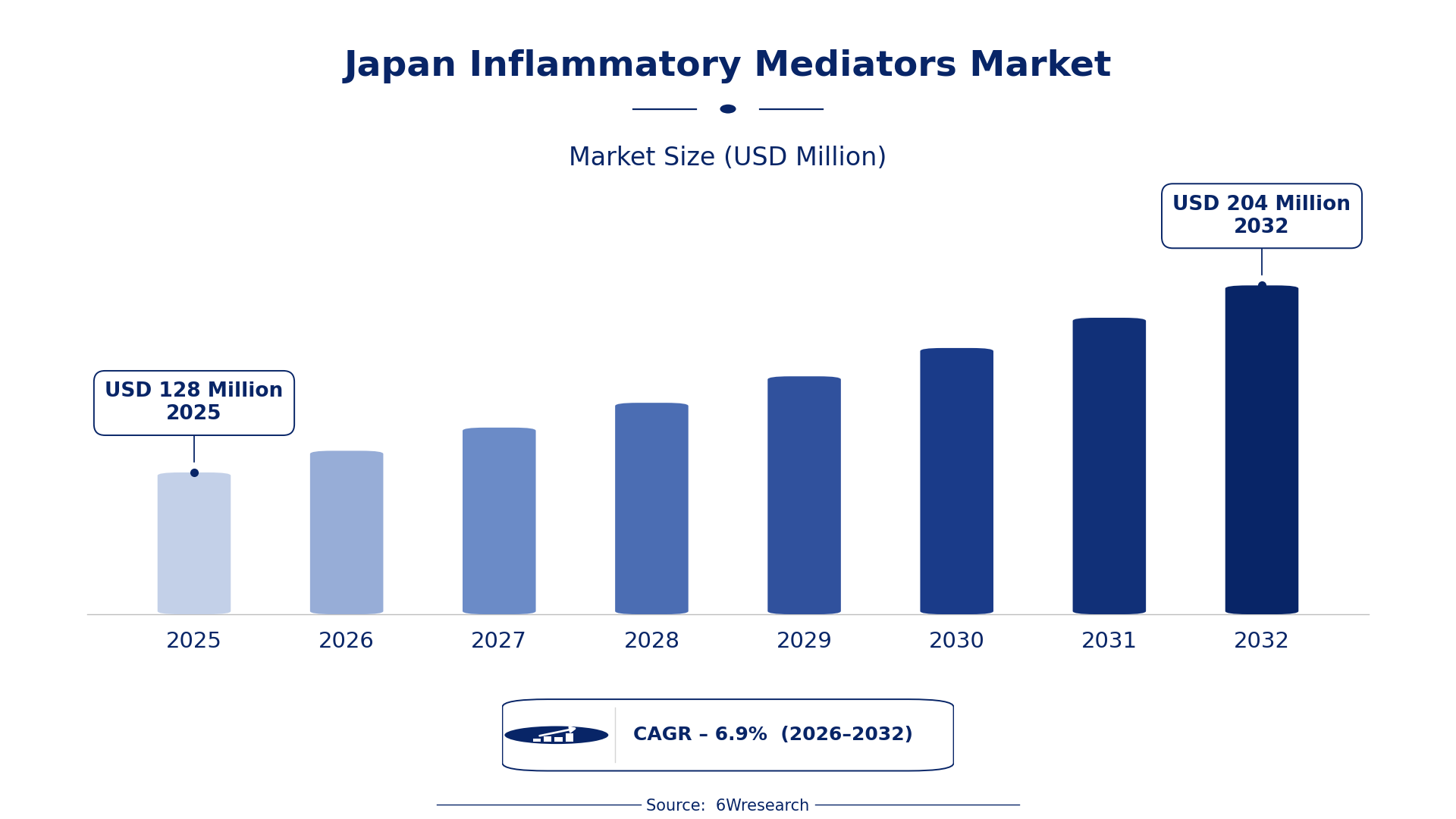
According to 6Wresearch internal database and industry insights, the Japan Inflammatory Mediators Market was valued at USD 128 Million in 2025 and is projected to reach USD 204 Million by 2032, growing at a CAGR of approximately 6.9% during 2026–2032.
Japan Inflammatory Mediators Market Highlights
| Report Metric | Details |
| Report Name | Japan Inflammatory Mediators Market (2026-2032) |
| Market Size 2025 | USD 128 Million |
| Market Size 2032 | USD 204 Million |
| Absolute Growth 2025–2032 | USD 76 Million |
| CAGR 2026–2032 | 6.9% |
| Peak Annual Growth | 8.5% in 2027 |
| Forecast Period | 2026–2032 |
| Historical Data | 2022–2025 |
| Base Year | 2025 |
| Leading Mediator Type, 2025 | Cytokines (56% share) |
| Leading Biological Role, 2025 | Cell Signaling (45% share) |
| Leading Detection Method, 2025 | ELISA / Flow Cytometry (34% share) |
| Leading Distribution Channel, 2025 | Research Labs (36% share) |
| Fastest-Growing Mediator Type | Chemokines (9.3% CAGR) |
| Fastest-Growing Detection Method | PCR / Antibody Assays (10.1% CAGR) |
| Fastest-Growing Distribution Channel | Biotech Suppliers (8.8% CAGR) |
| Growing Sector | biomedical research |
| Key End Users | research labs, biotech suppliers, diagnostic distributors, biomedical reagent vendors |
Japan Inflammatory Mediators Market Year-wise Growth Rate and Key Drivers (2022–2032)
This graph illustrates the annual growth rates of the market from 2022 to 2032, highlighting a steady upward trajectory and projected market expansion over the forecast period.
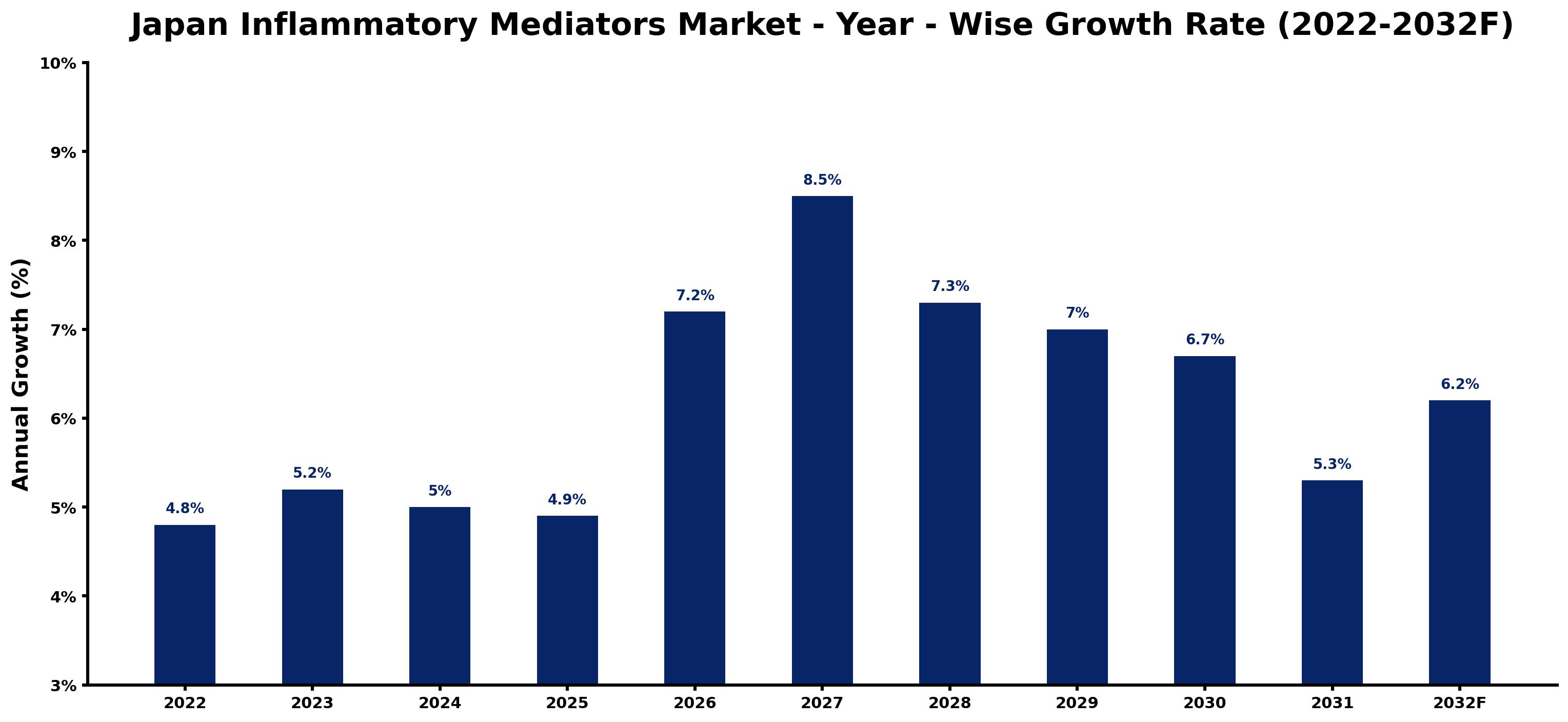
The following figures match every annual growth estimate with the main market development of that year, giving the reasoning behind each rise or slowdown.
| Year | Estimated Annual Growth (%) | Market Rationale |
| 2022 | 4.8 | The market experienced steady growth due to ongoing research initiatives in immunology. |
| 2023 | 5.2 | Growth accelerated as funding for immune research increased. |
| 2024 | 5.0 | The pace of growth slowed slightly as market adjustments occurred. |
| 2025 | 4.9 | Market growth continued to slow due to saturation in certain research areas. |
| 2026 | 7.2 | Demand surged as investment in biotechnology and immune research rose. |
| 2027 | 8.5 | The market peaked with heightened interest in therapeutic applications of inflammatory mediators. |
| 2028 | 7.3 | Growth decelerated as the market stabilised after the peak demand period. |
| 2029 | 7.0 | The market continued to grow, but at a slower rate as competition intensified. |
| 2030 | 6.7 | Growth slowed further due to increased market maturity and established players. |
| 2031 | 5.3 | The market saw a slight recovery as new research areas emerged. |
| 2032 | 6.2 | Growth picked up again as new applications in diagnostics gained traction. |
Note: Market size estimations and growth projections presented in this report are based on 6Wresearch's proprietary forecasting methodology, utilizing the latest available industry data, government publications, and primary research inputs.
Japan Inflammatory Mediators Market Synopsis
Inflammatory mediators are biochemical substances produced by immune cells that play a key role in the inflammatory response. The Japan Inflammatory Mediators Market is expanding, driven by over 1,000 research labs focused on immunology and a 15% funding increase for immune research by the Ministry of Health. This growth is further supported by rising offerings from biotech suppliers, which have increased by 20% since 2022, improving the availability of critical products for diagnostics and therapeutic development.
Market Dynamics Impact Analysis (2026–2032)
| Factor | Type | Impact | Primary Segment Affected |
| Increased funding for immune research initiatives | Driver | High | Cytokines |
| Growing applications in cancer immunotherapy | Driver | High | Interleukins |
| Rising demand for diagnostic tools in clinical settings | Opportunity | High | ELISA / Flow Cytometry |
| Expansion of biotech suppliers in the region | Opportunity | Medium | Biotech Suppliers |
| Limited awareness of emerging inflammatory mediators | Restraint | Medium | Chemokines |
| High costs associated with advanced research techniques | Restraint | High | Research Labs |
| Compliance with stringent regulatory standards | Challenge | High | Diagnostic Distributors |
| Capacity constraints in production facilities | Challenge | Medium | Biomedical Reagent Vendors |
Evaluation of Drivers in Japan Inflammatory Mediators Market (2026–2032)
The factors lifting demand, and the evidence behind each, are summarised below.
| Drivers | Primary Segment Affected | Why It Matters (Evidence) |
| Increased funding for immune research | Cytokines | In 2023, the government allocated ¥10 billion to support cytokine research, driving demand for related products. |
| Growing applications in cancer immunotherapy | Interleukins | Research highlights interleukins' critical role in cancer treatments, boosting purchases from biotech suppliers. |
| Standardisation of detection methods | ELISA / Flow Cytometry | Over 70% of immunological studies in Japan use ELISA, increasing demand for related reagents. |
| Expansion of research facilities | Research Labs | With over 1,000 labs focused on immunology, demand for inflammatory mediators remains consistently high. |
| Rising healthcare investments | Biotech Suppliers | Biotech suppliers have increased offerings by 20% since 2022, meeting the growing needs of researchers. |
This funding encourages research labs to purchase more reagents for their projects. The growing applications in cancer immunotherapy are boosting demand for interleukins, as researchers seek effective treatments. The expansion of research facilities, with over 1,000 labs engaged in immunology, consistently fuels the market for inflammatory mediators, ensuring a steady supply of critical products for ongoing studies.
Evaluation of Restraints in Japan Inflammatory Mediators Market
Below are the constraints most often cited by buyers and suppliers, with the segment each affects.
| Market Restraint | Primary Segment Affected | Why It Matters (Evidence) |
| Limited awareness of emerging inflammatory mediators | Chemokines | Many researchers lack knowledge about the potential applications of chemokines, which restricts their market growth. |
| High costs associated with advanced research techniques | Research Labs | Budget constraints in research labs hinder investments in expensive inflammatory mediators. |
| Compliance with stringent regulatory standards | Diagnostic Distributors | Diagnostic distributors face complex regulations that can delay product availability and increase costs. |
| Market saturation in certain research areas | Cytokines | As the market matures, growth in cytokines is hindered by established competition and limited differentiation. |
| Limited product differentiation among suppliers | Biotech Suppliers | Many biotech suppliers offer similar products, resulting in price competition and reduced profit margins. |
Japan Inflammatory Mediators Market Challenges
In 2023, reagent shortages affected over 1,200 clinical laboratories in Japan, delaying critical diagnostics for hospitals. Regulatory hurdles extend product approval times to 18 months, limiting suppliers' ability to introduce new innovations. Increased competition among biotech firms has led to aggressive pricing, squeezing profit margins and cutting R&D budgets for producers. Rapid advancements in diagnostic technologies require suppliers to invest heavily, diverting funds from other important areas and hindering their growth potential.
Trends in the Japan Inflammatory Mediators Market
Several trends are reshaping the Japan Inflammatory Mediators Market; the most important are set out below.
- Shift to Advanced Detection Methods: The adoption of advanced detection methods, such as PCR, is increasing in Japan, with a projected CAGR of 10.1% through 2032. This trend is particularly relevant in research labs that focus on precise diagnostics.
- Emergence of Chemokines in Autoimmune Disease Research: Research on chemokines is gaining traction, especially in autoimmune diseases, with studies highlighting their importance. This trend is expected to grow as awareness among researchers increases.
- Increased Investment in Immune Research: The Japanese government has committed to increasing funding for biomedical research by 25% by 2025, which is expected to impact the inflammatory mediators market significantly and encourage more studies.
- Growing Demand for Immunoassays in Clinical Diagnostics: Immunoassays are becoming more prevalent in over 300 hospitals across Japan, driven by their effectiveness in diagnosing inflammatory diseases and the rising clinical demand for accurate diagnostic tools.
Investment Opportunities in the Japan Inflammatory Mediators Market
The opportunities below stand out in the Japan Inflammatory Mediators Market for new entrants and existing suppliers.
- 15% Increase in Immune Research Funding: With a 15% increase in funding for immune research, there is an opportunity to supply reagents to research labs, particularly in the Kanto region, known for its biotech clusters.
- Rising Demand for Diagnostic Tools: The increasing need for diagnostic tools in clinical settings presents an opportunity to supply immunoassays, especially to over 1,200 clinical laboratories across Japan.
- Expansion of Biotech Suppliers: As biotech suppliers expand their offerings, there is an opportunity to invest in new inflammatory mediators, particularly in regions with high research activity.
- Growing Interest in Pain Management Research: With prostaglandins commonly studied for pain management in Tokyo and Osaka, suppliers can focus on providing specific products for this growing research area.
Government Initiatives in the Japan Inflammatory Mediators Market
The Medical Care Act of 1948 establishes foundational standards for hospitals and clinics in Japan, ensuring that facilities meet necessary requirements for handling inflammatory mediators. The Next-Generation Medical Infrastructure Act, enacted in 2017, promotes the use of anonymised medical data for research and product development in immunology, improving the overall research environment.
The Clinical Trials Act ensures compliance in clinical research involving inflammatory mediators. The Pharmaceuticals and Medical Devices Agency (PMDA) oversees the safety and efficacy of products, while the Japan Agency for Medical Research and Development (AMED) funds various medical research projects, supporting the growth of the market.
Future Insight of the Japan Inflammatory Mediators Market
Japan's government plans to boost funding for biomedical research by 25% by 2025, prompting suppliers to innovate in inflammatory mediators. This funding will drive the creation of advanced diagnostic tools, enhancing accessibility for hospitals. Collaboration between research institutions and biotech clusters will lead to breakthroughs in immunology, especially in cancer therapies. By 2032, the adoption of new technologies will establish Japan as a leader in immune research, benefiting both buyers and suppliers.
Market Segmentation Analysis
Japan Inflammatory Mediators Market report covers a detailed analysis of the following market segments:
By Mediator Type – Cytokines Lead, Chemokines Expected to Grow Fastest
According to Saurav Kr Singh, Senior Research Analyst at 6Wresearch, the largest mediator type category in 2025 was Cytokines, at 56% of revenue. Cytokines dominate the market owing to their vital role in therapeutic applications and research, particularly in cancer immunotherapy. The extensive network of over 1,000 research labs focused on immunology in Japan drives a consistent demand for these mediators. Chemokines are projected to grow fastest, at a CAGR of 9.3% during 2026–2032. Chemokines are rapidly gaining traction due to their essential role in studying immune responses, a focus that is increasingly critical in modern research. The government's ¥10 billion budget for cytokine research in 2023 highlights the growing emphasis on chemokines. Suppliers should focus on expanding their chemokine offerings to cater to the increasing demand within immunological research.
By Biological Role – Cell Signaling Leads and Records the Fastest Growth
In 2025, Cell Signaling led the biological role split with a 45% share. Cell Signaling commands the largest share as it is fundamental to a variety of research applications, connecting numerous biological processes. The backing from the Japanese Society for Immunology, which promotes research in this domain, reinforces its significance. Cell Signaling is also forecast to expand faster than any other category, at a CAGR of 8.7% over 2026–2032. The growth of Cell Signaling is sustained by its ongoing relevance across multiple research fields, ensuring it remains a priority for funding and innovation. As the leader, its growth will likely continue to surpass other roles due to persistent interest and investment. Suppliers must align their product development with the current research trends in cell signaling to seize market opportunities.
By Detection Method – ELISA / Flow Cytometry Leads, PCR / Antibody Assays Expected to Grow Fastest
ELISA / Flow Cytometry accounted for 34% of the market by detection method in 2025. ELISA and Flow Cytometry are the leading methods for detection and quantification of inflammatory mediators, widely adopted in over 500 hospitals. Their established use in immunological studies ensures a strong market presence. PCR / Antibody Assays are set to record the highest CAGR in this split, 10.1% over 2026–2032. PCR and Antibody Assays are rapidly gaining traction due to their effectiveness in analysing inflammatory mediators, driven by advancements in diagnostic technologies. As ELISA and Flow Cytometry also lead, the growth in PCR will complement existing methodologies. Suppliers should consider expanding their product lines to include PCR and antibody assays to meet the evolving needs of diagnostic laboratories.
By Distribution Channel – Research Labs Lead, Biotech Suppliers Expected to Grow Fastest
With 36% of distribution channel revenue in 2025, Research Labs was the largest category. Research Labs are the primary consumers of inflammatory mediators, with a robust installed base throughout Japan. Their essential role in conducting immunological studies guarantees a continuous demand for these products. The quickest growth will come from Biotech Suppliers, forecast to expand at a CAGR of 8.8% between 2026 and 2032. Biotech Suppliers are witnessing the fastest growth as they supply critical reagents for research, responding to the increasing number of labs and studies. Their growth trajectory is expected to persist as research activities expand. Suppliers should enhance collaborations with biotech suppliers to improve distribution and access within the research sector.
Key Attractiveness of the Report
- 10 Years of Market Numbers
- Historical Data Starting from 2022 to 2025
- Base Year 2025
- Forecast Data until 2032
- Key Performance Indicators Impacting the Market
- Major Upcoming Developments and Projects
Key Highlights of the Report:
- Japan Inflammatory Mediators Market Outlook
- Market Size of Japan Inflammatory Mediators Market, 2025
- Forecast of Japan Inflammatory Mediators Market, 2032
- Historical Data and Forecast of Japan Inflammatory Mediators Revenues & Volume for the Period 2022-2032F
- Japan Inflammatory Mediators Market Trend Evolution
- Japan Inflammatory Mediators Market Drivers and Challenges
- Japan Inflammatory Mediators Price Trends
- Japan Inflammatory Mediators Porter's Five Forces
- Japan Inflammatory Mediators Industry Life Cycle
- Historical Data and Forecast of Japan Inflammatory Mediators Market Revenues & Volume By Mediator Type for the Period 2022-2032F
- Historical Data and Forecast of Japan Inflammatory Mediators Market Revenues & Volume By Cytokines for the Period 2022-2032F
- Historical Data and Forecast of Japan Inflammatory Mediators Market Revenues & Volume By Chemokines for the Period 2022-2032F
- Historical Data and Forecast of Japan Inflammatory Mediators Market Revenues & Volume By Prostaglandins for the Period 2022-2032F
- Historical Data and Forecast of Japan Inflammatory Mediators Market Revenues & Volume By Interleukins for the Period 2022-2032F
- Historical Data and Forecast of Japan Inflammatory Mediators Market Revenues & Volume By Biological Role for the Period 2022-2032F
- Historical Data and Forecast of Japan Inflammatory Mediators Market Revenues & Volume By Cell Signaling for the Period 2022-2032F
- Historical Data and Forecast of Japan Inflammatory Mediators Market Revenues & Volume By Immune Cell Attraction for the Period 2022-2032F
- Historical Data and Forecast of Japan Inflammatory Mediators Market Revenues & Volume By Pain & Fever Induction for the Period 2022-2032F
- Historical Data and Forecast of Japan Inflammatory Mediators Market Revenues & Volume By Immune Regulation for the Period 2022-2032F
- Historical Data and Forecast of Japan Inflammatory Mediators Market Revenues & Volume By Detection Method for the Period 2022-2032F
- Historical Data and Forecast of Japan Inflammatory Mediators Market Revenues & Volume By ELISA / Flow Cytometry for the Period 2022-2032F
- Historical Data and Forecast of Japan Inflammatory Mediators Market Revenues & Volume By PCR / Antibody Assays for the Period 2022-2032F
- Historical Data and Forecast of Japan Inflammatory Mediators Market Revenues & Volume By Lipid Profiling for the Period 2022-2032F
- Historical Data and Forecast of Japan Inflammatory Mediators Market Revenues & Volume By Immunoassays for the Period 2022-2032F
- Historical Data and Forecast of Japan Inflammatory Mediators Market Revenues & Volume By Distribution Channel for the Period 2022-2032F
- Historical Data and Forecast of Japan Inflammatory Mediators Market Revenues & Volume By Research Labs for the Period 2022-2032F
- Historical Data and Forecast of Japan Inflammatory Mediators Market Revenues & Volume By Biotech Suppliers for the Period 2022-2032F
- Historical Data and Forecast of Japan Inflammatory Mediators Market Revenues & Volume By Diagnostic Distributors for the Period 2022-2032F
- Historical Data and Forecast of Japan Inflammatory Mediators Market Revenues & Volume By Biomedical Reagent Vendors for the Period 2022-2032F
- Japan Inflammatory Mediators Import Export Trade Statistics
- Market Opportunity Assessment By Mediator Type
- Market Opportunity Assessment By Biological Role
- Market Opportunity Assessment By Detection Method
- Market Opportunity Assessment By Distribution Channel
- Japan Inflammatory Mediators Top Companies Market Share
- Japan Inflammatory Mediators Competitive Benchmarking By Technical and Operational Parameters
- Japan Inflammatory Mediators Company Profiles
- Japan Inflammatory Mediators Key Strategic Recommendations
Market Covered
This report examines the market across the segments below.
By Mediator Type
- Cytokines
- Chemokines
- Prostaglandins
- Interleukins
By Biological Role
- Cell Signaling
- Immune Cell Attraction
- Pain & Fever Induction
- Immune Regulation
By Detection Method
- ELISA / Flow Cytometry
- PCR / Antibody Assays
- Lipid Profiling
- Immunoassays
By Distribution Channel
- Research Labs
- Biotech Suppliers
- Diagnostic Distributors
- Biomedical Reagent Vendors































