Japan Influenza Therapeutics Market Size & Growth Rate
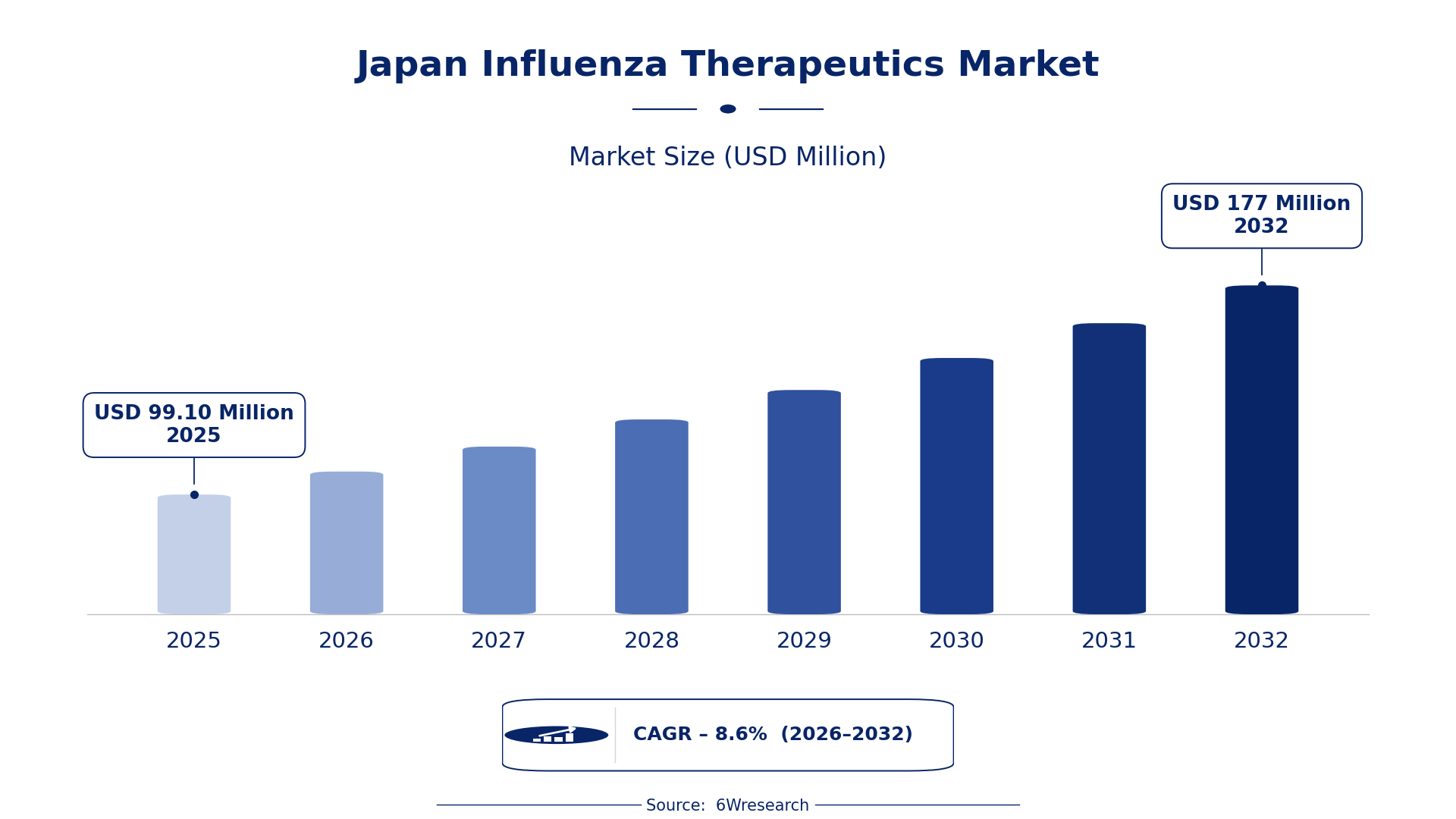
According to 6Wresearch internal database and industry insights, the Japan Influenza Therapeutics Market was valued at USD 99.10 Million in 2025 and is projected to reach USD 177 Million by 2032, growing at a CAGR of approximately 8.6% during 2026–2032.
Japan Influenza Therapeutics Market Highlights
| Report Metric | Details |
| Report Name | Japan Influenza Therapeutics Market (2026-2032) |
| Market Size 2025 | USD 99.10 Million |
| Market Size 2032 | USD 177 Million |
| Absolute Growth 2025–2032 | USD 77.90 Million |
| CAGR 2026–2032 | 8.6% |
| Peak Annual Growth | 9.4% in 2028 |
| Forecast Period | 2026–2032 |
| Historical Data | 2022–2025 |
| Base Year | 2025 |
| Leading Therapy Type, 2025 | Antivirals (41% share) |
| Leading Drug Type, 2025 | Neuraminidase Inhibitors (42% share) |
| Leading Target Influenza Strain, 2025 | Influenza A & B (48% share) |
| Leading Distribution Channel, 2025 | Hospital Pharmacies (41% share) |
| Fastest-Growing Therapy Type | Monoclonal Antibodies (11.4% CAGR) |
| Fastest-Growing Drug Type | Biologics (12.4% CAGR) |
| Fastest-Growing Target Influenza Strain | Severe Influenza (11.0% CAGR) |
| Fastest-Growing Distribution Channel | Biotech Distributors (11.8% CAGR) |
| Growing Sector | pharmaceuticals |
| Key End Users | hospitals, healthcare providers, drugstores, pharmacies |
Japan Influenza Therapeutics Market Year-wise Growth Rate and Key Drivers (2022–2032)
This graph illustrates the annual growth rates of the market from 2022 to 2032, highlighting a steady upward trajectory and projected market expansion over the forecast period.
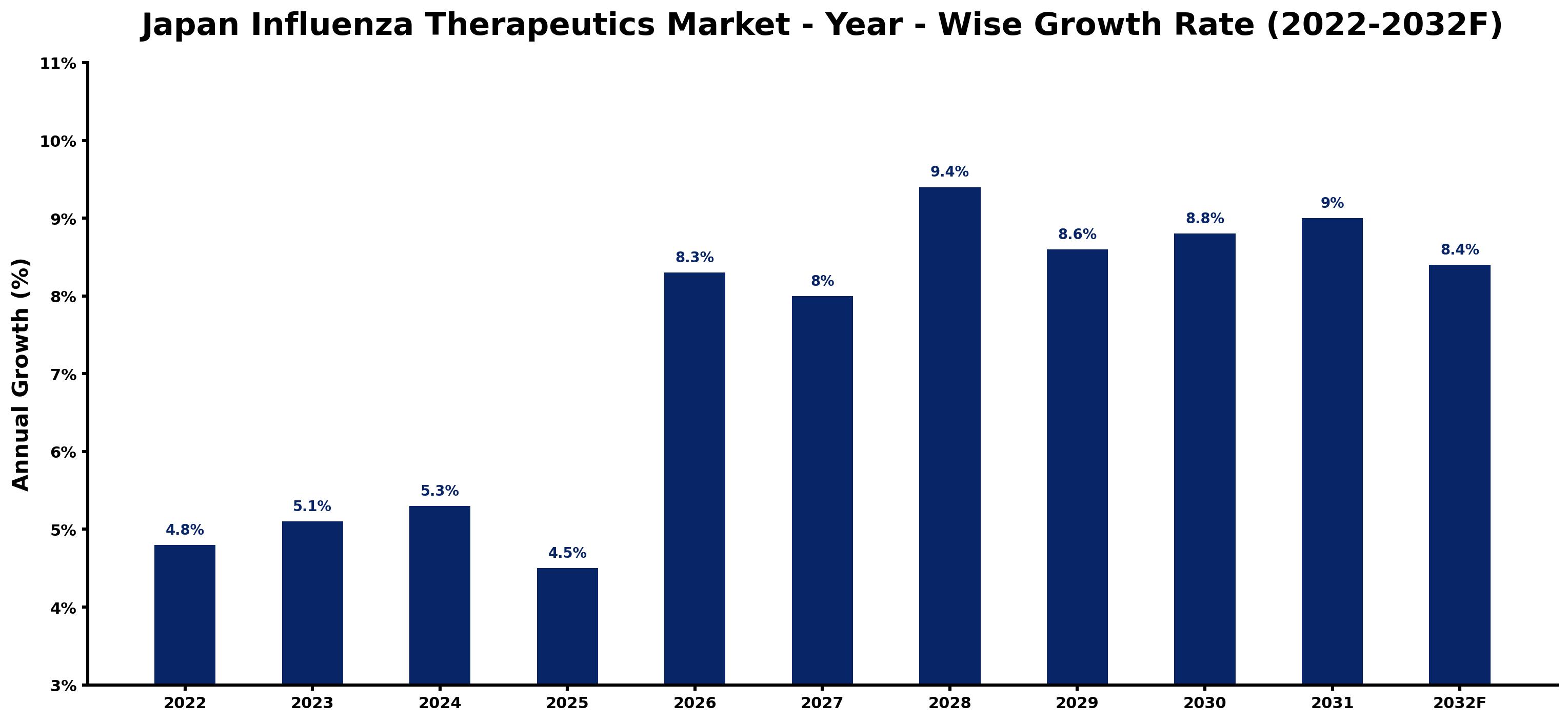
Year by year, the estimates below pair each growth rate with the development that shaped it.
| Year | Estimated Annual Growth (%) | Market Rationale |
| 2022 | 4.8 | The market experienced steady growth due to existing healthcare demands. |
| 2023 | 5.1 | Demand increased as healthcare providers focused on influenza management. |
| 2024 | 5.3 | The introduction of new antiviral treatments further boosted market growth. |
| 2025 | 4.5 | Growth slowed as the market adjusted to previous high rates. |
| 2026 | 8.3 | A surge in hospital admissions for influenza is expected to lead to higher orders. |
| 2027 | 8.0 | Market growth will slow as competition intensifies among treatment options. |
| 2028 | 9.4 | The introduction of advanced therapies is projected to spur demand increases. |
| 2029 | 8.6 | A slight slowdown is expected as market saturation begins to set in. |
| 2030 | 8.8 | Growth will accelerate again with new treatment protocols being adopted. |
| 2031 | 9.0 | Demand will rise as public health campaigns increase awareness of influenza. |
| 2032 | 8.4 | Market growth will slow as established therapies become widely available. |
Note: Market size estimations and growth projections presented in this report are based on 6Wresearch's proprietary forecasting methodology, utilizing the latest available industry data, government publications, and primary research inputs.
Japan Influenza Therapeutics Market Synopsis
Influenza therapeutics are crucial medications for treating influenza infections, primarily through antiviral agents that inhibit viral replication. The market is supported by ongoing research and a strong healthcare system, improving treatment accessibility for patients.
Market Dynamics Impact Analysis (2026–2032)
| Factor | Type | Impact | Primary Segment Affected |
| Rising vaccination rates | Driver | High | Antivirals |
| Increased hospital admissions due to influenza outbreaks | Driver | High | Neuraminidase Inhibitors |
| Growing demand for combination therapies | Opportunity | Medium | Combination Therapies |
| Expansion of OTC symptomatic relief products | Opportunity | Medium | OTC Symptomatic Relief |
| Limited access to advanced therapies in rural areas | Restraint | High | Biologics |
| High costs associated with monoclonal antibodies | Restraint | Medium | Monoclonal Antibodies |
| Intense competition among therapeutic options | Challenge | High | Antivirals |
| Regulatory hurdles for new drug approvals | Challenge | Medium | Neuraminidase Inhibitors |
Evaluation of Drivers in Japan Influenza Therapeutics Market (2026–2032)
Key forces behind demand, with the segment each one moves most, are listed below.
| Drivers | Primary Segment Affected | Why It Matters (Evidence) |
| Increased vaccination rates | Antivirals | The annual vaccination rate of around 40% drives demand for antiviral treatments during peak seasons. |
| Higher hospital admissions | Neuraminidase Inhibitors | Increased hospital stays for severe influenza cases, averaging 7 days, boost orders for antiviral medications. |
| Rising awareness of influenza complications | OTC Symptomatic Relief | Public health campaigns promote the use of OTC products, resulting in higher sales in drugstores. |
| Advancements in treatment protocols | Combination Therapies | The growing trend of using combination therapies increases treatment efficacy, driving demand among healthcare providers. |
| Support from healthcare associations | Monoclonal Antibodies | The Japan Society of Infectious Diseases promotes awareness and usage, increasing demand for monoclonal antibody treatments. |
Behind the steady rise in orders sits a growing focus on influenza management among healthcare providers. In 2022, Japan's population was approximately 125 million, with a vaccination rate of 40%, leading to increased demand for antiviral treatments. The average hospital stay for severe influenza cases is about 7 days, prompting hospitals to order more antiviral medications. Awareness campaigns have raised the profile of influenza complications, resulting in higher sales of OTC symptomatic relief products. Endorsements from healthcare associations further drive the adoption of monoclonal antibodies, improving treatment efficacy across the country.
Evaluation of Restraints in Japan Influenza Therapeutics Market
The key brakes on demand, and where they bite hardest, are shown below.
| Market Restraint | Primary Segment Affected | Why It Matters (Evidence) |
| Limited access to advanced therapies in rural areas | Biologics | Patients in rural regions often face barriers to accessing advanced therapies, limiting treatment options. |
| High costs associated with monoclonal antibodies | Monoclonal Antibodies | The expensive nature of monoclonal antibodies restricts their use among healthcare providers. |
| Regulatory hurdles for new drug approvals | Neuraminidase Inhibitors | Strict regulations can delay the introduction of new antiviral drugs, affecting availability. |
| Intense competition among therapeutic options | Antivirals | The presence of numerous antiviral options can dilute market share for individual products. |
| Market saturation in urban areas | OTC Symptomatic Relief | High availability of OTC products in urban drugstores leads to fierce competition and price pressures. |
Japan Influenza Therapeutics Market Challenges
A lack of skilled professionals in Japan results in delays in the production of influenza therapeutics, which can extend patient hospital stays by an average of 7 days. Heightened competition among pharmaceutical companies pressures prices downward, impacting profit margins for suppliers and constraining their ability to invest in new treatments. During peak influenza seasons, buyers face shortages of antiviral medications, leading to treatment delays for patients and potential complications. Suppliers struggle to keep pace with rapid technological changes, incurring significant costs that may ultimately raise prices for healthcare providers.
Trends in the Japan Influenza Therapeutics Market
These developments are changing demand patterns in the Japan Influenza Therapeutics Market.
- Shift towards Combination Therapies: Healthcare providers are increasingly adopting combination therapies to improve treatment efficacy for severe influenza cases. In 2023, prescriptions for these therapies rose significantly, reflecting a growing trend in clinical practice.
- Increasing Use of Monoclonal Antibodies: The adoption of monoclonal antibodies is rising, particularly for complicated influenza cases. In 2023, their usage increased markedly, driven by endorsements from healthcare associations.
- Rise in OTC Symptomatic Relief Products: OTC symptomatic relief products are gaining popularity among patients seeking immediate flu symptom relief. Sales in drugstores increased notably in 2023, reflecting changing consumer preferences.
- Focus on Preventive Measures: The national influenza prevention program launched in 2023 targets high-risk groups, leading to a significant increase in vaccination rates. This initiative aims to reduce hospital admissions and improve public health outcomes.
Investment Opportunities in the Japan Influenza Therapeutics Market
The opportunities below stand out in the Japan Influenza Therapeutics Market for new entrants and existing suppliers.
- Healthcare providers seeking effective treatments: Urban healthcare providers require effective antiviral solutions, with a market gap of approximately USD 50 million. Collaborating with local hospitals can facilitate entry into this segment.
- Pharmaceutical companies expanding product lines: Pharmaceutical companies can explore joint ventures to develop new antiviral medications, addressing the growing demand for effective treatments. The market gap is estimated at USD 30 million.
- Increased demand for OTC products: Drugstores are seeking reliable suppliers for OTC symptomatic relief products, with a market gap of USD 20 million. Establishing partnerships with local distributors can enhance market presence.
- Growing interest in biologics: Biologics are gaining attention among healthcare providers, with a projected market gap of USD 25 million. Companies can enter this market through regulatory approvals and partnerships.
Government Initiatives in the Japan Influenza Therapeutics Market
The NHI drug price standard, revised regularly, establishes reimbursement prices for influenza therapeutics, ensuring affordability for patients. This complements the Medical Care Act of 1948, which sets standards for hospitals and clinics, improving treatment accessibility for buyers of influenza therapeutics.
The Clinical Trials Act allows for the research and development of new influenza treatments while ensuring compliance with safety standards. The Ministry of Health, Labour and Welfare oversees these regulations, facilitating the approval process for new therapies.
Future Insight of the Japan Influenza Therapeutics Market
Investment in advanced biotechnological methods will reshape the production landscape for influenza therapeutics, creating a surge in demand from healthcare providers. The national influenza prevention program aims to improve treatment protocols for high-risk groups, enhancing patient outcomes. Increased awareness campaigns could elevate vaccination rates to over 50% of the population by 2032. Adoption of ISO 9001 standards will ensure consistent quality in pharmaceutical manufacturing, benefiting both suppliers and healthcare providers.
Market Segmentation Analysis
Japan Influenza Therapeutics Market report covers a detailed analysis of the following market segments:
By Therapy Type – Antivirals Lead, Monoclonal Antibodies Expected to Grow Fastest
According to Saurav Kr Singh, Senior Research Analyst at 6Wresearch, Antivirals took 41% of therapy type revenue in 2025, more than any other category. Antivirals hold the largest market share due to their widespread application in treating acute influenza infections, particularly in hospitals where thousands of prescriptions are issued annually. The Tokyo metropolitan area exemplifies this demand, driven by its dense population and numerous healthcare facilities. Monoclonal Antibodies are projected to grow fastest, at a CAGR of 11.4% during 2026–2032. Monoclonal Antibodies are experiencing rapid growth as they specifically target strains of the virus, with increased adoption in treatment protocols for severe cases. The recent national influenza prevention program has further accelerated their uptake among healthcare providers, ensuring their relevance in the market. Suppliers should focus on expanding their offerings in monoclonal antibodies to capitalise on this growth trend.
By Drug Type – Neuraminidase Inhibitors Lead, Biologics Expected to Grow Fastest
With 42% of drug type revenue in 2025, Neuraminidase Inhibitors was the largest category. Neuraminidase Inhibitors dominate the market as they are specifically designed to inhibit viral spread, making them the preferred choice for healthcare providers. Their established efficacy has resulted in a strong installed base within hospitals across Japan, ensuring consistent demand. The quickest growth will come from Biologics, forecast to expand at a CAGR of 12.4% between 2026 and 2032. Biologics are witnessing rapid growth as they are increasingly integrated into treatment protocols for complicated influenza cases, despite being used less frequently than traditional antivirals. This trend is likely to continue as healthcare providers seek more targeted therapies, enhancing their market presence. Buyers should prepare for a shift towards biologics as treatment options evolve.
By Target Influenza Strain – Influenza A & B Leads, Severe Influenza Expected to Grow Fastest
In 2025, Influenza A & B led the target influenza strain split with a 48% share. Influenza A & B strains are the primary targets for influenza therapeutics, accounting for 90% of cases in Japan. This widespread prevalence ensures that treatments focused on these strains maintain a strong market presence. Over 2026–2032, Severe Influenza is expected to post the fastest growth, at a CAGR of 11.0%. Severe Influenza is growing rapidly in importance as healthcare providers focus on critical cases requiring immediate intervention. The average hospital stay of about 7 days for severe cases underscores the need for effective treatment solutions. Suppliers must ensure their product lines are equipped to address the needs of severe influenza cases.
By Distribution Channel – Hospital Pharmacies Lead, Biotech Distributors Expected to Grow Fastest
Hospital Pharmacies accounted for 41% of the market by distribution channel in 2025. Hospital Pharmacies serve as the primary distribution channel, acting as the main point for dispensing therapeutics directly to patients in need. The robust healthcare system in Japan supports a high volume of prescriptions filled through these pharmacies, ensuring their dominance. Biotech Distributors are set to record the highest CAGR in this split, 11.8% over 2026–2032. Biotech Distributors are experiencing the fastest growth as they supply specialised products to healthcare providers, reflecting an increasing reliance on advanced therapeutics. Their role is becoming more critical as treatment protocols evolve, indicating a shift in distribution dynamics. Suppliers should strengthen partnerships with biotech distributors to enhance their market reach.
Key Attractiveness of the Report
- 10 Years of Market Numbers
- Historical Data Starting from 2022 to 2025
- Base Year 2025
- Forecast Data until 2032
- Key Performance Indicators Impacting the Market
- Major Upcoming Developments and Projects
Key Highlights of the Report:
- Japan Influenza Therapeutics Market Outlook
- Market Size of Japan Influenza Therapeutics Market, 2025
- Forecast of Japan Influenza Therapeutics Market, 2032
- Historical Data and Forecast of Japan Influenza Therapeutics Revenues & Volume for the Period 2022-2032F
- Japan Influenza Therapeutics Market Trend Evolution
- Japan Influenza Therapeutics Market Drivers and Challenges
- Japan Influenza Therapeutics Price Trends
- Japan Influenza Therapeutics Porter's Five Forces
- Japan Influenza Therapeutics Industry Life Cycle
- Historical Data and Forecast of Japan Influenza Therapeutics Market Revenues & Volume By Therapy Type for the Period 2022-2032F
- Historical Data and Forecast of Japan Influenza Therapeutics Market Revenues & Volume By Antivirals for the Period 2022-2032F
- Historical Data and Forecast of Japan Influenza Therapeutics Market Revenues & Volume By Monoclonal Antibodies for the Period 2022-2032F
- Historical Data and Forecast of Japan Influenza Therapeutics Market Revenues & Volume By Combination Therapies for the Period 2022-2032F
- Historical Data and Forecast of Japan Influenza Therapeutics Market Revenues & Volume By OTC Symptomatic Relief for the Period 2022-2032F
- Historical Data and Forecast of Japan Influenza Therapeutics Market Revenues & Volume By Drug Type for the Period 2022-2032F
- Historical Data and Forecast of Japan Influenza Therapeutics Market Revenues & Volume By Neuraminidase Inhibitors for the Period 2022-2032F
- Historical Data and Forecast of Japan Influenza Therapeutics Market Revenues & Volume By Biologics for the Period 2022-2032F
- Historical Data and Forecast of Japan Influenza Therapeutics Market Revenues & Volume By Antiviral + Antibiotic for the Period 2022-2032F
- Historical Data and Forecast of Japan Influenza Therapeutics Market Revenues & Volume By Decongestant / Analgesic for the Period 2022-2032F
- Historical Data and Forecast of Japan Influenza Therapeutics Market Revenues & Volume By Target Influenza Strain for the Period 2022-2032F
- Historical Data and Forecast of Japan Influenza Therapeutics Market Revenues & Volume By Influenza A & B for the Period 2022-2032F
- Historical Data and Forecast of Japan Influenza Therapeutics Market Revenues & Volume By Severe Influenza for the Period 2022-2032F
- Historical Data and Forecast of Japan Influenza Therapeutics Market Revenues & Volume By Complicated Cases for the Period 2022-2032F
- Historical Data and Forecast of Japan Influenza Therapeutics Market Revenues & Volume By Mild Seasonal Flu for the Period 2022-2032F
- Historical Data and Forecast of Japan Influenza Therapeutics Market Revenues & Volume By Distribution Channel for the Period 2022-2032F
- Historical Data and Forecast of Japan Influenza Therapeutics Market Revenues & Volume By Hospital Pharmacies for the Period 2022-2032F
- Historical Data and Forecast of Japan Influenza Therapeutics Market Revenues & Volume By Biotech Distributors for the Period 2022-2032F
- Historical Data and Forecast of Japan Influenza Therapeutics Market Revenues & Volume By Prescription Retailers for the Period 2022-2032F
- Historical Data and Forecast of Japan Influenza Therapeutics Market Revenues & Volume By Drugstores for the Period 2022-2032F
- Japan Influenza Therapeutics Import Export Trade Statistics
- Market Opportunity Assessment By Therapy Type
- Market Opportunity Assessment By Drug Type
- Market Opportunity Assessment By Target Influenza Strain
- Market Opportunity Assessment By Distribution Channel
- Japan Influenza Therapeutics Top Companies Market Share
- Japan Influenza Therapeutics Competitive Benchmarking By Technical and Operational Parameters
- Japan Influenza Therapeutics Company Profiles
- Japan Influenza Therapeutics Key Strategic Recommendations
Market Covered
Coverage by segment is as follows.
By Therapy Type
- Antivirals
- Monoclonal Antibodies
- Combination Therapies
- OTC Symptomatic Relief
By Drug Type
- Neuraminidase Inhibitors
- Biologics
- Antiviral + Antibiotic
- Decongestant / Analgesic
By Target Influenza Strain
- Influenza A & B
- Severe Influenza
- Complicated Cases
- Mild Seasonal Flu
By Distribution Channel
- Hospital Pharmacies
- Biotech Distributors
- Prescription Retailers
- Drugstores































