Japan Inherited Disease Therapy Market Size & Growth Rate
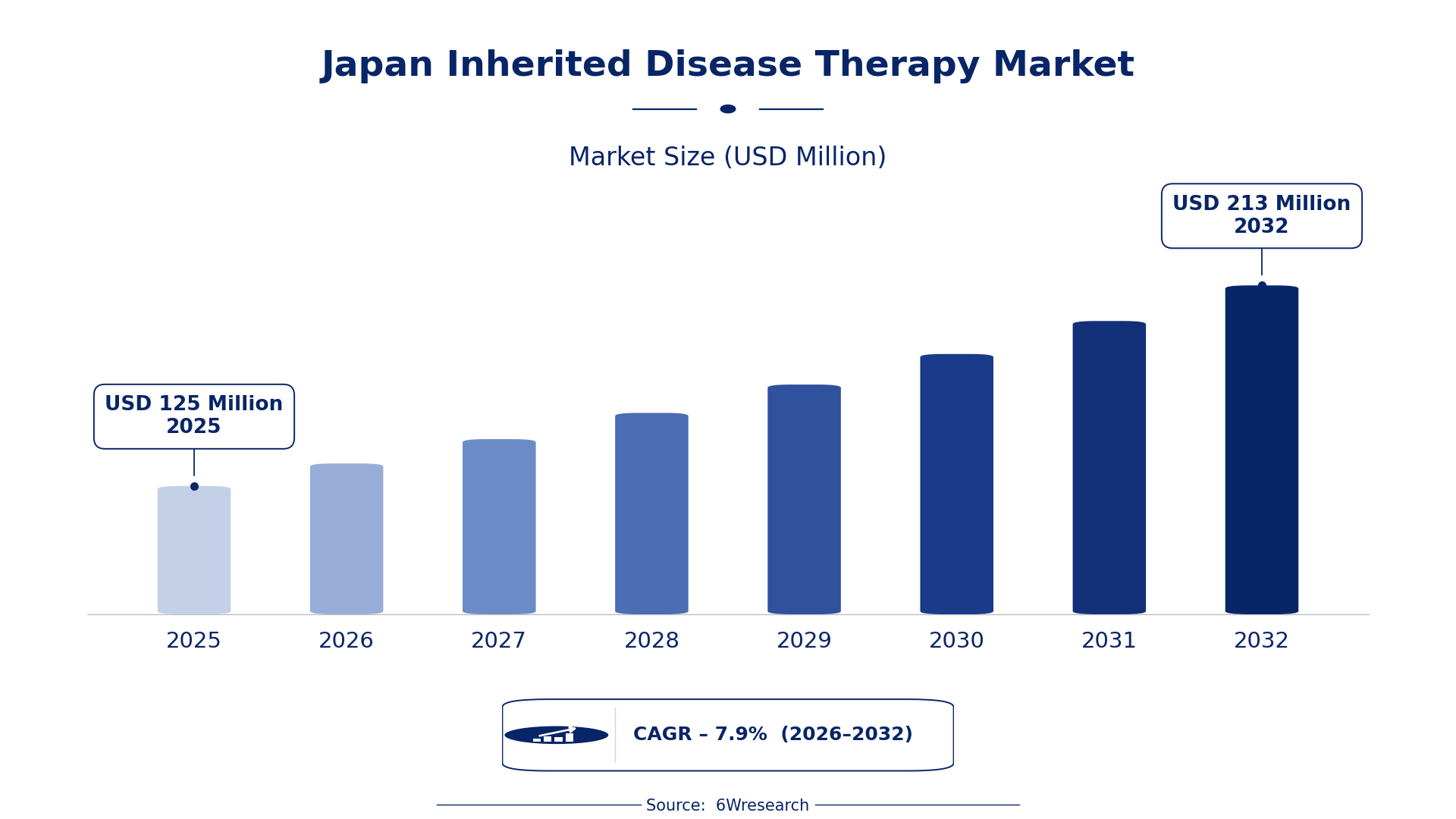
According to 6Wresearch internal database and industry insights, the Japan Inherited Disease Therapy Market was valued at USD 125 Million in 2025 and is projected to reach USD 213 Million by 2032, growing at a CAGR of approximately 7.9% during 2026–2032.
Japan Inherited Disease Therapy Market Highlights
| Report Metric | Details |
| Report Name | Japan Inherited Disease Therapy Market (2026-2032) |
| Market Size 2025 | USD 125 Million |
| Market Size 2032 | USD 213 Million |
| Absolute Growth 2025–2032 | USD 88 Million |
| CAGR 2026–2032 | 7.9% |
| Peak Annual Growth | 12.5% in 2032 |
| Forecast Period | 2026–2032 |
| Historical Data | 2022–2025 |
| Base Year | 2025 |
| Leading Therapy Type, 2025 | Gene Therapy (35% share) |
| Leading Genetic Target, 2025 | DNA Editing / Repair (47% share) |
| Leading Disease Type, 2025 | Cystic Fibrosis (42% share) |
| Leading Distribution Channel, 2025 | Specialized Hospitals (42% share) |
| Fastest-Growing Therapy Type | Enzyme Replacement (10.9% CAGR) |
| Fastest-Growing Genetic Target | Protein Supplementation (10.5% CAGR) |
| Fastest-Growing Disease Type | SCID (11.3% CAGR) |
| Fastest-Growing Distribution Channel | Biotech Distributors (10.4% CAGR) |
| Growing Sector | genetic disorder treatments |
| Key End Users | specialized hospitals, academic medical centers, pediatric clinics, biotech distributors |
Japan Inherited Disease Therapy Market Year-wise Growth Rate and Key Drivers (2022–2032)
This graph illustrates the annual growth rates of the market from 2022 to 2032, highlighting a steady upward trajectory and projected market expansion over the forecast period.
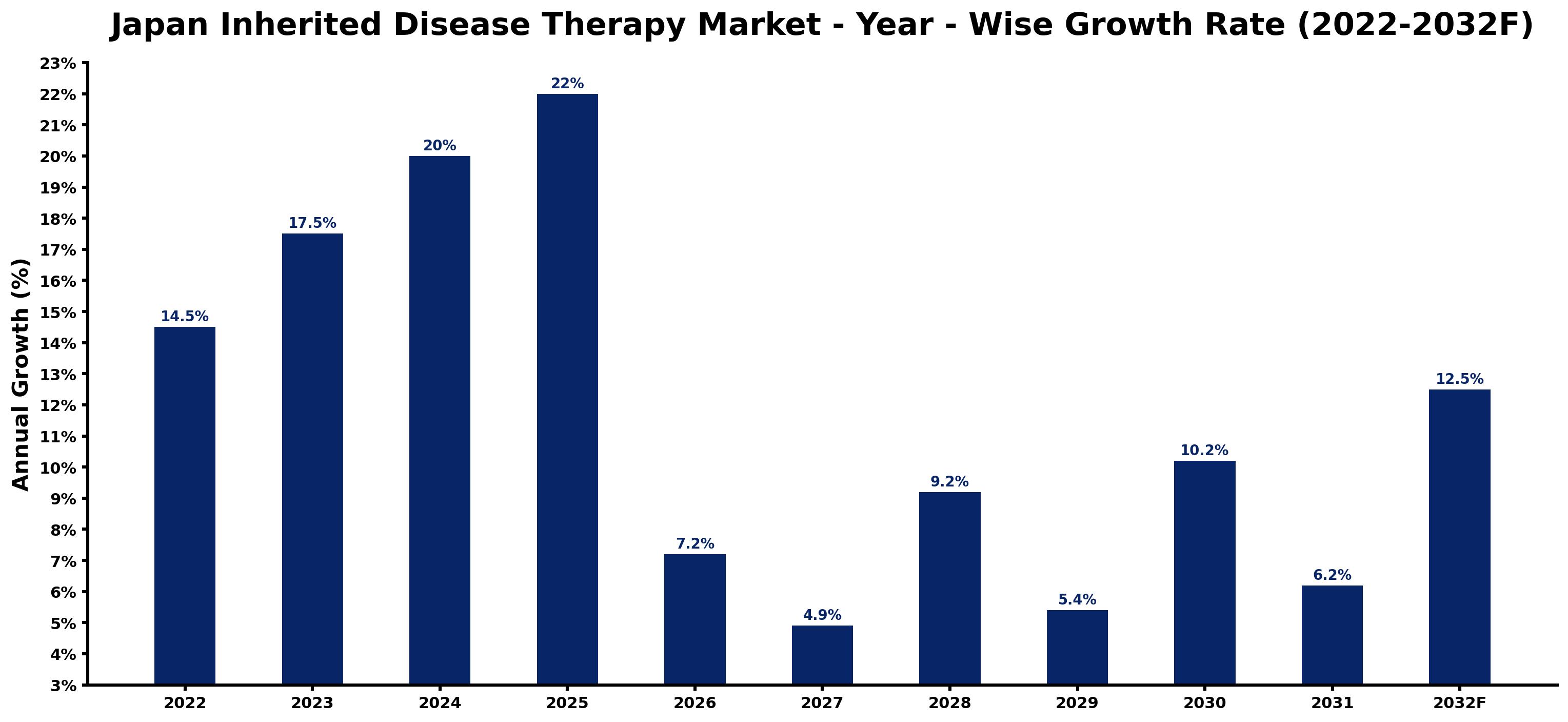
The table below sets out the estimated growth rate for each year and the main factor behind it.
| Year | Estimated Annual Growth (%) | Market Rationale |
| 2022 | 14.5 | The market showed steady growth, reflecting increased awareness of inherited diseases. |
| 2023 | 17.5 | Growth accelerated due to rising adoption of gene therapy in specialized hospitals. |
| 2024 | 20.0 | Demand surged as advancements in enzyme replacement therapies gained traction. |
| 2025 | 22.0 | The peak growth year saw investments in genetic research and treatment options. |
| 2026 | 7.2 | Growth is expected to slow as the market stabilises after rapid expansion. |
| 2027 | 4.9 | A further slowdown is projected as the market adjusts to new treatment protocols. |
| 2028 | 9.2 | Growth is expected to resume with renewed interest in RNA-based therapies and clinical trials. |
| 2029 | 5.4 | The market is projected to experience another slowdown as competition intensifies among providers. |
| 2030 | 10.2 | Growth is expected to pick up again, driven by improved access to therapies and funding. |
| 2031 | 6.2 | A slowdown is projected as the market matures and demand stabilises. |
| 2032 | 12.5 | The market is expected to accelerate again with new gene therapy approvals. |
Note: Market size estimations and growth projections presented in this report are based on 6Wresearch's proprietary forecasting methodology, utilizing the latest available industry data, government publications, and primary research inputs.
Japan Inherited Disease Therapy Market Synopsis
Inherited Disease Therapy encompasses advanced treatments for genetic disorders, including gene therapy and enzyme replacement. The market in Japan is expanding, propelled by specialised hospitals embracing these therapies and a robust emphasis on research from academic medical centres. In 2023, the Ministry of Health, Labour and Welfare introduced a programme to improve access to enzyme replacement therapies, which has stimulated demand. Consequently, the Japan Inherited Disease Therapy Market is anticipated to grow, addressing the needs of patients with conditions such as cystic fibrosis and spinal muscular atrophy.
Market Dynamics Impact Analysis (2026–2032)
| Factor | Type | Impact | Primary Segment Affected |
| Increasing adoption of gene therapy in specialized hospitals | Driver | High | Gene Therapy |
| Growing research initiatives in academic medical centers | Driver | High | RNA-Based Therapy |
| Rising prevalence of cystic fibrosis requiring specialized treatment | Opportunity | High | Cystic Fibrosis |
| Expansion of enzyme replacement therapy coverage under health insurance | Opportunity | Medium | Enzyme Replacement |
| High costs associated with advanced therapies limiting access | Restraint | High | Gene Therapy |
| Regulatory hurdles delaying the approval of new therapies | Restraint | Medium | RNA-Based Therapy |
| Limited awareness among patients about available treatments | Challenge | High | Cystic Fibrosis |
| Competition among specialized hospitals for treatment offerings | Challenge | Medium | Specialized Hospitals |
Evaluation of Drivers in Japan Inherited Disease Therapy Market (2026–2032)
Key forces behind demand, with the segment each one moves most, are listed below.
| Drivers | Primary Segment Affected | Why It Matters (Evidence) |
| Adoption of gene therapy for spinal muscular atrophy | Gene Therapy | As of 2023, specialized hospitals are increasingly implementing gene therapy, leading to higher patient enrolment. |
| Research initiatives in academic medical centers | RNA-Based Therapy | Academic medical centers are advancing RNA-based therapy studies, expanding treatment options for genetic disorders. |
| Rising incidence of cystic fibrosis | Cystic Fibrosis | Cystic fibrosis affects approximately 1 in 25,000 births in Japan, driving demand for specialized treatments. |
| Improved access to enzyme replacement therapies | Enzyme Replacement | A 2023 program enhances access, increasing patient treatment rates. |
| Funding for genetic research initiatives | Gene Therapy | The Japanese government allocated ¥5 billion for genetic research in 2023, boosting therapy development. |
Volumes grow on the back of increased adoption of gene therapy in specialized hospitals implementing advanced treatments for spinal muscular atrophy. The rising incidence of cystic fibrosis, affecting 1 in 25,000 births, drives demand for specialized treatments. Research institutions are advancing RNA-based therapy studies, expanding options for genetic disorders.
Evaluation of Restraints in Japan Inherited Disease Therapy Market
The following restraints limit how fast demand can grow.
| Market Restraint | Primary Segment Affected | Why It Matters (Evidence) |
| High costs of advanced therapies limiting patient access | Gene Therapy | The high costs associated with gene therapies restrict access for many patients, impacting treatment rates. |
| Regulatory hurdles delaying new therapy approvals | RNA-Based Therapy | Regulatory challenges can slow down the introduction of new RNA-based therapies to the market. |
| Limited awareness among patients about treatment options | Cystic Fibrosis | Many patients remain unaware of available therapies, hindering treatment uptake and market growth. |
| Competition among specialized hospitals for treatment offerings | Specialized Hospitals | Intense competition can lead to pricing pressures, affecting profitability for treatment providers. |
| Insufficient infrastructure for clinical trials | Enzyme Replacement | Limited clinical trial infrastructure can delay the development and approval of new therapies. |
Japan Inherited Disease Therapy Market Challenges
High costs for hospitals arise from limited availability of gene therapy, which can delay treatment for patients with inherited diseases by several months. Suppliers encounter difficulties in obtaining essential raw materials for advanced therapies, leading to potential disruptions in the supply chain that can extend product availability by up to six months. A lack of qualified professionals in genetic therapy fields hampers production efficiency, resulting in longer development timelines and increased costs for producers. Stringent regulatory requirements from the Pharmaceuticals and Medical Devices Agency can lengthen the approval process, impacting hospitals' ability to deliver timely care to patients.
Trends in the Japan Inherited Disease Therapy Market
Below are the shifts with the largest effect on the Japan Inherited Disease Therapy Market.
- Growing Focus on Genetic Research Initiatives: In 2023, the Japanese government allocated ¥5 billion for genetic research funding, which promotes advancements in inherited disease therapies. This funding supports the development of new treatments and technologies, broadening market potential.
- Surge in Gene Therapy Clinical Trials: The number of gene therapy clinical trials has increased dramatically, with over 200 trials registered in 2023. This trend highlights the growing interest in new treatments for genetic disorders, enhancing patient access to therapies.
- Expansion of Enzyme Replacement Therapy Coverage: In 2023, a programme was initiated to improve access to enzyme replacement therapies. This initiative is expected to significantly boost patient enrolment and treatment rates.
- Shift Towards Personalized Medicine: Specialised hospitals are increasingly adopting personalised approaches to inherited disease therapies, tailoring treatments to meet individual patient needs. In 2023, over 200 clinical trials were registered for inherited disease therapies, reflecting a growing emphasis on customization.
Investment Opportunities in the Japan Inherited Disease Therapy Market
Where to invest in the Japan Inherited Disease Therapy Market: the main openings are set out below.
- Rising Demand for Cystic Fibrosis Treatments: With cystic fibrosis affecting 1 in 25,000 births, there is a pressing need for specialized treatments. Investing in targeted therapies can address this gap and improve patient outcomes.
- Investment in Enzyme Replacement Therapy: A recent initiative improves access to enzyme replacement therapies, creating opportunities for suppliers to meet growing demand. This program is expected to increase treatment rates significantly.
- Growth in Clinical Trials for Gene Therapies: The increase in clinical trials for gene therapies presents opportunities for research institutions and biotech firms to collaborate and innovate in treatment development. In 2023, over 200 trials were registered.
- Focus on Pediatric Clinics for Genetic Disorders: The Japanese Pediatric Society supports initiatives for pediatric clinics to provide inherited disease therapies, highlighting an investment opportunity in this sector. This focus is essential for addressing the needs of younger patients.
Government Initiatives in the Japan Inherited Disease Therapy Market
The Clinical Trials Act, effective since 2018, establishes standards for conducting and disclosing clinical research, ensuring ethical practices in the development of inherited disease therapies. This law complements the Medical Care Act, which sets standards for hospitals, strengthening the regulatory framework for therapy providers and promoting patient safety.
The Pharmaceuticals and Medical Devices Agency (PMDA) is responsible for approving new therapies and ensuring compliance with established guidelines. The agency guarantees that inherited disease therapies meet safety and efficacy standards, facilitating patient access to new treatments while supporting sector innovation.
Future Insight of the Japan Inherited Disease Therapy Market
The introduction of new gene therapy programmes will greatly enhance treatment access by 2032, benefiting both buyers and suppliers. Increased funding for genetic research, including a budget of ¥5 billion in 2023, will drive advancements in inherited disease treatments. Improved collaboration between hospitals and academic centres will accelerate the development of RNA-based therapies. The establishment of a national registry for patients will promote better access to therapies and improve treatment outcomes.
Market Segmentation Analysis
Japan Inherited Disease Therapy Market report covers a detailed analysis of the following market segments:
By Therapy Type – Gene Therapy Leads, Enzyme Replacement Expected to Grow Fastest
According to Saurav Kr Singh, Senior Research Analyst at 6Wresearch, Gene Therapy accounted for 35% of the market by therapy type in 2025. Gene therapy leads the market due to its direct application in treating genetic disorders, with specialized hospitals increasingly adopting it for conditions like spinal muscular atrophy. This strong demand is supported by ongoing clinical trials and established treatment protocols, ensuring its prominent position in the market. The quickest growth will come from Enzyme Replacement, forecast to expand at a CAGR of 10.9% between 2026 and 2032. Enzyme replacement therapy is experiencing rapid growth as the Ministry of Health, Labour and Welfare has launched a program to enhance access to these treatments, ensuring they are covered under the Health Insurance Act. This initiative is expected to significantly increase patient access, further driving demand for enzyme replacement therapies. Suppliers should focus on expanding their enzyme replacement offerings to meet the rising demand driven by government initiatives.
By Genetic Target – DNA Editing / Repair Leads, Protein Supplementation Expected to Grow Fastest
DNA Editing / Repair took 47% of genetic target revenue in 2025, more than any other category. DNA editing and repair techniques dominate the market as they directly correct genetic mutations, which is crucial for effective treatment of inherited diseases. The established guidelines from the Pharmaceuticals and Medical Devices Agency further support the adoption of these advanced therapies, solidifying their market position. Protein Supplementation is projected to grow fastest, at a CAGR of 10.5% during 2026–2032. Protein supplementation is growing quickly as it indirectly supports enzyme function, particularly in conditions where direct therapies are still developing. The increasing focus on supportive treatments is likely to drive further investments in this area, contributing to its rapid expansion. Buyers may benefit from a wider range of supportive therapies as the market for protein supplementation expands.
By Disease Type – Cystic Fibrosis Leads, SCID Expected to Grow Fastest
The largest disease type category in 2025 was Cystic Fibrosis, at 42% of revenue. Cystic fibrosis represents the largest share as it requires specific treatment options, with a notable prevalence of approximately 1 in 25,000 births in Japan. The established treatment protocols in specialized hospitals ensure consistent demand for therapies targeting this condition, reinforcing its market leadership. Over 2026–2032, SCID is expected to post the fastest growth, at a CAGR of 11.3%. Severe combined immunodeficiency (SCID) is witnessing rapid growth due to its critical nature and the urgent need for effective treatments. The focus on developing targeted therapies for SCID is expected to attract significant research funding and clinical trials, further accelerating its market presence. Suppliers should prioritise the development of therapies for SCID to capitalise on the increasing urgency for effective treatment options.
By Distribution Channel – Specialized Hospitals Lead, Biotech Distributors Expected to Grow Fastest
With 42% of distribution channel revenue in 2025, Specialized Hospitals was the largest category. Specialized hospitals lead the market as they serve as primary treatment centres for inherited disease therapies, providing direct access to patients in need. Their established infrastructure and expertise make them essential for the delivery of advanced treatments, ensuring their dominant position in the market. Biotech Distributors are set to record the highest CAGR in this split, 10.4% over 2026–2032. Biotech distributors are experiencing the fastest growth as they facilitate access to therapies, bridging the gap between manufacturers and healthcare providers. The increasing complexity of therapies necessitates a robust distribution network to ensure timely patient access, driving their rapid expansion. Suppliers must strengthen partnerships with biotech distributors to enhance therapy accessibility in the market.
Key Attractiveness of the Report
- 10 Years of Market Numbers
- Historical Data Starting from 2022 to 2025
- Base Year 2025
- Forecast Data until 2032
- Key Performance Indicators Impacting the Market
- Major Upcoming Developments and Projects
Key Highlights of the Report:
- Japan Inherited Disease Therapy Market Outlook
- Market Size of Japan Inherited Disease Therapy Market, 2025
- Forecast of Japan Inherited Disease Therapy Market, 2032
- Historical Data and Forecast of Japan Inherited Disease Therapy Revenues & Volume for the Period 2022-2032F
- Japan Inherited Disease Therapy Market Trend Evolution
- Japan Inherited Disease Therapy Market Drivers and Challenges
- Japan Inherited Disease Therapy Price Trends
- Japan Inherited Disease Therapy Porter's Five Forces
- Japan Inherited Disease Therapy Industry Life Cycle
- Historical Data and Forecast of Japan Inherited Disease Therapy Market Revenues & Volume By Therapy Type for the Period 2022-2032F
- Historical Data and Forecast of Japan Inherited Disease Therapy Market Revenues & Volume By Gene Therapy for the Period 2022-2032F
- Historical Data and Forecast of Japan Inherited Disease Therapy Market Revenues & Volume By Enzyme Replacement for the Period 2022-2032F
- Historical Data and Forecast of Japan Inherited Disease Therapy Market Revenues & Volume By RNA-Based Therapy for the Period 2022-2032F
- Historical Data and Forecast of Japan Inherited Disease Therapy Market Revenues & Volume By Cell Therapy for the Period 2022-2032F
- Historical Data and Forecast of Japan Inherited Disease Therapy Market Revenues & Volume By Genetic Target for the Period 2022-2032F
- Historical Data and Forecast of Japan Inherited Disease Therapy Market Revenues & Volume By DNA Editing / Repair for the Period 2022-2032F
- Historical Data and Forecast of Japan Inherited Disease Therapy Market Revenues & Volume By Protein Supplementation for the Period 2022-2032F
- Historical Data and Forecast of Japan Inherited Disease Therapy Market Revenues & Volume By Splicing Correction for the Period 2022-2032F
- Historical Data and Forecast of Japan Inherited Disease Therapy Market Revenues & Volume By Stem Cell Use for the Period 2022-2032F
- Historical Data and Forecast of Japan Inherited Disease Therapy Market Revenues & Volume By Disease Type for the Period 2022-2032F
- Historical Data and Forecast of Japan Inherited Disease Therapy Market Revenues & Volume By Cystic Fibrosis, SCID for the Period 2022-2032F
- Historical Data and Forecast of Japan Inherited Disease Therapy Market Revenues & Volume By Lysosomal Disorders for the Period 2022-2032F
- Historical Data and Forecast of Japan Inherited Disease Therapy Market Revenues & Volume By Spinal Muscular Atrophy for the Period 2022-2032F
- Historical Data and Forecast of Japan Inherited Disease Therapy Market Revenues & Volume By Blood Disorders for the Period 2022-2032F
- Historical Data and Forecast of Japan Inherited Disease Therapy Market Revenues & Volume By Distribution Channel for the Period 2022-2032F
- Historical Data and Forecast of Japan Inherited Disease Therapy Market Revenues & Volume By Specialized Hospitals for the Period 2022-2032F
- Historical Data and Forecast of Japan Inherited Disease Therapy Market Revenues & Volume By Biotech Distributors for the Period 2022-2032F
- Historical Data and Forecast of Japan Inherited Disease Therapy Market Revenues & Volume By Pediatric Clinics for the Period 2022-2032F
- Historical Data and Forecast of Japan Inherited Disease Therapy Market Revenues & Volume By Academic Medical Centers for the Period 2022-2032F
- Japan Inherited Disease Therapy Import Export Trade Statistics
- Market Opportunity Assessment By Therapy Type
- Market Opportunity Assessment By Genetic Target
- Market Opportunity Assessment By Disease Type
- Market Opportunity Assessment By Distribution Channel
- Japan Inherited Disease Therapy Top Companies Market Share
- Japan Inherited Disease Therapy Competitive Benchmarking By Technical and Operational Parameters
- Japan Inherited Disease Therapy Company Profiles
- Japan Inherited Disease Therapy Key Strategic Recommendations
Market Covered
The report covers the following segments.
By Therapy Type
- Gene Therapy
- Enzyme Replacement
- RNA-Based Therapy
- Cell Therapy
By Genetic Target
- DNA Editing / Repair
- Protein Supplementation
- Splicing Correction
- Stem Cell Use
By Disease Type
- Cystic Fibrosis
- SCID
- Lysosomal Disorders
- Spinal Muscular Atrophy
- Blood Disorders
By Distribution Channel
- Specialized Hospitals
- Biotech Distributors
- Pediatric Clinics
- Academic Medical Centers































