Japan Inherited Disease Treatment Market Size & Growth Rate
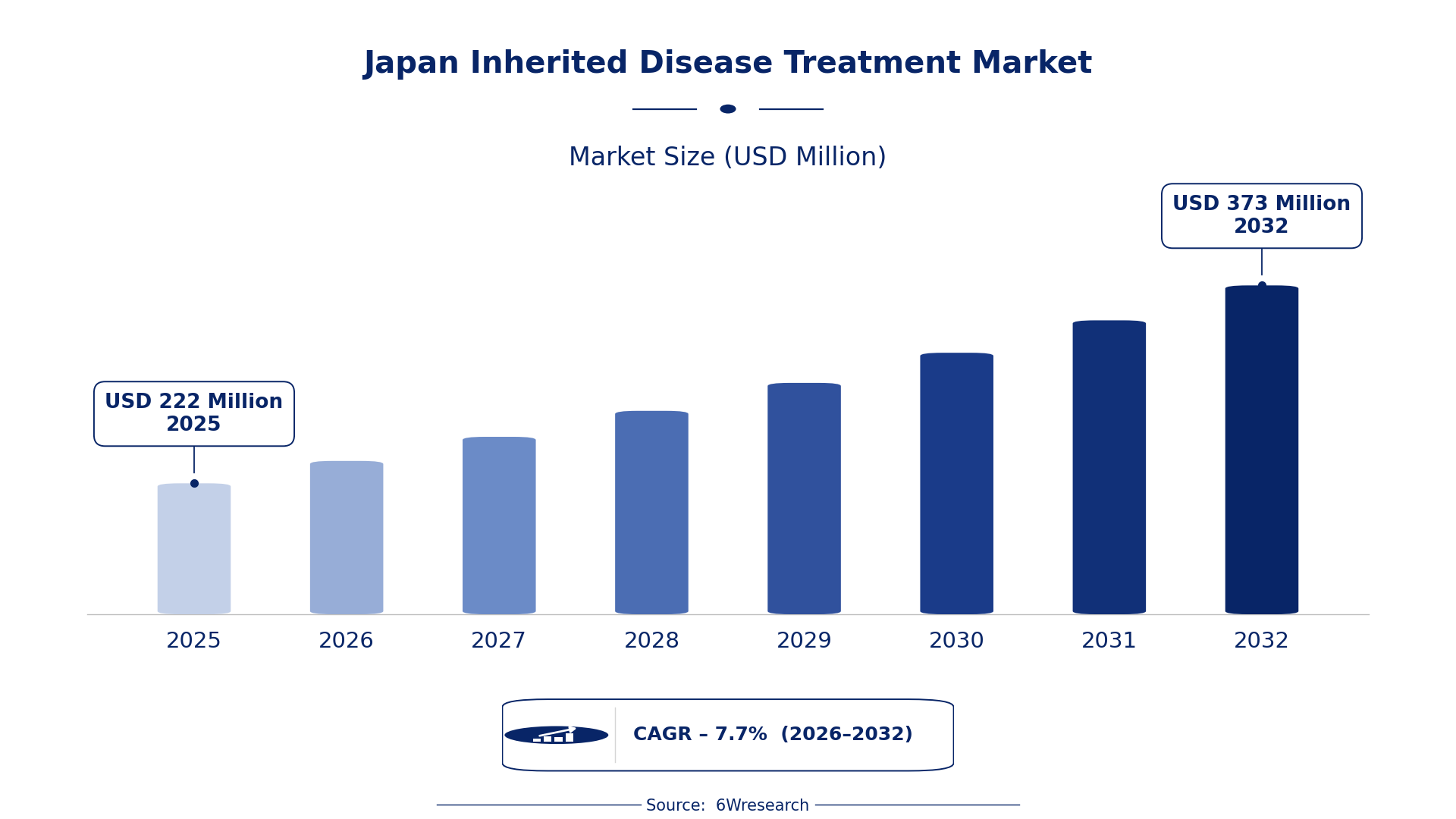
According to 6Wresearch internal database and industry insights, the Japan Inherited Disease Treatment Market was valued at USD 222 Million in 2025 and is projected to reach USD 373 Million by 2032, growing at a CAGR of approximately 7.7% during 2026–2032.
Japan Inherited Disease Treatment Market Highlights
| Report Metric | Details |
| Report Name | Japan Inherited Disease Treatment Market (2026-2032) |
| Market Size 2025 | USD 222 Million |
| Market Size 2032 | USD 373 Million |
| Absolute Growth 2025–2032 | USD 151 Million |
| CAGR 2026–2032 | 7.7% |
| Peak Annual Growth | 8.5% in 2028 |
| Forecast Period | 2026–2032 |
| Historical Data | 2022–2025 |
| Base Year | 2025 |
| Leading Treatment Type, 2025 | Disease-Specific Drugs (38% share) |
| Leading Disease Area, 2025 | Hemophilia (40% share) |
| Leading Intervention Type, 2025 | Symptom Control (45% share) |
| Leading Distribution Channel, 2025 | Hospital Pharmacies (34% share) |
| Fastest-Growing Treatment Type | Supportive Therapy (10.7% CAGR) |
| Fastest-Growing Disease Area | PKU (9.9% CAGR) |
| Fastest-Growing Intervention Type | Early-Onset Interventions (11.3% CAGR) |
| Fastest-Growing Distribution Channel | Home Healthcare Services (10.1% CAGR) |
| Growing Sector | Inherited Disease Treatment |
| Key End Users | Healthcare providers, patients, research institutions |
Japan Inherited Disease Treatment Market Year-wise Growth Rate and Key Drivers (2022–2032)
This graph illustrates the annual growth rates of the market from 2022 to 2032, highlighting a steady upward trajectory and projected market expansion over the forecast period.
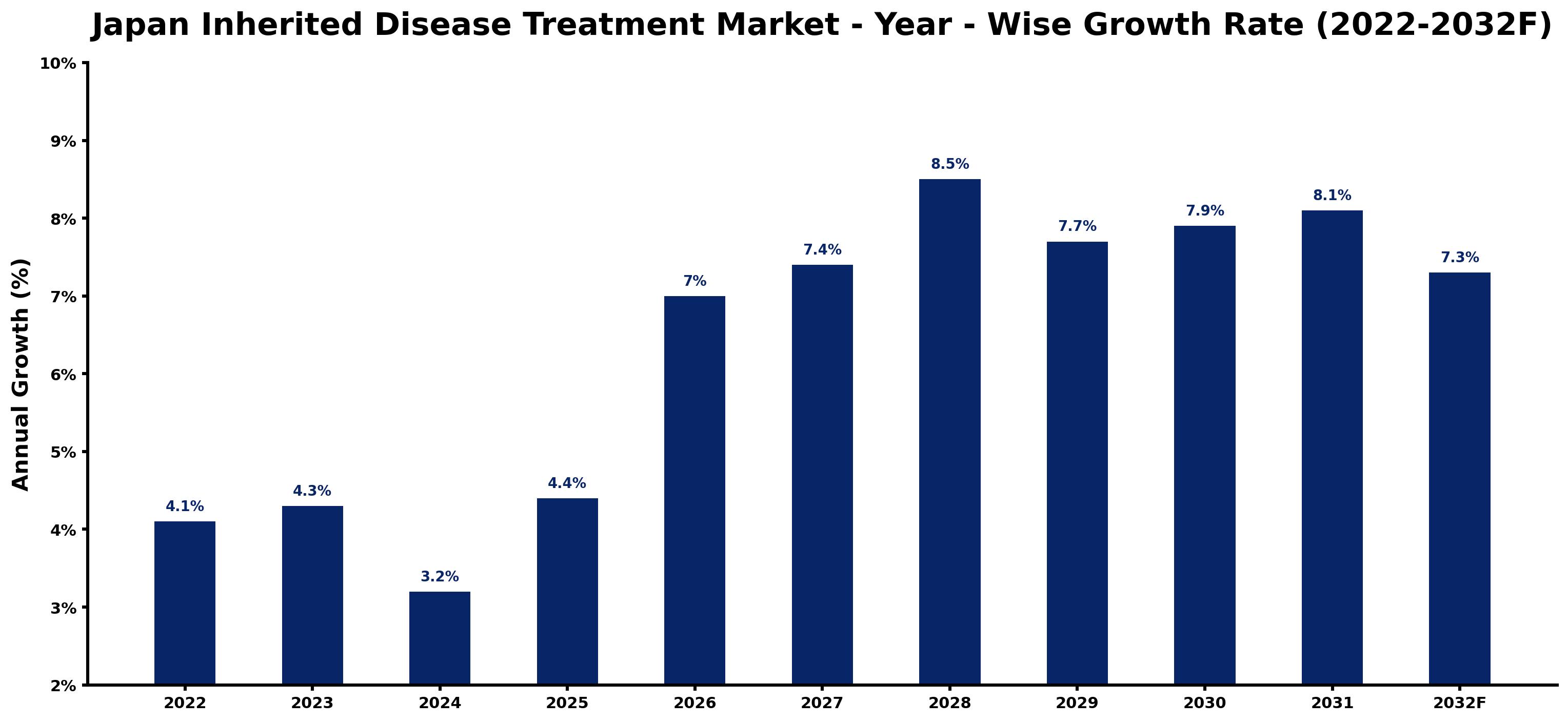
Below, each year's estimated growth is shown next to the factor that most influenced it.
| Year | Estimated Annual Growth (%) | Market Rationale |
| 2022 | 4.1 | The market experienced steady growth due to increasing awareness of inherited diseases. |
| 2023 | 4.3 | Demand rose as healthcare providers expanded treatment options for genetic disorders. |
| 2024 | 3.2 | Growth slowed slightly as market adjustments occurred following previous increases. |
| 2025 | 4.4 | The market grew faster due to improved treatment protocols and patient access. |
| 2026 | 7.0 | Growth is expected to accelerate as new therapies enter the market, attracting more patients. |
| 2027 | 7.4 | Demand will continue to rise with advancements in genetic research and treatment. |
| 2028 | 8.5 | The peak growth year will be driven by substantial investments in genetic therapies. |
| 2029 | 7.7 | Growth is projected to slow as the market adjusts to the peak demand levels seen previously. |
| 2030 | 7.9 | Demand will increase again due to new healthcare initiatives and treatment options. |
| 2031 | 8.1 | The market is expected to continue growing as patient awareness and diagnosis improve. |
| 2032 | 7.3 | Growth will slow slightly as the market stabilises after years of rapid expansion. |
Note: Market size estimations and growth projections presented in this report are based on 6Wresearch's proprietary forecasting methodology, utilizing the latest available industry data, government publications, and primary research inputs.
Japan Inherited Disease Treatment Market Synopsis
Inherited Disease Treatment encompasses therapies designed to manage genetic disorders, focusing on conditions like hemophilia and metabolic disorders. The Japan Inherited Disease Treatment Market is expanding due to rising patient diagnoses, advancements in treatment options, and supportive healthcare policies. In 2022, approximately 20,000 patients were diagnosed with hemophilia, driving demand for effective therapies. New government initiatives, including a program launched in 2023, are improving genetic testing services, further boosting market growth.
Market Dynamics Impact Analysis (2026–2032)
| Factor | Type | Impact | Primary Segment Affected |
| Rising patient diagnoses of genetic disorders | Driver | High | Hemophilia |
| Advancements in treatment protocols | Driver | High | Disease-Specific Drugs |
| Growing support for genetic research initiatives | Opportunity | High | Supportive Therapy |
| Increasing demand for home healthcare services | Opportunity | Medium | Home Healthcare Services |
| Limited access to specialty hospitals | Restraint | High | Specialty Hospitals |
| High costs associated with disease-specific drugs | Restraint | Medium | Disease-Specific Drugs |
| Insufficient healthcare infrastructure in rural areas | Challenge | High | Home Healthcare Services |
| Regulatory hurdles for new treatment approvals | Challenge | Medium | Disease-Specific Drugs |
Evaluation of Drivers in Japan Inherited Disease Treatment Market (2026–2032)
The following drivers explain most of the expected growth.
| Drivers | Primary Segment Affected | Why It Matters (Evidence) |
| Increasing prevalence of hemophilia | Hemophilia | Approximately 20,000 patients diagnosed in Japan drive demand for effective treatments. |
| Advancements in genetic therapies | Disease-Specific Drugs | New therapies improve treatment efficacy, attracting more patients requiring specific medications. |
| Support from healthcare providers | Supportive Therapy | Healthcare providers are expanding treatment options, leading to increased patient access and demand. |
| Government funding for genetic research | Home Healthcare Services | The government allocated ¥1 billion for research, improving treatment options and patient support. |
| Growing awareness of inherited diseases | Symptom Control | Increased patient awareness leads to higher demand for symptom management therapies. |
Several shifts outside the market lift sales. The increasing prevalence of hemophilia, with approximately 20,000 patients diagnosed, drives demand for effective therapies. New therapies improve efficacy, attracting more patients who require specific medications. Support from healthcare providers broadens treatment options, increasing patient access. Funding of ¥1 billion for research enhances treatment options and patient support. Awareness campaigns led by the Japanese Society for Human Genetics lead to higher demand for symptom management therapies, further boosting market growth.
Evaluation of Restraints in Japan Inherited Disease Treatment Market
The following restraints limit how fast demand can grow.
| Market Restraint | Primary Segment Affected | Why It Matters (Evidence) |
| Limited access to specialty hospitals | Specialty Hospitals | Over 300 specialty hospitals exist, but access is uneven across regions, affecting patient care. |
| High costs associated with disease-specific drugs | Disease-Specific Drugs | Patients face out-of-pocket expenses averaging over ¥1 million annually, limiting access to necessary treatments. |
| Insufficient healthcare infrastructure in rural areas | Home Healthcare Services | Rural regions lack adequate facilities, which affects patient access to essential healthcare services. |
| Regulatory hurdles for new treatment approvals | Disease-Specific Drugs | Stringent regulations delay the introduction of new therapies, impacting patient access. |
| Limited awareness of inherited diseases among the public | Symptom Control | Public knowledge gaps hinder early diagnosis and treatment, affecting overall market growth. |
Japan Inherited Disease Treatment Market Challenges
Buyers face high costs for inherited disease treatments, with some therapies exceeding ¥1 million annually, which strains their financial resources. Regulatory hurdles from the Ministry of Health, Labour and Welfare delay access to new therapies, extending treatment initiation times for patients. A lack of skilled professionals, particularly in genetic counselling, complicates care for over 5,000 individuals with metabolic disorders, affecting their management strategies. Outdated genetic testing technology leads to misdiagnoses, resulting in longer treatment delays for affected individuals, which can worsen their health outcomes.
Trends in the Japan Inherited Disease Treatment Market
The shifts below are changing how Japan Inherited Disease Treatment Market products are bought and supplied.
- Shift towards Home Healthcare Services: In 2023, the demand for home healthcare services surged, with a 10.1% growth rate. This shift reflects the need for convenient patient management, especially in rural areas.
- Increase in Genetic Testing Services: The launch of a new government program in 2023 improved genetic testing services, aiming to enhance early diagnosis rates for inherited diseases. This initiative is expected to benefit thousands of patients.
- Focus on Symptom Control: The emphasis on symptom control has grown, particularly for hemophilia patients. In 2022, 15% of muscular dystrophy patients received surgical interventions, highlighting the need for effective management.
- Rising Awareness of Inherited Diseases: Since 2022, awareness campaigns led by the Japanese Society for Human Genetics have increased public knowledge of genetic disorders, contributing to higher diagnosis rates.
Investment Opportunities in the Japan Inherited Disease Treatment Market
The following areas offer the clearest openings for investors and suppliers in the Japan Inherited Disease Treatment Market.
- Partnerships with Specialty Hospitals: Now is an ideal time for partnerships with specialty hospitals focusing on genetic disorders. Collaboration can improve service offerings and patient access.
- Investment in Genetic Research: The Japanese government allocated ¥1 billion for genetic research, creating an opportunity for investment in new therapies and treatments.
- Expansion of Home Healthcare Services: With a growing demand for home healthcare, suppliers can invest in services that support ongoing patient management, especially in underserved regions.
- Development of Dietary Management Solutions: The need for dietary management solutions for conditions like PKU is pressing, with over 5,000 patients requiring such services in Japan.
Government Initiatives in the Japan Inherited Disease Treatment Market
The Medical Care Act of 1948 establishes standards for hospitals and clinics, ensuring quality for inherited disease treatments. Subsequent measures, such as the Long-Term Care Insurance Act of 1997, provide funding for nursing care and support services, improving access to necessary treatments.
The Ministry of Health, Labour and Welfare oversees the implementation of healthcare policies, approving funding for research initiatives and genetic testing services. In 2023, the ministry supported a program aimed at improving access to genetic counseling services across Japan.
Future Insight of the Japan Inherited Disease Treatment Market
New government programmes aimed at enhancing genetic testing services will improve patient access by 2032, benefiting both buyers and suppliers. Updated clinical guidelines for inherited disease treatment will be implemented across over 300 specialty hospitals, ensuring consistent care. Research funding of ¥1 billion allocated for inherited diseases will drive advancements in treatment options. Increased awareness campaigns by professional societies will improve understanding and management of genetic disorders, ultimately enhancing patient outcomes.
Market Segmentation Analysis
Japan Inherited Disease Treatment Market report covers a detailed analysis of the following market segments:
By Treatment Type – Disease-Specific Drugs Lead, Supportive Therapy Expected to Grow Fastest
According to Saurav Kr Singh, Senior Research Analyst at 6Wresearch, Disease-Specific Drugs took 38% of treatment type revenue in 2025, more than any other category. Disease-specific drugs dominate the market as they are essential for effectively treating inherited conditions like hemophilia, which affects around 20,000 patients in Japan. The presence of over 300 specialty hospitals dedicated to genetic disorders underscores the robust demand for these targeted therapies. Supportive Therapy is set to record the highest CAGR in this split, 10.7% over 2026–2032. Supportive therapy is rapidly growing due to its critical role in managing symptoms and enhancing the quality of life for patients, particularly those with chronic conditions like PKU. Recent government initiatives aimed at improving genetic testing services are expected to further accelerate this segment's growth. Suppliers should focus on developing supportive care solutions to meet the rising demand in the market.
By Disease Area – Hemophilia Leads, PKU Expected to Grow Fastest
In 2025, Hemophilia led the disease area split with a 40% share. Hemophilia leads the market as it receives considerable attention from healthcare providers and researchers, reflecting its significant impact on patients' lives. The updated clinical guidelines for hemophilia treatment in 2023 demonstrate a continued commitment to enhancing care options for this condition. Over 2026–2032, PKU is expected to post the fastest growth, at a CAGR of 9.9%. PKU is the fastest-growing area, driven by the need for specific dietary management strategies for over 5,000 patients in Japan. The increasing prevalence of metabolic disorders highlights the urgent requirement for tailored treatment solutions. Buyers can anticipate improved access to specialised treatments for metabolic disorders in the near future.
By Intervention Type – Symptom Control Leads, Early-Onset Interventions Expected to Grow Fastest
With 45% of intervention type revenue in 2025, Symptom Control was the largest category. Symptom control is the leading intervention type due to its fundamental role in managing inherited diseases, allowing patients to cope effectively with their conditions. This focus is crucial for improving overall patient outcomes and enhancing their quality of life. The quickest growth will come from Early-Onset Interventions, forecast to expand at a CAGR of 11.3% between 2026 and 2032. Early-onset interventions are gaining traction as they are vital for managing genetic disorders from birth, enabling timely treatment and better long-term health outcomes. This proactive approach is increasingly acknowledged in clinical practice. Suppliers must prioritise early intervention strategies to align with modern treatment approaches.
By Distribution Channel – Hospital Pharmacies Lead, Home Healthcare Services Expected to Grow Fastest
Hospital Pharmacies held 34% of the Japan Inherited Disease Treatment Market by distribution channel in 2025. Hospital pharmacies are the primary distribution channel as they serve as the main source for dispensing essential medications to patients with inherited diseases. Their established presence in healthcare facilities ensures consistent access to necessary treatments. Home Healthcare Services are projected to grow fastest, at a CAGR of 10.1% during 2026–2032. Home healthcare services are rapidly growing, reflecting the increasing demand for ongoing patient support and management outside of traditional hospital settings. This shift towards home-based care is driven by patient preferences for convenience and comfort. Providers should consider expanding their offerings to include home healthcare solutions to capture this emerging market.
Key Attractiveness of the Report
- 10 Years of Market Numbers
- Historical Data Starting from 2022 to 2025
- Base Year 2025
- Forecast Data until 2032
- Key Performance Indicators Impacting the Market
- Major Upcoming Developments and Projects
Key Highlights of the Report:
- Japan Inherited Disease Treatment Market Outlook
- Market Size of Japan Inherited Disease Treatment Market, 2025
- Forecast of Japan Inherited Disease Treatment Market, 2032
- Historical Data and Forecast of Japan Inherited Disease Treatment Revenues & Volume for the Period 2022-2032F
- Japan Inherited Disease Treatment Market Trend Evolution
- Japan Inherited Disease Treatment Market Drivers and Challenges
- Japan Inherited Disease Treatment Price Trends
- Japan Inherited Disease Treatment Porter's Five Forces
- Japan Inherited Disease Treatment Industry Life Cycle
- Historical Data and Forecast of Japan Inherited Disease Treatment Market Revenues & Volume By Treatment Type for the Period 2022-2032F
- Historical Data and Forecast of Japan Inherited Disease Treatment Market Revenues & Volume By Supportive Therapy for the Period 2022-2032F
- Historical Data and Forecast of Japan Inherited Disease Treatment Market Revenues & Volume By Disease-Specific Drugs for the Period 2022-2032F
- Historical Data and Forecast of Japan Inherited Disease Treatment Market Revenues & Volume By Surgical Treatment for the Period 2022-2032F
- Historical Data and Forecast of Japan Inherited Disease Treatment Market Revenues & Volume By Lifestyle Management for the Period 2022-2032F
- Historical Data and Forecast of Japan Inherited Disease Treatment Market Revenues & Volume By Disease Area for the Period 2022-2032F
- Historical Data and Forecast of Japan Inherited Disease Treatment Market Revenues & Volume By Muscular / Metabolic for the Period 2022-2032F
- Historical Data and Forecast of Japan Inherited Disease Treatment Market Revenues & Volume By Hemophilia, PKU for the Period 2022-2032F
- Historical Data and Forecast of Japan Inherited Disease Treatment Market Revenues & Volume By Heart / Structural Issues for the Period 2022-2032F
- Historical Data and Forecast of Japan Inherited Disease Treatment Market Revenues & Volume By Diet / Activity Monitoring for the Period 2022-2032F
- Historical Data and Forecast of Japan Inherited Disease Treatment Market Revenues & Volume By Intervention Type for the Period 2022-2032F
- Historical Data and Forecast of Japan Inherited Disease Treatment Market Revenues & Volume By Symptom Control for the Period 2022-2032F
- Historical Data and Forecast of Japan Inherited Disease Treatment Market Revenues & Volume By Replacement or Blocking for the Period 2022-2032F
- Historical Data and Forecast of Japan Inherited Disease Treatment Market Revenues & Volume By Early-Onset Interventions for the Period 2022-2032F
- Historical Data and Forecast of Japan Inherited Disease Treatment Market Revenues & Volume By Mild Genetic Disorders for the Period 2022-2032F
- Historical Data and Forecast of Japan Inherited Disease Treatment Market Revenues & Volume By Distribution Channel for the Period 2022-2032F
- Historical Data and Forecast of Japan Inherited Disease Treatment Market Revenues & Volume By Home Healthcare Services for the Period 2022-2032F
- Historical Data and Forecast of Japan Inherited Disease Treatment Market Revenues & Volume By Hospital Pharmacies for the Period 2022-2032F
- Historical Data and Forecast of Japan Inherited Disease Treatment Market Revenues & Volume By Specialty Hospitals for the Period 2022-2032F
- Historical Data and Forecast of Japan Inherited Disease Treatment Market Revenues & Volume By Clinical Nutritionists for the Period 2022-2032F
- Japan Inherited Disease Treatment Import Export Trade Statistics
- Market Opportunity Assessment By Treatment Type
- Market Opportunity Assessment By Disease Area
- Market Opportunity Assessment By Intervention Type
- Market Opportunity Assessment By Distribution Channel
- Japan Inherited Disease Treatment Top Companies Market Share
- Japan Inherited Disease Treatment Competitive Benchmarking By Technical and Operational Parameters
- Japan Inherited Disease Treatment Company Profiles
- Japan Inherited Disease Treatment Key Strategic Recommendations
Market Covered
The study includes the following segmentation.
By Treatment Type
- Supportive Therapy
- Disease-Specific Drugs
- Surgical Treatment
- Lifestyle Management
By Disease Area
- Muscular / Metabolic
- Hemophilia
- PKU
- Heart / Structural Issues
- Diet / Activity Monitoring
By Intervention Type
- Symptom Control
- Replacement or Blocking
- Early-Onset Interventions
- Mild Genetic Disorders
By Distribution Channel
- Home Healthcare Services
- Hospital Pharmacies
- Specialty Hospitals
- Clinical Nutritionists































