Japan Inherited Enzyme Deficiency Market Size & Growth Rate
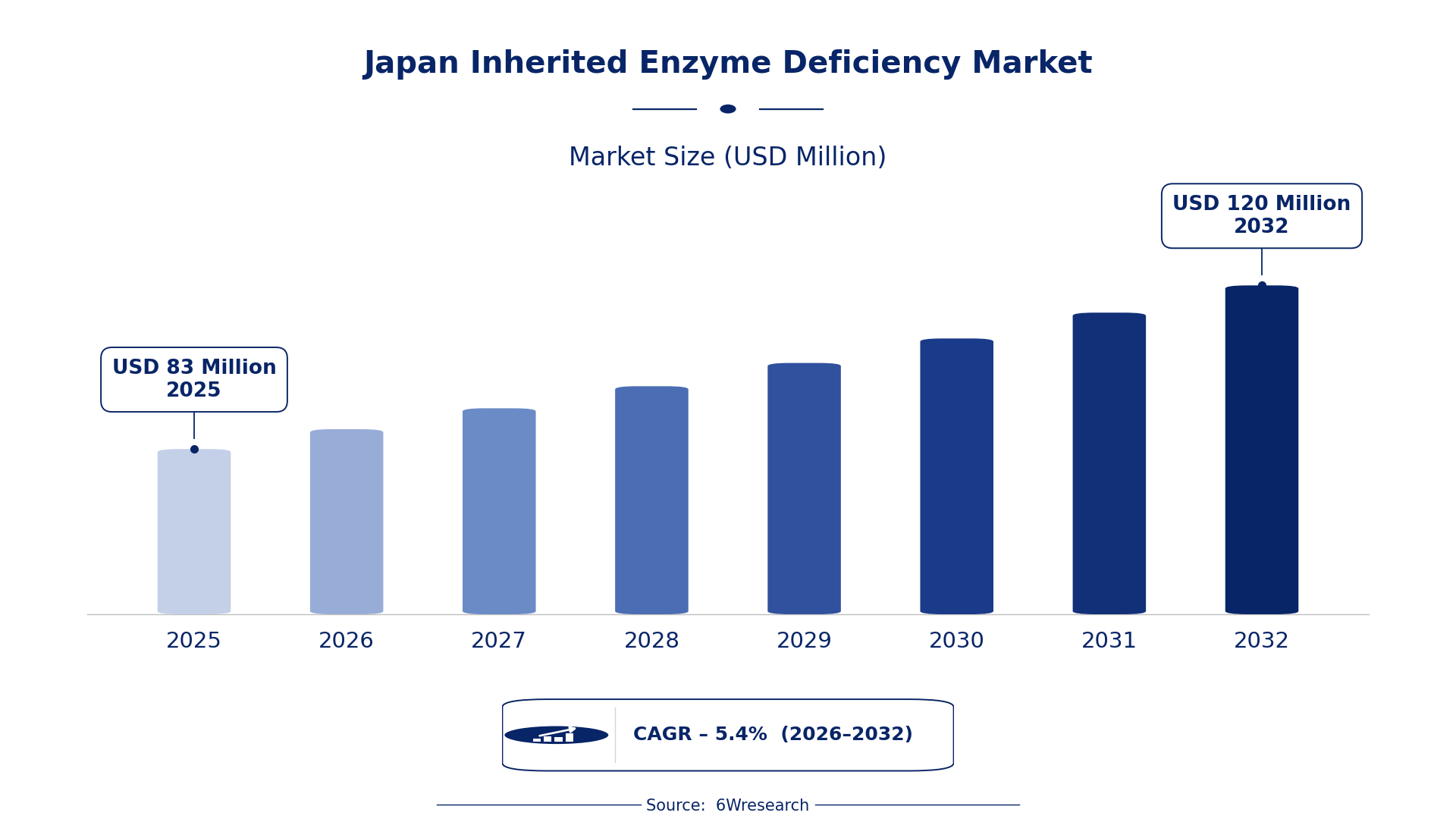
According to 6Wresearch internal database and industry insights, the Japan Inherited Enzyme Deficiency Market was valued at USD 83 Million in 2025 and is projected to reach USD 120 Million by 2032, growing at a CAGR of approximately 5.4% during 2026–2032.
Japan Inherited Enzyme Deficiency Market Highlights
| Report Metric | Details |
| Report Name | Japan Inherited Enzyme Deficiency Market (2026-2032) |
| Market Size 2025 | USD 83 Million |
| Market Size 2032 | USD 120 Million |
| Absolute Growth 2025–2032 | USD 37 Million |
| CAGR 2026–2032 | 5.4% |
| Peak Annual Growth | 6.5% in 2028 |
| Forecast Period | 2026–2032 |
| Historical Data | 2022–2025 |
| Base Year | 2025 |
| Leading Enzyme Deficiency, 2025 | G6PD Deficiency (47% share) |
| Leading Disease Name, 2025 | Hemolytic Anemia (53% share) |
| Leading Treatment Strategy, 2025 | ERT / Gene Therapy (48% share) |
| Leading Distribution Channel, 2025 | Genetic Clinics (41% share) |
| Fastest-Growing Enzyme Deficiency | Fabry Disease (6.7% CAGR) |
| Fastest-Growing Disease Name | Lysosomal Storage (7.1% CAGR) |
| Fastest-Growing Distribution Channel | Pediatric Nutrition Centers (6.8% CAGR) |
| Growing Sector | Healthcare for genetic disorders |
| Key End Users | Healthcare providers, patients, genetic clinics, pediatric nutrition centers |
Japan Inherited Enzyme Deficiency Market Year-wise Growth Rate and Key Drivers (2022–2032)
This graph illustrates the annual growth rates of the market from 2022 to 2032, highlighting a steady upward trajectory and projected market expansion over the forecast period.
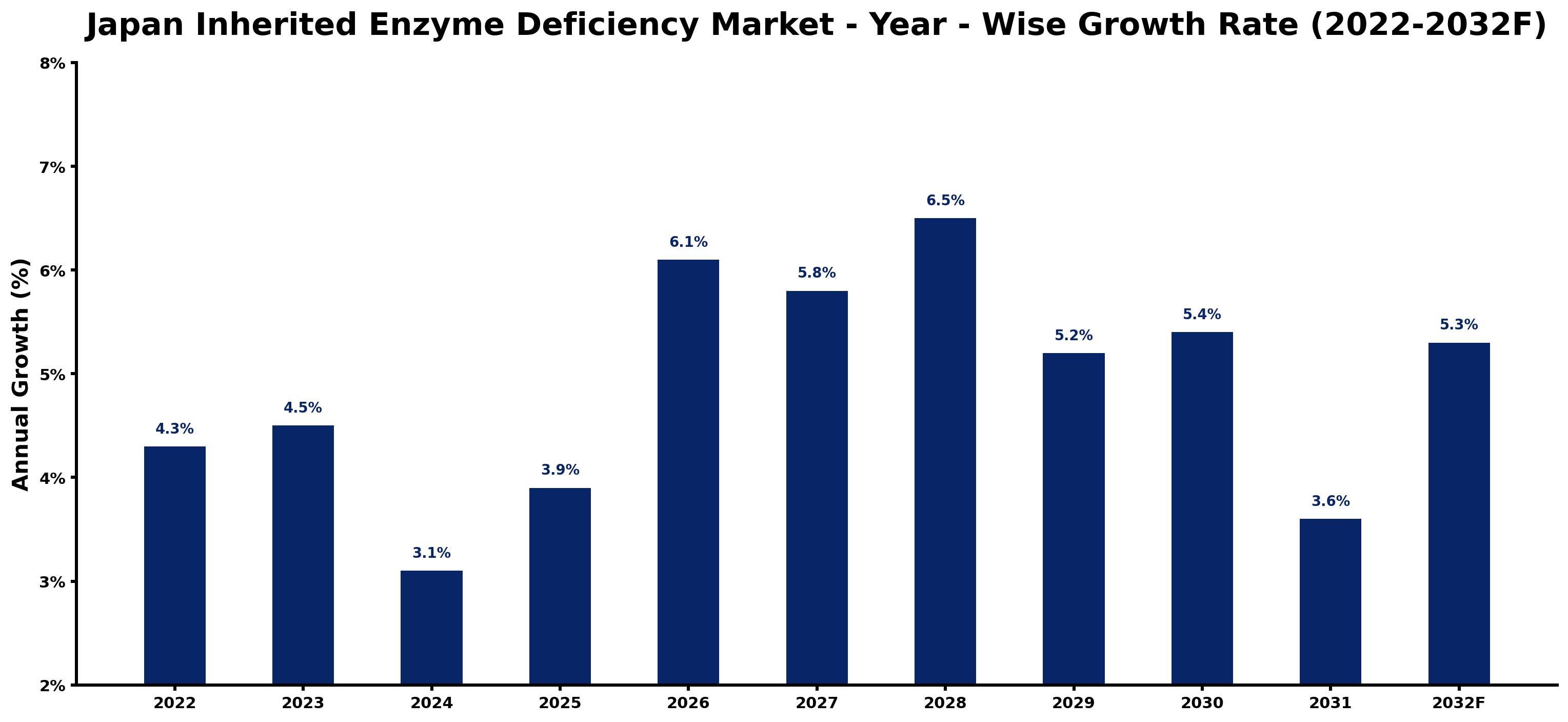
Each row of the following table gives one year's estimated growth and the event or demand shift that explains it.
| Year | Estimated Annual Growth (%) | Market Rationale |
| 2022 | 4.3 | The market experienced steady growth due to increased awareness of enzyme deficiencies. |
| 2023 | 4.5 | Demand rose as healthcare providers improved diagnostic capabilities and treatment options. |
| 2024 | 3.1 | Growth slowed as competition among treatment strategies intensified. |
| 2025 | 3.9 | Healthcare investments in enzyme therapies boosted market performance. |
| 2026 | 6.1 | Rising patient numbers and treatment access are expected to increase demand. |
| 2027 | 5.8 | Market growth will slow due to saturation in certain treatment segments. |
| 2028 | 6.5 | The introduction of new therapies will lead to a peak in demand. |
| 2029 | 5.2 | Growth will decelerate as market adjustments occur post-peak. |
| 2030 | 5.4 | Demand will stabilise as treatment options become more established. |
| 2031 | 3.6 | Market growth will slow due to regulatory changes affecting new therapies. |
| 2032 | 5.3 | Increased focus on patient education and support services will drive growth. |
Note: Market size estimations and growth projections presented in this report are based on 6Wresearch's proprietary forecasting methodology, utilizing the latest available industry data, government publications, and primary research inputs.
Japan Inherited Enzyme Deficiency Market Synopsis
Inherited enzyme deficiencies are genetic disorders caused by the absence or malfunction of specific enzymes, diagnosed through genetic testing and biochemical assays. The Japan Inherited Enzyme Deficiency Market is growing, driven by around 1,500 diagnoses of G6PD Deficiency in 2022 and advancements in treatment options. Improved diagnostic techniques and government initiatives supporting enzyme deficiency management are propelling market growth.
Market Dynamics Impact Analysis (2026–2032)
| Factor | Type | Impact | Primary Segment Affected |
| Rising patient diagnoses due to improved screening methods | Driver | High | G6PD Deficiency |
| Advancements in enzyme replacement therapies increasing treatment options | Driver | High | Fabry Disease |
| Growing demand for specialized treatment facilities | Opportunity | Medium | Pediatric Nutrition Centers |
| Increased investment in rare disease research and development | Opportunity | High | Genetic Clinics |
| Limited awareness among the general population about enzyme deficiencies | Restraint | Medium | Lysosomal Storage |
| High costs associated with enzyme replacement therapies | Restraint | High | Gaucher Disease |
| Shortage of trained healthcare professionals for enzyme deficiency management | Challenge | High | Hospital-Based Delivery |
| Regulatory hurdles delaying the introduction of new therapies | Challenge | Medium | IV Enzyme Therapy |
Evaluation of Drivers in Japan Inherited Enzyme Deficiency Market (2026–2032)
Demand rests on the following drivers, each shown with the segment it touches most.
| Drivers | Primary Segment Affected | Why It Matters (Evidence) |
| Increased awareness of enzyme deficiencies among healthcare providers | G6PD Deficiency | This awareness leads to earlier diagnosis and treatment, with approximately 1,500 patients diagnosed in 2022. |
| Advancements in enzyme replacement therapies | Fabry Disease | These therapies improve patient outcomes, affecting around 1 in 40,000 males in Japan. |
| Growing number of genetic clinics providing specialized care | Genetic Clinics | The Tokyo Metropolitan area has the highest concentration of these clinics, improving access to treatment. |
| Government funding for rare disease research | Pediatric Nutrition Centers | In 2023, the government allocated ¥1 billion for research, boosting treatment options. |
| Rising prevalence of diagnosed cases due to better screening | Lysosomal Storage | Increased diagnostic techniques have led to a higher reported incidence of these disorders. |
Buyers are adding capacity as healthcare providers improve their diagnostic capabilities, leading to approximately 1,500 diagnoses of enzyme deficiencies in 2022. The introduction of advanced enzyme replacement therapies has improved patient outcomes, particularly for conditions affecting males. Funding for rare disease research, amounting to ¥1 billion in 2023, supports treatment advancements. The rising prevalence of diagnosed cases due to improved screening methods drives demand for specialized treatment facilities.
Evaluation of Restraints in Japan Inherited Enzyme Deficiency Market
These are the pressures that could keep growth below its potential.
| Market Restraint | Primary Segment Affected | Why It Matters (Evidence) |
| Limited public awareness about enzyme deficiencies | Lysosomal Storage | This lack of awareness hampers early diagnosis and treatment, affecting patient outcomes. |
| High costs of enzyme replacement therapies | Gaucher Disease | These costs can deter patients from seeking necessary treatments, impacting overall market growth. |
| Shortage of trained healthcare professionals | Hospital-Based Delivery | This shortage restricts the capacity to manage enzyme deficiencies effectively, delaying patient care. |
| Regulatory hurdles for new therapies | IV Enzyme Therapy | These hurdles can extend the time to market for new treatments, affecting availability. |
| Competition among treatment strategies causing market fragmentation | Fabry Disease | This fragmentation can confuse patients and providers, impacting treatment choices. |
Japan Inherited Enzyme Deficiency Market Challenges
Limited diagnostic technology hampers timely identification of enzyme deficiencies, causing patients to wait an average of five years for diagnosis, which delays necessary treatment for healthcare providers. Intense competition among clinics leads to inconsistent access to enzyme replacement therapies, resulting in unequal patient care, particularly affecting rural populations. Supply chain disruptions impact the availability of essential diagnostic tools, causing treatment delays for patients and increasing healthcare costs by approximately ¥500 million annually. Stringent regulations surrounding genetic testing methodologies can slow the introduction of new diagnostic techniques, restricting clinics' ability to offer timely solutions.
Trends in the Japan Inherited Enzyme Deficiency Market
The shifts below are changing how Japan Inherited Enzyme Deficiency Market products are bought and supplied.
- Shift in Focus to Genetic Clinics: Genetic clinics are increasingly becoming the primary source of diagnosis and management for enzyme deficiencies, particularly in urban areas like Tokyo. The number of genetic clinics has risen, reflecting a growing recognition of these disorders.
- Transition from Traditional to Advanced Therapies: The year 2023 marked a shift as advanced enzyme replacement therapies began to dominate treatment strategies. This change has improved patient outcomes and increased demand for specialised care.
- Emergence of Pediatric Nutrition Centers: Pediatric Nutrition Centers are gaining prominence in managing dietary needs for enzyme deficiency patients. Their establishment in major urban areas like Osaka is addressing the specific requirements of affected children.
- Growing Emphasis on Awareness Campaigns: Awareness campaigns for rare diseases have intensified, particularly since 2023. These initiatives aim to educate the public and healthcare providers about enzyme deficiencies, increasing diagnosis rates.
Investment Opportunities in the Japan Inherited Enzyme Deficiency Market
Several openings in the Japan Inherited Enzyme Deficiency Market merit attention from investors.
- Supply of Advanced Enzyme Replacement Therapies: With the rising prevalence of enzyme deficiencies, there is an opportunity to supply advanced therapies. The government allocated ¥1 billion for rare disease research in 2023, indicating strong market potential.
- Investment in Genetic Clinics: The demand for specialised treatment is growing, particularly in urban areas. Investing in genetic clinics can meet this need, especially in regions like Tokyo where access is critical.
- Development of Pediatric Nutrition Programs: The increasing focus on dietary management for children with enzyme deficiencies presents an opportunity. Pediatric Nutrition Centers are essential in urban areas like Osaka, where specialised care is needed.
- Expansion of Awareness Campaigns: The heightened focus on awareness campaigns creates a need for educational materials and resources. Collaborating with local health authorities can facilitate entry into this growing sector.
Government Initiatives in the Japan Inherited Enzyme Deficiency Market
The NHI drug price standard, revised regularly, sets reimbursement prices for enzyme replacement therapies, ensuring affordability for patients. The Medical Care Act establishes standards for hospitals and clinics, which include necessary facilities and staffing for effective treatment of inherited enzyme deficiencies.
In 2023, the Japanese government allocated ¥1 billion for rare disease research, administered by the Ministry of Health. This funding supports the development of new therapies and improves diagnostic capabilities for enzyme deficiencies.
Future Insight of the Japan Inherited Enzyme Deficiency Market
The launch of specialised genetic testing centres will improve diagnostic capabilities for inherited enzyme deficiencies by 2032, facilitating earlier interventions for patients. Increased government funding for rare disease research will spur advancements in treatment options, benefiting both patients and healthcare providers. Awareness campaigns will enhance patient education and access to specialised care, leading to better health outcomes. Updated management guidelines will establish standardised treatment protocols, ensuring consistent and effective care across healthcare settings.
Market Segmentation Analysis
Japan Inherited Enzyme Deficiency Market report covers a detailed analysis of the following market segments:
By Enzyme Deficiency – G6PD Deficiency Leads, Fabry Disease Expected to Grow Fastest
According to Saurav Kr Singh, Senior Research Analyst at 6Wresearch, G6PD Deficiency took 47% of enzyme deficiency revenue in 2025, more than any other category. G6PD Deficiency commands the largest share owing to its high prevalence, with around 1,500 patients diagnosed in Japan. The specific management strategies required to prevent hemolytic crises create a robust demand among healthcare providers. Fabry Disease is set to record the highest CAGR in this split, 6.7% over 2026–2032. Fabry Disease is witnessing rapid growth as awareness and diagnostic capabilities improve, with its incidence at approximately 1 in 40,000 males. The increasing emphasis on enzyme replacement therapy for symptom management is a pivotal factor in this growth. Suppliers should enhance diagnostic and treatment options to address the rising demand for G6PD Deficiency and Fabry Disease management.
By Disease Name – Hemolytic Anemia Leads, Lysosomal Storage Expected to Grow Fastest
The largest disease name category in 2025 was Hemolytic Anemia, at 53% of revenue. Hemolytic Anemia leads the segment as it encompasses a broader range of conditions, including those arising from enzyme deficiencies. Its prevalence and the necessity for comprehensive management strategies make it a critical focus in healthcare. Over 2026–2032, Lysosomal Storage is expected to post the fastest growth, at a CAGR of 7.1%. Lysosomal Storage disorders are experiencing rapid growth due to advancements in diagnostic techniques, underscoring the need for specific therapies. This segment's expansion reflects heightened awareness and research into inherited enzyme deficiencies. Buyers will gain from an expanded selection of treatment options as the emphasis on lysosomal storage disorders intensifies.
By Treatment Strategy – ERT / Gene Therapy Leads and Records the Fastest Growth
With 48% of treatment strategy revenue in 2025, ERT / Gene Therapy was the largest category. ERT / Gene Therapy is the predominant treatment strategy as it is vital for effectively managing several inherited enzyme deficiencies. Its role in delivering targeted therapy has solidified its status as the preferred approach among healthcare providers. ERT / Gene Therapy is also forecast to expand faster than any other category, at a CAGR of 7.2% over 2026–2032. ERT / Gene Therapy is also the fastest-growing strategy, propelled by ongoing research and development aimed at enhancing patient outcomes. The convergence of advancements in gene therapy techniques is likely to broaden its application across various enzyme deficiencies. Suppliers should invest in research to develop and refine ERT and gene therapy solutions to leverage this growth.
By Distribution Channel – Genetic Clinics Lead, Pediatric Nutrition Centers Expected to Grow Fastest
In 2025, Genetic Clinics led the distribution channel split with a 41% share. Genetic Clinics are the leading distribution channel as they play a crucial role in diagnosing and managing enzyme deficiencies. Their concentrated presence in urban areas, particularly the Tokyo Metropolitan area, ensures accessibility for patients needing specialised care. The quickest growth will come from Pediatric Nutrition Centers, forecast to expand at a CAGR of 6.8% between 2026 and 2032. Pediatric Nutrition Centers are rapidly growing as they concentrate on dietary management for affected children, indicating a rising recognition of nutrition's role in treatment. Their establishment in major urban centres supports this trend. Suppliers must consider partnerships with genetic clinics and pediatric nutrition centres to effectively reach their target market.
Key Attractiveness of the Report
- 10 Years of Market Numbers
- Historical Data Starting from 2022 to 2025
- Base Year 2025
- Forecast Data until 2032
- Key Performance Indicators Impacting the Market
- Major Upcoming Developments and Projects
Key Highlights of the Report:
- Japan Inherited Enzyme Deficiency Market Outlook
- Market Size of Japan Inherited Enzyme Deficiency Market, 2025
- Forecast of Japan Inherited Enzyme Deficiency Market, 2032
- Historical Data and Forecast of Japan Inherited Enzyme Deficiency Revenues & Volume for the Period 2022-2032F
- Japan Inherited Enzyme Deficiency Market Trend Evolution
- Japan Inherited Enzyme Deficiency Market Drivers and Challenges
- Japan Inherited Enzyme Deficiency Price Trends
- Japan Inherited Enzyme Deficiency Porter's Five Forces
- Japan Inherited Enzyme Deficiency Industry Life Cycle
- Historical Data and Forecast of Japan Inherited Enzyme Deficiency Market Revenues & Volume By Enzyme Deficiency for the Period 2022-2032F
- Historical Data and Forecast of Japan Inherited Enzyme Deficiency Market Revenues & Volume By G6PD Deficiency for the Period 2022-2032F
- Historical Data and Forecast of Japan Inherited Enzyme Deficiency Market Revenues & Volume By PKU for the Period 2022-2032F
- Historical Data and Forecast of Japan Inherited Enzyme Deficiency Market Revenues & Volume By Fabry Disease for the Period 2022-2032F
- Historical Data and Forecast of Japan Inherited Enzyme Deficiency Market Revenues & Volume By Gaucher Disease for the Period 2022-2032F
- Historical Data and Forecast of Japan Inherited Enzyme Deficiency Market Revenues & Volume By Disease Name for the Period 2022-2032F
- Historical Data and Forecast of Japan Inherited Enzyme Deficiency Market Revenues & Volume By Hemolytic Anemia for the Period 2022-2032F
- Historical Data and Forecast of Japan Inherited Enzyme Deficiency Market Revenues & Volume By Metabolism Disorder for the Period 2022-2032F
- Historical Data and Forecast of Japan Inherited Enzyme Deficiency Market Revenues & Volume By Lysosomal Storage for the Period 2022-2032F
- Historical Data and Forecast of Japan Inherited Enzyme Deficiency Market Revenues & Volume By Lipid Metabolism Disorder for the Period 2022-2032F
- Historical Data and Forecast of Japan Inherited Enzyme Deficiency Market Revenues & Volume By Treatment Strategy for the Period 2022-2032F
- Historical Data and Forecast of Japan Inherited Enzyme Deficiency Market Revenues & Volume By Avoidance + Monitoring for the Period 2022-2032F
- Historical Data and Forecast of Japan Inherited Enzyme Deficiency Market Revenues & Volume By Low-Phenylalanine Diet for the Period 2022-2032F
- Historical Data and Forecast of Japan Inherited Enzyme Deficiency Market Revenues & Volume By ERT / Gene Therapy for the Period 2022-2032F
- Historical Data and Forecast of Japan Inherited Enzyme Deficiency Market Revenues & Volume By IV Enzyme Therapy for the Period 2022-2032F
- Historical Data and Forecast of Japan Inherited Enzyme Deficiency Market Revenues & Volume By Distribution Channel for the Period 2022-2032F
- Historical Data and Forecast of Japan Inherited Enzyme Deficiency Market Revenues & Volume By Genetic Clinics for the Period 2022-2032F
- Historical Data and Forecast of Japan Inherited Enzyme Deficiency Market Revenues & Volume By Pediatric Nutrition Centers for the Period 2022-2032F
- Historical Data and Forecast of Japan Inherited Enzyme Deficiency Market Revenues & Volume By Biopharma Distributors for the Period 2022-2032F
- Historical Data and Forecast of Japan Inherited Enzyme Deficiency Market Revenues & Volume By Hospital-Based Delivery for the Period 2022-2032F
- Japan Inherited Enzyme Deficiency Import Export Trade Statistics
- Market Opportunity Assessment By Enzyme Deficiency
- Market Opportunity Assessment By Disease Name
- Market Opportunity Assessment By Treatment Strategy
- Market Opportunity Assessment By Distribution Channel
- Japan Inherited Enzyme Deficiency Top Companies Market Share
- Japan Inherited Enzyme Deficiency Competitive Benchmarking By Technical and Operational Parameters
- Japan Inherited Enzyme Deficiency Company Profiles
- Japan Inherited Enzyme Deficiency Key Strategic Recommendations
Market Covered
The following segment groups are covered in the report.
By Enzyme Deficiency
- G6PD Deficiency
- PKU
- Fabry Disease
- Gaucher Disease
By Disease Name
- Hemolytic Anemia
- Metabolism Disorder
- Lysosomal Storage
- Lipid Metabolism Disorder
By Treatment Strategy
- Avoidance + Monitoring
- Low-Phenylalanine Diet
- ERT / Gene Therapy
- IV Enzyme Therapy
By Distribution Channel
- Genetic Clinics
- Pediatric Nutrition Centers
- Biopharma Distributors
- Hospital-Based Delivery































