Japan Inherited Skin Conditions Market Size & Growth Rate
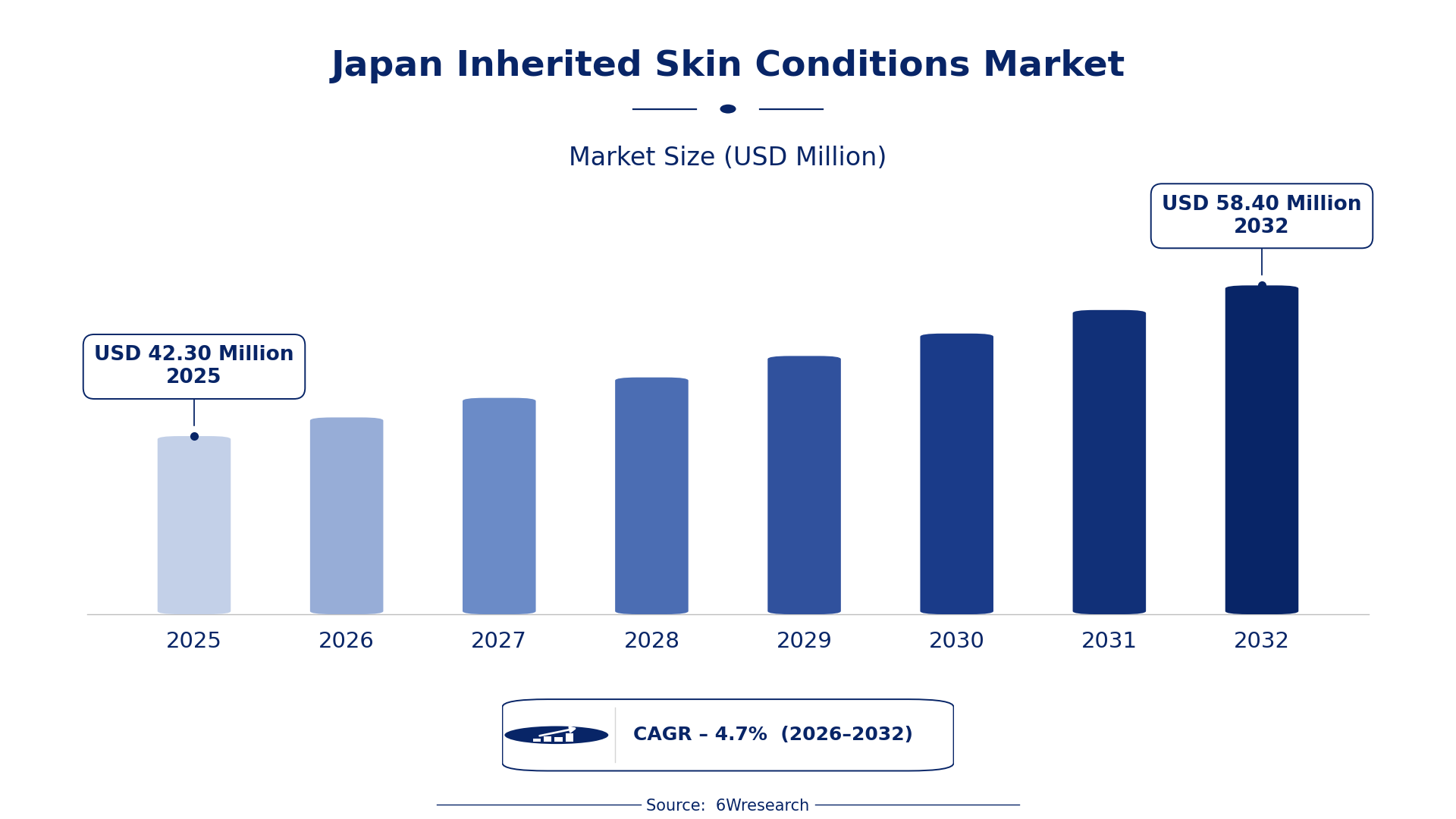
According to 6Wresearch internal database and industry insights, the Japan Inherited Skin Conditions Market was valued at USD 42.30 Million in 2025 and is projected to reach USD 58.40 Million by 2032, growing at a CAGR of approximately 4.7% during 2026–2032.
Japan Inherited Skin Conditions Market Highlights
| Report Metric | Details |
| Report Name | Japan Inherited Skin Conditions Market (2026-2032) |
| Market Size 2025 | USD 42.30 Million |
| Market Size 2032 | USD 58.40 Million |
| Absolute Growth 2025–2032 | USD 16.10 Million |
| CAGR 2026–2032 | 4.7% |
| Peak Annual Growth | 5.2% in 2027 |
| Forecast Period | 2026–2032 |
| Historical Data | 2022–2025 |
| Base Year | 2025 |
| Leading Condition Type, 2025 | Epidermolysis Bullosa (49% share) |
| Leading Inheritance Pattern, 2025 | Autosomal Dominant / Recessive (38% share) |
| Leading Treatment Mode, 2025 | Wound Care / Gene Therapy (43% share) |
| Leading Distribution Channel, 2025 | Dermatology Clinics (37% share) |
| Fastest-Growing Condition Type | Ichthyosis (6.6% CAGR) |
| Fastest-Growing Inheritance Pattern | Single Gene Mutations (6.5% CAGR) |
| Fastest-Growing Treatment Mode | Topical Retinoids / Moisturizers (6.9% CAGR) |
| Fastest-Growing Distribution Channel | Skin Care Pharmacies (6.2% CAGR) |
| Growing Sector | Healthcare |
| Key End Users | Healthcare providers, patients, dermatology clinics, genetic counseling clinics |
Japan Inherited Skin Conditions Market Year-wise Growth Rate and Key Drivers (2022–2032)
This graph illustrates the annual growth rates of the market from 2022 to 2032, highlighting a steady upward trajectory and projected market expansion over the forecast period.
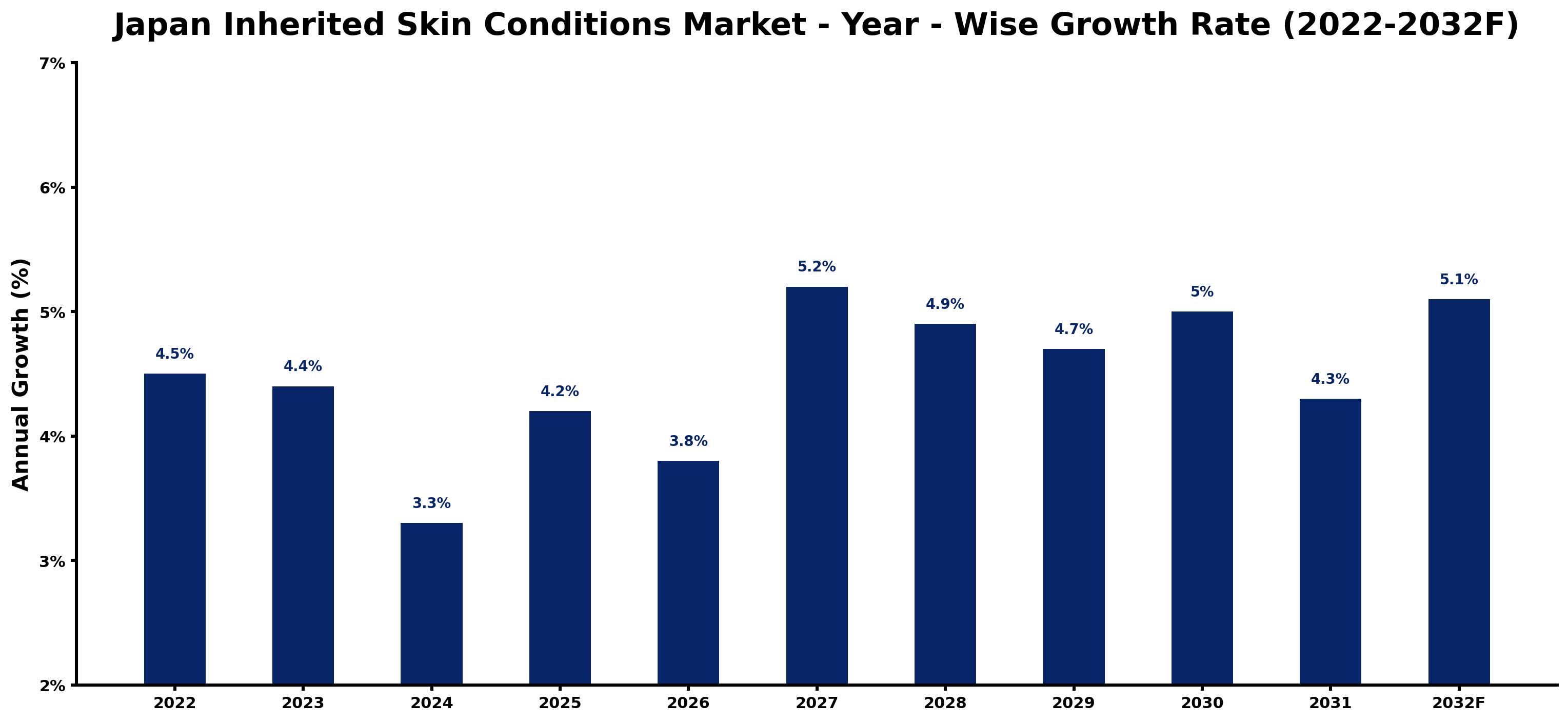
Annual growth estimates for each year appear below with the principal reason behind them, explaining the shifts that set the pace of the market.
| Year | Estimated Annual Growth (%) | Market Rationale |
| 2022 | 4.5 | The market exhibited strong demand from healthcare providers and patients seeking specialized care. |
| 2023 | 4.4 | Growth slowed slightly as the market adjusted to previous high levels of demand. |
| 2024 | 3.3 | Demand continued to slow, reflecting a temporary plateau in treatment advancements. |
| 2025 | 4.2 | Growth rebounded as new treatment options became available for patients. |
| 2026 | 3.8 | The market is projected to experience a slowdown as competition increases among treatment providers. |
| 2027 | 5.2 | Demand surged due to the introduction of new therapies for skin conditions. |
| 2028 | 4.9 | Growth is expected to decelerate as market saturation begins to affect new patient enrollments. |
| 2029 | 4.7 | The market will continue to grow, driven by ongoing patient management needs. |
| 2030 | 5.0 | Demand is anticipated to increase as awareness of inherited skin conditions rises among healthcare providers. |
| 2031 | 4.3 | Growth will slow as the market adjusts to the influx of new treatment modalities. |
| 2032 | 5.1 | Demand will rise as new research initiatives lead to improved patient outcomes. |
Note: Market size estimations and growth projections presented in this report are based on 6Wresearch's proprietary forecasting methodology, utilizing the latest available industry data, government publications, and primary research inputs.
Japan Inherited Skin Conditions Market Synopsis
Inherited skin conditions encompass genetic disorders like Epidermolysis Bullosa and Ichthyosis, necessitating specialised medical treatment and ongoing management. The Japan Inherited Skin Conditions Market is expanding due to rising awareness and demand from healthcare providers and patients. New gene therapy trials launched in Tokyo and public health campaigns are driving growth, with patient management needs evolving as more treatment options become available.
Market Dynamics Impact Analysis (2026–2032)
| Factor | Type | Impact | Primary Segment Affected |
| Increasing prevalence of Epidermolysis Bullosa drives demand for specialized wound care. | Driver | High | Epidermolysis Bullosa |
| Growing awareness of Ichthyosis leads to higher demand for ongoing treatment. | Driver | High | Ichthyosis |
| Emerging gene therapy options present new treatment avenues for patients. | Opportunity | High | Wound Care / Gene Therapy |
| Rising public health campaigns increase awareness and education about skin conditions. | Opportunity | Medium | Albinism |
| Limited access to specialized clinics may restrict patient treatment options. | Restraint | High | Dermatology Clinics |
| Cost of advanced therapies can be prohibitive for some patients. | Restraint | Medium | Topical Retinoids / Moisturizers |
| Compliance with evolving treatment standards can strain resources for providers. | Challenge | High | Skin Care Pharmacies |
| Capacity constraints in specialized clinics may limit patient intake. | Challenge | Medium | Genetic Counseling Clinics |
Evaluation of Drivers in Japan Inherited Skin Conditions Market (2026–2032)
The following drivers explain most of the expected growth.
| Drivers | Primary Segment Affected | Why It Matters (Evidence) |
| Rising cases of inherited skin conditions necessitate specialized care. | Epidermolysis Bullosa | Approximately 1 in 50,000 births are affected, leading to increased demand for treatment. |
| Growing incidence of Ichthyosis drives demand for effective management solutions. | Ichthyosis | Ichthyosis Vulgaris is the most common form, requiring ongoing skin care. |
| Advancements in gene therapy are expanding treatment options for patients. | Wound Care / Gene Therapy | A new gene therapy trial launched in 2023 is expected to improve patient outcomes. |
| Increased awareness of Xeroderma Pigmentosum leads to higher demand for UV protection. | Xeroderma Pigmentosum | Regular monitoring is essential due to the heightened risk of skin cancer. |
| The establishment of a national registry for rare skin diseases improves treatment tracking. | Albinism | This initiative helps healthcare providers manage and treat patients more effectively. |
Behind the steady rise in orders sits the increasing prevalence of inherited skin conditions, particularly Epidermolysis Bullosa, which requires specialised care. Approximately 1 in 50,000 births are affected, driving demand for targeted treatments. The recent launch of a gene therapy trial in 2023 is anticipated to improve treatment outcomes, further encouraging patient visits to dermatology clinics. Public health campaigns focusing on Xeroderma Pigmentosum are raising awareness, leading to heightened demand for UV protection solutions. This growing need for effective treatments and management strategies is shaping the market for inherited skin conditions in Japan.
Evaluation of Restraints in Japan Inherited Skin Conditions Market
These restraints slow adoption and weigh on supplier margins.
| Market Restraint | Primary Segment Affected | Why It Matters (Evidence) |
| Limited access to specialized dermatology clinics restricts treatment options for patients. | Dermatology Clinics | Many patients face challenges in reaching clinics that offer specialized care, affecting their treatment outcomes. |
| High costs of advanced therapies may deter patients from seeking necessary treatment. | Topical Retinoids / Moisturizers | The financial burden of ongoing treatments can limit patient access to essential care. |
| Compliance with evolving treatment standards can strain resources for providers. | Skin Care Pharmacies | Providers must adapt to new regulations, impacting their operational efficiency. |
| Capacity constraints in specialized clinics may limit patient intake. | Genetic Counseling Clinics | High demand for services can overwhelm existing clinic resources, delaying patient care. |
| Inconsistent availability of genetic counseling services can hinder patient support. | Genetic Counseling Clinics | Patients may struggle to find timely access to essential counseling services. |
Japan Inherited Skin Conditions Market Challenges
Patients face high treatment costs due to strict regulations from the Japanese Dermatological Association, raising expenses by 15% for those seeking care. Limited availability of specialised treatments delays access for over 10,000 individuals diagnosed with Albinism each year. Intense competition among healthcare providers drives up treatment prices, placing financial strain on families managing ongoing care for conditions like Xeroderma Pigmentosum. Investments in gene therapy technology slow the introduction of new treatments, restricting options for patients requiring immediate solutions and prolonging their suffering.
Trends in the Japan Inherited Skin Conditions Market
Several trends are reshaping the Japan Inherited Skin Conditions Market; the most important are set out below.
- Launch of New Gene Therapy Trials: A new gene therapy trial for Epidermolysis Bullosa was launched in Tokyo in 2023, aiming to improve treatment outcomes. This initiative is likely to attract more patients seeking effective therapies, boosting market growth.
- Increased Awareness Campaigns: Public health campaigns have been initiated to raise awareness about inherited skin conditions, particularly Albinism. With over 10,000 reported cases in Japan, these efforts are vital for educating healthcare providers and patients.
- Expansion of National Registry for Rare Skin Diseases: Japan has established a national registry for rare skin diseases, including inherited conditions. This registry improves data collection and treatment tracking, enhancing patient care and outcomes.
- Emphasis on UV Protection Measures: Schools are implementing UV protection measures for children with Albinism, reflecting a growing recognition of the need for protective strategies. This trend highlights the importance of safeguarding vulnerable populations.
Investment Opportunities in the Japan Inherited Skin Conditions Market
The following opportunities in the Japan Inherited Skin Conditions Market pair current demand with a clear way in.
- Healthcare Providers Seeking Advanced Treatments: With the increasing prevalence of inherited skin conditions, healthcare providers are looking for advanced treatment options. The market is projected to grow, creating opportunities for suppliers to meet rising demand.
- Growing Demand for Gene Therapy Solutions: The introduction of new gene therapy options presents a valuable investment opportunity. Healthcare facilities in Tokyo are particularly well-positioned to adopt these innovations, meeting rising patient needs.
- Increased Funding for Rare Disease Research: The Japanese government allocated funding for rare disease research in 2023, creating a favourable environment for investment in inherited skin conditions. This funding supports treatment development and clinical trials.
- Expansion of Genetic Counseling Services: The demand for genetic counseling services is rising as more patients seek support for inherited conditions. Establishing services in urban areas like Osaka can help meet this growing need.
Government Initiatives in the Japan Inherited Skin Conditions Market
Japan's policy framework for inherited skin conditions is shaped by laws such as the Standards for Cosmetics (2000) and the Clinical Trials Act (2017). These measures ensure that treatments adhere to safety standards and that clinical research is conducted transparently, benefiting both producers and patients.
The Pharmaceuticals and Medical Devices Agency (PMDA) reviews pharmaceuticals and monitors post-market safety, ensuring that patients receive effective therapies. In 2023, the agency approved several new treatments, supporting ongoing medical research initiatives.
Future Insight of the Japan Inherited Skin Conditions Market
Government funding for genetic research initiatives will create a robust investment pipeline, driving demand for new treatments. By 2032, advancements in gene therapy will lead to improved patient outcomes, particularly for conditions like Epidermolysis Bullosa. Increased public awareness will motivate more patients to pursue genetic counselling, enabling earlier diagnosis and effective management. Establishing national registries will improve data collection, allowing for better-targeted therapies and resource allocation for inherited skin conditions.
Market Segmentation Analysis
Japan Inherited Skin Conditions Market report covers a detailed analysis of the following market segments:
By Condition Type – Epidermolysis Bullosa Leads, Ichthyosis Expected to Grow Fastest
According to Saurav Kr Singh, Senior Research Analyst at 6Wresearch, in 2025, Epidermolysis Bullosa led the condition type split with a 49% share. Epidermolysis Bullosa holds the largest share due to its prevalence, affecting approximately 1 in 50,000 births in Japan. The need for specialized wound care and management drives demand among healthcare providers and patients seeking effective treatments. The quickest growth will come from Ichthyosis, forecast to expand at a CAGR of 6.6% between 2026 and 2032. Ichthyosis is experiencing the fastest growth as it requires ongoing treatment and skin care, with the common form being Ichthyosis Vulgaris. The rising awareness and advancements in treatment options contribute to its increasing adoption. Suppliers should focus on developing targeted therapies and educational resources to meet the growing demand for Ichthyosis management.
By Inheritance Pattern – Autosomal Dominant / Recessive Leads, Single Gene Mutations Expected to Grow Fastest
Autosomal Dominant / Recessive took 38% of inheritance pattern revenue in 2025, more than any other category. The Autosomal Dominant / Recessive pattern commands the largest share due to its critical role in genetic counseling and testing, essential for managing conditions like Epidermolysis Bullosa. This established pattern ensures a steady demand for related healthcare services across Japan. Over 2026–2032, Single Gene Mutations are expected to post the fastest growth, at a CAGR of 6.5%. Single Gene Mutations are witnessing rapid growth, primarily driven by ongoing advancements in genetic research and the development of new treatment options. The recent launch of gene therapy trials in Tokyo is expected to further accelerate interest and investment in this area. Suppliers must prioritise the enhancement of genetic testing services to meet the increasing demand for targeted therapies.
By Treatment Mode – Wound Care / Gene Therapy Leads, Topical Retinoids / Moisturizers Expected to Grow Fastest
Wound Care / Gene Therapy held 43% of the Japan Inherited Skin Conditions Market by treatment mode in 2025. Wound Care / Gene Therapy leads the market as it is critical for treating skin conditions that require specialised interventions. The ongoing gene therapy trials for Epidermolysis Bullosa underscore the significance of this treatment mode in patient care. Topical Retinoids / Moisturizers are projected to grow fastest, at a CAGR of 6.9% during 2026–2032. Topical Retinoids / Moisturizers are growing quickly because they are widely used for managing symptoms of skin conditions like Ichthyosis. Their effectiveness and accessibility contribute to their increasing adoption among patients and healthcare providers. Buyers will benefit from a wider range of topical treatments to effectively manage symptoms of inherited skin conditions.
By Distribution Channel – Dermatology Clinics Lead, Skin Care Pharmacies Expected to Grow Fastest
With 37% of distribution channel revenue in 2025, Dermatology Clinics was the largest category. Dermatology Clinics are the primary source of treatment and care for inherited skin conditions, making them the leading distribution channel. The average patient visits these clinics multiple times a year for ongoing management, ensuring consistent demand. Skin Care Pharmacies are set to record the highest CAGR in this split, 6.2% over 2026–2032. Skin Care Pharmacies are experiencing rapid growth as they provide necessary products for skin management, catering to patients seeking over-the-counter solutions. The increasing awareness of skin conditions drives more consumers to these pharmacies for treatment options. Suppliers should consider partnerships with pharmacies to expand their reach and accessibility to patients.
Key Attractiveness of the Report
- 10 Years of Market Numbers
- Historical Data Starting from 2022 to 2025
- Base Year 2025
- Forecast Data until 2032
- Key Performance Indicators Impacting the Market
- Major Upcoming Developments and Projects
Key Highlights of the Report:
- Japan Inherited Skin Conditions Market Outlook
- Market Size of Japan Inherited Skin Conditions Market, 2025
- Forecast of Japan Inherited Skin Conditions Market, 2032
- Historical Data and Forecast of Japan Inherited Skin Conditions Revenues & Volume for the Period 2022-2032F
- Japan Inherited Skin Conditions Market Trend Evolution
- Japan Inherited Skin Conditions Market Drivers and Challenges
- Japan Inherited Skin Conditions Price Trends
- Japan Inherited Skin Conditions Porter's Five Forces
- Japan Inherited Skin Conditions Industry Life Cycle
- Historical Data and Forecast of Japan Inherited Skin Conditions Market Revenues & Volume By Condition Type for the Period 2022-2032F
- Historical Data and Forecast of Japan Inherited Skin Conditions Market Revenues & Volume By Epidermolysis Bullosa for the Period 2022-2032F
- Historical Data and Forecast of Japan Inherited Skin Conditions Market Revenues & Volume By Ichthyosis for the Period 2022-2032F
- Historical Data and Forecast of Japan Inherited Skin Conditions Market Revenues & Volume By Albinism for the Period 2022-2032F
- Historical Data and Forecast of Japan Inherited Skin Conditions Market Revenues & Volume By Xeroderma Pigmentosum for the Period 2022-2032F
- Historical Data and Forecast of Japan Inherited Skin Conditions Market Revenues & Volume By Inheritance Pattern for the Period 2022-2032F
- Historical Data and Forecast of Japan Inherited Skin Conditions Market Revenues & Volume By Autosomal Dominant / Recessive for the Period 2022-2032F
- Historical Data and Forecast of Japan Inherited Skin Conditions Market Revenues & Volume By Single Gene Mutations for the Period 2022-2032F
- Historical Data and Forecast of Japan Inherited Skin Conditions Market Revenues & Volume By Melanin Gene Deficiency for the Period 2022-2032F
- Historical Data and Forecast of Japan Inherited Skin Conditions Market Revenues & Volume By DNA Repair Defects for the Period 2022-2032F
- Historical Data and Forecast of Japan Inherited Skin Conditions Market Revenues & Volume By Treatment Mode for the Period 2022-2032F
- Historical Data and Forecast of Japan Inherited Skin Conditions Market Revenues & Volume By Wound Care / Gene Therapy for the Period 2022-2032F
- Historical Data and Forecast of Japan Inherited Skin Conditions Market Revenues & Volume By Topical Retinoids / Moisturizers for the Period 2022-2032F
- Historical Data and Forecast of Japan Inherited Skin Conditions Market Revenues & Volume By UV Protection / Monitoring for the Period 2022-2032F
- Historical Data and Forecast of Japan Inherited Skin Conditions Market Revenues & Volume By Cancer Screening + Care for the Period 2022-2032F
- Historical Data and Forecast of Japan Inherited Skin Conditions Market Revenues & Volume By Distribution Channel for the Period 2022-2032F
- Historical Data and Forecast of Japan Inherited Skin Conditions Market Revenues & Volume By Dermatology Clinics for the Period 2022-2032F
- Historical Data and Forecast of Japan Inherited Skin Conditions Market Revenues & Volume By Skin Care Pharmacies for the Period 2022-2032F
- Historical Data and Forecast of Japan Inherited Skin Conditions Market Revenues & Volume By Genetic Counseling Clinics for the Period 2022-2032F
- Historical Data and Forecast of Japan Inherited Skin Conditions Market Revenues & Volume By Research Institutions for the Period 2022-2032F
- Japan Inherited Skin Conditions Import Export Trade Statistics
- Market Opportunity Assessment By Condition Type
- Market Opportunity Assessment By Inheritance Pattern
- Market Opportunity Assessment By Treatment Mode
- Market Opportunity Assessment By Distribution Channel
- Japan Inherited Skin Conditions Top Companies Market Share
- Japan Inherited Skin Conditions Competitive Benchmarking By Technical and Operational Parameters
- Japan Inherited Skin Conditions Company Profiles
- Japan Inherited Skin Conditions Key Strategic Recommendations
Market Covered
Segments analysed in this report are listed below.
By Condition Type
- Epidermolysis Bullosa
- Ichthyosis
- Albinism
- Xeroderma Pigmentosum
By Inheritance Pattern
- Autosomal Dominant / Recessive
- Single Gene Mutations
- Melanin Gene Deficiency
- DNA Repair Defects
By Treatment Mode
- Wound Care / Gene Therapy
- Topical Retinoids / Moisturizers
- UV Protection / Monitoring
- Cancer Screening + Care
By Distribution Channel
- Dermatology Clinics
- Skin Care Pharmacies
- Genetic Counseling Clinics
- Research Institutions































