Japan Injectable Diabetes Treatment Market Size & Growth Rate
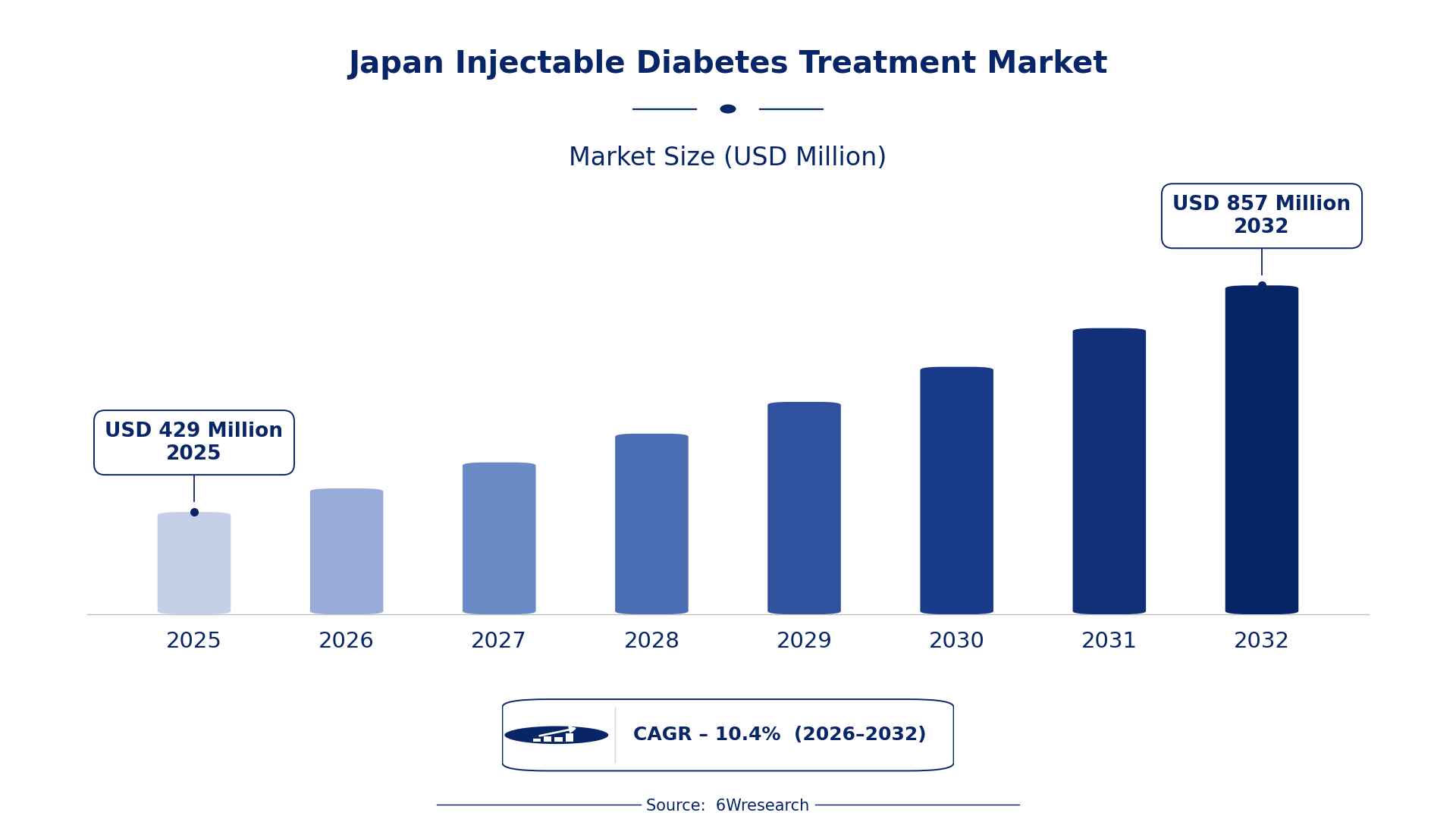
According to 6Wresearch internal database and industry insights, the Japan Injectable Diabetes Treatment Market was valued at USD 429 Million in 2025 and is projected to reach USD 857 Million by 2032, growing at a CAGR of approximately 10.4% during 2026–2032.
Japan Injectable Diabetes Treatment Market Highlights
| Report Metric | Details |
| Report Name | Japan Injectable Diabetes Treatment Market (2026-2032) |
| Market Size 2025 | USD 429 Million |
| Market Size 2032 | USD 857 Million |
| Absolute Growth 2025–2032 | USD 428 Million |
| CAGR 2026–2032 | 10.4% |
| Peak Annual Growth | 11.9% in 2031 |
| Forecast Period | 2026–2032 |
| Historical Data | 2022–2025 |
| Base Year | 2025 |
| Leading Drug Class, 2025 | Basal Insulin (34% share) |
| Leading Type, 2025 | Long-Acting Insulin (39% share) |
| Leading Delivery Device, 2025 | Vials & Syringes (36% share) |
| Leading Patient Type, 2025 | Type 1 Diabetics (38% share) |
| Leading Distribution Channel, 2025 | Hospital Pharmacies (36% share) |
| Fastest-Growing Drug Class | Bolus Insulin (13.9% CAGR) |
| Fastest-Growing Type | Rapid-Acting Insulin (14.6% CAGR) |
| Fastest-Growing Delivery Device | Pre-filled Pens (13.4% CAGR) |
| Fastest-Growing Patient Type | Type 2 Diabetics (14.5% CAGR) |
| Fastest-Growing Distribution Channel | Retail Pharmacies (13.5% CAGR) |
| Growing Sector | Diabetes care |
| Key End Users | Type 1 Diabetics, Type 2 Diabetics, Healthcare Providers, Hospital Pharmacies |
Japan Injectable Diabetes Treatment Market Year-wise Growth Rate and Key Drivers (2022–2032)
This graph illustrates the annual growth rates of the market from 2022 to 2032, highlighting a steady upward trajectory and projected market expansion over the forecast period.
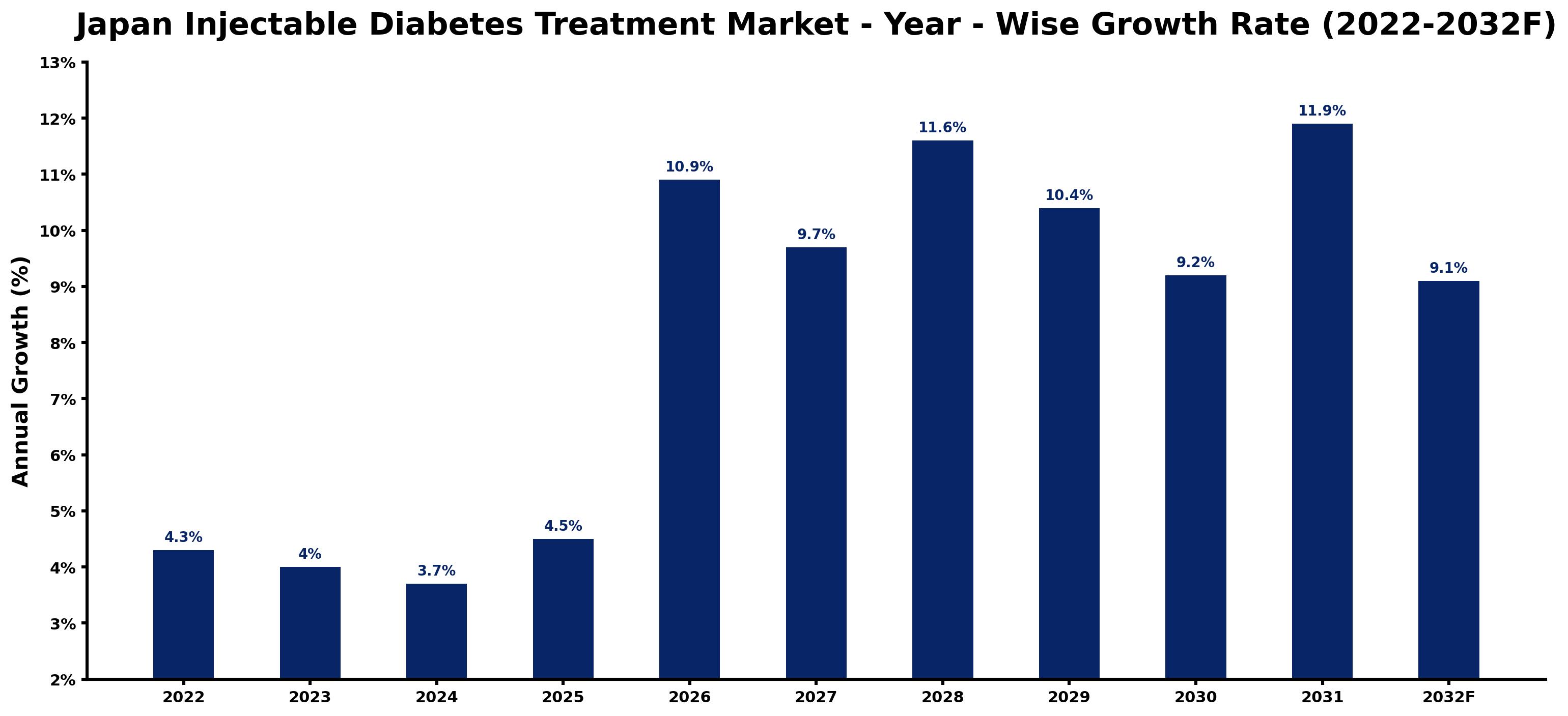
Annual growth estimates for each year appear below with the principal reason behind them, explaining the shifts that set the pace of the market.
| Year | Estimated Annual Growth (%) | Market Rationale |
| 2022 | 4.3 | The market experienced steady growth, driven by rising diabetes diagnoses. |
| 2023 | 4.0 | Demand growth slowed due to increased competition among treatment options. |
| 2024 | 3.7 | The market continued to grow, but at a slower pace as new entrants emerged. |
| 2025 | 4.5 | Growth accelerated as more patients adopted insulin therapies for better glycemic control. |
| 2026 | 10.9 | The market is projected to see strong growth as awareness campaigns boost treatment uptake. |
| 2027 | 9.7 | Growth will slow slightly as the market stabilises with established treatment options. |
| 2028 | 11.6 | Demand is expected to rise sharply as new therapies gain popularity among patients. |
| 2029 | 10.4 | Growth is anticipated to moderate as the market adjusts to increased competition. |
| 2030 | 9.2 | The market will continue to grow, driven by ongoing education and support initiatives. |
| 2031 | 11.9 | A peak in growth is anticipated as new treatments gain regulatory approval. |
| 2032 | 9.1 | Growth will slow as the market reaches maturity and competition intensifies. |
Note: Market size estimations and growth projections presented in this report are based on 6Wresearch's proprietary forecasting methodology, utilizing the latest available industry data, government publications, and primary research inputs.
Japan Injectable Diabetes Treatment Market Synopsis
Injectable diabetes treatments include insulin and GLP-1 receptor agonists, which are essential for managing blood glucose levels in diabetic patients. The Japan Injectable Diabetes Treatment Market is expanding due to a rising prevalence of diabetes, with approximately 7 million diagnosed individuals in 2022. The increasing adoption of therapies, such as Liraglutide and Semaglutide, is driving demand, supported by campaigns aimed at improving diabetes education and management standards. The average age of diabetes diagnosis in Japan is 64 years, highlighting the importance of effective treatment options for an aging population.
Market Dynamics Impact Analysis (2026–2032)
| Factor | Type | Impact | Primary Segment Affected |
| Rising prevalence of diabetes among adults | Driver | High | Long-Acting Insulin |
| Increasing adoption of GLP-1 receptor agonists | Driver | High | GLP-1 Receptor Agonists |
| Growing demand for convenient delivery methods | Opportunity | High | Pre-filled Pens |
| Expansion of diabetes treatment facilities in urban areas | Opportunity | Medium | Hospital Pharmacies |
| High cost of diabetes medications | Restraint | High | General Patient Base |
| Limited access to diabetes education programs | Restraint | Medium | Type 2 Diabetics |
| Competition from biosimilars and generics | Challenge | High | Insulin Biosimilars |
| Regulatory hurdles for new product approvals | Challenge | Medium | GLP-1 Receptor Agonists |
Evaluation of Drivers in Japan Injectable Diabetes Treatment Market (2026–2032)
The table below links each growth driver to the segment it affects and the evidence for it.
| Drivers | Primary Segment Affected | Why It Matters (Evidence) |
| Increasing diabetes prevalence | Long-Acting Insulin | Approximately 7 million people in Japan are diagnosed with diabetes, leading to higher demand for insulin therapies. |
| Growing awareness of diabetes management | GLP-1 Receptor Agonists | A campaign launched in 2023 aims to improve diabetes awareness, driving treatment adoption. |
| Rising preference for user-friendly devices | Pre-filled Pens | Convenient delivery methods are gaining traction, with a projected growth rate of 13.4% for pre-filled pens. |
| Expansion of healthcare facilities | Hospital Pharmacies | The Tokyo metropolitan area has the highest concentration of diabetes treatment facilities, improving access to treatments. |
| Support from diabetes education programs | Type 2 Diabetics | Local health authorities are backing diabetes education initiatives, increasing treatment uptake among patients. |
Much of the new demand traces back to the increasing prevalence of diabetes, with approximately 7 million diagnosed individuals in Japan. This situation drives higher consumption of insulin therapies, particularly among Type 1 diabetic patients who rely on these treatments for effective management. A campaign launched in 2023 aims to improve diabetes awareness, which is expected to boost the adoption of therapies like Liraglutide and Semaglutide. The rising preference for user-friendly delivery devices, such as pre-filled pens, is changing purchasing behaviour as patients seek convenience. The concentration of diabetes treatment facilities in urban areas, particularly in Tokyo, enhances access to necessary therapies, promoting higher demand among patients.
Evaluation of Restraints in Japan Injectable Diabetes Treatment Market
Below are the constraints most often cited by buyers and suppliers, with the segment each affects.
| Market Restraint | Primary Segment Affected | Why It Matters (Evidence) |
| High cost of diabetes medications | General Patient Base | The average annual cost of diabetes medications is around ¥50,000, limiting access for some patients. |
| Limited access to diabetes education programs | Type 2 Diabetics | Many patients lack access to education programs, with only a fraction receiving adequate support. |
| Regulatory hurdles for new product approvals | GLP-1 Receptor Agonists | Strict regulations from the PMDA can delay the introduction of new therapies by several months. |
| Competition from biosimilars and generics | Insulin Biosimilars | The presence of lower-cost alternatives can impact the market share of original insulin products. |
| Market saturation with existing therapies | Bolus Insulin | An influx of treatment options has led to increased competition, slowing growth. |
Japan Injectable Diabetes Treatment Market Challenges
New diabetes medications encounter lengthy approval processes due to strict regulations from the Pharmaceuticals and Medical Devices Agency, delaying market entry by up to 18 months for suppliers. Rapid technological advancements create a gap in regulatory frameworks, hindering timely launches and resulting in potential revenue losses for producers. Price competition among existing treatments forces producers to lower prices, which reduces profit margins and limits their ability to invest in new solutions. A shortage of diabetes specialists, with only 30,000 available for approximately 7 million diagnosed patients, results in inadequate care and support for many individuals.
Trends in the Japan Injectable Diabetes Treatment Market
Four trends stand out in the Japan Injectable Diabetes Treatment Market.
- Increase in Diabetes Treatment Facilities: The Tokyo metropolitan area is experiencing a rise in diabetes treatment facilities, improving patient access to care. This trend is likely to support the growing demand for injectable diabetes treatments as more facilities open.
- Expansion of Diabetes Education Programs: Local health authorities are prioritising diabetes education initiatives, which are set to increase patient engagement. In 2023, the government allocated ¥5 billion for diabetes prevention programs, reflecting a commitment to improving management.
- Growing Acceptance of GLP-1 Receptor Agonists: There is a notable increase in the acceptance of GLP-1 receptor agonists among Type 2 diabetics. Liraglutide and Semaglutide are gaining traction, backed by their effectiveness in weight management and glycemic control.
- Shift in Patient Preferences: Patients are increasingly opting for pre-filled pens over traditional vials and syringes, reflecting a desire for convenience. In 2025, pre-filled pens are projected to grow at a rate of 13.4%, indicating a shift in delivery preferences.
Investment Opportunities in the Japan Injectable Diabetes Treatment Market
The opportunities below stand out in the Japan Injectable Diabetes Treatment Market for new entrants and existing suppliers.
- Investment in Diabetes Education Programs: With the government's ¥5 billion allocation for diabetes prevention, there is an opportunity to invest in educational initiatives. Collaborating with local health authorities can facilitate program implementation and improve patient outcomes.
- Expansion of Hospital Pharmacies: The concentration of diabetes treatment facilities in urban areas presents a chance to expand hospital pharmacies. Establishing partnerships with healthcare providers can improve access to injectable treatments and streamline distribution.
- Supply of Pre-filled Pens: The demand for pre-filled pens is growing, with a projected increase in usage. Suppliers can enter the market through partnerships with local pharmacies to strengthen distribution channels and meet consumer needs.
- Development of New GLP-1 Therapies: The increasing acceptance of GLP-1 receptor agonists creates opportunities for developing new therapies. Engaging with the Pharmaceuticals and Medical Devices Agency can streamline the approval process and facilitate market entry.
Government Initiatives in the Japan Injectable Diabetes Treatment Market
The NHI drug price standard, revised regularly, sets reimbursement prices for diabetes medications, impacting costs for patients and healthcare providers. Compliance with this standard is essential for producers to ensure their products are covered under national health insurance, which influences market conditions. In 2023, the average reimbursement price for diabetes medications was adjusted to reflect rising costs, ensuring continued access for patients.
The Pharmaceuticals and Medical Devices Agency oversees the approval of new diabetes treatments, ensuring safety and efficacy. This agency's stringent regulations require producers to conduct thorough testing and reporting, affecting the speed at which new therapies reach the market. In 2023, the PMDA processed over 100 applications for diabetes medications, highlighting the active regulatory environment.
Future Insight of the Japan Injectable Diabetes Treatment Market
By 2032, patients will experience more effective diabetes management as advanced insulin delivery systems become commonplace in treatment protocols. Increased government funding for diabetes prevention programs will drive community education and outreach initiatives. Collaborative strategies between health authorities and diabetes organisations will lead to integrated care models that address both diabetes and obesity. Enhanced data analytics will enable better patient monitoring and tailored treatment plans, ultimately improving outcomes for individuals living with diabetes.
Market Segmentation Analysis
Japan Injectable Diabetes Treatment Market report covers a detailed analysis of the following market segments:
By Drug Class – Basal Insulin Leads, Bolus Insulin Expected to Grow Fastest
According to Saurav Kr Singh, Senior Research Analyst at 6Wresearch, with 34% of drug class revenue in 2025, Basal Insulin was the largest category. Basal Insulin holds the largest share as it is essential for long-term glucose control in diabetes management. This is particularly evident in facilities across Japan that cater to the needs of Type 1 diabetic patients who rely on consistent insulin administration. Bolus Insulin is set to record the highest CAGR in this split, 13.9% over 2026–2032. Bolus Insulin is experiencing rapid growth due to its ability to provide immediate glucose control during meals, which is increasingly sought after by patients aiming for effective meal-time management. The rising obesity rates among Type 2 diabetics further contribute to this demand. Suppliers should prioritise the development of bolus insulin products to align with the growing market needs.
By Type – Long-Acting Insulin Leads, Rapid-Acting Insulin Expected to Grow Fastest
The largest type category in 2025 was Long-Acting Insulin, at 39% of revenue. Long-Acting Insulin dominates the market by providing stable insulin levels over 24 hours, which is crucial for patients requiring consistent glycemic control. This is especially relevant for the approximately 1.5 million insulin users in Japan who depend on effective long-term management. Over 2026–2032, Rapid-Acting Insulin is expected to post the fastest growth, at a CAGR of 14.6%. Rapid-Acting Insulin is growing quickly as it effectively lowers blood glucose after meals, catering to patients needing immediate intervention. Increased awareness and education around diabetes management are likely to further enhance its adoption. Buyers will see a broader selection of rapid-acting insulin options as market demand continues to increase.
By Delivery Device – Vials & Syringes Lead, Pre-filled Pens Expected to Grow Fastest
In 2025, Vials & Syringes led the delivery device split with a 36% share. Vials & Syringes remain the leading delivery method as they are the traditional and widely accepted means for insulin administration in healthcare facilities. Their established presence ensures a steady supply for patients who prefer conventional delivery methods. The quickest growth will come from Pre-filled Pens, forecast to expand at a CAGR of 13.4% between 2026 and 2032. Pre-filled Pens are growing rapidly as they offer greater convenience for self-administration, appealing to a more mobile patient demographic. The trend towards self-management in diabetes care is driving this shift. Suppliers must invest in pre-filled pen technology to meet the rising consumer preference for convenience.
By Patient Type – Type 1 Diabetics Lead, Type 2 Diabetics Expected to Grow Fastest
Type 1 Diabetics accounted for 38% of the market by patient type in 2025. Type 1 Diabetics are the primary users of insulin therapies, significantly influencing the market due to their reliance on insulin for effective management. Their specific treatment requirements drive the demand for tailored injectable solutions across various healthcare settings. Type 2 Diabetics are projected to grow fastest, at a CAGR of 14.5% during 2026–2032. Type 2 Diabetics represent the fastest-growing segment as they increasingly seek injectable treatments for improved management of their condition. The rising prevalence of diabetes in Japan is accelerating this shift towards more intensive treatment options. Suppliers should adapt their marketing strategies to meet the distinct needs of Type 2 Diabetics.
By Distribution Channel – Hospital Pharmacies Lead, Retail Pharmacies Expected to Grow Fastest
Hospital Pharmacies held 36% of the Japan Injectable Diabetes Treatment Market by distribution channel in 2025. Hospital Pharmacies are the main distribution point for injectable diabetes treatments, ensuring patients have reliable access to essential medications. This channel is vital for timely treatment, especially in urban areas with a high prevalence of diabetes. Retail Pharmacies are set to record the highest CAGR in this split, 13.5% over 2026–2032. Retail Pharmacies are witnessing the fastest growth as they provide a convenient source for patients to obtain medications. The increasing focus on patient autonomy in diabetes management is driving this trend towards more accessible options. Suppliers should enhance collaborations with retail pharmacies to improve patient access to treatments.
Key Attractiveness of the Report
- 10 Years of Market Numbers
- Historical Data Starting from 2022 to 2025
- Base Year 2025
- Forecast Data until 2032
- Key Performance Indicators Impacting the Market
- Major Upcoming Developments and Projects
Key Highlights of the Report:
- Japan Injectable Diabetes Treatment Market Outlook
- Market Size of Japan Injectable Diabetes Treatment Market, 2025
- Forecast of Japan Injectable Diabetes Treatment Market, 2032
- Historical Data and Forecast of Japan Injectable Diabetes Treatment Revenues & Volume for the Period 2022-2032F
- Japan Injectable Diabetes Treatment Market Trend Evolution
- Japan Injectable Diabetes Treatment Market Drivers and Challenges
- Japan Injectable Diabetes Treatment Price Trends
- Japan Injectable Diabetes Treatment Porter's Five Forces
- Japan Injectable Diabetes Treatment Industry Life Cycle
- Historical Data and Forecast of Japan Injectable Diabetes Treatment Market Revenues & Volume By Drug Class for the Period 2022-2032F
- Historical Data and Forecast of Japan Injectable Diabetes Treatment Market Revenues & Volume By Basal Insulin for the Period 2022-2032F
- Historical Data and Forecast of Japan Injectable Diabetes Treatment Market Revenues & Volume By Bolus Insulin for the Period 2022-2032F
- Historical Data and Forecast of Japan Injectable Diabetes Treatment Market Revenues & Volume By GLP-1 Receptor Agonists for the Period 2022-2032F
- Historical Data and Forecast of Japan Injectable Diabetes Treatment Market Revenues & Volume By Fixed-Dose Combinations for the Period 2022-2032F
- Historical Data and Forecast of Japan Injectable Diabetes Treatment Market Revenues & Volume By Insulin Biosimilars for the Period 2022-2032F
- Historical Data and Forecast of Japan Injectable Diabetes Treatment Market Revenues & Volume By Type for the Period 2022-2032F
- Historical Data and Forecast of Japan Injectable Diabetes Treatment Market Revenues & Volume By Long-Acting Insulin for the Period 2022-2032F
- Historical Data and Forecast of Japan Injectable Diabetes Treatment Market Revenues & Volume By Rapid-Acting Insulin for the Period 2022-2032F
- Historical Data and Forecast of Japan Injectable Diabetes Treatment Market Revenues & Volume By Liraglutide, Semaglutide for the Period 2022-2032F
- Historical Data and Forecast of Japan Injectable Diabetes Treatment Market Revenues & Volume By Insulin + GLP-1 for the Period 2022-2032F
- Historical Data and Forecast of Japan Injectable Diabetes Treatment Market Revenues & Volume By Recombinant Insulin for the Period 2022-2032F
- Historical Data and Forecast of Japan Injectable Diabetes Treatment Market Revenues & Volume By Delivery Device for the Period 2022-2032F
- Historical Data and Forecast of Japan Injectable Diabetes Treatment Market Revenues & Volume By Vials & Syringes for the Period 2022-2032F
- Historical Data and Forecast of Japan Injectable Diabetes Treatment Market Revenues & Volume By Pre-filled Pens for the Period 2022-2032F
- Historical Data and Forecast of Japan Injectable Diabetes Treatment Market Revenues & Volume By Auto-Injectors for the Period 2022-2032F
- Historical Data and Forecast of Japan Injectable Diabetes Treatment Market Revenues & Volume By Dual Chamber Devices for the Period 2022-2032F
- Historical Data and Forecast of Japan Injectable Diabetes Treatment Market Revenues & Volume By Disposable Pens for the Period 2022-2032F
- Historical Data and Forecast of Japan Injectable Diabetes Treatment Market Revenues & Volume By Patient Type for the Period 2022-2032F
- Historical Data and Forecast of Japan Injectable Diabetes Treatment Market Revenues & Volume By Type 1 Diabetics for the Period 2022-2032F
- Historical Data and Forecast of Japan Injectable Diabetes Treatment Market Revenues & Volume By Type 2 Diabetics for the Period 2022-2032F
- Historical Data and Forecast of Japan Injectable Diabetes Treatment Market Revenues & Volume By Obese or Elderly Adults for the Period 2022-2032F
- Historical Data and Forecast of Japan Injectable Diabetes Treatment Market Revenues & Volume By High-Risk Diabetics for the Period 2022-2032F
- Historical Data and Forecast of Japan Injectable Diabetes Treatment Market Revenues & Volume By General Patient Base for the Period 2022-2032F
- Historical Data and Forecast of Japan Injectable Diabetes Treatment Market Revenues & Volume By Distribution Channel for the Period 2022-2032F
- Historical Data and Forecast of Japan Injectable Diabetes Treatment Market Revenues & Volume By Hospital Pharmacies for the Period 2022-2032F
- Historical Data and Forecast of Japan Injectable Diabetes Treatment Market Revenues & Volume By Retail Pharmacies for the Period 2022-2032F
- Historical Data and Forecast of Japan Injectable Diabetes Treatment Market Revenues & Volume By Online Pharmacies for the Period 2022-2032F
- Historical Data and Forecast of Japan Injectable Diabetes Treatment Market Revenues & Volume By Clinics & Specialty Stores for the Period 2022-2032F
- Historical Data and Forecast of Japan Injectable Diabetes Treatment Market Revenues & Volume By Institutional Sales (B2B) for the Period 2022-2032F
- Japan Injectable Diabetes Treatment Import Export Trade Statistics
- Market Opportunity Assessment By Drug Class
- Market Opportunity Assessment By Type
- Market Opportunity Assessment By Delivery Device
- Market Opportunity Assessment By Patient Type
- Market Opportunity Assessment By Distribution Channel
- Japan Injectable Diabetes Treatment Top Companies Market Share
- Japan Injectable Diabetes Treatment Competitive Benchmarking By Technical and Operational Parameters
- Japan Injectable Diabetes Treatment Company Profiles
- Japan Injectable Diabetes Treatment Key Strategic Recommendations
Market Covered
The following segment groups are covered in the report.
By Drug Class
- Basal Insulin
- Bolus Insulin
- GLP-1 Receptor Agonists
- Fixed-Dose Combinations
- Insulin Biosimilars
By Type
- Long-Acting Insulin
- Rapid-Acting Insulin
- Liraglutide
- Semaglutide
- Insulin + GLP-1
- Recombinant Insulin
By Delivery Device
- Vials & Syringes
- Pre-filled Pens
- Auto-Injectors
- Dual Chamber Devices
- Disposable Pens
By Patient Type
- Type 1 Diabetics
- Type 2 Diabetics
- Obese or Elderly Adults
- High-Risk Diabetics
- General Patient Base
By Distribution Channel
- Hospital Pharmacies
- Retail Pharmacies
- Online Pharmacies
- Clinics & Specialty Stores
- Institutional Sales (B2B)































