Japan Injectable Pharmaceuticals Market Size & Growth Rate
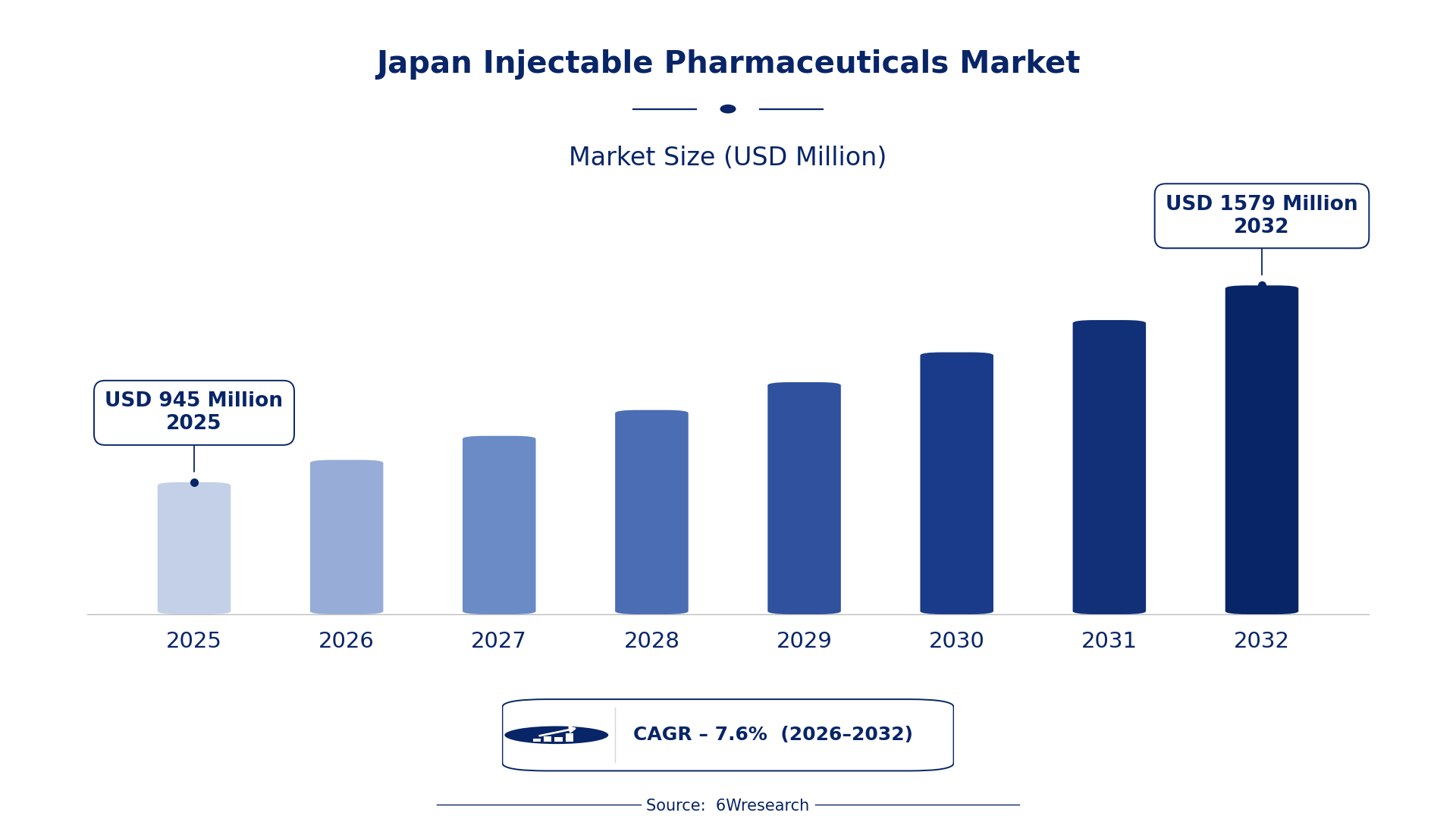
According to 6Wresearch internal database and industry insights, the Japan Injectable Pharmaceuticals Market was valued at USD 945 Million in 2025 and is projected to reach USD 1,579 Million by 2032, growing at a CAGR of approximately 7.6% during 2026–2032.
Japan Injectable Pharmaceuticals Market Highlights
| Report Metric | Details |
| Report Name | Japan Injectable Pharmaceuticals Market (2026-2032) |
| Market Size 2025 | USD 945 Million |
| Market Size 2032 | USD 1,579 Million |
| Absolute Growth 2025–2032 | USD 634 Million |
| CAGR 2026–2032 | 7.6% |
| Peak Annual Growth | 8.7% in 2029 |
| Forecast Period | 2026–2032 |
| Historical Data | 2022–2025 |
| Base Year | 2025 |
| Leading Drug Class, 2025 | Antibiotics (41% share) |
| Leading Route of Administration, 2025 | Intravenous (48% share) |
| Leading Usage Type, 2025 | Acute Infections (38% share) |
| Leading Product Form, 2025 | Solution/Vials (38% share) |
| Leading Distribution Channel, 2025 | Hospital Pharmacies (39% share) |
| Fastest-Growing Drug Class | Oncology Drugs (10.3% CAGR) |
| Fastest-Growing Route of Administration | Intramuscular (9.9% CAGR) |
| Fastest-Growing Usage Type | Cancer Treatment (10.2% CAGR) |
| Fastest-Growing Product Form | Reconstitutable Powders (10.9% CAGR) |
| Fastest-Growing Distribution Channel | Clinics (10.0% CAGR) |
| Growing Sector | pharmaceuticals |
| Key End Users | hospitals, clinics, outpatient services |
Japan Injectable Pharmaceuticals Market Year-wise Growth Rate and Key Drivers (2022–2032)
This graph illustrates the annual growth rates of the market from 2022 to 2032, highlighting a steady upward trajectory and projected market expansion over the forecast period.

Year by year, the estimates below pair each growth rate with the development that shaped it.
| Year | Estimated Annual Growth (%) | Market Rationale |
| 2022 | 3.5 | The market experienced steady growth, reflecting ongoing demand for injectable treatments. |
| 2023 | 3.8 | Growth accelerated due to increased hospital usage of injectable antibiotics and biologics. |
| 2024 | 2.6 | The market saw a slowdown as competition increased among injectable drug producers. |
| 2025 | 4.1 | Growth picked up again, driven by rising demand for oncology drugs and pain management. |
| 2026 | 6.7 | Investment in new drug development is expected to drive further market expansion. |
| 2027 | 7.0 | Demand continues to rise as healthcare providers adopt more injectable therapies. |
| 2028 | 7.3 | The introduction of new biologics is projected to boost market growth. |
| 2029 | 8.7 | The peak growth rate is anticipated as hospitals expand their injectable drug offerings. |
| 2030 | 7.8 | Growth is expected to slow slightly as market saturation begins to occur. |
| 2031 | 7.2 | The market will continue to grow, albeit at a reduced pace due to increased competition. |
| 2032 | 8.6 | A renewed focus on chronic disease management will drive growth in the injectable sector. |
Note: Market size estimations and growth projections presented in this report are based on 6Wresearch's proprietary forecasting methodology, utilizing the latest available industry data, government publications, and primary research inputs.
Japan Injectable Pharmaceuticals Market Synopsis
Injectable pharmaceuticals are medications delivered via injection, essential for treating acute infections, cancer, and managing pain. The Japan Injectable Pharmaceuticals Market is expanding due to strong demand from hospitals and clinics, with over 60% of hospitals regularly using injectable antibiotics. Investment in drug development and the increasing prevalence of chronic diseases are key drivers of growth, supported by a healthcare system that invests heavily in new therapies, with national medical care expenditure reaching about JPY 46.7 trillion in 2022.
Market Dynamics Impact Analysis (2026–2032)
| Factor | Type | Impact | Primary Segment Affected |
| Growing elderly population increasing demand for injectable medications | Driver | High | Acute Infections |
| Rising prevalence of chronic diseases driving need for biologics | Driver | High | Biologics |
| Increasing hospital investments in injectable drug therapies | Opportunity | High | Oncology Drugs |
| Expansion of outpatient services creating demand for prefilled syringes | Opportunity | High | Pain Management |
| Intense competition among manufacturers leading to price pressures | Restraint | Medium | Antibiotics |
| Regulatory hurdles delaying the introduction of new products | Restraint | Medium | Biologics |
| Supply chain disruptions affecting product availability | Challenge | High | Intravenous |
| Limited access to advanced therapies in rural areas | Challenge | Medium | Intramuscular |
Evaluation of Drivers in Japan Injectable Pharmaceuticals Market (2026–2032)
These are the developments adding the most demand over the forecast period.
| Drivers | Primary Segment Affected | Why It Matters (Evidence) |
| Increasing healthcare expenditure on injectable medications | Oncology Drugs | Japan's national medical care expenditure was about JPY 46.7 trillion in fiscal 2022, leading to higher investments in oncology treatments. |
| Rising incidence of cancer cases requiring injectable therapies | Biologics | The Japanese Society of Clinical Oncology promotes injectable biologics, contributing to a 20% increase in usage over five years. |
| Growing demand for pain management solutions in hospitals | Pain Management | In 2023, the government initiated a program to improve the availability of injectable pain management drugs. |
| High volume of injectable prescriptions handled by hospitals | Intravenous | The average hospital pharmacy in Japan manages over 1,000 injectable prescriptions monthly, indicating strong demand. |
| Increased usage of prefilled syringes for chronic disease management | Prefilled Syringes | Prefilled syringes are increasingly used in outpatient settings, improving patient compliance and convenience. |
Orders keep climbing as healthcare expenditure rises, with Japan's national medical care expenditure reaching about JPY 46.7 trillion in 2022. The incidence of cancer is also increasing, prompting more hospitals to adopt injectable biologics, which have seen a 20% rise in usage over five years. Hospital pharmacies are handling over 1,000 injectable prescriptions monthly, indicating a strong need for intravenous therapies. The shift towards prefilled syringes is improving patient compliance in chronic disease management.
Evaluation of Restraints in Japan Injectable Pharmaceuticals Market
These are the pressures that could keep growth below its potential.
| Market Restraint | Primary Segment Affected | Why It Matters (Evidence) |
| Intense competition leading to price reductions | Antibiotics | Price pressures are affecting profitability for manufacturers, limiting their ability to invest in new product development. |
| Regulatory challenges delaying product approvals | Biologics | Strict regulations overseen by the PMDA can prolong the time to market for new injectable drugs. |
| Supply chain disruptions impacting availability | Intravenous | Disruptions in the supply chain can cause shortages of critical injectable medications in hospitals. |
| Limited access to advanced therapies in rural areas | Intramuscular | Patients in rural regions may face challenges accessing injectable therapies, affecting overall market growth. |
| High production costs for complex formulations | Pain Management | Manufacturers face rising costs in producing advanced injectable pain management drugs, impacting pricing strategies. |
Japan Injectable Pharmaceuticals Market Challenges
Intense competition among producers drives down prices, squeezing profit margins for suppliers. This price pressure compels hospitals to focus on lower-cost options, which may compromise the quality of patient care. Regulatory hurdles from the Pharmaceuticals and Medical Devices Agency slow the approval process for new injectable drugs, resulting in treatment delays for patients. Rising compliance costs for producers increase the financial burden on clinics and hospitals, potentially limiting patient access to necessary medications.
Trends in the Japan Injectable Pharmaceuticals Market
Four trends stand out in the Japan Injectable Pharmaceuticals Market.
- Shift towards Prefilled Syringes: The use of prefilled syringes is increasing in outpatient settings for chronic disease management, with a notable rise in adoption. In 2023, over 60% of hospitals reported using prefilled syringes, improving patient compliance.
- Growth of Injectable Biologics: The injectable biologics segment is expanding rapidly, driven by increased cancer cases. The Japanese Society of Clinical Oncology has reported a 20% increase in the use of these therapies over the past five years.
- Expansion of Hospital Pharmacy Services: Hospital pharmacies are evolving to handle more injectable prescriptions, with the average pharmacy managing over 1,000 prescriptions monthly. This trend reflects the growing reliance on injectable medications in patient care.
- Government Initiatives to Improve Pain Management: In 2023, the government launched a program to improve the availability of injectable pain management drugs. This initiative aims to address the rising demand for effective pain relief solutions.
Investment Opportunities in the Japan Injectable Pharmaceuticals Market
The following opportunities in the Japan Injectable Pharmaceuticals Market pair current demand with a clear way in.
- Timing for Increased Investment in Oncology Drugs: With the oncology drug segment expected to account for a substantial share, hospitals are investing more in these therapies. By 2025, the market is expected to reach USD 945 million, creating opportunities for suppliers.
- Growing Demand from Outpatient Clinics: Outpatient clinics are increasingly adopting injectable therapies, particularly prefilled syringes. This trend is driven by the need for convenient treatment options, presenting opportunities for partnerships with local clinics.
- Market Gap for Pain Management Solutions: The government’s initiative to improve pain management drug availability highlights a market gap. Suppliers can enter this space by collaborating with hospitals and clinics to provide effective solutions.
- Investment in Biologics for Chronic Diseases: The rising prevalence of chronic diseases creates a demand for biologics. Suppliers can explore partnerships with healthcare providers to meet this growing need.
Government Initiatives in the Japan Injectable Pharmaceuticals Market
The NHI drug price standard, revised regularly, sets reimbursement prices for injectable medications, ensuring affordability for patients. Additionally, the PMD Act regulates the approval and quality of injectable pharmaceuticals, establishing safety and efficacy standards.
The Pharmaceuticals and Medical Devices Agency (PMDA) reviews and approves injectable drugs, ensuring compliance with safety regulations. The Japan Agency for Medical Research and Development (AMED) funds research initiatives aimed at developing new injectable therapies, supporting advancements in the sector.
Future Insight of the Japan Injectable Pharmaceuticals Market
Technological advancements in biopharmaceuticals will transform demand for injectable pharmaceuticals by 2032, particularly in oncology treatments. The government programme aimed at improving access to pain management drugs will elevate patient care and increase usage in hospitals. New standards from the Japan Agency for Medical Research and Development will streamline drug approvals, enabling quicker access to new therapies. By 2032, the average hospital pharmacy is expected to manage over 1,200 injectable prescriptions monthly, reflecting a growing reliance on injectable medications in treatment protocols.
Market Segmentation Analysis
Japan Injectable Pharmaceuticals Market report covers a detailed analysis of the following market segments:
By Drug Class – Antibiotics Lead, Oncology Drugs Expected to Grow Fastest
According to Saurav Kr Singh, Senior Research Analyst at 6Wresearch, the largest drug class category in 2025 was Antibiotics, at 41% of revenue. Antibiotics hold the largest share as they are essential for treating bacterial infections, with over 60% of hospitals in Japan regularly using injectable antibiotics. This widespread adoption highlights their critical role in infection management within the healthcare system. Oncology Drugs are projected to grow fastest, at a CAGR of 10.3% during 2026–2032. The oncology drug segment is experiencing rapid growth due to the increasing prevalence of cancer and the push for injectable therapies in treatment protocols. Support from clinical oncology organisations is likely to further drive this growth trajectory. Suppliers should focus on developing oncology-related products to meet the rising demand in this segment.
By Route of Administration – Intravenous Leads, Intramuscular Expected to Grow Fastest
Intravenous accounted for 48% of the market by route of administration in 2025. Intravenous administration is the leading method for hospital treatments, providing rapid drug delivery to patients in urgent need. This route is crucial for acute care scenarios where timely medication can greatly influence recovery outcomes. Over 2026–2032, Intramuscular is expected to post the fastest growth, at a CAGR of 9.9%. Intramuscular administration is seeing swift growth, particularly for vaccines and certain treatments, as outpatient facilities increasingly adopt this method. The rise in vaccination campaigns is a significant factor in this segment's rapid expansion. Suppliers need to ensure their offerings are suitable for both intravenous and intramuscular applications to capture market opportunities.
By Usage Type – Acute Infections Lead, Cancer Treatment Expected to Grow Fastest
Acute Infections held 38% of the Japan Injectable Pharmaceuticals Market by usage type in 2025. Acute infections represent the largest share as they require immediate treatment, driving a high volume of injectable prescriptions in hospitals. The average hospital pharmacy handles over 1,000 injectable prescriptions monthly, underscoring this demand. The quickest growth will come from Cancer Treatment, forecast to expand at a CAGR of 10.2% between 2026 and 2032. Cancer treatment is the fastest-growing segment due to the rising incidence of cancer and the need for effective chemotherapy options. The increasing focus on supportive care in oncology is likely to sustain this growth. Buyers should prioritise sourcing injectable medications that cater specifically to cancer treatment to align with market trends.
By Product Form – Solution/Vials Lead, Reconstitutable Powders Expected to Grow Fastest
Solution/Vials took 38% of product form revenue in 2025, more than any other category. Solution/vials are the prevalent form for injectable medications, extensively utilised in hospitals for their practicality and straightforward application. This established preference among healthcare providers reinforces their leading position in the market. Reconstitutable Powders are set to record the highest CAGR in this split, 10.9% over 2026–2032. Reconstitutable powders are rapidly gaining traction, especially for biologics and vaccines that necessitate preparation prior to administration. The notable 20% increase in biologics usage over the past five years is driving this segment's growth. Suppliers should explore expanding their product lines to include reconstitutable powders to meet evolving healthcare provider needs.
By Distribution Channel – Hospital Pharmacies Lead, Clinics Expected to Grow Fastest
In 2025, Hospital Pharmacies led the distribution channel split with a 39% share. Hospital pharmacies serve as the main distribution point for injectable medications, guaranteeing that healthcare facilities have quick access to essential drugs. Their pivotal role in the supply chain reinforces their leading position in the market. Clinics are projected to grow fastest, at a CAGR of 10.0% during 2026–2032. Clinics are rapidly becoming a growing distribution channel, reflecting a trend towards outpatient care and decentralised healthcare services. Government efforts to enhance access to injectable medications are further facilitating this growth. Suppliers should strengthen their partnerships with clinics to take advantage of this expanding distribution channel.
Key Attractiveness of the Report
- 10 Years of Market Numbers
- Historical Data Starting from 2022 to 2025
- Base Year 2025
- Forecast Data until 2032
- Key Performance Indicators Impacting the Market
- Major Upcoming Developments and Projects
Key Highlights of the Report:
- Japan Injectable Pharmaceuticals Market Outlook
- Market Size of Japan Injectable Pharmaceuticals Market, 2025
- Forecast of Japan Injectable Pharmaceuticals Market, 2032
- Historical Data and Forecast of Japan Injectable Pharmaceuticals Revenues & Volume for the Period 2022-2032F
- Japan Injectable Pharmaceuticals Market Trend Evolution
- Japan Injectable Pharmaceuticals Market Drivers and Challenges
- Japan Injectable Pharmaceuticals Price Trends
- Japan Injectable Pharmaceuticals Porter's Five Forces
- Japan Injectable Pharmaceuticals Industry Life Cycle
- Historical Data and Forecast of Japan Injectable Pharmaceuticals Market Revenues & Volume By Drug Class for the Period 2022-2032F
- Historical Data and Forecast of Japan Injectable Pharmaceuticals Market Revenues & Volume By Antibiotics for the Period 2022-2032F
- Historical Data and Forecast of Japan Injectable Pharmaceuticals Market Revenues & Volume By Oncology Drugs for the Period 2022-2032F
- Historical Data and Forecast of Japan Injectable Pharmaceuticals Market Revenues & Volume By Biologics for the Period 2022-2032F
- Historical Data and Forecast of Japan Injectable Pharmaceuticals Market Revenues & Volume By Pain Management for the Period 2022-2032F
- Historical Data and Forecast of Japan Injectable Pharmaceuticals Market Revenues & Volume By Route of Administration for the Period 2022-2032F
- Historical Data and Forecast of Japan Injectable Pharmaceuticals Market Revenues & Volume By Intravenous for the Period 2022-2032F
- Historical Data and Forecast of Japan Injectable Pharmaceuticals Market Revenues & Volume By Intramuscular for the Period 2022-2032F
- Historical Data and Forecast of Japan Injectable Pharmaceuticals Market Revenues & Volume By Subcutaneous for the Period 2022-2032F
- Historical Data and Forecast of Japan Injectable Pharmaceuticals Market Revenues & Volume By Intrathecal for the Period 2022-2032F
- Historical Data and Forecast of Japan Injectable Pharmaceuticals Market Revenues & Volume By Usage Type for the Period 2022-2032F
- Historical Data and Forecast of Japan Injectable Pharmaceuticals Market Revenues & Volume By Acute Infections for the Period 2022-2032F
- Historical Data and Forecast of Japan Injectable Pharmaceuticals Market Revenues & Volume By Cancer Treatment for the Period 2022-2032F
- Historical Data and Forecast of Japan Injectable Pharmaceuticals Market Revenues & Volume By Long-term Use for the Period 2022-2032F
- Historical Data and Forecast of Japan Injectable Pharmaceuticals Market Revenues & Volume By Emergency Use for the Period 2022-2032F
- Historical Data and Forecast of Japan Injectable Pharmaceuticals Market Revenues & Volume By Product Form for the Period 2022-2032F
- Historical Data and Forecast of Japan Injectable Pharmaceuticals Market Revenues & Volume By Solution/Vials for the Period 2022-2032F
- Historical Data and Forecast of Japan Injectable Pharmaceuticals Market Revenues & Volume By Reconstitutable Powders for the Period 2022-2032F
- Historical Data and Forecast of Japan Injectable Pharmaceuticals Market Revenues & Volume By Prefilled Syringes for the Period 2022-2032F
- Historical Data and Forecast of Japan Injectable Pharmaceuticals Market Revenues & Volume By Ampoules for the Period 2022-2032F
- Historical Data and Forecast of Japan Injectable Pharmaceuticals Market Revenues & Volume By Distribution Channel for the Period 2022-2032F
- Historical Data and Forecast of Japan Injectable Pharmaceuticals Market Revenues & Volume By Hospital Pharmacies for the Period 2022-2032F
- Historical Data and Forecast of Japan Injectable Pharmaceuticals Market Revenues & Volume By Clinics for the Period 2022-2032F
- Historical Data and Forecast of Japan Injectable Pharmaceuticals Market Revenues & Volume By Specialty Stores for the Period 2022-2032F
- Historical Data and Forecast of Japan Injectable Pharmaceuticals Market Revenues & Volume By Retail Pharmacies for the Period 2022-2032F
- Japan Injectable Pharmaceuticals Import Export Trade Statistics
- Market Opportunity Assessment By Drug Class
- Market Opportunity Assessment By Route of Administration
- Market Opportunity Assessment By Usage Type
- Market Opportunity Assessment By Product Form
- Market Opportunity Assessment By Distribution Channel
- Japan Injectable Pharmaceuticals Top Companies Market Share
- Japan Injectable Pharmaceuticals Competitive Benchmarking By Technical and Operational Parameters
- Japan Injectable Pharmaceuticals Company Profiles
- Japan Injectable Pharmaceuticals Key Strategic Recommendations
Market Covered
This report examines the market across the segments below.
By Drug Class
- Antibiotics
- Oncology Drugs
- Biologics
- Pain Management
By Route of Administration
- Intravenous
- Intramuscular
- Subcutaneous
- Intrathecal
By Usage Type
- Acute Infections
- Cancer Treatment
- Long-term Use
- Emergency Use
By Product Form
- Solution/Vials
- Reconstitutable Powders
- Prefilled Syringes
- Ampoules
By Distribution Channel
- Hospital Pharmacies
- Clinics
- Specialty Stores
- Retail Pharmacies































