Japan Injection Blow Molding Market Size & Growth Rate
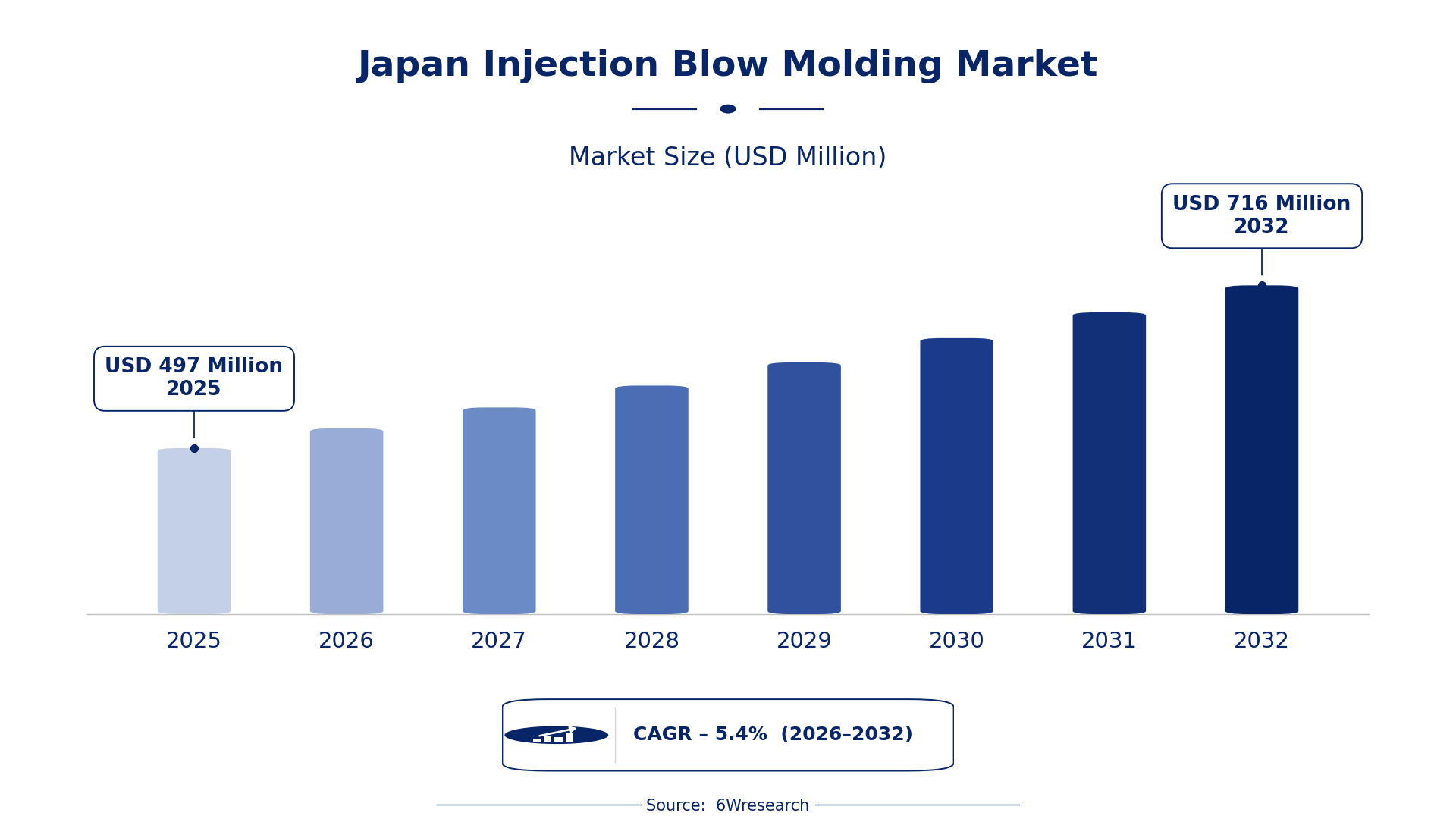
According to 6Wresearch internal database and industry insights, the Japan Injection Blow Molding Market was valued at USD 497 Million in 2025 and is projected to reach USD 716 Million by 2032, growing at a CAGR of approximately 5.4% during 2026–2032.
Japan Injection Blow Molding Market Highlights
| Report Metric | Details |
| Report Name | Japan Injection Blow Molding Market (2026-2032) |
| Market Size 2025 | USD 497 Million |
| Market Size 2032 | USD 716 Million |
| Absolute Growth 2025–2032 | USD 219 Million |
| CAGR 2026–2032 | 5.4% |
| Peak Annual Growth | 6.2% in 2028 |
| Forecast Period | 2026–2032 |
| Historical Data | 2022–2025 |
| Base Year | 2025 |
| Leading Process Type, 2025 | Single-Stage (37% share) |
| Leading Mold Type, 2025 | Precision Molds (52% share) |
| Leading Material Type, 2025 | PET (35% share) |
| Leading Application, 2025 | Pharmaceutical Bottles (44% share) |
| Leading End User Sector, 2025 | Healthcare Sector (45% share) |
| Fastest-Growing Process Type | IBM for Medical (7.4% CAGR) |
| Fastest-Growing Mold Type | Aseptic Mold (7.6% CAGR) |
| Fastest-Growing Material Type | Medical-Grade PE (7.8% CAGR) |
| Fastest-Growing Application | Liquid Vials (7.1% CAGR) |
| Growing Sector | Healthcare Sector |
| Key End Users | Healthcare Sector, Packaging Companies, F&B Industry, Cosmetic Industry |
Japan Injection Blow Molding Market Year-wise Growth Rate and Key Drivers (2022–2032)
This graph illustrates the annual growth rates of the market from 2022 to 2032, highlighting a steady upward trajectory and projected market expansion over the forecast period.
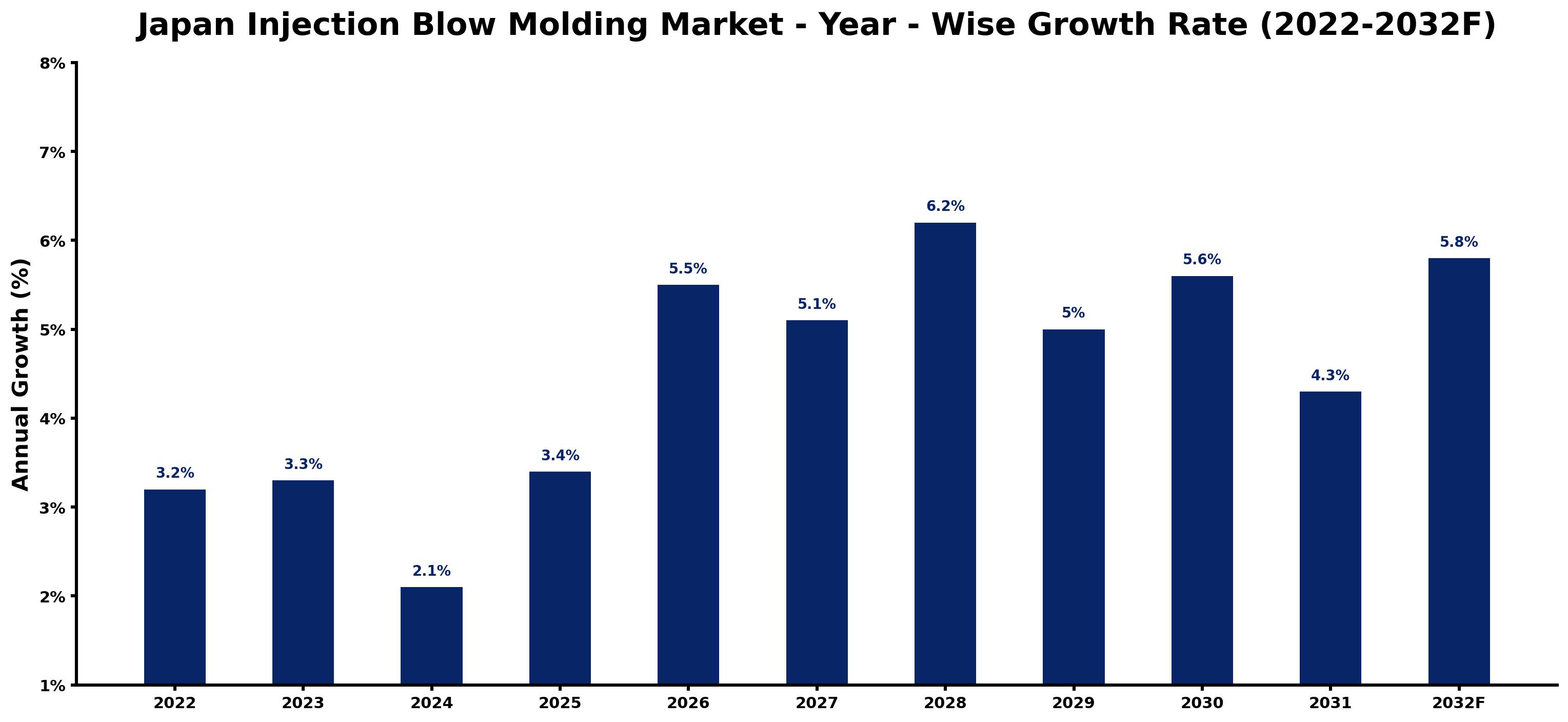
Below, each year's estimated growth is shown next to the factor that most influenced it.
| Year | Estimated Annual Growth (%) | Market Rationale |
| 2022 | 3.2 | The market experienced steady growth due to strong demand from the healthcare sector and packaging industries. |
| 2023 | 3.3 | Growth accelerated as production ramped up for pharmaceutical packaging and beverage containers. |
| 2024 | 2.1 | A slowdown occurred as production faced temporary constraints from supply chain disruptions. |
| 2025 | 3.4 | Growth regained momentum with rising demand for medical and cosmetic packaging solutions. |
| 2026 | 5.5 | The market is expected to grow rapidly as investments in sustainable packaging technologies increase. |
| 2027 | 5.1 | A slight slowdown is anticipated as the market adjusts to new production capacities and efficiencies. |
| 2028 | 6.2 | Growth will peak with heightened demand for packaging solutions in pharmaceuticals and food sectors. |
| 2029 | 5.0 | The market is expected to slow as competition intensifies among packaging firms in various segments. |
| 2030 | 5.6 | Growth is projected to rise again due to increased consumer demand for packaged goods and sustainable options. |
| 2031 | 4.3 | A slowdown is anticipated as market saturation begins to take effect in certain segments and products. |
| 2032 | 5.8 | The market will continue to grow as new technologies and materials are adopted across various applications. |
Note: Market size estimations and growth projections presented in this report are based on 6Wresearch's proprietary forecasting methodology, utilizing the latest available industry data, government publications, and primary research inputs.
Japan Injection Blow Molding Market Synopsis
Injection blow molding is a manufacturing process for creating hollow plastic parts, integrating both injection and blow molding techniques. The Japan Injection Blow Molding Market is primarily driven by the healthcare sector, which includes over 10,000 hospitals requiring pharmaceutical packaging. Additionally, the beverage industry is expanding, with rising consumption boosting demand for beverage containers. With Japan's packaging industry valued at approximately 1.5 trillion JPY, investments in sustainable practices and technological advancements are set to further stimulate market growth.
Market Dynamics Impact Analysis (2026–2032)
| Factor | Type | Impact | Primary Segment Affected |
| Growing demand for pharmaceutical packaging due to healthcare sector expansion. | Driver | High | IBM for Medical |
| Increased consumer preference for sustainable packaging solutions. | Driver | High | IBM for Food |
| Rising investments in advanced manufacturing technologies. | Opportunity | High | Precision Molds |
| Expansion of the beverage industry leading to higher packaging needs. | Opportunity | Medium | Beverage Bottles |
| Regulatory compliance costs for food-grade materials. | Restraint | High | IBM for Food |
| Limited availability of skilled workforce for advanced mold production. | Restraint | Medium | Precision Molds |
| High costs associated with compliance to stringent packaging standards. | Challenge | High | IBM for Medical |
| Capacity constraints in production facilities due to rising demand. | Challenge | Medium | Pharmaceutical Bottles |
Evaluation of Drivers in Japan Injection Blow Molding Market (2026–2032)
Demand rests on the following drivers, each shown with the segment it touches most.
| Drivers | Primary Segment Affected | Why It Matters (Evidence) |
| Investment in advanced manufacturing technologies boosts production efficiency. | Precision Molds | Japan's packaging industry is valued at approximately 1.5 trillion JPY, driving investments in technology. |
| Increased healthcare spending leads to higher demand for medical packaging. | Healthcare Sector | The healthcare sector in Japan has over 10,000 hospitals requiring pharmaceutical packaging. |
| Growing consumer demand for sustainable packaging materials drives innovation. | Single-Stage | In 2022, Japan's packaging industry saw a notable trend towards sustainable packaging solutions, influencing production choices. |
| Rising beverage consumption increases the need for beverage bottles. | Beverage Bottles | The demand for beverage bottles is increasing due to a rise in consumption, with significant growth in the beverage sector. |
| Regulatory standards for food safety necessitate high-quality materials. | Food-Grade Plastic | The Food Safety Agency regulates food-grade plastic materials in Japan, ensuring compliance and safety. |
Volumes grow on the back of increased investments in advanced manufacturing technologies, which boost production efficiency across the sector. The healthcare sector drives demand for medical packaging solutions, leading to higher production of pharmaceutical bottles. Rising consumer preferences for sustainable packaging further stimulate the market, as Japan's packaging industry values sustainability. The beverage industry's growth, driven by increased consumption, necessitates more beverage bottles, creating further opportunities for manufacturers. Compliance with food safety standards requires high-quality materials, ensuring consistent demand from the food sector.
Evaluation of Restraints in Japan Injection Blow Molding Market
These restraints slow adoption and weigh on supplier margins.
| Market Restraint | Primary Segment Affected | Why It Matters (Evidence) |
| High compliance costs for food-grade materials limit profit margins. | Single-Stage | The Food Safety Agency mandates stringent regulations, increasing production costs for manufacturers. |
| Limited availability of skilled workforce impacts production capacity. | Precision Molds | The need for specialized skills in mold production is not being met, hindering growth. |
| Supply chain disruptions can delay production timelines. | Beverage Bottles | Japan's reliance on imported materials can lead to vulnerabilities in supply chains. |
| Increasing competition may pressure prices and margins. | PET | As more players enter the market, price competition intensifies, affecting profitability. |
| Regulatory changes can impose additional costs on manufacturers. | Single-Stage | Frequent updates to health regulations require ongoing compliance investments. |
Japan Injection Blow Molding Market Challenges
Japan's injection blow molding sector produced over 500 million plastic bottles in 2022, yet supply chain disruptions have delayed deliveries, impacting hospitals that depend on timely pharmaceutical packaging. A shortage of skilled workers in the injection molding industry has created production inefficiencies, resulting in longer lead times for clinics requiring essential medical supplies. Rising costs of raw materials, particularly medical-grade PE, have inflated expenses for producers, compelling them to increase prices for buyers. Stringent food safety regulations complicate operations, causing delays for packaging companies as they navigate approvals from the Food Safety Agency.
Trends in the Japan Injection Blow Molding Market
Several trends are reshaping the Japan Injection Blow Molding Market; the most important are set out below.
- Increase in Sustainable Packaging Solutions: The Japanese packaging industry is increasingly adopting eco-friendly materials, with the Tokyo Metropolitan Government setting targets for reducing plastic waste by 2030. This shift is prompting companies to innovate in sustainable practices.
- Shift to Aseptic Molds: The industry is moving towards aseptic molds to meet stringent hygiene standards in medical packaging. Aseptic molds are projected to grow at a CAGR of 7.6%, reflecting the increasing demand for safety in healthcare applications.
- Growth of Medical-Grade Materials: The demand for medical-grade PE is rising, driven by the need for compliance with health regulations. This segment is expected to grow at a CAGR of 7.8%, indicating a shift towards higher quality materials in medical applications.
- Increase in Liquid Vials for Pharmaceuticals: The production of liquid vials is gaining traction, particularly in the pharmaceutical sector. This application is projected to grow at a CAGR of 7.1%, reflecting the increasing need for safe and compliant packaging.
Investment Opportunities in the Japan Injection Blow Molding Market
Investors looking at the Japan Injection Blow Molding Market should consider the following areas.
- Tokyo as a Hub for Packaging Innovation: Tokyo is emerging as a major hub for packaging innovation, with a projected growth of 5.4% in the sector. Companies can enter this market through local partnerships and joint ventures to access regional expertise.
- Investment in Advanced Mold Technologies: The demand for precision molds is rising, with an expected increase in production capabilities. Investing in advanced mold technologies can meet the needs of packaging companies in Japan.
- Focus on Medical Packaging Compliance: With over 10,000 hospitals in Japan, there is a significant opportunity in medical packaging compliance. Suppliers can enter this market by obtaining necessary certifications and aligning with healthcare standards.
- Growing Demand for Beverage Packaging: The beverage industry is expanding, with a projected increase in beverage consumption. Companies can capitalise on this by supplying innovative packaging solutions tailored for beverage manufacturers.
Government Initiatives in the Japan Injection Blow Molding Market
Japan's regulatory framework for injection blow molding is shaped by several laws, including the Food Sanitation Act amendment (2018), which mandates HACCP-based hygiene management for food businesses. Compliance with these regulations ensures that producers maintain high safety standards in food-grade packaging, which is critical for the industry. The Long-Term Care Insurance Act (1997) funds nursing care and support services, indirectly influencing the demand for compliant packaging solutions in the healthcare sector.
The Ministry of Health, Labour and Welfare oversees regulations for medical packaging, approving standards that ensure safety and compliance. The NHI drug price standard influences the demand for compliant packaging solutions, as it sets reimbursement prices for drugs used in medical care, impacting the types of packaging required by healthcare facilities.
Future Insight of the Japan Injection Blow Molding Market
A policy-driven shift towards sustainable packaging will transform the market by 2032, prompting suppliers to utilise eco-friendly materials and technologies. The Tokyo Metropolitan Government's targets for reducing plastic waste by 2030 will stimulate innovation in biodegradable packaging solutions. Advances in automation and smart manufacturing will enhance production efficiency, allowing buyers to experience reduced costs and faster turnaround times. The annual Packaging Technology Conference will showcase trends that align with consumer preferences, ensuring the industry adapts to meet future demands.
Market Segmentation Analysis
Japan Injection Blow Molding Market report covers a detailed analysis of the following market segments:
By Process Type – Single-Stage Leads, IBM for Medical Expected to Grow Fastest
According to Saurav Kr Singh, Senior Research Analyst at 6Wresearch, Single-Stage held 37% of the Japan Injection Blow Molding Market by process type in 2025. The Single-Stage process commands the largest share as it is extensively utilised for producing small to medium-sized containers across various sectors. Its prominent role in pharmaceutical packaging demonstrates its capability to satisfy diverse market requirements. IBM for Medical is set to record the highest CAGR in this split, 7.4% over 2026–2032. This sector's expansion is reflected in the increasing number of hospitals demanding compliant packaging solutions. Suppliers should prioritise enhancing Single-Stage capabilities to cater to the rising demand in the healthcare sector.
By Mold Type – Precision Molds Lead, Aseptic Mold Expected to Grow Fastest
In 2025, Precision Molds led the mold type split with a 52% share. Precision Molds lead the market as they are crucial for high-quality production, especially in industries that require exact specifications. Their prevalent application in the healthcare sector highlights their key role in ensuring product integrity. Aseptic Mold is projected to grow fastest, at a CAGR of 7.6% during 2026–2032. The Aseptic Mold segment is growing rapidly due to the essential need for maintaining sterility in medical packaging. This demand is propelled by the heightened focus on safety within healthcare applications. Investing in advanced Aseptic Mold technology will be vital for suppliers aiming to penetrate the expanding healthcare market.
By Material Type – PET Leads, Medical-Grade PE Expected to Grow Fastest
PET took 35% of material type revenue in 2025, more than any other category. PET is the dominant material type, primarily utilised for beverage and food packaging, owing to its excellent properties and recyclability. The substantial production of plastic bottles in Japan underscores its importance in the market. Over 2026–2032, Medical-Grade PE is expected to post the fastest growth, at a CAGR of 7.8%. Medical-Grade PE is witnessing rapid growth as it is vital for healthcare applications, particularly in ensuring compliance with health regulations. The surging demand for safe medical packaging is driving this segment forward. Suppliers must focus on the development of Medical-Grade PE solutions to align with the increasing healthcare standards.
By Application – Pharmaceutical Bottles Lead, Liquid Vials Expected to Grow Fastest
With 44% of application revenue in 2025, Pharmaceutical Bottles was the largest category. Pharmaceutical Bottles are the leading application due to their significance in the healthcare sector, where compliance and safety are paramount. The extensive network of hospitals in Japan drives the demand for these essential products. The quickest growth will come from Liquid Vials, forecast to expand at a CAGR of 7.1% between 2026 and 2032. Liquid Vials are experiencing the fastest growth as they are essential for pharmaceuticals and laboratory use, particularly in the context of increasing healthcare needs. This growth is supported by the rising number of medical applications requiring vials. Focusing on the production of Liquid Vials will be advantageous for suppliers looking to capitalise on the expanding pharmaceutical market.
By End User Sector – Healthcare Sector Leads and Records the Fastest Growth
Healthcare Sector accounted for 45% of the market by end user sector in 2025. The Healthcare Sector leads the market as it demands high-quality molded containers for various applications, including pharmaceuticals and medical devices. The presence of over 10,000 hospitals in Japan underscores the sector's substantial requirements. The same category is also set to grow fastest, at a CAGR of 6.8% during 2026–2032. The Healthcare Sector is also the fastest-growing end user, driven by the increasing need for compliant and safe packaging solutions in medical applications. This dual role reinforces the sector's dominance and potential for future growth. Suppliers should align their strategies with the healthcare sector's needs to maximise their market opportunities.
Key Attractiveness of the Report
- 10 Years of Market Numbers
- Historical Data Starting from 2022 to 2025
- Base Year 2025
- Forecast Data until 2032
- Key Performance Indicators Impacting the Market
- Major Upcoming Developments and Projects
Key Highlights of the Report:
- Japan Injection Blow Molding Market Outlook
- Market Size of Japan Injection Blow Molding Market, 2025
- Forecast of Japan Injection Blow Molding Market, 2032
- Historical Data and Forecast of Japan Injection Blow Molding Revenues & Volume for the Period 2022-2032F
- Japan Injection Blow Molding Market Trend Evolution
- Japan Injection Blow Molding Market Drivers and Challenges
- Japan Injection Blow Molding Price Trends
- Japan Injection Blow Molding Porter's Five Forces
- Japan Injection Blow Molding Industry Life Cycle
- Historical Data and Forecast of Japan Injection Blow Molding Market Revenues & Volume By Process Type for the Period 2022-2032F
- Historical Data and Forecast of Japan Injection Blow Molding Market Revenues & Volume By Single-Stage for the Period 2022-2032F
- Historical Data and Forecast of Japan Injection Blow Molding Market Revenues & Volume By Double-Stage for the Period 2022-2032F
- Historical Data and Forecast of Japan Injection Blow Molding Market Revenues & Volume By IBM for Food for the Period 2022-2032F
- Historical Data and Forecast of Japan Injection Blow Molding Market Revenues & Volume By IBM for Medical for the Period 2022-2032F
- Historical Data and Forecast of Japan Injection Blow Molding Market Revenues & Volume By Mold Type for the Period 2022-2032F
- Historical Data and Forecast of Japan Injection Blow Molding Market Revenues & Volume By Precision Molds for the Period 2022-2032F
- Historical Data and Forecast of Japan Injection Blow Molding Market Revenues & Volume By Custom Mold for the Period 2022-2032F
- Historical Data and Forecast of Japan Injection Blow Molding Market Revenues & Volume By Standard Mold for the Period 2022-2032F
- Historical Data and Forecast of Japan Injection Blow Molding Market Revenues & Volume By Aseptic Mold for the Period 2022-2032F
- Historical Data and Forecast of Japan Injection Blow Molding Market Revenues & Volume By Material Type for the Period 2022-2032F
- Historical Data and Forecast of Japan Injection Blow Molding Market Revenues & Volume By PET, PE, PP for the Period 2022-2032F
- Historical Data and Forecast of Japan Injection Blow Molding Market Revenues & Volume By HDPE, LDPE for the Period 2022-2032F
- Historical Data and Forecast of Japan Injection Blow Molding Market Revenues & Volume By Food-Grade Plastic for the Period 2022-2032F
- Historical Data and Forecast of Japan Injection Blow Molding Market Revenues & Volume By Medical-Grade PE for the Period 2022-2032F
- Historical Data and Forecast of Japan Injection Blow Molding Market Revenues & Volume By Application for the Period 2022-2032F
- Historical Data and Forecast of Japan Injection Blow Molding Market Revenues & Volume By Pharmaceutical Bottles for the Period 2022-2032F
- Historical Data and Forecast of Japan Injection Blow Molding Market Revenues & Volume By Cosmetic Containers for the Period 2022-2032F
- Historical Data and Forecast of Japan Injection Blow Molding Market Revenues & Volume By Beverage Bottles for the Period 2022-2032F
- Historical Data and Forecast of Japan Injection Blow Molding Market Revenues & Volume By Liquid Vials for the Period 2022-2032F
- Historical Data and Forecast of Japan Injection Blow Molding Market Revenues & Volume By End User Sector for the Period 2022-2032F
- Historical Data and Forecast of Japan Injection Blow Molding Market Revenues & Volume By Packaging Companies for the Period 2022-2032F
- Historical Data and Forecast of Japan Injection Blow Molding Market Revenues & Volume By Cosmetic Industry for the Period 2022-2032F
- Historical Data and Forecast of Japan Injection Blow Molding Market Revenues & Volume By F&B Industry for the Period 2022-2032F
- Historical Data and Forecast of Japan Injection Blow Molding Market Revenues & Volume By Healthcare Sector for the Period 2022-2032F
- Japan Injection Blow Molding Import Export Trade Statistics
- Market Opportunity Assessment By Process Type
- Market Opportunity Assessment By Mold Type
- Market Opportunity Assessment By Material Type
- Market Opportunity Assessment By Application
- Market Opportunity Assessment By End User Sector
- Japan Injection Blow Molding Top Companies Market Share
- Japan Injection Blow Molding Competitive Benchmarking By Technical and Operational Parameters
- Japan Injection Blow Molding Company Profiles
- Japan Injection Blow Molding Key Strategic Recommendations
Market Covered
The report covers the following segments.
By Process Type
- Single-Stage
- Double-Stage
- IBM for Food
- IBM for Medical
By Mold Type
- Precision Molds
- Custom Mold
- Standard Mold
- Aseptic Mold
By Material Type
- PET
- PE
- PP
- HDPE
- LDPE
- Food-Grade Plastic
- Medical-Grade PE
By Application
- Pharmaceutical Bottles
- Cosmetic Containers
- Beverage Bottles
- Liquid Vials
By End User Sector
- Packaging Companies
- Cosmetic Industry
- F&B Industry
- Healthcare Sector































