Japan Inland Waterways Transport Market Size & Growth Rate
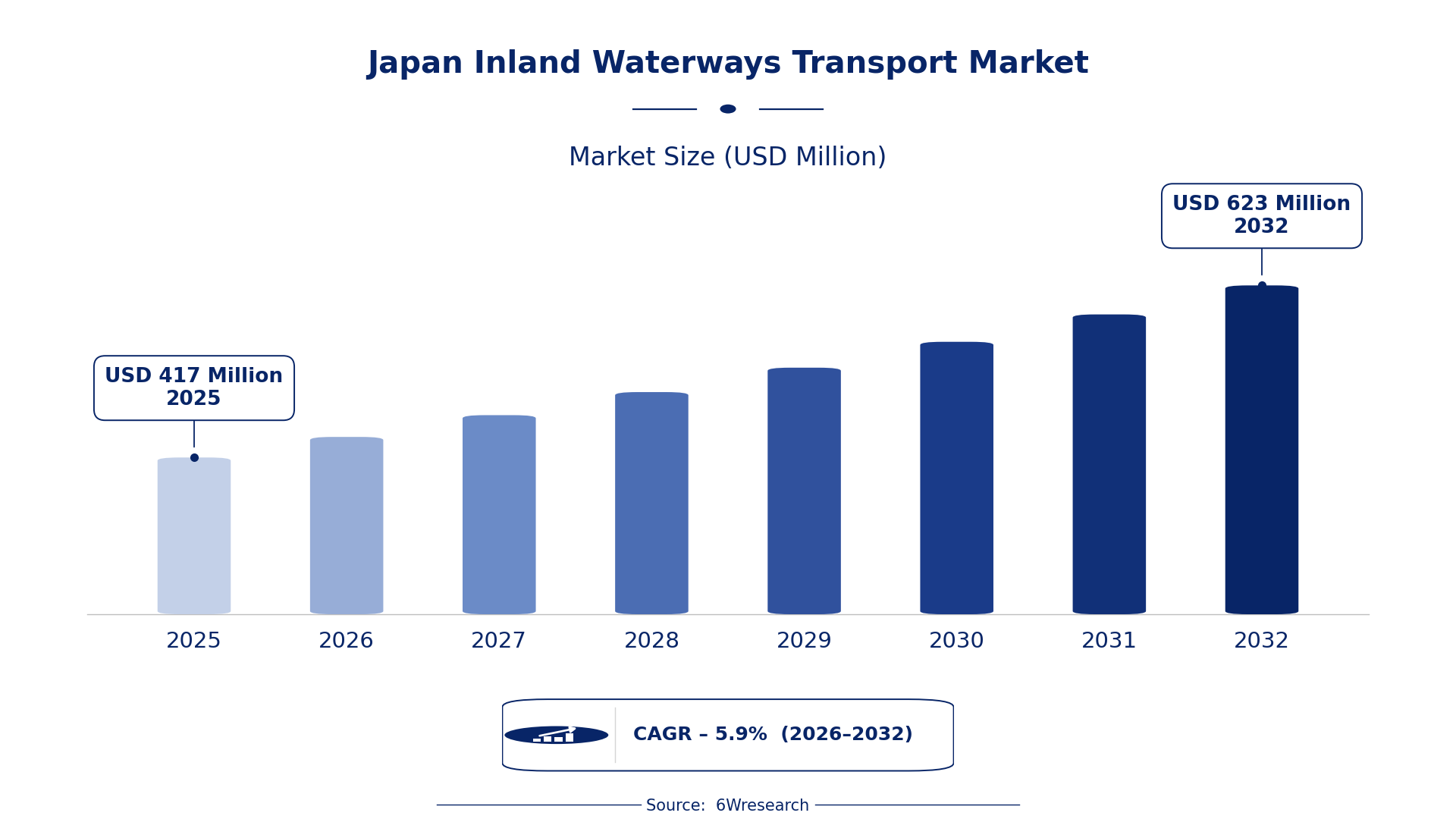
According to 6Wresearch internal database and industry insights, the Japan Inland Waterways Transport Market was valued at USD 417 Million in 2025 and is projected to reach USD 623 Million by 2032, growing at a CAGR of approximately 5.9% during 2026–2032.
Japan Inland Waterways Transport Market Highlights
| Report Metric | Details |
| Report Name | Japan Inland Waterways Transport Market (2026-2032) |
| Market Size 2025 | USD 417 Million |
| Market Size 2032 | USD 623 Million |
| Absolute Growth 2025–2032 | USD 206 Million |
| CAGR 2026–2032 | 5.9% |
| Peak Annual Growth | 7.2% in 2030 |
| Forecast Period | 2026–2032 |
| Historical Data | 2022–2025 |
| Base Year | 2025 |
| Leading Transport Type, 2025 | Passenger Services (45% share) |
| Leading Cargo Type, 2025 | Chemicals (31% share) |
| Leading Vessel Type, 2025 | Barges (41% share) |
| Leading Route Type, 2025 | Inland Rivers (43% share) |
| Leading End User Sector, 2025 | Tourism Sector (43% share) |
| Fastest-Growing Cargo Type | Oils (8.7% CAGR) |
| Fastest-Growing Vessel Type | Tank Barges (8.4% CAGR) |
| Fastest-Growing Route Type | Coastal + River (8.5% CAGR) |
| Fastest-Growing End User Sector | Import/Export Firms (7.8% CAGR) |
| Growing Sector | Tourism Sector |
| Key End Users | Tourism Sector, Bulk Cargo Transporters, Petrochemical Sector, Import/Export Firms |
Japan Inland Waterways Transport Market Year-wise Growth Rate and Key Drivers (2022–2032)
This graph illustrates the annual growth rates of the market from 2022 to 2032, highlighting a steady upward trajectory and projected market expansion over the forecast period.
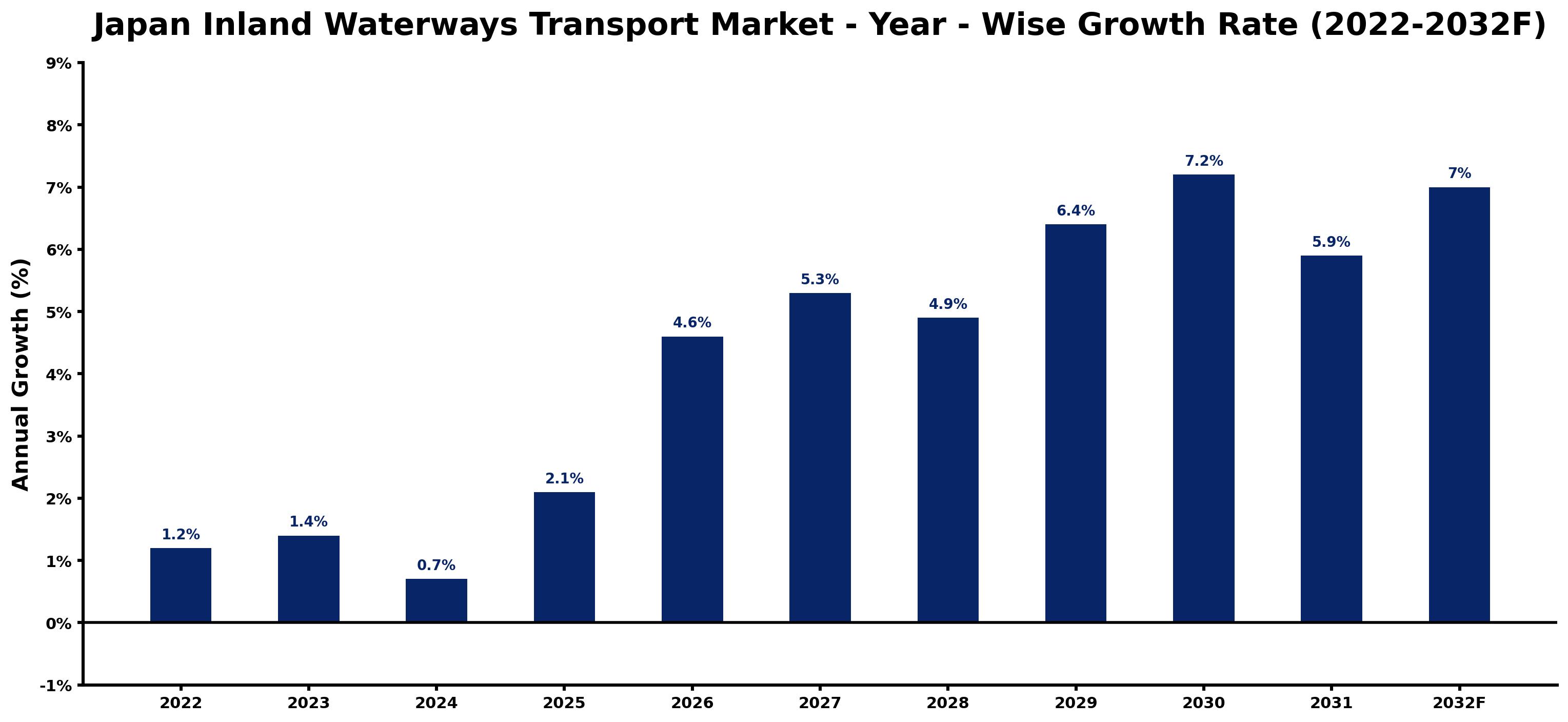
For each year, the table pairs the estimated growth rate with the leading influence on demand, showing how the drivers changed across the period.
| Year | Estimated Annual Growth (%) | Market Rationale |
| 2022 | 1.2 | The market experienced stable demand from domestic users and imports. |
| 2023 | 1.4 | Growth was driven by increased domestic tourism and infrastructure improvements. |
| 2024 | 0.7 | Demand slowed due to temporary disruptions in logistics and transport. |
| 2025 | 2.1 | The market saw faster growth as investments in infrastructure began to yield results. |
| 2026 | 4.6 | An increased focus on eco-friendly transport solutions is expected to spur demand. |
| 2027 | 5.3 | Investment in passenger services will continue to enhance market performance. |
| 2028 | 4.9 | Demand growth is projected to slow as capacity issues begin to surface. |
| 2029 | 6.4 | Rising tourism and improved routes will lead to faster growth again. |
| 2030 | 7.2 | Peak growth is expected due to substantial investments in infrastructure. |
| 2031 | 5.9 | Growth will slow as market adjustments to capacity constraints occur. |
| 2032 | 7.0 | Demand is projected to rise again with new technological advancements. |
Note: Market size estimations and growth projections presented in this report are based on 6Wresearch's proprietary forecasting methodology, utilizing the latest available industry data, government publications, and primary research inputs.
Japan Inland Waterways Transport Market Synopsis
Inland Waterways Transport in Japan plays a crucial role in the movement of goods and passengers via rivers and canals, primarily utilising specialised vessels such as barges and tankers. This mode of transport reduces road congestion and offers an environmentally friendly alternative for cargo movement. The Japan Inland Waterways Transport Market is on an upward trend, propelled by a rise in domestic tourism, with inland waterways accounting for 5% of total freight transport in 2022. The Tokyo Bay area stands out as a key hub, while government initiatives encourage the use of inland waterways for bulk cargo and passenger services.
Market Dynamics Impact Analysis (2026–2032)
| Factor | Type | Impact | Primary Segment Affected |
| Rising domestic tourism drives demand for passenger services. | Driver | High | Passenger Services |
| Infrastructure improvements enhance navigability and efficiency. | Driver | High | Bulk Cargo |
| Increased investment in eco-friendly transport solutions creates opportunities. | Opportunity | High | Container Transport |
| Growing demand for leisure cruises offers new market potential. | Opportunity | Medium | Tourist Routes |
| Capacity constraints limit the ability to meet rising demand. | Restraint | High | Passenger Services |
| Regulatory compliance costs can hinder operational efficiency. | Restraint | Medium | Bulk Cargo |
| Increased competition from alternative transport modes poses risks. | Challenge | High | Container Transport |
| Technological adoption may lag behind market needs. | Challenge | Medium | Liquid Cargo |
Evaluation of Drivers in Japan Inland Waterways Transport Market (2026–2032)
The main growth drivers and the segments they affect most are set out below.
| Drivers | Primary Segment Affected | Why It Matters (Evidence) |
| Rising domestic tourism increases passenger transport demand. | Passenger Services | Tourist routes have seen a 20% increase in usage since 2021, encouraging more ferry services. |
| Infrastructure investments improve transport efficiency. | Bulk Cargo | The government allocated ¥1 billion for improvements in inland waterways, boosting cargo capacity. |
| Growing environmental awareness promotes eco-friendly transport options. | Container Transport | Sustainable transport solutions are increasingly adopted by businesses looking to enhance logistics. |
| Increased demand for leisure activities boosts passenger services. | Tourist Routes | Passenger ferries serve over 1 million tourists annually in urban areas, driving service expansions. |
| Technological advancements improve operational capabilities. | Liquid Cargo | New standards are applied to improve environmental management in transport. |
The strongest pull on demand comes from rising domestic tourism, which has led to a 20% increase in usage of tourist routes since 2021. Infrastructure investments, including ¥1 billion allocated for improvements, boost navigability and efficiency in cargo transport. Passenger ferries serve over 1 million tourists annually in urban areas, increasing demand for services. Enhanced operational capabilities in liquid cargo transport are achieved through improved management practices.
Evaluation of Restraints in Japan Inland Waterways Transport Market
Below are the constraints most often cited by buyers and suppliers, with the segment each affects.
| Market Restraint | Primary Segment Affected | Why It Matters (Evidence) |
| Capacity constraints limit the ability to meet rising demand. | Passenger Services | The average length of passenger ferry routes is approximately 15 km, restricting service expansion. |
| Regulatory compliance costs can hinder operational efficiency. | Bulk Cargo | Compliance with standards increases operational costs for transport providers. |
| Competition from road and rail transport affects market share. | Container Transport | Inland waterways accounted for only 5% of total freight transport in 2022, limiting growth. |
| Seasonal fluctuations in demand create instability. | Tourist Routes | Tourist routes experience peak usage in summer, leading to uneven revenue throughout the year. |
| Limited awareness of inland waterways' benefits constrains growth. | Liquid Cargo | Many businesses still prefer traditional transport modes, affecting liquid cargo volumes. |
Japan Inland Waterways Transport Market Challenges
A lack of skilled operators poses a challenge for inland waterways transport, leading to delays in cargo movement and escalating costs for producers reliant on timely deliveries. Buyers face rising expenses as regulatory measures from the Ministry of Land, Infrastructure, Transport and Tourism impose compliance costs, which may result in fines and operational disruptions. Complex regulations burden importers, extending lead times and inflating logistics costs as they navigate these requirements. Competition from alternative transport modes exerts pressure on the sector, with a 20% increase in the use of tourist routes since 2021 diverting resources and focus away from bulk transport services.
Trends in the Japan Inland Waterways Transport Market
The trends below show where the Japan Inland Waterways Transport Market is heading.
- Shift towards Eco-Friendly Transport Solutions: Sustainable logistics practices are reshaping transport methods. Government initiatives promote inland waterways, contributing to a 5% share in total freight transport in 2022, appealing to environmentally conscious buyers.
- Increase in Domestic Tourism Driving Passenger Services: Domestic tourism is significantly influencing passenger transport demand. In 2023, passenger ferries accommodated over 1 million tourists, reflecting a growing trend that benefits ferry operators and service providers.
- Expansion of Infrastructure for Inland Waterways: Infrastructure improvements are enhancing the efficiency of inland transport. The government allocated ¥1 billion for upgrades in 2023, which will support increased cargo capacity and attract more users.
- Growth of Leisure Cruises on Inland Waterways: Leisure cruises are becoming increasingly popular among tourists. The average length of passenger ferry routes is approximately 15 km, providing ample opportunities for growth in this segment.
Investment Opportunities in the Japan Inland Waterways Transport Market
The following areas offer the clearest openings for investors and suppliers in the Japan Inland Waterways Transport Market.
- Tourism Sector Seeking Enhanced Passenger Services: The tourism sector is on the rise, with a 20% increase in the use of tourist routes. Investing in passenger ferry services in urban areas can draw more tourists and enhance service offerings.
- Growing Demand for Eco-Friendly Logistics Solutions: The timing is ideal for investments in sustainable transport options, as the government advocates for eco-friendly solutions. Container transport firms can gain from adopting inland waterways.
- Bulk Cargo Transport Needs Infrastructure Improvements: The bulk cargo sector necessitates enhanced infrastructure to meet growing demand. The Tokyo Bay area offers opportunities for investments in facilities and services to support this growth.
- Liquid Cargo Sector Requires Specialized Tank Barges: The liquid cargo market is expanding, requiring investments in specialised tank barges. The petrochemical sector represents a key buyer group that can benefit from improved transport solutions.
Government Initiatives in the Japan Inland Waterways Transport Market
The Water Supply Act (1957) and the Sewerage Act (1958) establish essential standards for inland waterways transport, ensuring safe drinking water and effective wastewater treatment. Compliance with these laws is necessary for producers and transport operators, as they must adhere to strict regulations to maintain operational licenses and public safety.
In 2023, ¥1 billion was allocated for infrastructure improvements in inland waterways, overseen by the Japan Waterway Development Agency. This funding aims to enhance navigability and efficiency, benefiting both cargo and passenger transport sectors.
Future Insight of the Japan Inland Waterways Transport Market
The introduction of automated navigation systems will transform demand for inland waterways transport by 2032, prompting suppliers to adopt more efficient operational practices. Infrastructure enhancements supported by government funding will expand navigable routes, improving logistics for buyers. An increased focus on sustainable transport solutions will encourage suppliers to implement eco-friendly practices. The growing popularity of domestic tourism will further elevate passenger ferry services, creating new opportunities for both suppliers and buyers as they respond to rising consumer interest.
Market Segmentation Analysis
Japan Inland Waterways Transport Market report covers a detailed analysis of the following market segments:
By Transport Type – Passenger Services Lead and Record the Fastest Growth
According to Saurav Kr Singh, Senior Research Analyst at 6Wresearch, Passenger Services accounted for 45% of the market by transport type in 2025. Passenger services hold the largest share in Japan's inland waterways transport as they are vital for urban mobility, especially in regions like Tokyo Bay. The annual usage of passenger ferries by over 1 million tourists highlights their importance in providing eco-friendly transport options. Passenger Services are also forecast to expand faster than any other category, at a CAGR of 8.3% over 2026–2032. The rapid growth of passenger services is driven by a 20% increase in tourist route usage since 2021, indicating a rising interest in domestic tourism. As this trend continues, the lead in this segment is expected to widen further as more tourists seek sustainable travel options. Suppliers should enhance passenger services to capitalise on the expanding tourism market.
By Cargo Type – Chemicals Lead, Oils Expected to Grow Fastest
Chemicals held 31% of the Japan Inland Waterways Transport Market by cargo type in 2025. Chemicals hold the largest share of the cargo type segment as they are transported using specialized tank barges that ensure safety and compliance with regulations. This segment's importance is underscored by the stringent safety protocols governing chemical transport. Over 2026–2032, Oils are expected to post the fastest growth, at a CAGR of 8.7%. The oils segment is experiencing rapid growth due to the increasing demand for petroleum products, which are efficiently transported through inland waterways. This trend indicates a shift towards more sustainable transport solutions for energy resources. Buyers in the oils sector should consider inland waterways as a viable transport option to meet their logistical needs.
By Vessel Type – Barges Lead, Tank Barges Expected to Grow Fastest
With 41% of vessel type revenue in 2025, Barges was the largest category. Barges dominate the vessel type segment in Japan's inland waterways transport, primarily utilised for transporting various cargo types, including bulk materials. Their ability to carry up to 1,500 tons makes them essential for efficient logistics operations across the country. Tank Barges are set to record the highest CAGR in this split, 8.4% over 2026–2032. Tank barges are experiencing the fastest growth due to their critical role in safely transporting liquid cargo such as chemicals and oils. As the demand for these products rises, the reliance on tank barges will likely increase, further expanding their market share. Suppliers should invest in tank barge capabilities to meet the growing demand for liquid cargo transport.
By Route Type – Inland Rivers Lead, Coastal + River Expected to Grow Fastest
In 2025, Inland Rivers led the route type split with a 43% share. Inland rivers are the primary transport routes for goods and passengers, enabling efficient movement across Japan's extensive navigable waterways. This reliance on inland rivers is essential for alleviating road congestion and promoting eco-friendly transport solutions. The quickest growth will come from Coastal + River, forecast to expand at a CAGR of 8.5% between 2026 and 2032. The combination of coastal and river routes is growing rapidly as it offers efficient transport solutions that leverage both inland and coastal waterways. This trend indicates a shift towards integrated transport systems that enhance logistical efficiency. Investments in infrastructure for coastal and river routes could yield significant returns for transport operators.
By End User Sector – Tourism Sector Leads, Import/Export Firms Expected to Grow Fastest
The largest end user sector category in 2025 was Tourism Sector, at 43% of revenue. The tourism sector is the largest end user of inland waterways transport, utilising these routes for leisure activities and sightseeing. This sector's growth is vital for promoting sustainable transport alternatives in urban areas. Import/Export Firms are projected to grow fastest, at a CAGR of 7.8% during 2026–2032. Import/export firms are experiencing the fastest growth as they increasingly utilise inland waterways for efficient goods transport. This trend indicates a shift towards more sustainable logistics practices among businesses, with a growing emphasis on reducing carbon footprints. Suppliers should target import/export firms to expand their market presence in the inland waterways transport sector.
Key Attractiveness of the Report
- 10 Years of Market Numbers
- Historical Data Starting from 2022 to 2025
- Base Year 2025
- Forecast Data until 2032
- Key Performance Indicators Impacting the Market
- Major Upcoming Developments and Projects
Key Highlights of the Report:
- Japan Inland Waterways Transport Market Outlook
- Market Size of Japan Inland Waterways Transport Market, 2025
- Forecast of Japan Inland Waterways Transport Market, 2032
- Historical Data and Forecast of Japan Inland Waterways Transport Revenues & Volume for the Period 2022-2032F
- Japan Inland Waterways Transport Market Trend Evolution
- Japan Inland Waterways Transport Market Drivers and Challenges
- Japan Inland Waterways Transport Price Trends
- Japan Inland Waterways Transport Porter's Five Forces
- Japan Inland Waterways Transport Industry Life Cycle
- Historical Data and Forecast of Japan Inland Waterways Transport Market Revenues & Volume By Transport Type for the Period 2022-2032F
- Historical Data and Forecast of Japan Inland Waterways Transport Market Revenues & Volume By Container Transport for the Period 2022-2032F
- Historical Data and Forecast of Japan Inland Waterways Transport Market Revenues & Volume By Bulk Cargo for the Period 2022-2032F
- Historical Data and Forecast of Japan Inland Waterways Transport Market Revenues & Volume By Liquid Cargo for the Period 2022-2032F
- Historical Data and Forecast of Japan Inland Waterways Transport Market Revenues & Volume By Passenger Services for the Period 2022-2032F
- Historical Data and Forecast of Japan Inland Waterways Transport Market Revenues & Volume By Cargo Type for the Period 2022-2032F
- Historical Data and Forecast of Japan Inland Waterways Transport Market Revenues & Volume By Consumer Goods for the Period 2022-2032F
- Historical Data and Forecast of Japan Inland Waterways Transport Market Revenues & Volume By Coal, Grains for the Period 2022-2032F
- Historical Data and Forecast of Japan Inland Waterways Transport Market Revenues & Volume By Chemicals, Oils for the Period 2022-2032F
- Historical Data and Forecast of Japan Inland Waterways Transport Market Revenues & Volume By Cruise, Ferries for the Period 2022-2032F
- Historical Data and Forecast of Japan Inland Waterways Transport Market Revenues & Volume By Vessel Type for the Period 2022-2032F
- Historical Data and Forecast of Japan Inland Waterways Transport Market Revenues & Volume By Barges for the Period 2022-2032F
- Historical Data and Forecast of Japan Inland Waterways Transport Market Revenues & Volume By Dumb Barges for the Period 2022-2032F
- Historical Data and Forecast of Japan Inland Waterways Transport Market Revenues & Volume By Tank Barges for the Period 2022-2032F
- Historical Data and Forecast of Japan Inland Waterways Transport Market Revenues & Volume By Catamarans for the Period 2022-2032F
- Historical Data and Forecast of Japan Inland Waterways Transport Market Revenues & Volume By Route Type for the Period 2022-2032F
- Historical Data and Forecast of Japan Inland Waterways Transport Market Revenues & Volume By Coastal + River for the Period 2022-2032F
- Historical Data and Forecast of Japan Inland Waterways Transport Market Revenues & Volume By Inland Rivers for the Period 2022-2032F
- Historical Data and Forecast of Japan Inland Waterways Transport Market Revenues & Volume By Canal Transport for the Period 2022-2032F
- Historical Data and Forecast of Japan Inland Waterways Transport Market Revenues & Volume By Tourist Routes for the Period 2022-2032F
- Historical Data and Forecast of Japan Inland Waterways Transport Market Revenues & Volume By End User Sector for the Period 2022-2032F
- Historical Data and Forecast of Japan Inland Waterways Transport Market Revenues & Volume By Import/Export Firms for the Period 2022-2032F
- Historical Data and Forecast of Japan Inland Waterways Transport Market Revenues & Volume By Agricultural Supply for the Period 2022-2032F
- Historical Data and Forecast of Japan Inland Waterways Transport Market Revenues & Volume By Petrochemical Sector for the Period 2022-2032F
- Historical Data and Forecast of Japan Inland Waterways Transport Market Revenues & Volume By Tourism Sector for the Period 2022-2032F
- Japan Inland Waterways Transport Import Export Trade Statistics
- Market Opportunity Assessment By Transport Type
- Market Opportunity Assessment By Cargo Type
- Market Opportunity Assessment By Vessel Type
- Market Opportunity Assessment By Route Type
- Market Opportunity Assessment By End User Sector
- Japan Inland Waterways Transport Top Companies Market Share
- Japan Inland Waterways Transport Competitive Benchmarking By Technical and Operational Parameters
- Japan Inland Waterways Transport Company Profiles
- Japan Inland Waterways Transport Key Strategic Recommendations
Market Covered
Segments analysed in this report are listed below.
By Transport Type
- Container Transport
- Bulk Cargo
- Liquid Cargo
- Passenger Services
By Cargo Type
- Consumer Goods
- Coal
- Grains
- Chemicals
- Oils
- Cruise
- Ferries
By Vessel Type
- Barges
- Dumb Barges
- Tank Barges
- Catamarans
By Route Type
- Coastal + River
- Inland Rivers
- Canal Transport
- Tourist Routes
By End User Sector
- Import/Export Firms
- Agricultural Supply
- Petrochemical Sector
- Tourism Sector































