Japan PD-1/PD-L1 immunotherapy Market Size & Growth Rate
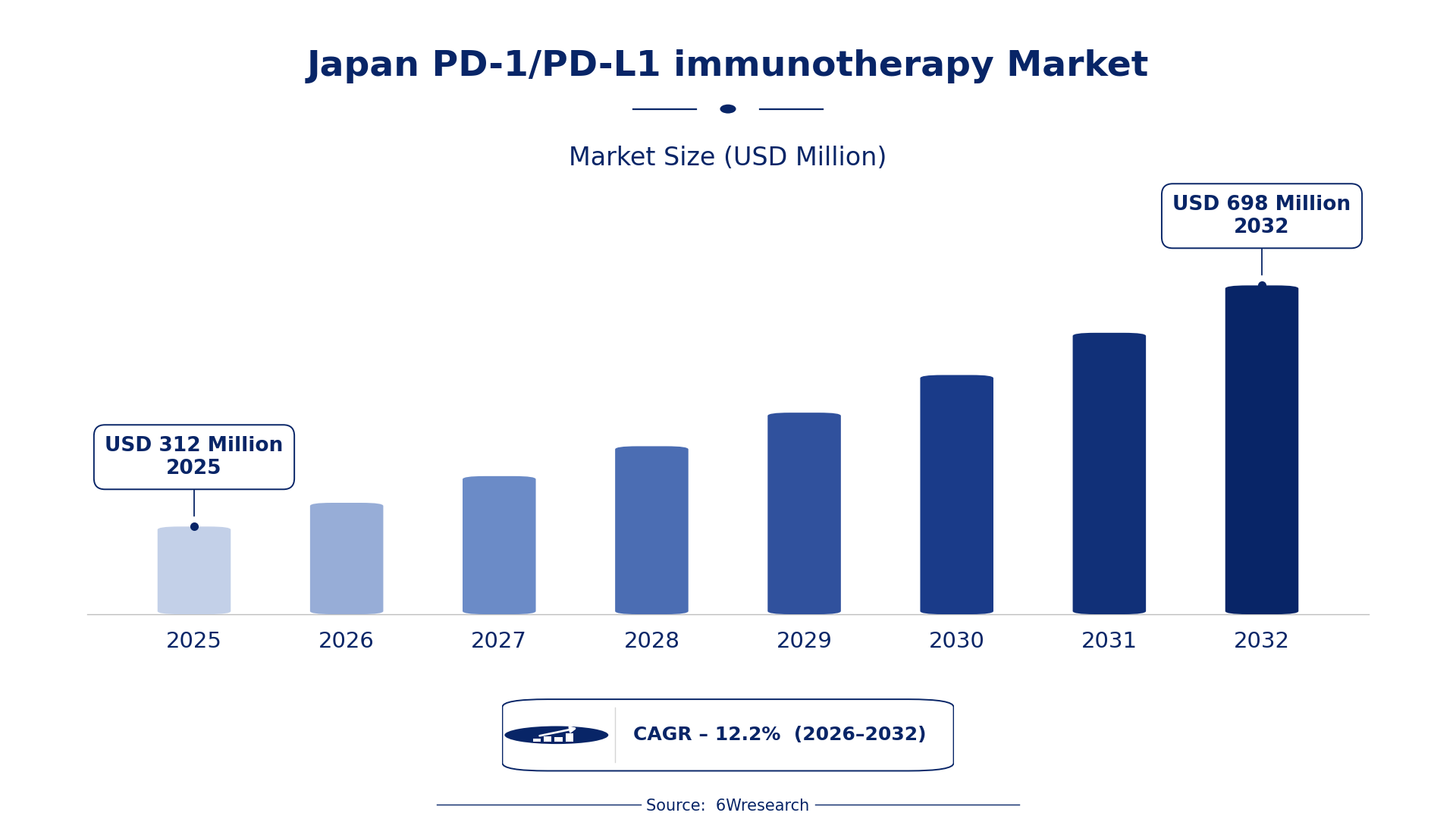
According to 6Wresearch internal database and industry insights, the Japan PD-1/PD-L1 immunotherapy Market was valued at USD 312 Million in 2025 and is projected to reach USD 698 Million by 2032, growing at a CAGR of approximately 12.2% during 2026–2032.
Japan PD-1/PD-L1 immunotherapy Market Highlights
| Report Metric | Details |
| Report Name | Japan PD-1/PD-L1 immunotherapy Market (2026-2032) |
| Market Size 2025 | USD 312 Million |
| Market Size 2032 | USD 698 Million |
| Absolute Growth 2025–2032 | USD 386 Million |
| CAGR 2026–2032 | 12.2% |
| Peak Annual Growth | 14.1% in 2032 |
| Forecast Period | 2026–2032 |
| Historical Data | 2022–2025 |
| Base Year | 2025 |
| Leading Type, 2025 | CTLA-4 Inhibitor (36% share) |
| Leading Application, 2025 | Melanoma (37% share) |
| Fastest-Growing Type | PD-1 Inhibitor (16.9% CAGR) |
| Fastest-Growing Application | Lung Cancer (16.2% CAGR) |
| Growing Sector | Oncology |
| Key End Users | Healthcare providers, hospitals, cancer research institutions |
Japan PD-1/PD-L1 immunotherapy Market Year-wise Growth Rate and Key Drivers (2022–2032)
This graph illustrates the annual growth rates of the market from 2022 to 2032, highlighting a steady upward trajectory and projected market expansion over the forecast period.
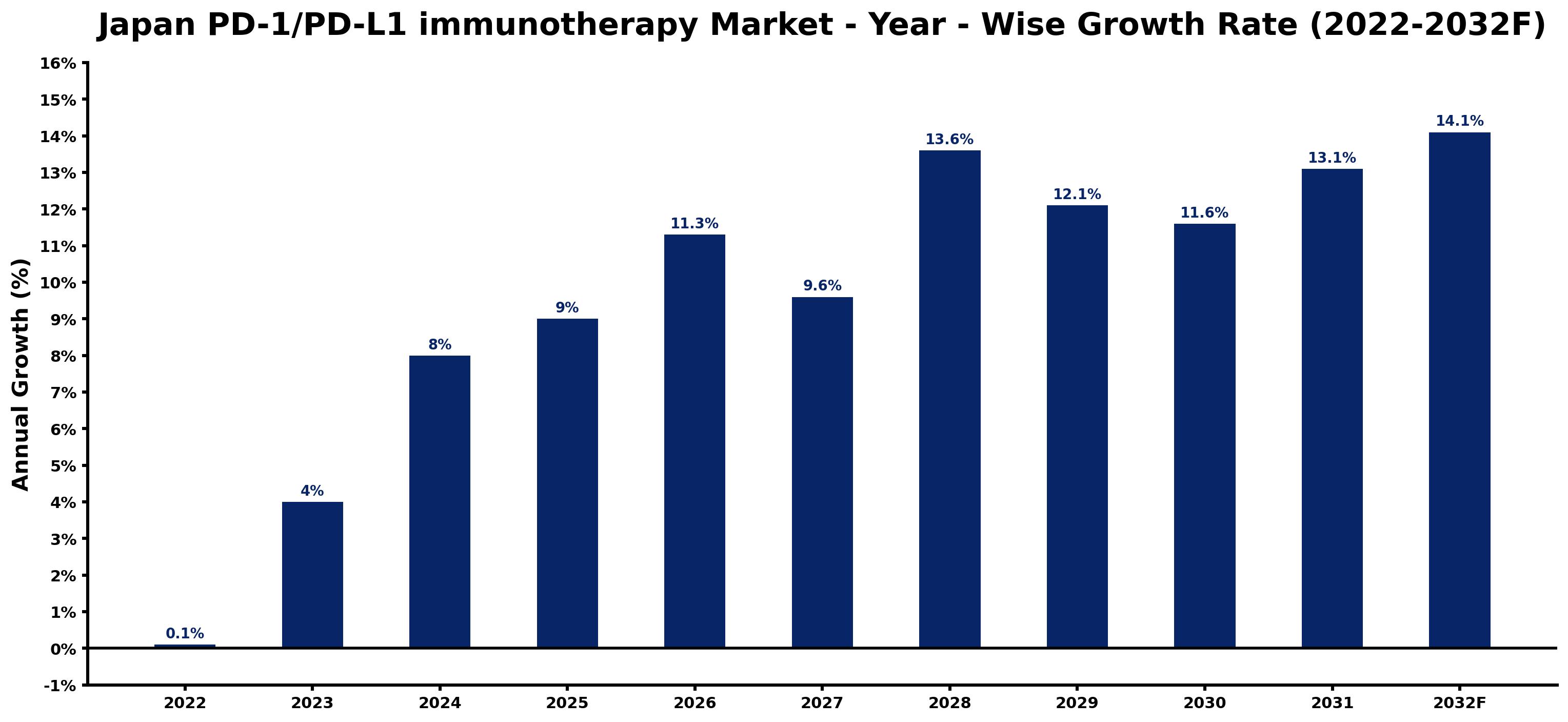
The table below sets out the estimated growth rate for each year and the main factor behind it.
| Year | Estimated Annual Growth (%) | Market Rationale |
| 2022 | 0.1 | The market experienced minimal growth as treatment options expanded. |
| 2023 | 4.0 | Increased awareness of immunotherapy benefits drove faster growth this year. |
| 2024 | 8.0 | The rise in patient numbers seeking advanced therapies contributed to growth. |
| 2025 | 9.0 | The introduction of new PD-1 therapies boosted market performance. |
| 2026 | 11.3 | Investment in clinical trials for PD-1 therapies is expected to accelerate demand. |
| 2027 | 9.6 | Growth slowed slightly as the market begins to stabilise after rapid expansion. |
| 2028 | 13.6 | Increased adoption of PD-1 therapies in hospitals is projected to spur demand growth. |
| 2029 | 12.1 | The market continued to grow, albeit at a slower pace than the previous year. |
| 2030 | 11.6 | Demand remained strong, supported by ongoing clinical research initiatives. |
| 2031 | 13.1 | The market saw renewed interest as new treatment protocols are established. |
| 2032 | 14.1 | A peak in growth is expected due to expanded access to PD-1 therapies. |
Note: Market size estimations and growth projections presented in this report are based on 6Wresearch's proprietary forecasting methodology, utilizing the latest available industry data, government publications, and primary research inputs.
Japan PD-1/PD-L1 immunotherapy Market Synopsis
PD-1/PD-L1 immunotherapy is a form of cancer treatment that uses monoclonal antibodies to block PD-1 receptors, primarily for melanoma and lung cancer. The Japan PD-1/PD-L1 immunotherapy Market is growing due to rising patient numbers and investments in cancer research, with approximately 50,000 patients treated in 2022. The annual budget for cancer research in Japan is around 30 billion JPY, which drives market growth by supporting new treatment options and improving patient outcomes. This expansion is fueled by increasing investments in oncology hospitals and ongoing clinical trials, creating a strong environment for PD-1 therapies.
Market Dynamics Impact Analysis (2026–2032)
| Factor | Type | Impact | Primary Segment Affected |
| Growing patient population seeking advanced cancer treatments | Driver | High | PD-1 Inhibitor |
| Increased investment in clinical trials for PD-1 therapies | Driver | High | PD-1 Inhibitor |
| Rising demand for innovative cancer therapies | Opportunity | High | Lung Cancer |
| Expansion of hospitals offering PD-1 therapies | Opportunity | Medium | Melanoma |
| High treatment costs limiting access for some patients | Restraint | High | PDL-1 Inhibitor |
| Regulatory hurdles delaying new product approvals | Restraint | Medium | Others |
| Limited production capacity for PD-1 therapies | Challenge | High | PD-1 Inhibitor |
| Competition from alternative cancer treatments | Challenge | Medium | Bladder Cancer |
Evaluation of Drivers in Japan PD-1/PD-L1 immunotherapy Market (2026–2032)
These are the developments adding the most demand over the forecast period.
| Drivers | Primary Segment Affected | Why It Matters (Evidence) |
| Increasing patient awareness of immunotherapy | PD-1 Inhibitor | Awareness campaigns have led to more patients seeking PD-1 treatments, driving demand. |
| Expansion of oncology hospitals | Melanoma | The establishment of new oncology hospitals increases patient access to PD-1 therapies. |
| Investment in cancer research | Lung Cancer | The annual budget for cancer research in Japan is around 30 billion JPY, supporting advancements in treatment. |
| Ongoing clinical trials for PD-1 inhibitors | Others | Clinical trials in various prefectures are expanding treatment options for patients. |
| Establishment of clinical guidelines | PDL-1 Inhibitor | Guidelines from the Japan Society of Clinical Oncology promote the use of PD-1 therapies. |
Spending rises because of heightened awareness among patients regarding immunotherapy options, leading to approximately 50,000 patients treated in 2022. The annual budget for cancer research in Japan is around 30 billion JPY, which supports advancements in treatment. The establishment of new oncology hospitals has increased accessibility to PD-1 therapies, allowing more patients to receive these treatments. Clinical trials across various prefectures are broadening treatment options, while clinical guidelines promote the adoption of PD-1 therapies, further driving market growth.
Evaluation of Restraints in Japan PD-1/PD-L1 immunotherapy Market
The following restraints limit how fast demand can grow.
| Market Restraint | Primary Segment Affected | Why It Matters (Evidence) |
| High treatment costs for PD-1 therapies | PD-1 Inhibitor | The average treatment cost for PD-1 inhibitors is approximately 1 million JPY per patient per year. |
| Regulatory challenges in product approval | Others | The approval pathway involves rigorous clinical trial requirements set by PMDA, delaying market entry. |
| Limited production capacity for PD-1 therapies | PDL-1 Inhibitor | The complexity of producing monoclonal antibodies restricts supply and increases costs. |
| Competition from alternative cancer treatments | Bladder Cancer | The presence of CTLA-4 inhibitors in combination therapies may divert attention from PD-1 therapies. |
| Inconsistent access to therapies across regions | Melanoma | Variability in hospital capabilities affects patient access to PD-1 treatments. |
Japan PD-1/PD-L1 immunotherapy Market Challenges
Buyers face supply chain disruptions due to the rigorous clinical trial requirements set by the Pharmaceuticals and Medical Devices Agency, which delays therapy availability and raises costs by approximately 1 million JPY per patient. Skills shortages among oncology specialists hinder effective treatment delivery, resulting in longer wait times for patients seeking PD-1 therapies. Competition among hospitals intensifies as numerous facilities aim for market share, driving up treatment prices and complicating access for patients. Technological limitations in manufacturing processes restrict production capacity for PD-1 therapies, delaying patient access and increasing costs for healthcare providers.
Trends in the Japan PD-1/PD-L1 immunotherapy Market
These developments are changing demand patterns in the Japan PD-1/PD-L1 immunotherapy Market.
- Oncology Hospitals Expanding Access to Immunotherapy: More hospitals in Japan are adopting PD-1 therapies, with over 200 facilities now offering these treatments. This expansion is expected to improve patient access to advanced cancer therapies, resulting in better treatment outcomes.
- Shift Towards Clinical Trials for PD-1 Therapies: The number of ongoing clinical trials for PD-1 inhibitors is increasing, particularly in major cities. This trend reflects a growing commitment to advancing cancer treatment options in Japan.
- Increased Adoption of National Guidelines for Immunotherapy: The Japan Society of Clinical Oncology has established guidelines promoting the use of PD-1 therapies. This initiative aims to standardise treatment protocols and improve patient outcomes across the country.
- Growing Focus on Cancer Research: With an annual budget of around 30 billion JPY, Japan is prioritising cancer research. This funding is driving advancements in PD-1 therapies and expanding treatment options for patients.
Investment Opportunities in the Japan PD-1/PD-L1 immunotherapy Market
Several openings in the Japan PD-1/PD-L1 immunotherapy Market merit attention from investors.
- Current Investment in Cancer Research: With an annual budget of around 30 billion JPY, there is an opportunity to invest in PD-1 therapies. Collaborating with hospitals specialising in oncology can improve access to new treatment options.
- Entry through Clinical Trials: Engaging in clinical trials for PD-1 inhibitors offers a pathway to market entry. Partnering with research institutions in Tokyo can facilitate access to new patient populations.
- Expanding Hospital Networks: The growing number of hospitals offering PD-1 therapies presents an opportunity for suppliers. Focusing on regions with fewer treatment options can strengthen market presence.
- Supplying Advanced Manufacturing Solutions: Investing in advanced manufacturing technologies for PD-1 therapies is timely. Collaborating with facilities that adhere to ISO 9001 standards can ensure product quality and compliance.
Government Initiatives in the Japan PD-1/PD-L1 immunotherapy Market
The Industrial Standardization Act, amended in 2019, governs product standards for PD-1 therapies, ensuring quality and safety. The Act against Unjustifiable Premiums and Misleading Representations, established in 1962, prohibits misleading advertising, protecting consumers and promoting transparency in the market. These measures directly impact the production and marketing of PD-1 therapies, ensuring that buyers receive accurate information about treatment options.
The Pharmaceuticals and Medical Devices Agency oversees the approval process for PD-1 therapies, ensuring compliance with rigorous clinical trial standards. The recent GX Basic Policy, adopted in 2023, aims for JPY 150 trillion in public-private investment, improving the framework for innovative cancer treatments. This policy supports the development and accessibility of PD-1 therapies, benefiting both producers and patients.
Future Insight of the Japan PD-1/PD-L1 immunotherapy Market
The launch of new clinical trial programmes will expand treatment options for advanced cancer patients by 2032, enhancing the effectiveness of PD-1 therapies. A government initiative to improve access will streamline patient pathways, reducing wait times. The application of ISO 9001 standards in manufacturing will improve product quality and consistency. By 2032, the annual budget for cancer research is expected to increase to around 30 billion JPY, further supporting innovative therapies and leading to better patient outcomes.
Market Segmentation Analysis
Japan PD-1/PD-L1 immunotherapy Market report covers a detailed analysis of the following market segments:
By Type – CTLA-4 Inhibitor Leads, PD-1 Inhibitor Expected to Grow Fastest
According to Ravi Bhandari, Research Head at 6Wresearch, CTLA-4 Inhibitor took 36% of type revenue in 2025, more than any other category. CTLA-4 inhibitors are primarily used in combination therapies, which restricts their market share in Japan. Their more specialised application contrasts with PD-1 inhibitors, which are widely applied in the treatment of prevalent cancers such as melanoma and lung cancer. PD-1 Inhibitor is projected to grow fastest, at a CAGR of 16.9% during 2026–2032. The PD-1 inhibitor segment is witnessing rapid growth due to its direct application in treating melanoma and lung cancer, with around 50,000 patients treated in 2022. This substantial patient base, coupled with ongoing clinical trials, is expected to further boost its uptake. Suppliers must prioritise the development of PD-1 inhibitors to align with the increasing demand in the oncology sector.
By Application – Melanoma Leads, Lung Cancer Expected to Grow Fastest
Melanoma accounted for 37% of the market by application in 2025. Melanoma remains the leading application for PD-1 therapy, as it is one of the primary indications for this treatment. The established guidelines by the Japan Society of Clinical Oncology reinforce its prominence in clinical practice, ensuring consistent utilisation across healthcare facilities. Over 2026–2032, Lung Cancer is expected to post the fastest growth, at a CAGR of 16.2%. Lung cancer is the fastest-growing application area for PD-1/PD-L1 inhibitors, reflecting a notable increase in PD-1 therapy utilisation, which rose by 20% from 2021 to 2022. This growth is supported by the increasing number of hospitals specialising in oncology treatments across Japan. Buyers should consider prioritising investments in lung cancer therapies as this segment shows substantial growth potential.
Key Attractiveness of the Report
- 10 Years of Market Numbers
- Historical Data Starting from 2022 to 2025
- Base Year 2025
- Forecast Data until 2032
- Key Performance Indicators Impacting the Market
- Major Upcoming Developments and Projects
Key Highlights of the Report:
- Japan PD-1/PD-L1 immunotherapy Market Outlook
- Market Size of Japan PD-1/PD-L1 immunotherapy Market, 2025
- Forecast of Japan PD-1/PD-L1 immunotherapy Market, 2032
- Historical Data and Forecast of Japan PD-1/PD-L1 immunotherapy Revenues & Volume for the Period 2022-2032
- Japan PD-1/PD-L1 immunotherapy Market Trend Evolution
- Japan PD-1/PD-L1 immunotherapy Market Drivers and Challenges
- Japan PD-1/PD-L1 immunotherapy Price Trends
- Japan PD-1/PD-L1 immunotherapy Porter's Five Forces
- Japan PD-1/PD-L1 immunotherapy Industry Life Cycle
- Historical Data and Forecast of Japan PD-1/PD-L1 immunotherapy Market Revenues & Volume By Type for the Period 2022-2032
- Historical Data and Forecast of Japan PD-1/PD-L1 immunotherapy Market Revenues & Volume By CTLA-4 Inhibitor for the Period 2022-2032
- Historical Data and Forecast of Japan PD-1/PD-L1 immunotherapy Market Revenues & Volume By PD-1 Inhibitor for the Period 2022-2032
- Historical Data and Forecast of Japan PD-1/PD-L1 immunotherapy Market Revenues & Volume By PDL-1 Inhibitor for the Period 2022-2032
- Historical Data and Forecast of Japan PD-1/PD-L1 immunotherapy Market Revenues & Volume By Others for the Period 2022-2032
- Historical Data and Forecast of Japan PD-1/PD-L1 immunotherapy Market Revenues & Volume By Application for the Period 2022-2032
- Historical Data and Forecast of Japan PD-1/PD-L1 immunotherapy Market Revenues & Volume By Melanoma for the Period 2022-2032
- Historical Data and Forecast of Japan PD-1/PD-L1 immunotherapy Market Revenues & Volume By Lung Cancer for the Period 2022-2032
- Historical Data and Forecast of Japan PD-1/PD-L1 immunotherapy Market Revenues & Volume By Bladder Cancer for the Period 2022-2032
- Historical Data and Forecast of Japan PD-1/PD-L1 immunotherapy Market Revenues & Volume By Others for the Period 2022-2032
- Japan PD-1/PD-L1 immunotherapy Import Export Trade Statistics
- Market Opportunity Assessment By Type
- Market Opportunity Assessment By Application
- Japan PD-1/PD-L1 immunotherapy Top Companies Market Share
- Japan PD-1/PD-L1 immunotherapy Competitive Benchmarking By Technical and Operational Parameters
- Japan PD-1/PD-L1 immunotherapy Company Profiles
- Japan PD-1/PD-L1 immunotherapy Key Strategic Recommendations
Market Covered
The following segment groups are covered in the report.
By Type
- CTLA-4 Inhibitor
- PD-1 Inhibitor
- PDL-1 Inhibitor
- Others
By Application
- Melanoma
- Lung Cancer
- Bladder Cancer
- Others































