Japan Pharmaceuticals Market Size & Growth Rate
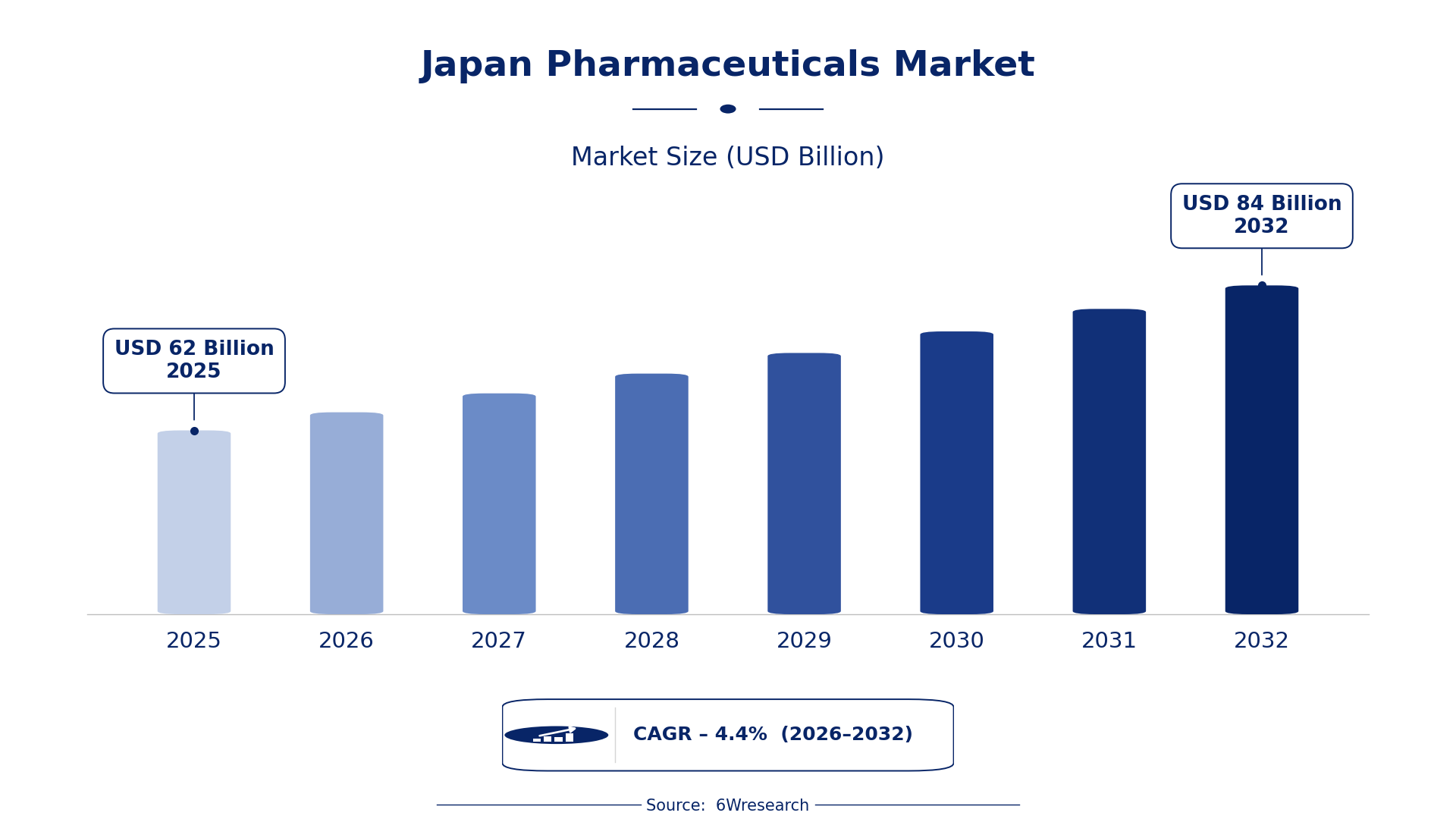
According to 6Wresearch internal database and industry insights, the Japan Pharmaceuticals Market was valued at USD 62 Billion in 2025 and is projected to reach USD 84 Billion by 2032, growing at a CAGR of approximately 4.4% during 2026–2032.
Japan Pharmaceuticals Market Highlights
| Report Metric | Details |
| Report Name | Japan Pharmaceuticals Market (2026-2032) |
| Market Size 2025 | USD 62 Billion |
| Market Size 2032 | USD 84 Billion |
| Absolute Growth 2025–2032 | USD 22 Billion |
| CAGR 2026–2032 | 4.4% |
| Peak Annual Growth | 5.0% in 2029 |
| Forecast Period | 2026–2032 |
| Historical Data | 2022–2025 |
| Base Year | 2025 |
| Leading Type, 2025 | Pharmaceutical Drugs (55% share) |
| Leading Distribution Channel, 2025 | Retail Pharmacies/ Drug Stores (57% share) |
| Leading Route of Administration, 2025 | Oral (47% share) |
| Leading Drug Classification, 2025 | Branded Drugs (66% share) |
| Leading Mode of Purchase, 2025 | Prescription-Based Drugs (57% share) |
| Fastest-Growing Type | Biologics (6.3% CAGR) |
| Fastest-Growing Distribution Channel | Hospital Pharmacies (5.5% CAGR) |
| Fastest-Growing Route of Administration | Parenteral (5.6% CAGR) |
| Fastest-Growing Drug Classification | Generic Drugs (5.9% CAGR) |
| Fastest-Growing Mode of Purchase | Over-The-Counter Drugs (5.4% CAGR) |
| Growing Sector | Pharmaceuticals |
| Key End Users | Hospitals, Retail Pharmacies, Healthcare Providers, Pharmaceutical Manufacturers |
Japan Pharmaceuticals Market Year-wise Growth Rate and Key Drivers (2022–2032)
This graph illustrates the annual growth rates of the market from 2022 to 2032, highlighting a steady upward trajectory and projected market expansion over the forecast period.
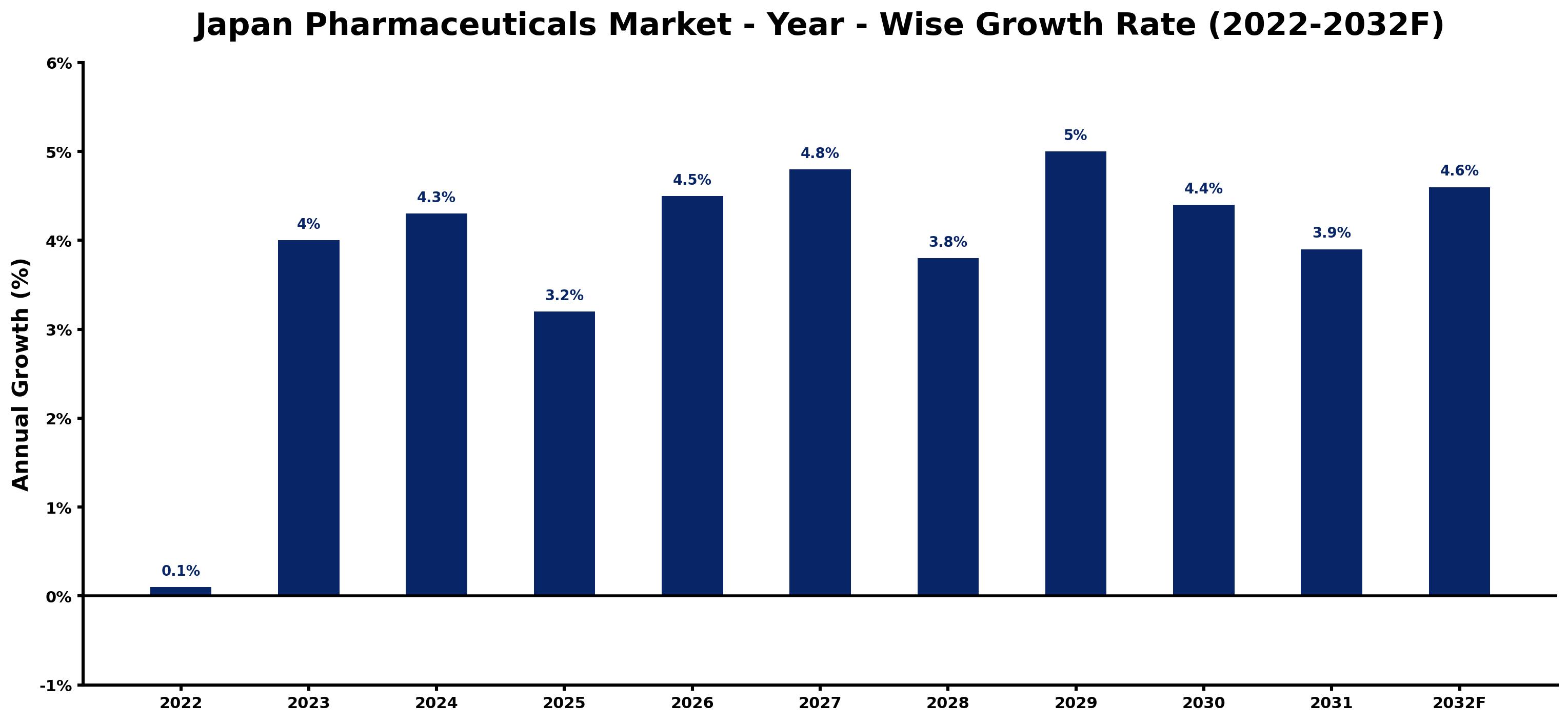
The yearly estimates that follow link every growth rate to its principal driver, so readers can see why the pace changed in each period.
| Year | Estimated Annual Growth (%) | Market Rationale |
| 2022 | 0.1 | The market exhibited minimal growth due to ongoing adjustments in healthcare spending. |
| 2023 | 4.0 | Growth accelerated as demand for pharmaceuticals increased amid an aging population. |
| 2024 | 4.3 | Continued demand from healthcare providers drove faster growth than the previous year. |
| 2025 | 3.2 | Growth slowed as market saturation began to affect new product introductions. |
| 2026 | 4.5 | Rising investment in drug development is expected to spur renewed growth. |
| 2027 | 4.8 | Increased healthcare expenditure will contribute to further market expansion. |
| 2028 | 3.8 | Market growth is projected to slow slightly as competition intensifies among generics. |
| 2029 | 5.0 | The introduction of new biologics will lead to the highest growth rate in the forecast period. |
| 2030 | 4.4 | Growth is expected to decelerate as regulatory challenges impact product approvals. |
| 2031 | 3.9 | Market growth will continue to slow due to increased cost pressures on producers. |
| 2032 | 4.6 | Rising demand for advanced therapies is expected to drive growth again. |
Note: Market size estimations and growth projections presented in this report are based on 6Wresearch's proprietary forecasting methodology, utilizing the latest available industry data, government publications, and primary research inputs.
Japan Pharmaceuticals Market Synopsis
Pharmaceuticals in Japan encompass a wide range of chemical compounds and biologics used for medical treatment, produced through complex processes in highly regulated environments. The Japan Pharmaceuticals Market is growing due to an aging population, increased healthcare expenditure, and a strong focus on research and development. With approximately 29.3% of the population aged 65 or older, the demand for effective treatments is rising. Recent government initiatives to promote drug development are attracting investment and facilitating new product introductions.
Market Dynamics Impact Analysis (2026–2032)
| Factor | Type | Impact | Primary Segment Affected |
| Aging population driving demand for chronic disease management | Driver | High | Pharmaceutical Drugs |
| Investment in innovative drug development increasing market offerings | Driver | High | Biologics |
| Growing interest in preventive care and wellness | Opportunity | Medium | Retail Pharmacies/ Drug Stores |
| Expansion of hospital infrastructure creating demand for pharmaceuticals | Opportunity | Medium | Hospital Pharmacies |
| High regulatory compliance costs affecting new entrants | Restraint | High | Pharmaceutical Drugs |
| Intense competition among generic drugs compressing margins | Restraint | Medium | Generic Drugs |
| Rising production costs impacting profitability | Challenge | High | Pharmaceutical Drugs |
| Capacity constraints in manufacturing facilities delaying product launches | Challenge | Medium | Biologics |
Evaluation of Drivers in Japan Pharmaceuticals Market (2026–2032)
Demand rests on the following drivers, each shown with the segment it touches most.
| Drivers | Primary Segment Affected | Why It Matters (Evidence) |
| Growing healthcare expenditure | Pharmaceutical Drugs | Japan's national medical care expenditure reached JPY 46.7 trillion in 2022, encouraging higher pharmaceutical purchases. |
| Increased focus on R&D for new therapies | Biologics | The government launched a program in 2023 to promote drug development, driving demand for biologics. |
| Rising prevalence of chronic diseases | Pharmaceutical Drugs | With a significant aging population, demand for pharmaceuticals is increasing substantially. |
| Expansion of hospital networks | Hospital Pharmacies | New hospitals being established in urban areas are increasing the demand for pharmaceutical supplies. |
| High penetration of generic drugs | Generic Drugs | Generic drug penetration reached 80% in 2023, leading to increased prescriptions and purchases. |
Buyers are adding capacity as the healthcare sector evolves, with Japan's national medical care expenditure reaching JPY 46.7 trillion in 2022, driving pharmaceutical purchases. The aging population is driving a rise in chronic diseases, leading to higher pharmaceutical consumption. New hospitals in urban areas are creating additional demand for pharmaceutical supplies. The penetration of generic drugs reached 80% in 2023, encouraging more prescriptions and purchases across the market.
Evaluation of Restraints in Japan Pharmaceuticals Market
The main factors holding the market back are set out below.
| Market Restraint | Primary Segment Affected | Why It Matters (Evidence) |
| High costs associated with regulatory compliance | Pharmaceutical Drugs | Strict regulations under the Pharmaceutical Affairs Law increase operational costs for producers. |
| Intense competition among generic drugs | Generic Drugs | The high penetration of generics at 80% compresses margins and affects profitability. |
| Rising production costs due to material shortages | Biologics | Increased costs for raw materials are impacting profit margins for biologics manufacturers. |
| Limited access to advanced manufacturing technologies | Pharmaceutical Drugs | Many smaller firms struggle to invest in the latest technologies, hindering their competitiveness. |
| Regulatory delays in drug approvals | Biologics | Lengthy approval processes can delay market entry for new biologics, impacting revenue. |
Japan Pharmaceuticals Market Challenges
Buyers face delays due to stringent regulations from the Pharmaceuticals and Medical Devices Agency, which can extend drug approval times by an average of six months, impacting access to essential medications. Suppliers encounter sourcing issues as disruptions in global supply chains can lead to raw material shortages, causing production delays that affect hospitals' ability to meet patient needs. Rising compliance costs with the Pharmaceutical Affairs Law can increase operational expenses by up to 15%, straining financial resources for producers. A shortage of skilled workers hinders innovation, with 20% of pharmaceutical companies reporting difficulties in finding qualified personnel, slowing research and development efforts.
Trends in the Japan Pharmaceuticals Market
Several trends are reshaping the Japan Pharmaceuticals Market; the most important are set out below.
- Shift towards Personalized Medicine: Healthcare providers are increasingly adopting personalized medicine approaches, particularly in oncology. The PMDA's guidelines for personalized therapies have led to a 15% rise in targeted treatment prescriptions since 2022.
- Transition from Traditional to Digital Health Solutions: The rise of telemedicine since 2020 has transformed patient engagement, with a 30% increase in digital consultations reported in Tokyo. This shift is reshaping how pharmaceuticals are marketed and distributed.
- Emergence of Biologics in Treatment Protocols: Biologics are becoming more prevalent in treatment protocols, especially for autoimmune diseases. The market for biologics is projected to grow significantly, reflecting their increasing importance.
- Growth in Preventive Healthcare Initiatives: Preventive healthcare initiatives are gaining traction, with the government promoting wellness programs. The Ministry of Health, Labour and Welfare reported a 20% increase in preventive care spending in 2023.
Investment Opportunities in the Japan Pharmaceuticals Market
The opportunities below stand out in the Japan Pharmaceuticals Market for new entrants and existing suppliers.
- Tokyo's Expanding Healthcare Facilities: Tokyo is experiencing a surge in new healthcare facilities, with plans for 50 new hospitals by 2025. This expansion creates an opportunity for pharmaceutical suppliers to meet rising demand.
- Aging Population in Osaka: Osaka's aging population presents an opportunity for pharmaceutical companies to develop targeted therapies. With a significant portion of the population aged 65 or older, investment in geriatric pharmaceuticals is essential.
- Investment Gap in Biologics: The biologics market is projected to grow significantly, presenting opportunities for companies to invest in R&D for new biologics to capture this growing market segment.
- Partnerships with Local Manufacturers: Collaborating with local manufacturers can facilitate market entry, particularly for new drug approvals. Establishing joint ventures can streamline the process and enhance market access.
Government Initiatives in the Japan Pharmaceuticals Market
The NHI drug price standard, revised regularly, sets reimbursement prices for drugs used in Japanese medical care, ensuring transparency and predictability for producers. This measure complements the PMD Act, which regulates drug approval and quality, ensuring that pharmaceuticals meet stringent safety standards.
Buyers, especially hospitals and pharmacies, utilise the PMDA’s streamlined drug approval process to bring new medications to market efficiently. The agency's oversight ensures that approved drugs are safe and effective, benefiting healthcare providers and patients alike.
Future Insight of the Japan Pharmaceuticals Market
A government programme to promote innovative drug development will be established by 2032. Technological advancements, such as AI-driven drug discovery, will streamline the development process and reduce time-to-market for new treatments. Collaboration between research institutions and pharmaceutical companies will create a more dynamic environment for innovation. By 2032, Japan's national medical care expenditure is expected to reach approximately JPY 60 trillion, which will enhance funding for healthcare initiatives and improve access to medications for buyers.
Market Segmentation Analysis
Japan Pharmaceuticals Market report covers a detailed analysis of the following market segments:
By Type – Pharmaceutical Drugs Lead, Biologics Expected to Grow Fastest
According to Bhawna Singh, Assistant Manager at 6Wresearch, in 2025, Pharmaceutical Drugs led the type split with a 55% share. Pharmaceutical Drugs hold the largest market share as they are the primary form of medication for numerous health conditions, appealing to a broad patient demographic. Their extensive use in treating chronic diseases ensures consistent demand across hospitals and clinics throughout Japan. Over 2026–2032, Biologics are expected to post the fastest growth, at a CAGR of 6.3%. Biologics are experiencing rapid growth due to their application in targeted therapies, which aligns with the increasing focus on personalised medicine. The government's recent programme to promote innovative drug development will likely sustain this growth trajectory. Suppliers must prioritise the expansion of their biologics offerings to align with the increasing demand for specialised treatment solutions.
By Distribution Channel – Retail Pharmacies/ Drug Stores Lead, Hospital Pharmacies Expected to Grow Fastest
The largest distribution channel category in 2025 was Retail Pharmacies/ Drug Stores, at 57% of revenue. Retail Pharmacies/Drug Stores dominate the market as they provide easy access to both over-the-counter and prescription drugs for consumers. Their widespread presence across urban and rural areas ensures that a large segment of the population can obtain necessary medications conveniently. Hospital Pharmacies are projected to grow fastest, at a CAGR of 5.5% during 2026–2032. Hospital Pharmacies are growing quickly as they dispense medications to both inpatients and outpatients, driven by the increasing number of hospital admissions and outpatient services. The rise in complex treatments requiring specialised medications is also propelling this segment's growth. Suppliers must strengthen partnerships with hospital pharmacies to capitalise on the increasing demand for hospital-based medication dispensing.
By Route of Administration – Oral Leads, Parenteral Expected to Grow Fastest
Oral held 47% of the Japan Pharmaceuticals Market by route of administration in 2025. Oral administration is the most common route for medication, preferred for its ease of use and patient compliance. This method is widely accepted among patients, making it the leading choice for many pharmaceutical products. The quickest growth will come from Parenteral, forecast to expand at a CAGR of 5.6% between 2026 and 2032. Parenteral administration is growing rapidly as it is essential for certain treatments requiring injections, particularly in hospital settings. The rise in chronic diseases and the need for immediate therapeutic effects are driving this segment's expansion. Suppliers should consider investing in parenteral products to address the increasing need for injectable therapies.
By Drug Classification – Branded Drugs Lead, Generic Drugs Expected to Grow Fastest
With 66% of drug classification revenue in 2025, Branded Drugs was the largest category. Branded Drugs retain a strong market position due to established trust and proven efficacy, making them the preferred choice for healthcare providers and patients alike. Their dominance is further supported by substantial marketing efforts that foster consumer loyalty across various therapeutic areas. Generic Drugs are set to record the highest CAGR in this split, 5.9% over 2026–2032. Generic Drugs are expanding rapidly as they offer cost-effective alternatives that are widely prescribed, especially following patent expirations of branded medications. The ongoing push for affordable healthcare solutions is driving this segment's swift growth. Suppliers should focus on enhancing their generic drug portfolios to meet the rising demand for economical medication alternatives.
By Mode of Purchase – Prescription-Based Drugs Lead, Over-The-Counter Drugs Expected to Grow Fastest
Prescription-Based Drugs took 57% of mode of purchase revenue in 2025, more than any other category. Prescription-Based Drugs are critical for managing chronic and acute conditions, making them a vital component of healthcare in Japan. The reliance on healthcare professionals for medication management solidifies their leading position in the market. Over 2026–2032, Over-The-Counter Drugs are expected to post the fastest growth, at a CAGR of 5.4%. Over-The-Counter Drugs are growing quickly as they provide easy access for consumers dealing with minor health issues, reflecting a shift towards self-medication. This trend is supported by increasing health awareness and the convenience of purchasing medications without a prescription. Suppliers should expand their over-the-counter product lines to meet the rising consumer demand for accessible health solutions.
Key Attractiveness of the Report
- 10 Years of Market Numbers
- Historical Data Starting from 2022 to 2025
- Base Year 2025
- Forecast Data until 2032
- Key Performance Indicators Impacting the Market
- Major Upcoming Developments and Projects
Key Highlights of the Report:
- Japan Pharmaceuticals Market Outlook
- Market Size of Japan Pharmaceuticals Market, 2025
- Forecast of Japan Pharmaceuticals Market, 2032
- Historical Data and Forecast of Japan Pharmaceuticals Revenues & Volume for the Period 2022-2032
- Japan Pharmaceuticals Market Trend Evolution
- Japan Pharmaceuticals Market Drivers and Challenges
- Japan Pharmaceuticals Price Trends
- Japan Pharmaceuticals Porter's Five Forces
- Japan Pharmaceuticals Industry Life Cycle
- Historical Data and Forecast of Japan Pharmaceuticals Market Revenues & Volume By Type for the Period 2022-2032
- Historical Data and Forecast of Japan Pharmaceuticals Market Revenues & Volume By Pharmaceutical Drugs for the Period 2022-2032
- Historical Data and Forecast of Japan Pharmaceuticals Market Revenues & Volume By Biologics for the Period 2022-2032
- Historical Data and Forecast of Japan Pharmaceuticals Market Revenues & Volume By Distribution Channel for the Period 2022-2032
- Historical Data and Forecast of Japan Pharmaceuticals Market Revenues & Volume By Hospital Pharmacies for the Period 2022-2032
- Historical Data and Forecast of Japan Pharmaceuticals Market Revenues & Volume By Retail Pharmacies/ Drug Stores for the Period 2022-2032
- Historical Data and Forecast of Japan Pharmaceuticals Market Revenues & Volume By Others for the Period 2022-2032
- Historical Data and Forecast of Japan Pharmaceuticals Market Revenues & Volume By Route of Administration for the Period 2022-2032
- Historical Data and Forecast of Japan Pharmaceuticals Market Revenues & Volume By Oral for the Period 2022-2032
- Historical Data and Forecast of Japan Pharmaceuticals Market Revenues & Volume By Parenteral for the Period 2022-2032
- Historical Data and Forecast of Japan Pharmaceuticals Market Revenues & Volume By Others for the Period 2022-2032
- Historical Data and Forecast of Japan Pharmaceuticals Market Revenues & Volume By Drug Classification for the Period 2022-2032
- Historical Data and Forecast of Japan Pharmaceuticals Market Revenues & Volume By Branded Drugs for the Period 2022-2032
- Historical Data and Forecast of Japan Pharmaceuticals Market Revenues & Volume By Generic Drugs for the Period 2022-2032
- Historical Data and Forecast of Japan Pharmaceuticals Market Revenues & Volume By Mode of Purchase for the Period 2022-2032
- Historical Data and Forecast of Japan Pharmaceuticals Market Revenues & Volume By Prescription-Based Drugs for the Period 2022-2032
- Historical Data and Forecast of Japan Pharmaceuticals Market Revenues & Volume By Over-The-Counter Drugs for the Period 2022-2032
- Japan Pharmaceuticals Import Export Trade Statistics
- Market Opportunity Assessment By Type
- Market Opportunity Assessment By Distribution Channel
- Market Opportunity Assessment By Route of Administration
- Market Opportunity Assessment By Drug Classification
- Market Opportunity Assessment By Mode of Purchase
- Japan Pharmaceuticals Top Companies Market Share
- Japan Pharmaceuticals Competitive Benchmarking By Technical and Operational Parameters
- Japan Pharmaceuticals Company Profiles
- Japan Pharmaceuticals Key Strategic Recommendations
Market Covered
The study includes the following segmentation.
By Type
- Pharmaceutical Drugs
- Biologics
By Distribution Channel
- Hospital Pharmacies
- Retail Pharmacies/ Drug Stores
- Others
By Route of Administration
- Oral
- Parenteral
- Others
By Drug Classification
- Branded Drugs
- Generic Drugs
By Mode of Purchase
- Prescription-Based Drugs
- Over-The-Counter Drugs































