Japan Secondary Ticket Market Size & Growth Rate
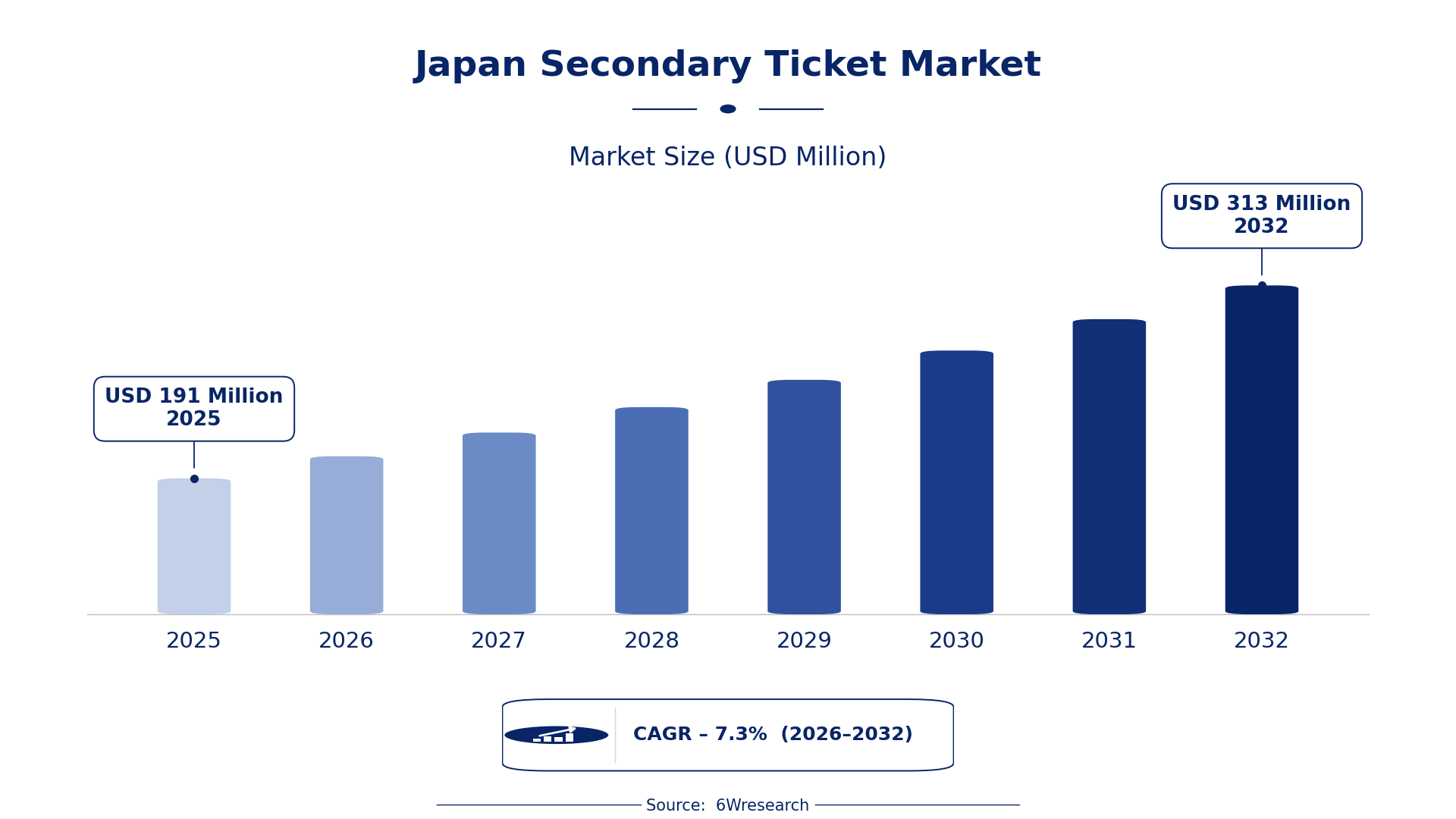
According to 6Wresearch internal database and industry insights, the Japan Secondary Ticket Market was valued at USD 191 Million in 2025 and is projected to reach USD 313 Million by 2032, growing at a CAGR of approximately 7.3% during 2026–2032.
Japan Secondary Ticket Market Highlights
| Report Metric | Details |
| Report Name | Japan Secondary Ticket Market (2026-2032) |
| Market Size 2025 | USD 191 Million |
| Market Size 2032 | USD 313 Million |
| Absolute Growth 2025–2032 | USD 122 Million |
| CAGR 2026–2032 | 7.3% |
| Peak Annual Growth | 8.7% in 2028 |
| Forecast Period | 2026–2032 |
| Historical Data | 2022–2025 |
| Base Year | 2025 |
| Leading Ticket Type, 2025 | Concert Tickets (43% share) |
| Leading Event Type, 2025 | Music Events (55% share) |
| Leading Sales Channel, 2025 | Online Platforms (46% share) |
| Leading Pricing Model, 2025 | Dynamic Pricing (41% share) |
| Leading End User, 2025 | Fans (37% share) |
| Fastest-Growing Ticket Type | Festival Tickets (10.0% CAGR) |
| Fastest-Growing Event Type | Performing Arts (10.4% CAGR) |
| Fastest-Growing Sales Channel | Mobile Apps (9.5% CAGR) |
| Fastest-Growing End User | Attendees (9.2% CAGR) |
| Growing Sector | live entertainment |
| Key End Users | fans, spectators, attendees, concertgoers |
Japan Secondary Ticket Market Year-wise Growth Rate and Key Drivers (2022–2032)
This graph illustrates the annual growth rates of the market from 2022 to 2032, highlighting a steady upward trajectory and projected market expansion over the forecast period.
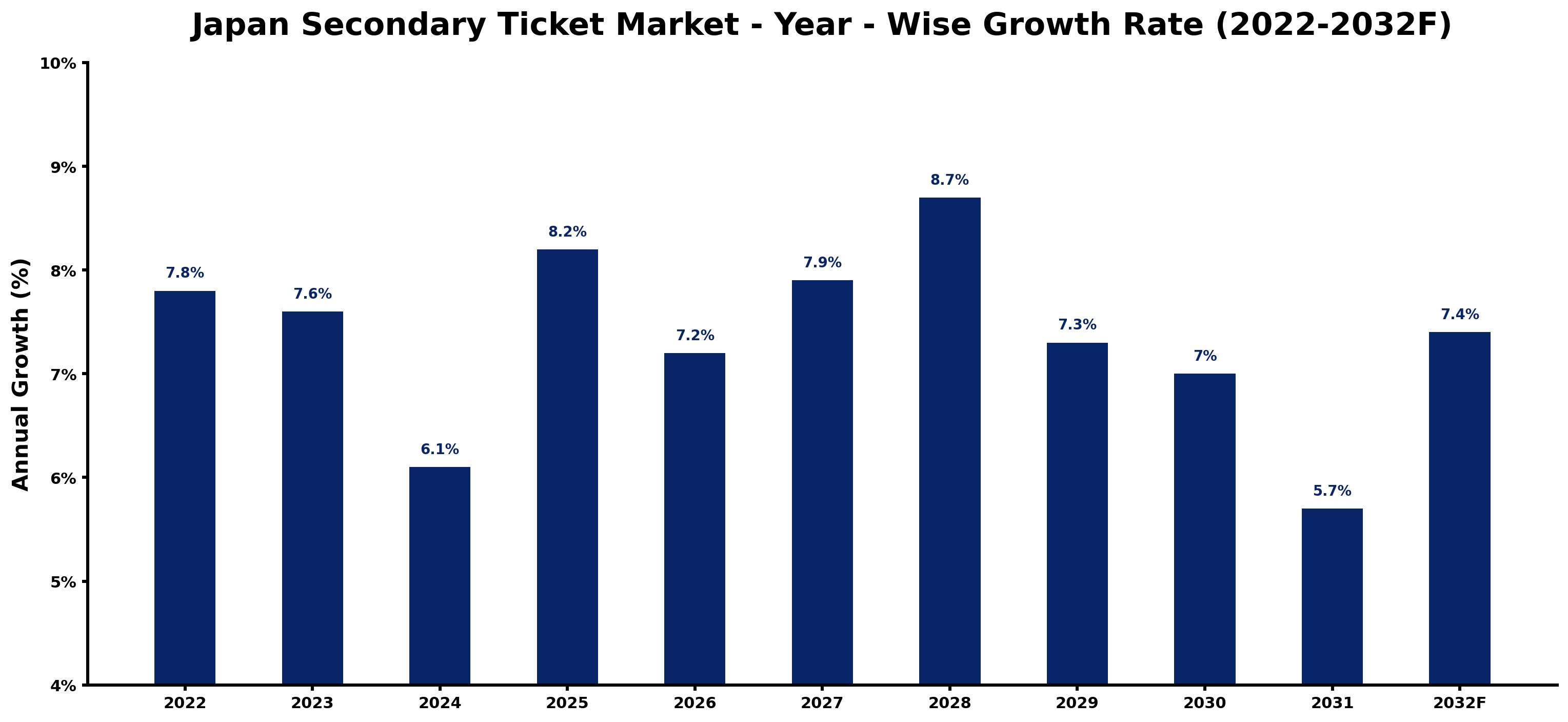
For each year, the table pairs the estimated growth rate with the leading influence on demand, showing how the drivers changed across the period.
| Year | Estimated Annual Growth (%) | Market Rationale |
| 2022 | 7.8 | The market experienced solid growth due to strong demand for live events. |
| 2023 | 7.6 | Growth slowed slightly as ticket prices adjusted to market conditions. |
| 2024 | 6.1 | Continued interest in live performances maintained market expansion. |
| 2025 | 8.2 | Increased attendance at concerts drove a surge in resale activity. |
| 2026 | 7.2 | The market growth rate is expected to slow as ticket supply begins to stabilise. |
| 2027 | 7.9 | Resale activity will pick up again with rising interest in live sports. |
| 2028 | 8.7 | The market is projected to peak as major events attract large audiences. |
| 2029 | 7.3 | Growth is expected to moderate as ticket prices reach higher levels. |
| 2030 | 7.0 | A slight slowdown will occur as competition among platforms intensifies. |
| 2031 | 5.7 | The market will continue to grow, driven by a young demographic. |
| 2032 | 7.4 | Increased festival attendance will boost resale opportunities. |
Note: Market size estimations and growth projections presented in this report are based on 6Wresearch's proprietary forecasting methodology, utilizing the latest available industry data, government publications, and primary research inputs.
Japan Secondary Ticket Market Synopsis
The secondary ticket market in Japan facilitates the resale of event tickets, primarily for concerts, sports, and theatre. This market thrives due to high domestic demand, allowing fans to access sold-out events through online platforms. The Japanese live music industry generated approximately 200 billion yen in ticket sales in 2022, while the number of music festivals has increased by 20% over the last five years. The rising interest in live performances and sports events drives market expansion, with fans actively seeking tickets through various resale channels.
Market Dynamics Impact Analysis (2026–2032)
| Factor | Type | Impact | Primary Segment Affected |
| High attendance at live events drives ticket demand and resale activity. | Driver | High | Concert Tickets |
| The rise of mobile applications enhances ticket accessibility for buyers. | Driver | High | Mobile Apps |
| The increasing number of music festivals creates new resale opportunities. | Opportunity | High | Festival Tickets |
| Online platforms are expanding, providing more avenues for ticket resale. | Opportunity | High | Online Platforms |
| Market saturation limits growth potential for resale platforms. | Restraint | Medium | Resale Websites |
| High resale prices may deter some buyers from purchasing tickets. | Restraint | Medium | Concert Tickets |
| Compliance with ticketing regulations can increase operational costs. | Challenge | High | Online Platforms |
| Capacity constraints at popular venues limit ticket availability. | Challenge | High | Concert Tickets |
Evaluation of Drivers in Japan Secondary Ticket Market (2026–2032)
The following drivers explain most of the expected growth.
| Drivers | Primary Segment Affected | Why It Matters (Evidence) |
| High demand for live music events drives ticket resale. | Concert Tickets | In 2022, the Japanese live music industry generated approximately 200 billion yen in ticket sales. |
| The rise of mobile applications enhances ticket accessibility for buyers. | Mobile Apps | As of 2023, Japan has over 1,000 active online ticket resale platforms. |
| The increasing number of music festivals creates new resale opportunities. | Festival Tickets | The number of music festivals in Japan has increased by 20% over the last five years. |
| Online platforms are expanding, providing more avenues for ticket resale. | Online Platforms | Over 70% of concertgoers reported using online platforms for ticket purchases in 2022. |
| Dynamic pricing strategies influence resale values. | Dynamic Pricing | The average resale price for concert tickets can exceed 150% of the original price. |
Much of the new demand traces back to the 200 billion yen generated by the live music industry in 2022, prompting fans to seek concert tickets through various resale platforms. The rise of mobile applications has made ticket purchasing more accessible, with numerous active online platforms in Japan as of 2023. The increase in music festivals over the last five years has created new resale opportunities. With a significant percentage of concertgoers using online platforms for purchases, the market continues to expand. Resale prices often exceed 150% of the original ticket price, reflecting the high demand for live events.
Evaluation of Restraints in Japan Secondary Ticket Market
The main factors holding the market back are set out below.
| Market Restraint | Primary Segment Affected | Why It Matters (Evidence) |
| Market saturation limits growth potential for resale platforms. | Resale Websites | As competition increases, platforms may struggle to differentiate themselves. |
| High resale prices may deter some buyers from purchasing tickets. | Concert Tickets | The average resale price exceeding 150% of the original price can reduce buyer interest. |
| Compliance with ticketing regulations can increase operational costs. | Online Platforms | Adhering to fair resale practices requires investment in compliance measures. |
| Limited availability of tickets for popular events constrains resale opportunities. | Concert Tickets | Capacity constraints at venues can restrict the number of tickets available for resale. |
| Consumer trust issues may hinder platform adoption. | Mobile Apps | Concerns about ticket authenticity can deter potential buyers from using resale apps. |
Japan Secondary Ticket Market Challenges
Buyers face increased costs due to a shortage of skilled professionals in the ticketing sector, which can delay transactions by up to 30%. Technology adoption is slow, preventing producers from implementing efficient electronic ticketing systems, resulting in an estimated 20% loss in potential sales for sellers. Regulatory complexities around fair ticket resale practices create bottlenecks, causing sellers to experience transaction delays that discourage buyers, ultimately reducing market participation. Competition from unregulated platforms diminishes consumer trust, leading to a potential 15% decline in ticket sales during peak seasons for legitimate sellers.
Trends in the Japan Secondary Ticket Market
Four trends stand out in the Japan Secondary Ticket Market.
- Shift from Traditional to Mobile Ticketing: The trend towards mobile ticketing began in 2022, with fans increasingly using apps for purchases. In 2023, over 70% of concertgoers reported using online platforms, indicating a shift in buyer behaviour.
- Growth of Music Festivals: The number of music festivals in Japan has increased by 20% over the last five years, creating new opportunities for ticket resale. This trend reflects a growing interest in diverse live events among audiences.
- Dynamic Pricing Adoption: Dynamic pricing strategies have gained traction since 2022, allowing sellers to adjust prices based on demand. This has led to average resale prices exceeding 150% of the original ticket price, impacting buyer decisions.
- Increased Online Resale Activity: Online resale activity surged in 2022 as fans sought access to sold-out events. In 2023, Japan boasted numerous active online ticket resale platforms, improving market accessibility.
Investment Opportunities in the Japan Secondary Ticket Market
The following areas offer the clearest openings for investors and suppliers in the Japan Secondary Ticket Market.
- Tokyo's Cultural Events: Tokyo hosts numerous cultural events, creating a ripe opportunity for ticket resale. With a projected market size of USD 191 million by 2025, suppliers can partner with local platforms to tap into this demand.
- Investment in Mobile Apps: With mobile apps growing at a rate of 9.5%, now is an ideal time to invest in app development. Targeting younger audiences, developers can create user-friendly platforms to facilitate ticket transactions.
- Expansion of Music Festivals: The increasing number of music festivals presents a unique opportunity for ticket suppliers. By 2025, suppliers can focus on festival tickets, which are projected to grow, engaging festival-goers.
- Improving Online Platforms: The expansion of online platforms offers a chance for investment in technology and user experience. By collaborating with major event organizers, suppliers can improve ticket accessibility for fans.
Government Initiatives in the Japan Secondary Ticket Market
The AI Promotion Act, implemented by the Ministry of Economy, Trade and Industry in 2025, encourages the development of AI solutions for ticket sales and resale, ensuring fair practices in the market. This act impacts ticketing by promoting technological advancements that streamline transactions and improve buyer experiences. The Tokyo Metropolitan Government supports cultural events with funding programs, allocating resources to enhance the ticketing infrastructure and promote accessibility for all audiences.
The Digital Agency leads government digital transformation and approves standards for online ticketing systems. This agency's initiatives support the development of secure and efficient ticket resale platforms, benefiting both buyers and sellers. The agency also funds projects aimed at improving the technological environment of ticketing in Japan, enhancing the overall market experience.
Future Insight of the Japan Secondary Ticket Market
The introduction of advanced electronic ticketing systems by 2032 will streamline the resale process and enhance user experiences. Initiatives like discussions at the Tokyo International Music Market will focus on ticketing innovations, paving the way for more efficient operations. Support from the Tokyo Metropolitan Government will likely increase the number of cultural events available to the public. Buyers will enjoy a wider array of event options, while suppliers will benefit from improved sales opportunities and greater audience engagement.
Market Segmentation Analysis
Japan Secondary Ticket Market report covers a detailed analysis of the following market segments:
By Ticket Type – Concert Tickets Lead, Festival Tickets Expected to Grow Fastest
According to Vasu Joshi, Associate Consultant at 6Wresearch, the largest ticket type category in 2025 was Concert Tickets, at 43% of revenue. Concert tickets dominate the market as live music events attract large audiences, with the Japanese live music industry generating approximately 200 billion yen in ticket sales in 2022. The high frequency of concerts in urban areas like Tokyo significantly contributes to the robust demand for resale tickets. The quickest growth will come from Festival Tickets, forecast to expand at a CAGR of 10.0% between 2026 and 2032. Festival tickets are experiencing rapid growth, with a notable 20% increase in the number of music festivals over the last five years. This trend indicates a growing enthusiasm for cultural events, particularly among younger demographics, ensuring continued opportunities for resale. This trend suggests that suppliers should refine their offerings to meet the increasing demand for both concert and festival tickets.
By Event Type – Music Events Lead, Performing Arts Expected to Grow Fastest
In 2025, Music Events led the event type split with a 55% share. Music events lead the secondary ticket market as high attendance at concerts creates a thriving resale environment. The vibrant live music scene in Japan, especially in metropolitan areas, fuels this demand. Performing Arts are set to record the highest CAGR in this split, 10.4% over 2026–2032. Performing arts tickets are growing quickly due to the common practice of reselling tickets for limited-availability shows. This growth is supported by the increasing popularity of theatre and cultural performances among audiences. Buyers may find more opportunities to access sought-after performing arts tickets through resale channels.
By Sales Channel – Online Platforms Lead, Mobile Apps Expected to Grow Fastest
With 46% of sales channel revenue in 2025, Online Platforms was the largest category. Online platforms are the primary sales channel for secondary tickets, with over 1,000 active platforms facilitating transactions in Japan. This widespread adoption reflects the convenience and accessibility of online ticket purchasing. Mobile Apps are projected to grow fastest, at a CAGR of 9.5% during 2026–2032. Mobile apps are rapidly gaining traction as more users prefer the convenience of purchasing tickets on their smartphones. The shift towards mobile technology aligns with the preferences of the younger demographic, ensuring continued growth in this area. Suppliers should invest in mobile-friendly solutions to meet the demands of tech-savvy consumers.
By Pricing Model – Dynamic Pricing Leads and Records the Fastest Growth
Dynamic Pricing accounted for 41% of the market by pricing model in 2025. Dynamic pricing is the leading model as it allows for flexible pricing strategies that reflect real-time market demand. This approach helps sellers maximise profits during peak demand periods, particularly for popular events. Dynamic Pricing is also forecast to expand faster than any other category, at a CAGR of 9.4% over 2026–2032. Dynamic pricing is also the fastest-growing model, as its implementation becomes more sophisticated with technology. The ability to adjust prices based on demand ensures that sellers remain competitive and profitable. Suppliers must adopt dynamic pricing strategies to optimise revenue and respond effectively to market fluctuations.
By End User – Fans Lead, Attendees Expected to Grow Fastest
Fans held 37% of the Japan Secondary Ticket Market by end user in 2025. Fans represent the largest segment of buyers in the secondary ticket market, motivated by their enthusiasm for live performances. Their commitment to attending events ensures a consistent demand for resale tickets across various platforms. The quickest growth will come from Attendees, forecast to expand at a CAGR of 9.2% between 2026 and 2032. Attendees are emerging as a rapidly growing segment, as more individuals actively seek to secure tickets for events they wish to enjoy. This shift indicates a broader acceptance of purchasing secondary tickets for a variety of experiences. Suppliers should adjust their marketing approaches to effectively reach both dedicated fans and casual attendees to optimise sales.
Key Attractiveness of the Report
- 10 Years of Market Numbers
- Historical Data Starting from 2022 to 2025
- Base Year 2025
- Forecast Data until 2032
- Key Performance Indicators Impacting the Market
- Major Upcoming Developments and Projects
Key Highlights of the Report:
- Japan Secondary Ticket Market Outlook
- Market Size of Japan Secondary Ticket Market, 2025
- Forecast of Japan Secondary Ticket Market, 2032
- Historical Data and Forecast of Japan Secondary Ticket Market Revenues & Volume for the Period 2022-2032F
- Japan Secondary Ticket Market Trend Evolution
- Japan Secondary Ticket Market Drivers and Challenges
- Japan Secondary Ticket Market Price Trends
- Japan Secondary Ticket Market Porter's Five Forces
- Japan Secondary Ticket Market Industry Life Cycle
- Historical Data and Forecast of Japan Secondary Ticket Market Revenues & Volume By Ticket Type for the Period 2022-2032F
- Historical Data and Forecast of Japan Secondary Ticket Market Revenues & Volume By Concert Tickets for the Period 2022-2032F
- Historical Data and Forecast of Japan Secondary Ticket Market Revenues & Volume By Sports Tickets for the Period 2022-2032F
- Historical Data and Forecast of Japan Secondary Ticket Market Revenues & Volume By Theater Tickets for the Period 2022-2032F
- Historical Data and Forecast of Japan Secondary Ticket Market Revenues & Volume By Festival Tickets for the Period 2022-2032F
- Historical Data and Forecast of Japan Secondary Ticket Market Revenues & Volume By Event Type for the Period 2022-2032F
- Historical Data and Forecast of Japan Secondary Ticket Market Revenues & Volume By Music Events for the Period 2022-2032F
- Historical Data and Forecast of Japan Secondary Ticket Market Revenues & Volume By Live Sports for the Period 2022-2032F
- Historical Data and Forecast of Japan Secondary Ticket Market Revenues & Volume By Performing Arts for the Period 2022-2032F
- Historical Data and Forecast of Japan Secondary Ticket Market Revenues & Volume By Entertainment Events for the Period 2022-2032F
- Historical Data and Forecast of Japan Secondary Ticket Market Revenues & Volume By Sales Channel for the Period 2022-2032F
- Historical Data and Forecast of Japan Secondary Ticket Market Revenues & Volume By Online Platforms for the Period 2022-2032F
- Historical Data and Forecast of Japan Secondary Ticket Market Revenues & Volume By Resale Websites for the Period 2022-2032F
- Historical Data and Forecast of Japan Secondary Ticket Market Revenues & Volume By Mobile Apps for the Period 2022-2032F
- Historical Data and Forecast of Japan Secondary Ticket Market Revenues & Volume By Digital Marketplaces for the Period 2022-2032F
- Historical Data and Forecast of Japan Secondary Ticket Market Revenues & Volume By Pricing Model for the Period 2022-2032F
- Historical Data and Forecast of Japan Secondary Ticket Market Revenues & Volume By Dynamic Pricing for the Period 2022-2032F
- Historical Data and Forecast of Japan Secondary Ticket Market Revenues & Volume By Auction-based for the Period 2022-2032F
- Historical Data and Forecast of Japan Secondary Ticket Market Revenues & Volume By Fixed Premium for the Period 2022-2032F
- Historical Data and Forecast of Japan Secondary Ticket Market Revenues & Volume By Demand-driven for the Period 2022-2032F
- Historical Data and Forecast of Japan Secondary Ticket Market Revenues & Volume By End User for the Period 2022-2032F
- Historical Data and Forecast of Japan Secondary Ticket Market Revenues & Volume By Fans for the Period 2022-2032F
- Historical Data and Forecast of Japan Secondary Ticket Market Revenues & Volume By Spectators for the Period 2022-2032F
- Historical Data and Forecast of Japan Secondary Ticket Market Revenues & Volume By Audience for the Period 2022-2032F
- Historical Data and Forecast of Japan Secondary Ticket Market Revenues & Volume By Attendees for the Period 2022-2032F
- Japan Secondary Ticket Market Import Export Trade Statistics
- Market Opportunity Assessment By Ticket Type
- Market Opportunity Assessment By Event Type
- Market Opportunity Assessment By Sales Channel
- Market Opportunity Assessment By Pricing Model
- Market Opportunity Assessment By End User
- Japan Secondary Ticket Market Top Companies Market Share
- Japan Secondary Ticket Market Competitive Benchmarking By Technical and Operational Parameters
- Japan Secondary Ticket Market Company Profiles
- Japan Secondary Ticket Market Key Strategic Recommendations
Market Covered
Segments analysed in this report are listed below.
By Ticket Type
- Concert Tickets
- Sports Tickets
- Theater Tickets
- Festival Tickets
By Event Type
- Music Events
- Live Sports
- Performing Arts
- Entertainment Events
By Sales Channel
- Online Platforms
- Resale Websites
- Mobile Apps
- Digital Marketplaces
By Pricing Model
- Dynamic Pricing
- Auction-based
- Fixed Premium
- Demand-driven
By End User
- Fans
- Spectators
- Audience
- Attendees































