Japan Syndromic Multiplex Diagnostic Market Size & Growth Rate
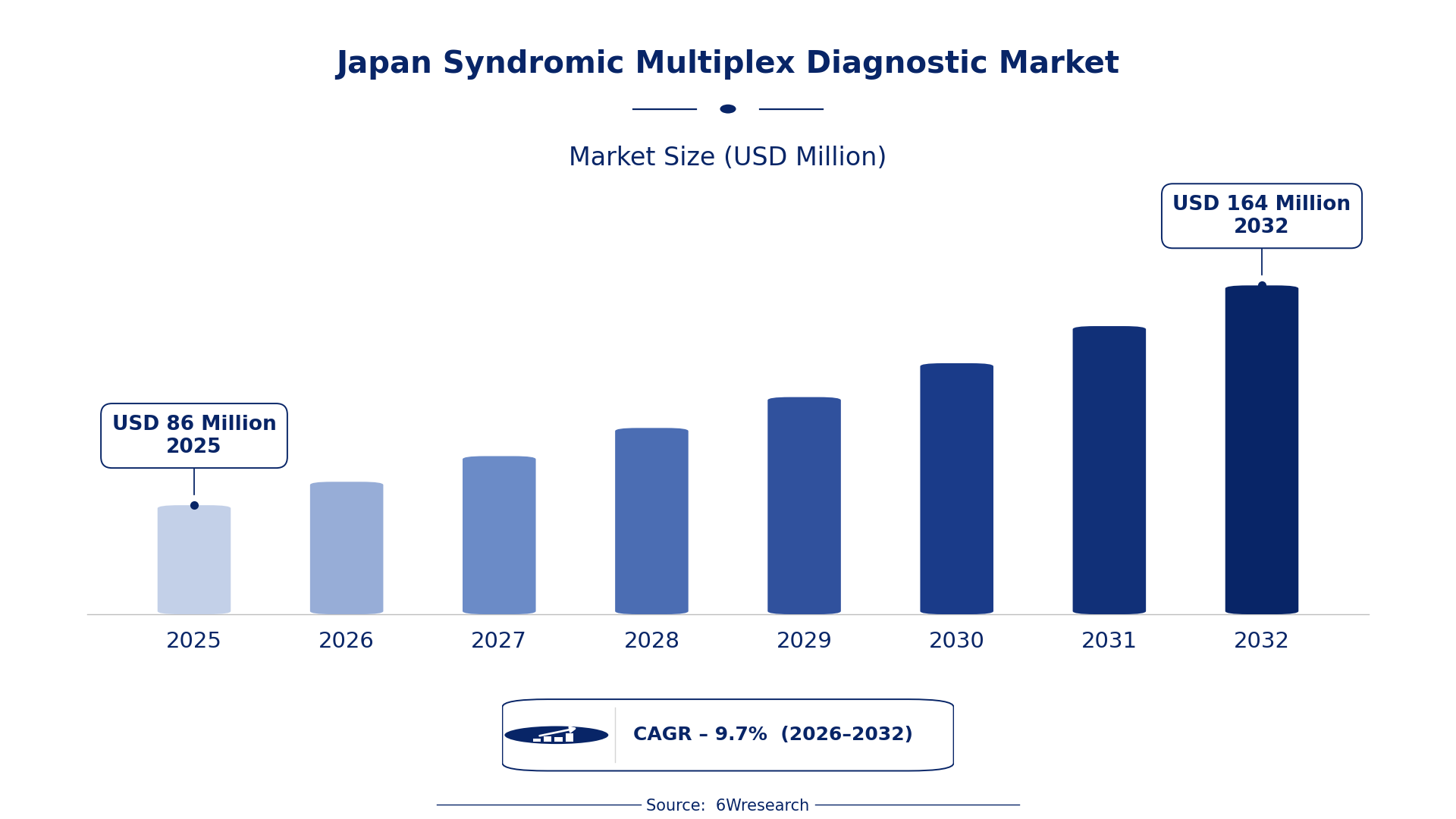
According to 6Wresearch internal database and industry insights, the Japan Syndromic Multiplex Diagnostic Market was valued at USD 86 Million in 2025 and is projected to reach USD 164 Million by 2032, growing at a CAGR of approximately 9.7% during 2026–2032.
Japan Syndromic Multiplex Diagnostic Market Highlights
| Report Metric | Details |
| Report Name | Japan Syndromic Multiplex Diagnostic Market (2026-2032) |
| Market Size 2025 | USD 86 Million |
| Market Size 2032 | USD 164 Million |
| Absolute Growth 2025–2032 | USD 78 Million |
| CAGR 2026–2032 | 9.7% |
| Peak Annual Growth | 11.0% in 2030 |
| Forecast Period | 2026–2032 |
| Historical Data | 2022–2025 |
| Base Year | 2025 |
| Leading Product Type, 2025 | Diagnostic Kits (56% share) |
| Leading Application, 2025 | Infectious Diseases (64% share) |
| Leading Diagnosis Method, 2025 | PCR (Polymerase Chain Reaction) (55% share) |
| Leading Technology, 2025 | Rapid Testing (59% share) |
| Fastest-Growing Product Type | Test Panels (13.1% CAGR) |
| Fastest-Growing Application | Pathogen Detection (12.5% CAGR) |
| Fastest-Growing Diagnosis Method | Enzyme Immunoassay (11.2% CAGR) |
| Growing Sector | Pathogen Detection |
| Key End Users | Infectious Diseases, Pathogen Detection |
Japan Syndromic Multiplex Diagnostic Market Year-wise Growth Rate and Key Drivers (2022–2032)
This graph illustrates the annual growth rates of the market from 2022 to 2032, highlighting a steady upward trajectory and projected market expansion over the forecast period.
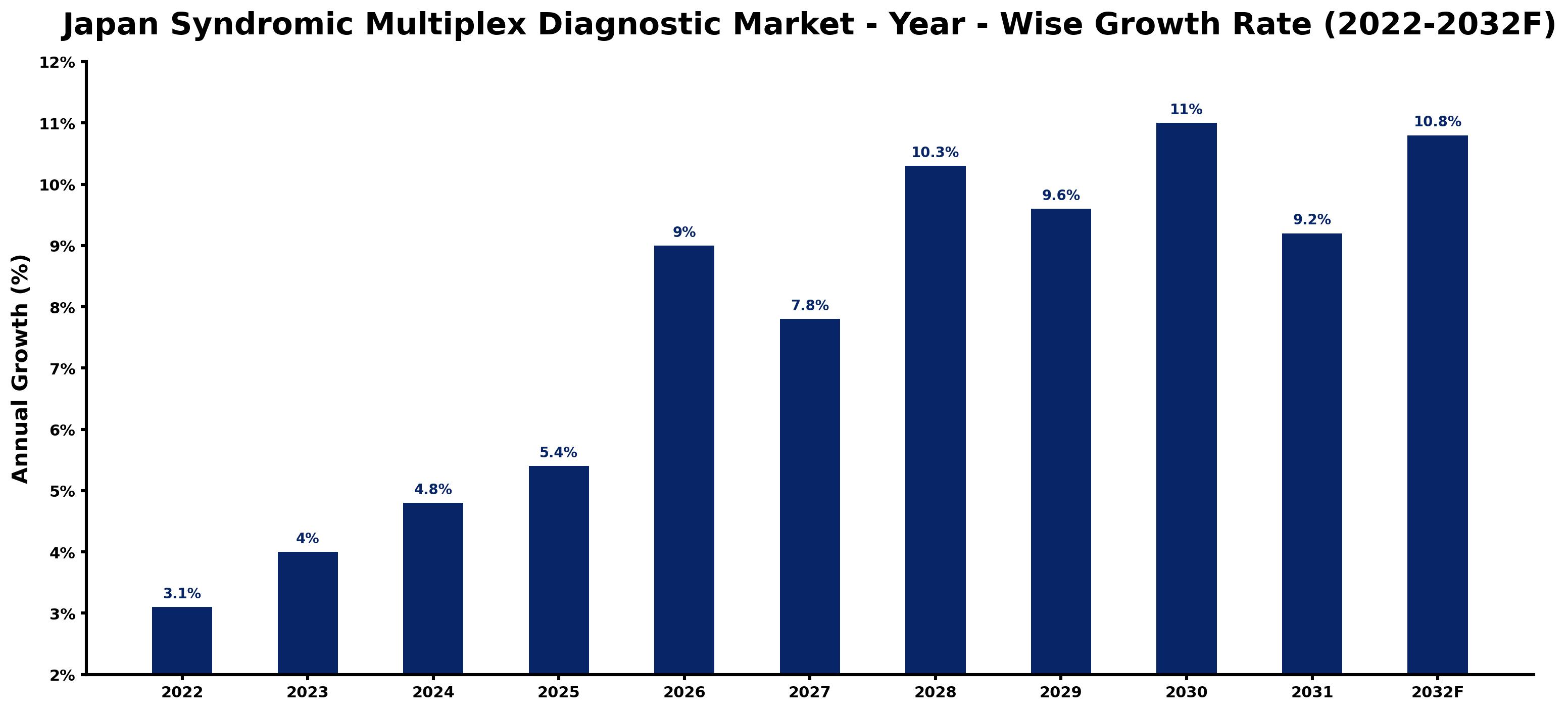
For each year, the table pairs the estimated growth rate with the leading influence on demand, showing how the drivers changed across the period.
| Year | Estimated Annual Growth (%) | Market Rationale |
| 2022 | 3.1 | The market experienced steady growth, reflecting ongoing investments in healthcare technologies. |
| 2023 | 4.0 | Healthcare spending increased, contributing to a faster growth rate compared to the previous year. |
| 2024 | 4.8 | The rise in infectious diseases drove demand for advanced diagnostic solutions, boosting growth. |
| 2025 | 5.4 | A growing emphasis on rapid disease identification led to the market's historical peak growth. |
| 2026 | 9.0 | New diagnostic technologies are expected to spur market expansion. |
| 2027 | 7.8 | Growth is projected to slow slightly as the market adjusts to the previous year's surge in demand. |
| 2028 | 10.3 | Technological advancements in diagnostics will facilitate a resurgence in market growth. |
| 2029 | 9.6 | Expansion will continue, although at a slower pace than in the previous year. |
| 2030 | 11.0 | Demand for multiplex diagnostics will result in peak growth rate. |
| 2031 | 9.2 | A slight slowdown is projected as growth stabilises after peak demand. |
| 2032 | 10.8 | Investments in healthcare innovations are expected to drive strong growth. |
Note: Market size estimations and growth projections presented in this report are based on 6Wresearch's proprietary forecasting methodology, utilizing the latest available industry data, government publications, and primary research inputs.
Japan Syndromic Multiplex Diagnostic Market Synopsis
Syndromic multiplex diagnostics enable simultaneous detection of multiple pathogens, crucial for infectious disease identification. In Japan, these diagnostics are increasingly utilised in clinical settings, supported by a robust healthcare infrastructure. The Japan Syndromic Multiplex Diagnostic Market is expanding due to rising healthcare expenditures, with national medical care expenditure reaching approximately JPY 46.7 trillion in fiscal 2022. Initiatives like the 2023 programme to enhance infectious disease monitoring further stimulate demand for these technologies.
Market Dynamics Impact Analysis (2026–2032)
| Factor | Type | Impact | Primary Segment Affected |
| Rising healthcare expenditure supports increased investment in diagnostic technologies. | Driver | High | Infectious Diseases |
| The need for rapid disease identification creates demand for multiplex diagnostics. | Driver | High | Diagnostic Kits |
| Growing prevalence of infectious diseases presents opportunities for diagnostic advancements. | Opportunity | High | Pathogen Detection |
| The push for improved diagnostic accuracy opens avenues for innovation in testing methods. | Opportunity | High | Test Panels |
| High costs associated with advanced diagnostic technologies may limit accessibility for some healthcare facilities. | Restraint | Medium | Rapid Testing |
| Limited awareness of multiplex diagnostics among smaller healthcare providers can hinder adoption. | Restraint | Medium | Enzyme Immunoassay |
| Competition from traditional diagnostic methods may slow market penetration of multiplex diagnostics. | Challenge | High | PCR (Polymerase Chain Reaction) |
| Regulatory hurdles in the approval process can delay the introduction of new diagnostic products. | Challenge | Medium | DNA Amplification |
Evaluation of Drivers in Japan Syndromic Multiplex Diagnostic Market (2026–2032)
The table below links each growth driver to the segment it affects and the evidence for it.
| Drivers | Primary Segment Affected | Why It Matters (Evidence) |
| Increased healthcare spending drives demand for advanced diagnostics. | Diagnostic Kits | Japan's national medical care expenditure was about JPY 46.7 trillion in fiscal 2022, leading to more purchases of diagnostic kits. |
| The rise in infectious diseases boosts the need for multiplex testing. | Infectious Diseases | With over 1 million tests conducted using multiplex diagnostics in 2022, healthcare providers are purchasing more advanced solutions. |
| Advancements in diagnostic methods improve effectiveness. | Test Panels | The adoption of new technologies in hospitals is increasing the demand for effective test panels. |
| Government initiatives support the development of diagnostic technologies. | Pathogen Detection | The 2023 programme to improve infectious disease monitoring encourages investments in pathogen detection technologies. |
| Growing awareness of rapid testing benefits increases market demand. | Rapid Testing | The new health initiative aimed at increasing rapid testing in rural areas is driving purchases of rapid diagnostic solutions. |
Volumes grow on the back of Japan's substantial healthcare spending, with national medical care expenditure reaching approximately JPY 46.7 trillion in fiscal 2022. The rise in infectious diseases has led to over 1 million tests conducted using multiplex diagnostics in 2022, prompting hospitals to invest in advanced testing technologies. New diagnostic methods are improving the effectiveness of testing, leading to greater adoption. The push for rapid testing in rural areas is driving demand for rapid diagnostic solutions, further stimulating market growth.
Evaluation of Restraints in Japan Syndromic Multiplex Diagnostic Market
The following restraints limit how fast demand can grow.
| Market Restraint | Primary Segment Affected | Why It Matters (Evidence) |
| High costs of advanced diagnostic technologies limit accessibility for some healthcare facilities. | Rapid Testing | The average cost of multiplex diagnostic kits can be prohibitive for smaller hospitals, restricting their adoption. |
| Limited awareness of multiplex diagnostics among smaller healthcare providers can hinder adoption. | Enzyme Immunoassay | Many smaller clinics are unaware of the benefits of multiplex diagnostics, resulting in lower purchase rates. |
| Competition from traditional diagnostic methods may slow market penetration of multiplex diagnostics. | PCR (Polymerase Chain Reaction) | Established methods remain preferred by some healthcare providers, impacting the growth of newer technologies. |
| Regulatory hurdles in the approval process can delay the introduction of new diagnostic products. | DNA Amplification | Lengthy approval processes can postpone the launch of new diagnostic solutions, affecting market entry. |
| Market saturation in certain areas may limit growth opportunities for new entrants. | Test Panels | As the market matures, new products may struggle to differentiate themselves in a crowded field. |
Japan Syndromic Multiplex Diagnostic Market Challenges
Diagnostic kits for respiratory infections often face delays in approval, extending time to market by up to six months for hospitals. This regulatory burden increases compliance costs, forcing buyers to pay higher prices for essential tests. Rapid technological advancements create pressure on producers to innovate, yet many struggle to keep pace, resulting in outdated offerings that do not meet buyer expectations. Increased production costs, driven by rising raw material prices, can lead to a 15% hike in diagnostic kit prices, impacting hospitals' budgets and patient care.
Trends in the Japan Syndromic Multiplex Diagnostic Market
The trends below show where the Japan Syndromic Multiplex Diagnostic Market is heading.
- Shift Towards Rapid Testing: Japan is experiencing a shift towards rapid testing solutions, particularly in rural healthcare settings. In 2023, a health initiative aimed to increase the adoption of rapid testing, with over 100,000 tests distributed to remote clinics.
- Growing Adoption of Enzyme Immunoassays: The use of enzyme immunoassays is on the rise, with a 15% increase in adoption reported in 2022. This trend is reflected in their effectiveness in serological testing across clinical laboratories.
- Increased Focus on Infectious Disease Monitoring: Since the launch of the 2023 programme to improve infectious disease monitoring, healthcare facilities have reported a 20% rise in multiplex diagnostic tests conducted, reflecting a growing emphasis on disease detection.
- Expansion of Diagnostic Kits in Hospitals: The demand for diagnostic kits has surged, particularly for respiratory infections, with hospitals reporting a 25% increase in usage in 2022. This trend highlights the need for effective testing solutions.
Investment Opportunities in the Japan Syndromic Multiplex Diagnostic Market
The following opportunities in the Japan Syndromic Multiplex Diagnostic Market pair current demand with a clear way in.
- Healthcare Facilities Seeking Advanced Testing Solutions: With Japan's healthcare expenditure reaching JPY 46.7 trillion, there is a need for advanced diagnostic kits. Hospitals in urban areas can partner with local suppliers to meet this demand.
- Investment in Multiplex Diagnostic Technologies: The growing focus on infectious disease detection creates an opportunity for suppliers to invest in multiplex diagnostic technologies. Healthcare providers in metropolitan regions are looking for effective solutions.
- Expansion of Rapid Testing in Rural Areas: As rural healthcare facilities seek rapid testing solutions, suppliers can provide diagnostic kits tailored to these needs. Collaborating with local governments can facilitate market entry.
- Increased Demand for Comprehensive Test Panels: The rising prevalence of infectious diseases drives the need for comprehensive test panels. Suppliers can target hospitals and clinics that require efficient diagnostic solutions.
Government Initiatives in the Japan Syndromic Multiplex Diagnostic Market
The Next-Generation Medical Infrastructure Act (2017) facilitates advancements in syndromic multiplex diagnostics by allowing certified bodies to anonymise medical data for research and product development. This measure complements existing regulations, such as the PMD Act, which governs the approval and quality of medical devices. The Clinical Trials Act (2017) sets rules for conducting research on multiplex diagnostics, ensuring compliance with regulatory standards and supporting the development of effective diagnostic solutions.
Healthcare providers use the Clinical Trials Act (2017) to conduct research on multiplex diagnostics, ensuring compliance with regulatory standards. This act supports the development of effective diagnostic solutions, benefiting both producers and buyers in the healthcare sector.
Future Insight of the Japan Syndromic Multiplex Diagnostic Market
Hospitals will adopt multiplex diagnostics more widely by 2032, driven by new health initiatives that promote access in rural areas. Enhanced research support from government agencies will lead to more innovative diagnostic solutions, benefiting both buyers and suppliers. The implementation of the ISO 13485 standard will improve quality management practices across the sector. With over 1 million tests conducted in 2022, the growing demand for efficient pathogen identification will further drive advancements in diagnostic technologies.
Market Segmentation Analysis
Japan Syndromic Multiplex Diagnostic Market report covers a detailed analysis of the following market segments:
By Product Type – Diagnostic Kits Lead, Test Panels Expected to Grow Fastest
According to Vasudha, AM at 6Wresearch, in 2025, Diagnostic Kits led the product type split with a 56% share. Diagnostic kits hold the largest share due to their essential role in testing multiple pathogens simultaneously, which is vital in clinical environments. For instance, hospitals in Japan rely heavily on these kits to manage infectious diseases effectively. Test Panels are set to record the highest CAGR in this split, 13.1% over 2026–2032. Test panels are rapidly gaining traction as they are increasingly utilised for comprehensive disease screening, particularly in light of the growing demand for efficient diagnostics. In 2022, over 1 million tests were conducted using multiplex diagnostics, highlighting their importance in healthcare. Suppliers should focus on expanding the availability and diversity of test panels to meet the rising demand.
By Application – Infectious Diseases Lead, Pathogen Detection Expected to Grow Fastest
Infectious Diseases held 64% of the Japan Syndromic Multiplex Diagnostic Market by application in 2025. Infectious diseases represent the primary application area for syndromic diagnostics, bolstered by Japan's strong healthcare infrastructure and the pressing need for rapid disease identification. The emphasis on infectious disease monitoring has resulted in widespread adoption of these diagnostics in hospitals nationwide. The quickest growth will come from Pathogen Detection, forecast to expand at a CAGR of 12.5% between 2026 and 2032. Pathogen detection is the fastest-growing application as healthcare providers increasingly prioritise accurate identification of infectious agents to enhance patient outcomes. The 2023 health initiative aimed at boosting rapid testing adoption underscores this growing focus. Suppliers must align their products with the heightened emphasis on pathogen detection to seize emerging market opportunities.
By Diagnosis Method – PCR (Polymerase Chain Reaction) Leads, Enzyme Immunoassay Expected to Grow Fastest
PCR (Polymerase Chain Reaction) accounted for 55% of the market by diagnosis method in 2025. PCR (Polymerase Chain Reaction) is the leading method due to its critical role in syndromic diagnostics, being used in over 70% of diagnostic laboratories across Japan. Its reliability and accuracy make it the preferred choice for detecting multiple pathogens. Over 2026–2032, Enzyme Immunoassay is expected to post the fastest growth, at a CAGR of 11.2%. Enzyme immunoassays are growing rapidly as they are widely used for detecting specific antigens or antibodies, complementing PCR techniques. Their integration into clinical workflows is becoming more prevalent, further driving their adoption. This suggests that suppliers should invest in enzyme immunoassay technologies to meet the rising demand in diagnostic laboratories.
By Technology – Rapid Testing Leads and Records the Fastest Growth
The largest technology category in 2025 was Rapid Testing, at 59% of revenue. Rapid testing leads the market due to its critical role in facilitating quick diagnoses in clinical settings, allowing healthcare providers to make timely decisions. This focus aligns with Japan's healthcare priorities, especially in effectively managing infectious diseases. Its lead should widen, with a projected CAGR of 11.7% during 2026–2032, the highest in this split. Rapid testing is also the fastest-growing technology, reflecting the urgent need for swift diagnostic solutions in response to infectious disease outbreaks. Ongoing health initiatives further underscore the significance of rapid testing in the healthcare sector. This suggests that suppliers should prioritise the development and distribution of rapid testing solutions to maintain a competitive advantage.
Key Attractiveness of the Report
- 10 Years of Market Numbers
- Historical Data Starting from 2022 to 2025
- Base Year 2025
- Forecast Data until 2032
- Key Performance Indicators Impacting the Market
- Major Upcoming Developments and Projects
Key Highlights of the Report:
- Japan Syndromic Multiplex Diagnostic Market Outlook
- Market Size of Japan Syndromic Multiplex Diagnostic Market,2025
- Forecast of Japan Syndromic Multiplex Diagnostic Market, 2032
- Historical Data and Forecast of Japan Syndromic Multiplex Diagnostic Revenues & Volume for the Period 2022-2032
- Japan Syndromic Multiplex Diagnostic Market Trend Evolution
- Japan Syndromic Multiplex Diagnostic Market Drivers and Challenges
- Japan Syndromic Multiplex Diagnostic Price Trends
- Japan Syndromic Multiplex Diagnostic Porter's Five Forces
- Japan Syndromic Multiplex Diagnostic Industry Life Cycle
- Historical Data and Forecast of Japan Syndromic Multiplex Diagnostic Market Revenues & Volume By Product Type for the Period 2022-2032
- Historical Data and Forecast of Japan Syndromic Multiplex Diagnostic Market Revenues & Volume By Diagnostic Kits for the Period 2022-2032
- Historical Data and Forecast of Japan Syndromic Multiplex Diagnostic Market Revenues & Volume By Test Panels for the Period 2022-2032
- Historical Data and Forecast of Japan Syndromic Multiplex Diagnostic Market Revenues & Volume By Application for the Period 2022-2032
- Historical Data and Forecast of Japan Syndromic Multiplex Diagnostic Market Revenues & Volume By Infectious Diseases for the Period 2022-2032
- Historical Data and Forecast of Japan Syndromic Multiplex Diagnostic Market Revenues & Volume By Pathogen Detection for the Period 2022-2032
- Historical Data and Forecast of Japan Syndromic Multiplex Diagnostic Market Revenues & Volume By Diagnosis Method for the Period 2022-2032
- Historical Data and Forecast of Japan Syndromic Multiplex Diagnostic Market Revenues & Volume By PCR (Polymerase Chain Reaction) for the Period 2022-2032
- Historical Data and Forecast of Japan Syndromic Multiplex Diagnostic Market Revenues & Volume By Enzyme Immunoassay for the Period 2022-2032
- Historical Data and Forecast of Japan Syndromic Multiplex Diagnostic Market Revenues & Volume By Technology for the Period 2022-2032
- Historical Data and Forecast of Japan Syndromic Multiplex Diagnostic Market Revenues & Volume By Rapid Testing for the Period 2022-2032
- Historical Data and Forecast of Japan Syndromic Multiplex Diagnostic Market Revenues & Volume By DNA Amplification for the Period 2022-2032
- Japan Syndromic Multiplex Diagnostic Import Export Trade Statistics
- Market Opportunity Assessment By Product Type
- Market Opportunity Assessment By Application
- Market Opportunity Assessment By Diagnosis Method
- Market Opportunity Assessment By Technology
- Japan Syndromic Multiplex Diagnostic Top Companies Market Share
- Japan Syndromic Multiplex Diagnostic Competitive Benchmarking By Technical and Operational Parameters
- Japan Syndromic Multiplex Diagnostic Company Profiles
- Japan Syndromic Multiplex Diagnostic Key Strategic Recommendations
Market Covered
The report covers the following segments.
By Product Type
- Diagnostic Kits
- Test Panels
By Application
- Infectious Diseases
- Pathogen Detection
By Diagnosis Method
- PCR (Polymerase Chain Reaction)
- Enzyme Immunoassay
By Technology
- Rapid Testing
- DNA Amplification































