Japan T Cell Lymphoma Market Size & Growth Rate
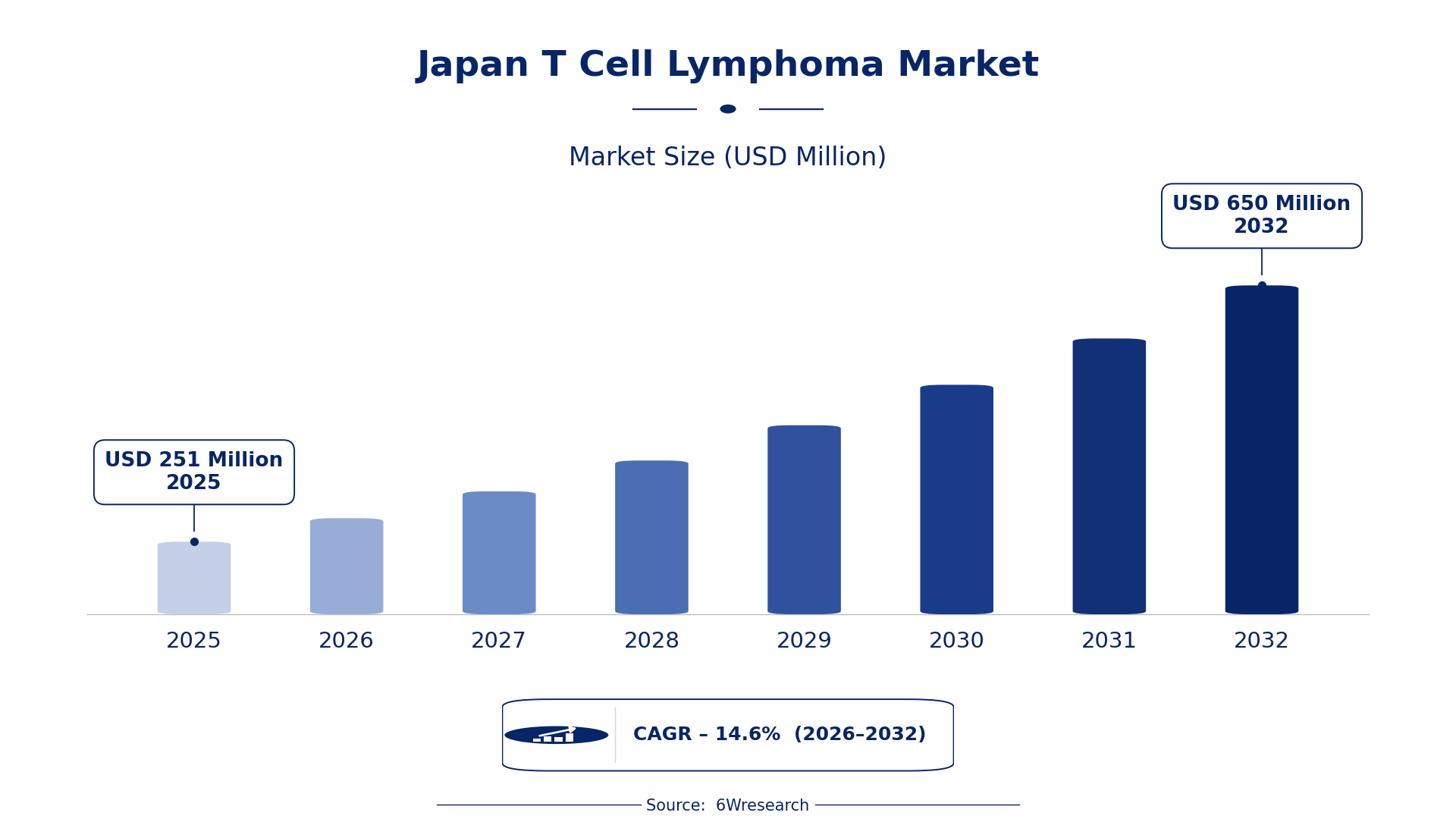
According to 6Wresearch internal database and industry insights, the Japan T Cell Lymphoma Market was valued at USD 251 Million in 2025 and is projected to reach USD 650 Million by 2032, growing at a CAGR of approximately 14.6% during 2026–2032.
Japan T Cell Lymphoma Market Highlights
| Report Metric | Details |
| Report Name | Japan T Cell Lymphoma Market (2026-2032) |
| Market Size 2025 | USD 251 Million |
| Market Size 2032 | USD 650 Million |
| Absolute Growth 2025–2032 | USD 399 Million |
| CAGR 2026–2032 | 14.6% |
| Peak Annual Growth | 15.1% in 2031 |
| Forecast Period | 2026–2032 |
| Historical Data | 2022–2025 |
| Base Year | 2025 |
| Leading Disease Type, 2025 | Blood Cancer (60% share) |
| Leading Treatment Method, 2025 | Chemotherapy (64% share) |
| Leading Treatment Type, 2025 | Chemotherapeutic Agents (68% share) |
| Leading Target, 2025 | Tcell Targeted (60% share) |
| Leading Stage, 2025 | Advanced Stage (63% share) |
| Fastest-Growing Disease Type | Lymphoma (15.7% CAGR) |
| Fastest-Growing Treatment Method | Immunotherapy (17.2% CAGR) |
| Fastest-Growing Treatment Type | Monoclonal Antibodies (19.8% CAGR) |
| Fastest-Growing Stage | Early Stage (16.4% CAGR) |
| Growing Sector | blood cancer treatment |
| Key End Users | hospitals, clinics, research institutions |
Japan T Cell Lymphoma Market Year-wise Growth Rate and Key Drivers (2022–2032)
This graph illustrates the annual growth rates of the market from 2022 to 2032, highlighting a steady upward trajectory and projected market expansion over the forecast period.
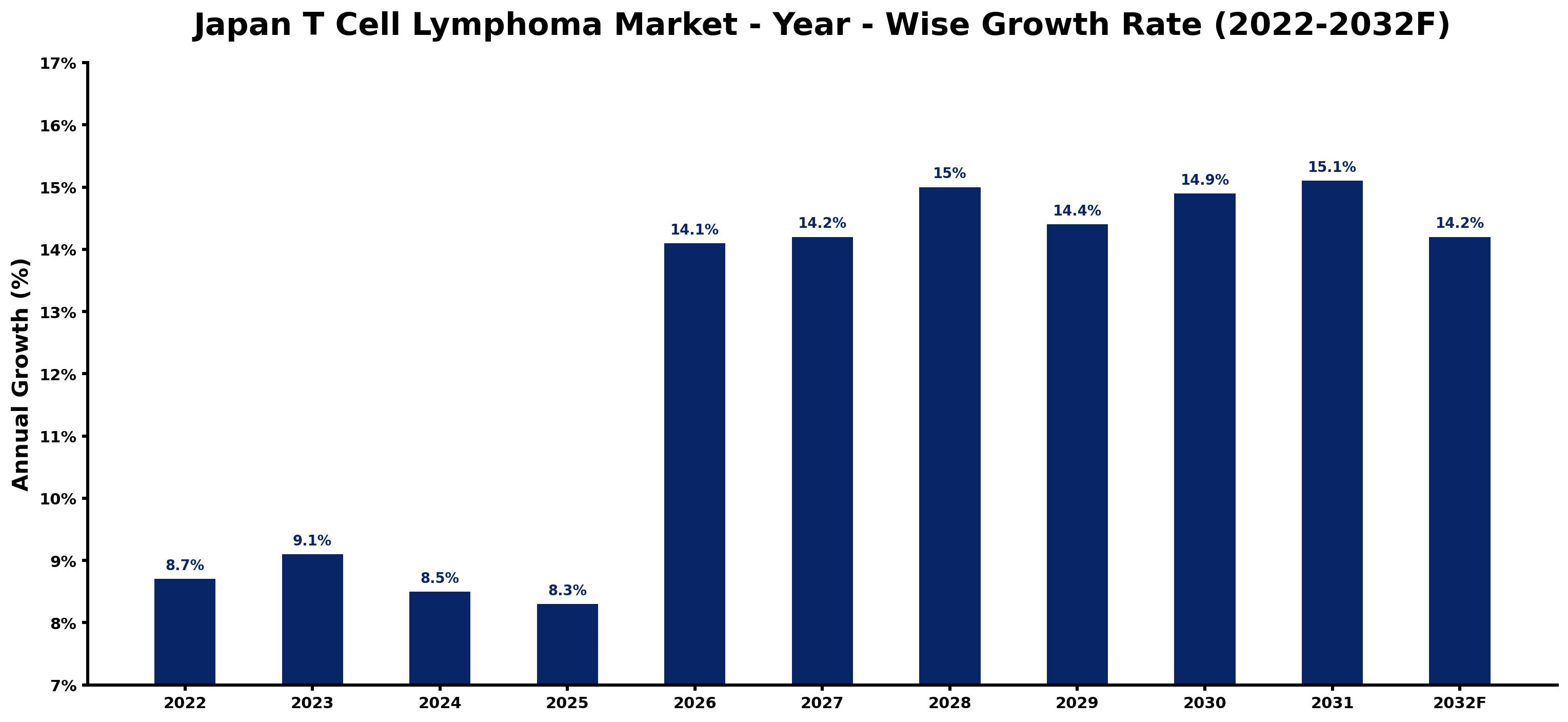
Annual growth estimates for each year appear below with the principal reason behind them, explaining the shifts that set the pace of the market.
| Year | Estimated Annual Growth (%) | Market Rationale |
| 2022 | 8.7 | The market showed a steady demand for T Cell Lymphoma treatments among healthcare providers. |
| 2023 | 9.1 | Increased patient diagnoses contributed to a rise in treatment demand and healthcare investments. |
| 2024 | 8.5 | The market experienced a slowdown as treatment options expanded but competition intensified. |
| 2025 | 8.3 | Demand remained stable, influenced by ongoing research and development in cancer therapies. |
| 2026 | 14.1 | Investment in immunotherapy advancements is anticipated to lead to a rise in treatment options and patient access. |
| 2027 | 14.2 | Growing clinical trials for new therapies will further stimulate demand among healthcare facilities. |
| 2028 | 15.0 | The introduction of new treatment methods is projected to contribute to accelerated market growth. |
| 2029 | 14.4 | A slight slowdown is expected as the market adjusts to new treatment protocols and competition. |
| 2030 | 14.9 | Demand will surge again due to heightened awareness and early detection programs. |
| 2031 | 15.1 | The peak growth will be driven by substantial investments in cancer research and treatment facilities. |
| 2032 | 14.2 | A slowdown in growth is projected as the market stabilises after rapid advancements. |
Note: Market size estimations and growth projections presented in this report are based on 6Wresearch's proprietary forecasting methodology, utilizing the latest available industry data, government publications, and primary research inputs.
Japan T Cell Lymphoma Market Synopsis
T Cell Lymphoma is a type of blood cancer characterised by the proliferation of T lymphocytes, primarily treated through chemotherapy and immunotherapy. In Japan, approximately 30,000 patients are diagnosed annually, with strong support from healthcare institutions. The Japan T Cell Lymphoma Market is expanding due to rising investments in cancer research, highlighted by the ¥2 billion allocated by the government for cancer initiatives in 2023. The promotion of immunotherapy by the Japanese Ministry of Health, Labour and Welfare further broadens treatment options, driving demand in hospitals and clinics.
Market Dynamics Impact Analysis (2026–2032)
| Factor | Type | Impact | Primary Segment Affected |
| Increasing prevalence of T Cell Lymphoma cases | Driver | High | Blood Cancer |
| Rising investment in cancer research and treatment facilities | Driver | High | Chemotherapy |
| Growing demand for advanced treatment options | Opportunity | High | Immunotherapy |
| Expansion of clinical trials for new therapies | Opportunity | Medium | Monoclonal Antibodies |
| High treatment costs limiting patient access | Restraint | High | Chemotherapeutic Agents |
| Limited number of specialized oncologists available | Restraint | Medium | Lymphoma |
| Competition among treatment providers intensifying | Challenge | High | Tcell Targeted |
| Challenges in early detection of T Cell Lymphoma | Challenge | Medium | Advanced Stage |
Evaluation of Drivers in Japan T Cell Lymphoma Market (2026–2032)
The main growth drivers and the segments they affect most are set out below.
| Drivers | Primary Segment Affected | Why It Matters (Evidence) |
| Rising patient diagnoses of T Cell Lymphoma | Blood Cancer | In 2022, approximately 30,000 patients were diagnosed, increasing demand for treatment options. |
| Government funding for cancer research initiatives | Chemotherapy | In 2023, ¥2 billion was allocated, leading to advancements in treatment methodologies. |
| Growing adoption of immunotherapy treatments | Immunotherapy | About 40% of T Cell Lymphoma patients received immunotherapy in 2022, driving demand for new therapies. |
| Expansion of clinical trials in major hospitals | Monoclonal Antibodies | Ongoing trials in 15 major hospitals are increasing the availability of new treatment options. |
| Support from healthcare institutions for treatment guidelines | Lymphoma | The Japan Society of Hematology oversees treatment guidelines, ensuring adherence to best practices. |
Spending rises because of the increasing number of T Cell Lymphoma diagnoses, with approximately 30,000 patients reported in 2022. Funding for cancer research, amounting to ¥2 billion in 2023, drives advancements in treatment methodologies. The adoption of immunotherapy is notable, with 40% of patients receiving these therapies. Clinical trials in major hospitals are expanding treatment options, stimulating demand. Guidelines from the Japan Society of Hematology ensure adherence to best practices, supporting healthcare providers in delivering effective treatments.
Evaluation of Restraints in Japan T Cell Lymphoma Market
The following restraints limit how fast demand can grow.
| Market Restraint | Primary Segment Affected | Why It Matters (Evidence) |
| High treatment costs for patients | Chemotherapeutic Agents | The average treatment cost can exceed ¥5 million per patient, limiting access for many individuals. |
| Shortage of specialized oncologists | Lymphoma | In 2022, there were only 1,200 registered oncologists specializing in blood cancers, affecting patient care. |
| Intense competition among treatment providers | Tcell Targeted | As more providers enter the market, differentiation becomes challenging, impacting pricing strategies. |
| Limited awareness of early detection methods | Advanced Stage | The recent launch of a national program for early detection highlights existing gaps in public awareness, with many patients unaware of symptoms. |
| Regulatory hurdles in treatment approvals | Immunotherapy | New therapies must navigate complex approval processes, delaying market entry and patient access. |
Japan T Cell Lymphoma Market Challenges
Skills shortages in oncology create treatment delays, as only 1,200 oncologists are available for 30,000 lymphoma patients, leading to extended wait times for essential care. High treatment costs averaging over ¥5 million per patient strain hospital budgets, limiting access for many patients and causing postponements in necessary therapies. Regulatory complexities slow the approval process for new treatments, which can extend timelines and negatively affect patient outcomes. Technological deficiencies in early detection methods result in late-stage diagnoses, increasing overall healthcare expenses for clinics and complicating treatment approaches.
Trends in the Japan T Cell Lymphoma Market
Four trends stand out in the Japan T Cell Lymphoma Market.
- Shift from Chemotherapy to Immunotherapy: Since 2022, there has been a notable shift towards immunotherapy treatments for T Cell Lymphoma, with 40% of patients receiving these therapies. This trend is supported by the Japanese Ministry of Health's promotion of immunotherapy, reflecting a growing preference for targeted therapies.
- Increase in Clinical Trials for New Treatments: In 2023, 15 major hospitals in Japan initiated clinical trials for new T Cell Lymphoma treatments. This expansion is expected to improve patient access to these therapies, driving market growth and enhancing treatment outcomes.
- Rising Government Investment in Cancer Research: The Japanese government allocated ¥2 billion for cancer research initiatives in 2023, aiming to improve treatment options for blood cancers. This funding is projected to accelerate advancements in T Cell Lymphoma therapies and enhance patient care.
- Enhanced Focus on Early Detection Programs: The launch of a national program in 2023 to improve early detection of blood cancers marks a significant shift. This initiative aims to reduce cancer mortality rates by 30% by 2030, ultimately leading to better patient outcomes.
Investment Opportunities in the Japan T Cell Lymphoma Market
Where to invest in the Japan T Cell Lymphoma Market: the main openings are set out below.
- Investment in Advanced Treatment Facilities: Healthcare facilities in urban areas are expanding to meet rising demand, with a projected need for new treatment options. The National Cancer Center is a key player in this initiative, with funding support expected to exceed ¥2 billion.
- Partnerships for Clinical Trials: Collaborating with major hospitals for clinical trials presents opportunities for new therapies. The National Health Insurance can facilitate access to funding, ensuring a smoother approval pathway for new treatments.
- Development of Targeted Therapies: The market gap for T Cell Lymphoma treatments highlights the need for targeted therapies. The Japanese Cancer Association is actively seeking partnerships to develop new treatment modalities, presenting investment opportunities.
- Expansion of Immunotherapy Options: The growing demand for immunotherapy in T Cell Lymphoma treatment creates opportunities for suppliers. The Japanese Ministry of Health's support for these therapies encourages investment in new treatment options.
Government Initiatives in the Japan T Cell Lymphoma Market
The Industrial Standardization Act, amended in 2019, governs product and test standards, ensuring quality in healthcare facilities treating blood cancers. This law mandates the development of treatment guidelines and promotes research initiatives, ensuring that healthcare providers adhere to best practices in T Cell Lymphoma treatment. In 2023, the government allocated ¥2 billion for cancer research initiatives, further supporting advancements in treatment methodologies.
The National Health Insurance system plays an important role in providing coverage for T Cell Lymphoma treatments. This allows patients to access necessary therapies without prohibitive costs. The Japanese Ministry of Health, Labour and Welfare oversees the implementation of these policies, promoting immunotherapy as a standard treatment option, thereby improving patient access to new therapies.
Future Insight of the Japan T Cell Lymphoma Market
Hospitals will see improved patient outcomes as the national program for early detection boosts diagnosis rates, allowing for timely interventions. By 2032, advancements from the Cancer Genome Project will facilitate personalised treatment strategies for patients. Ongoing clinical trials in 15 major hospitals will expand the range of available therapies, providing more options for patients. The government's goal to reduce cancer mortality by 30% by 2030 will encourage suppliers to innovate and develop new treatment modalities.
Market Segmentation Analysis
Japan T Cell Lymphoma Market report covers a detailed analysis of the following market segments:
By Disease Type – Blood Cancer Leads, Lymphoma Expected to Grow Fastest
According to Bhawna Singh, Assistant Manager at 6Wresearch, the largest disease type category in 2025 was Blood Cancer, at 60% of revenue. Blood cancer commands the largest share due to the significant number of patients diagnosed with T Cell Lymphoma, approximately 30,000 each year in Japan. The guidelines established by the Japan Society of Hematology specifically target treatment for this prevalent disease category. Over 2026–2032, Lymphoma is expected to post the fastest growth, at a CAGR of 15.7%. Lymphoma is experiencing rapid growth as awareness and diagnostic capabilities improve, with national initiatives aimed at enhancing early detection of blood cancers. This focus is expected to substantially increase the number of diagnosed cases in the near future. Suppliers should concentrate on developing targeted solutions for lymphoma to address the rising demand.
By Treatment Method – Chemotherapy Leads, Immunotherapy Expected to Grow Fastest
In 2025, Chemotherapy led the treatment method split with a 64% share. Chemotherapy remains the leading treatment method for T Cell Lymphoma, as it is widely used in clinical practice and supported by established treatment protocols. The average treatment cost exceeding ¥5 million reflects the reliance on this method for patient care. Immunotherapy is set to record the highest CAGR in this split, 17.2% over 2026–2032. Immunotherapy is gaining traction due to its effectiveness, with 40% of T Cell Lymphoma patients receiving it as part of their treatment. The Japanese Ministry of Health, Labour and Welfare's promotion of immunotherapy further fuels its rapid adoption. Buyers will benefit from considering a wider range of treatment options, including immunotherapy, to optimise patient outcomes.
By Treatment Type – Chemotherapeutic Agents Lead, Monoclonal Antibodies Expected to Grow Fastest
Chemotherapeutic Agents held 68% of the Japan T Cell Lymphoma Market by treatment type in 2025. Chemotherapeutic agents are vital for treating T Cell Lymphoma, serving as the foundation of standard treatment regimens. Their widespread application in clinical settings highlights their critical role in managing this condition effectively. Monoclonal Antibodies are projected to grow fastest, at a CAGR of 19.8% during 2026–2032. Monoclonal antibodies are gaining traction due to their targeted approach, which aligns with ongoing clinical trials in major hospitals across Japan. This trend indicates a shift towards more precise treatment options for patients. Suppliers should invest in the research and development of monoclonal antibodies to capitalise on this expanding market segment.
By Target – Tcell Targeted Leads and Records the Fastest Growth
Tcell Targeted took 60% of target revenue in 2025, more than any other category. Tcell targeted therapies dominate the market as they specifically address the cancerous T cells in T Cell Lymphoma, making them essential for effective treatment. Ongoing clinical trials are focused on optimising these targeted therapies to improve patient outcomes. Tcell Targeted is also forecast to expand faster than any other category, at a CAGR of 16.0% over 2026–2032. As Tcell targeted therapies are also the fastest-growing segment, their lead will widen with advancements in treatment methodologies that enhance efficacy. The integration of research and clinical application ensures sustained growth in this area. Suppliers must prioritise Tcell targeted solutions to align with market trends and patient requirements.
By Stage – Advanced Stage Leads, Early Stage Expected to Grow Fastest
Advanced Stage accounted for 63% of the market by stage in 2025. Advanced stage treatments account for the largest share as many patients present with late-stage symptoms, necessitating intensive care protocols. The critical nature of advanced stage treatment underscores its prominence in the overall market. Over 2026–2032, Early Stage is expected to post the fastest growth, at a CAGR of 16.4%. Early stage treatments are witnessing rapid growth due to increased emphasis on early detection initiatives, which aim to improve outcomes for patients diagnosed at this stage. This proactive approach is expected to significantly alter treatment paradigms. Buyers should prepare for a shift towards early stage treatment options as awareness and detection capabilities improve.
Key Attractiveness of the Report
- 10 Years of Market Numbers
- Historical Data Starting from 2022 to 2025
- Base Year 2025
- Forecast Data until 2032
- Key Performance Indicators Impacting the Market
- Major Upcoming Developments and Projects
Key Highlights of the Report:
- Japan T Cell Lymphoma Market Outlook
- Market Size of Japan T Cell Lymphoma Market,2025
- Forecast of Japan T Cell Lymphoma Market, 2032
- Historical Data and Forecast of Japan T Cell Lymphoma Revenues & Volume for the Period 2022-2032
- Japan T Cell Lymphoma Market Trend Evolution
- Japan T Cell Lymphoma Market Drivers and Challenges
- Japan T Cell Lymphoma Price Trends
- Japan T Cell Lymphoma Porter's Five Forces
- Japan T Cell Lymphoma Industry Life Cycle
- Historical Data and Forecast of Japan T Cell Lymphoma Market Revenues & Volume By Disease Type for the Period 2022-2032
- Historical Data and Forecast of Japan T Cell Lymphoma Market Revenues & Volume By Blood Cancer for the Period 2022-2032
- Historical Data and Forecast of Japan T Cell Lymphoma Market Revenues & Volume By Lymphoma for the Period 2022-2032
- Historical Data and Forecast of Japan T Cell Lymphoma Market Revenues & Volume By Treatment Method for the Period 2022-2032
- Historical Data and Forecast of Japan T Cell Lymphoma Market Revenues & Volume By Chemotherapy for the Period 2022-2032
- Historical Data and Forecast of Japan T Cell Lymphoma Market Revenues & Volume By Immunotherapy for the Period 2022-2032
- Historical Data and Forecast of Japan T Cell Lymphoma Market Revenues & Volume By Treatment Type for the Period 2022-2032
- Historical Data and Forecast of Japan T Cell Lymphoma Market Revenues & Volume By Chemotherapeutic Agents for the Period 2022-2032
- Historical Data and Forecast of Japan T Cell Lymphoma Market Revenues & Volume By Monoclonal Antibodies for the Period 2022-2032
- Historical Data and Forecast of Japan T Cell Lymphoma Market Revenues & Volume By Target for the Period 2022-2032
- Historical Data and Forecast of Japan T Cell Lymphoma Market Revenues & Volume By Bcell Targeted for the Period 2022-2032
- Historical Data and Forecast of Japan T Cell Lymphoma Market Revenues & Volume By Tcell Targeted for the Period 2022-2032
- Historical Data and Forecast of Japan T Cell Lymphoma Market Revenues & Volume By Stage for the Period 2022-2032
- Historical Data and Forecast of Japan T Cell Lymphoma Market Revenues & Volume By Early Stage for the Period 2022-2032
- Historical Data and Forecast of Japan T Cell Lymphoma Market Revenues & Volume By Advanced Stage for the Period 2022-2032
- Japan T Cell Lymphoma Import Export Trade Statistics
- Market Opportunity Assessment By Disease Type
- Market Opportunity Assessment By Treatment Method
- Market Opportunity Assessment By Treatment Type
- Market Opportunity Assessment By Target
- Market Opportunity Assessment By Stage
- Japan T Cell Lymphoma Top Companies Market Share
- Japan T Cell Lymphoma Competitive Benchmarking By Technical and Operational Parameters
- Japan T Cell Lymphoma Company Profiles
- Japan T Cell Lymphoma Key Strategic Recommendations
Market Covered
Segments analysed in this report are listed below.
By Disease Type
- Blood Cancer
- Lymphoma
By Treatment Method
- Chemotherapy
- Immunotherapy
By Treatment Type
- Chemotherapeutic Agents
- Monoclonal Antibodies
By Target
- Bcell Targeted
- Tcell Targeted
By Stage
- Early Stage
- Advanced Stage































