Japan Tiny Homes Market Size & Growth Rate
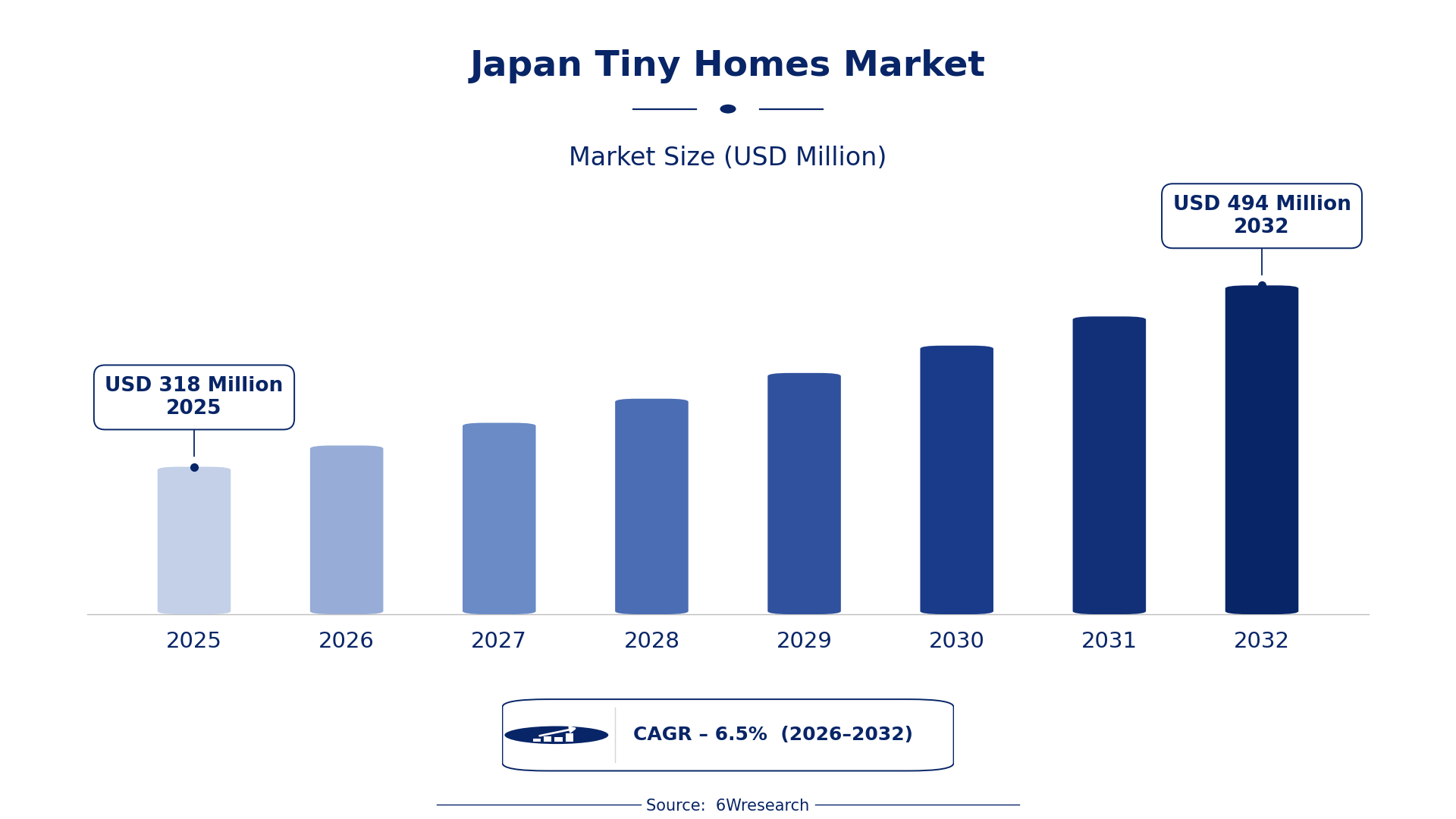
According to 6Wresearch internal database and industry insights, the Japan Tiny Homes Market was valued at USD 318 Million in 2025 and is projected to reach USD 494 Million by 2032, growing at a CAGR of approximately 6.5% during 2026–2032.
Japan Tiny Homes Market Highlights
| Report Metric | Details |
| Report Name | Japan Tiny Homes Market (2026-2032) |
| Market Size 2025 | USD 318 Million |
| Market Size 2032 | USD 494 Million |
| Absolute Growth 2025–2032 | USD 176 Million |
| CAGR 2026–2032 | 6.5% |
| Peak Annual Growth | 7.4% in 2031 |
| Forecast Period | 2026–2032 |
| Historical Data | 2022–2025 |
| Base Year | 2025 |
| Leading Type, 2025 | Mobile Tiny Homes (66% share) |
| Leading Application, 2025 | Home Use (57% share) |
| Fastest-Growing Type | Stationary Tiny Homes (9.1% CAGR) |
| Fastest-Growing Application | Commercial Use (8.4% CAGR) |
| Growing Sector | Affordable Housing |
| Key End Users | Urban dwellers, retirees, young families, vacation rental investors |
Japan Tiny Homes Market Year-wise Growth Rate and Key Drivers (2022–2032)
This graph illustrates the annual growth rates of the market from 2022 to 2032, highlighting a steady upward trajectory and projected market expansion over the forecast period.
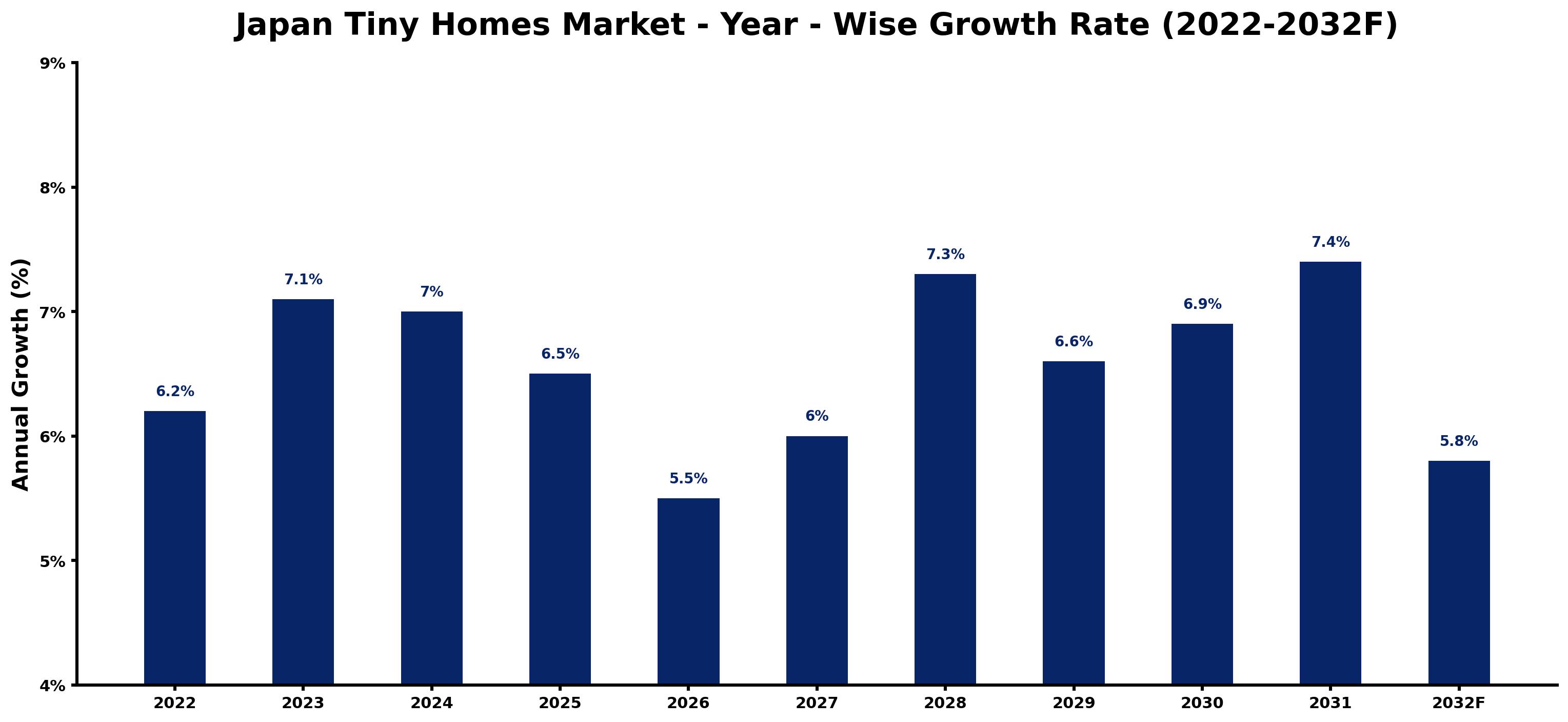
For each year, the table pairs the estimated growth rate with the leading influence on demand, showing how the drivers changed across the period.
| Year | Estimated Annual Growth (%) | Market Rationale |
| 2022 | 6.2 | The market showed steady growth, reflecting rising interest in compact living solutions. |
| 2023 | 7.1 | Demand surged as urban residents sought affordable housing amid high real estate prices. |
| 2024 | 7.0 | Growth slowed slightly due to market saturation in urban areas, yet interest remained strong. |
| 2025 | 6.5 | A continued slowdown occurred as competition increased among tiny home producers. |
| 2026 | 5.5 | The market is projected to slow further as consumer preferences stabilise. |
| 2027 | 6.0 | Growth is anticipated to rise again as fresh designs attract new buyers. |
| 2028 | 7.3 | Demand is expected to increase as sustainability trends gain traction among consumers. |
| 2029 | 6.6 | A slight slowdown is anticipated as the market matures and options diversify. |
| 2030 | 6.9 | Growth is set to rise again as urbanisation continues to drive housing needs. |
| 2031 | 7.4 | The market is expected to peak as tiny homes become mainstream housing options. |
| 2032 | 5.8 | Growth will slow as the market reaches a more stable equilibrium. |
Note: Market size estimations and growth projections presented in this report are based on 6Wresearch's proprietary forecasting methodology, utilizing the latest available industry data, government publications, and primary research inputs.
Japan Tiny Homes Market Synopsis
Tiny homes are compact living spaces designed for efficiency and minimalism, often built with sustainable materials and innovative techniques. The Japan Tiny Homes Market was valued at approximately USD 318 million in 2022, driven by urban residents seeking affordable housing solutions amid high real estate prices. The growing interest in minimal living and environmental sustainability, particularly in urban areas like Tokyo, fuels demand for these homes, which are increasingly featured in lifestyle media and supported by government initiatives.
Market Dynamics Impact Analysis (2026–2032)
| Factor | Type | Impact | Primary Segment Affected |
| Rising urbanisation and high real estate prices drive demand for affordable housing solutions. | Driver | High | Home Use |
| Growing interest in minimalism and sustainability encourages consumers to consider tiny homes. | Driver | High | Stationary Tiny Homes |
| The establishment of over 200 tiny home communities creates new living options for buyers. | Opportunity | High | Mobile Tiny Homes |
| The increasing popularity of tiny homes as vacation rentals opens new revenue streams for investors. | Opportunity | High | Commercial Use |
| High construction costs can limit the affordability of tiny homes for some buyers. | Restraint | Medium | Stationary Tiny Homes |
| Regulatory challenges related to zoning and building codes may hinder market expansion. | Restraint | Medium | Mobile Tiny Homes |
| Limited financing options may restrict potential buyers from purchasing tiny homes. | Challenge | High | Home Use |
| Consumer hesitance regarding downsizing can slow market acceptance of tiny homes. | Challenge | Medium | Stationary Tiny Homes |
Evaluation of Drivers in Japan Tiny Homes Market (2026–2032)
These are the developments adding the most demand over the forecast period.
| Drivers | Primary Segment Affected | Why It Matters (Evidence) |
| Urbanisation | Home Use | As urban areas expand, 29.3% of Japan's population aged 65 or older increases demand for affordable housing options. |
| Sustainability trends | Stationary Tiny Homes | The shift towards eco-friendly living drives demand for homes built from sustainable materials, appealing to environmentally conscious consumers. |
| Government initiatives | Mobile Tiny Homes | Supportive policies from the Ministry of Land, Infrastructure, Transport and Tourism promote tiny homes as viable housing solutions, aiming for a 30% increase in sustainable housing by 2030. |
| Media promotion of minimalism | Home Use | Increased visibility in lifestyle magazines encourages consumers to consider tiny homes for personal living, with rising articles promoting minimalism. |
| Community developments | Commercial Use | The establishment of tiny home communities provides new opportunities for vacation rentals and alternative housing, appealing to tourists. |
A wider customer base explains much of the growth, as urbanisation and high real estate prices increase demand for affordable housing. Approximately 29.3% of Japan's population is aged 65 or older, which heightens the need for accessible housing solutions. The average cost of a tiny home ranges from 2 million to 5 million yen, making them appealing to young families. The popularity of minimalism in lifestyle media encourages consumers to embrace tiny living, expanding the customer base.
Evaluation of Restraints in Japan Tiny Homes Market
The table below lists the restraints and the evidence behind each.
| Market Restraint | Primary Segment Affected | Why It Matters (Evidence) |
| High construction costs limit affordability for potential buyers. | Stationary Tiny Homes | The average cost of a tiny home ranges from 2 million to 5 million yen, affecting buyer decisions. |
| Zoning regulations can restrict the placement of tiny homes in urban areas. | Mobile Tiny Homes | Local building codes may not accommodate tiny homes, limiting their market potential. |
| Limited financing options hinder potential buyers from securing loans for tiny homes. | Home Use | Many financial institutions remain cautious about lending for non-traditional housing. |
| Consumer hesitance regarding downsizing slows market acceptance of tiny homes. | Stationary Tiny Homes | Potential buyers may struggle with the idea of living in smaller spaces. |
| Market saturation in urban areas may limit growth opportunities. | Commercial Use | As more tiny homes are built, competition increases, affecting profitability. |
Japan Tiny Homes Market Challenges
Strict zoning laws hinder construction, as local authorities impose regulations that can delay approvals for months, affecting builders and potential homeowners. Many regions lack clear guidelines for compact living spaces, leading to confusion and extended wait times for approvals, costing buyers valuable time in a competitive market. Limited technological advancements in construction methods restrict production efficiency, resulting in longer lead times for suppliers and increased costs for buyers. Rising prices for eco-friendly materials can inflate housing costs by 10-20%, making them less affordable for those seeking sustainable living options.
Trends in the Japan Tiny Homes Market
The shifts below are changing how Japan Tiny Homes Market products are bought and supplied.
- Shift towards Eco-Friendly Materials: In 2023, over 200 tiny home communities were established across Japan, promoting sustainable living. These homes are often built using eco-friendly materials, aligning with growing consumer preferences for sustainability.
- Increase in Tiny Home Media Coverage: Tiny homes are increasingly featured in Japanese lifestyle magazines, with a notable rise in articles promoting minimalism. This trend is clear as more publications highlight the benefits of compact living spaces.
- Growth of Tiny Homes as Vacation Rentals: The popularity of tiny homes as vacation rentals is rising, particularly in rural areas. This shift is driven by changing consumer preferences for unique travel experiences and affordable accommodations.
- Expansion of Tiny Home Communities: Tokyo is experiencing the establishment of numerous tiny home communities, catering to urban residents. This trend reflects a growing demand for affordable housing solutions in high-cost areas.
Investment Opportunities in the Japan Tiny Homes Market
The following areas offer the clearest openings for investors and suppliers in the Japan Tiny Homes Market.
- Urban Areas: Tokyo's high real estate prices create a gap for affordable housing solutions, with tiny homes offering an attractive alternative for residents seeking cost-effective living options.
- Sustainable Housing Initiatives: The government's target to increase sustainable housing by 30% by 2030 aligns with investment in tiny homes, appealing to environmentally conscious buyers.
- Tiny Home Rentals: The rising trend of tiny homes as vacation rentals presents an opportunity for investors to tap into the growing market for unique lodging experiences, particularly in tourist areas.
- Partnerships with Local Builders: Collaborating with local builders can facilitate entry into the tiny homes market, utilising their expertise and networks to meet regional demand effectively.
Government Initiatives in the Japan Tiny Homes Market
The GX Basic Policy, adopted in 2023, aims to increase sustainable housing initiatives, building on the Industrial Standardization Act of 1949. This policy supports tiny homes, encouraging their adoption as viable housing solutions.
In 2023, the Ministry of Land, Infrastructure, Transport and Tourism launched a programme supporting housing solutions, including tiny homes, with a target of JPY 150 trillion in decarbonisation investment over the next decade.
Future Insight of the Japan Tiny Homes Market
Advanced construction techniques will transform the tiny homes market, enabling suppliers to build more efficiently and meet consumer demand. By 2032, the government's goal to increase sustainable housing adoption by 30% will likely introduce new financial incentives for buyers, enhancing the appeal of compact living spaces. The introduction of improved eco-friendly materials will lower construction costs and enhance energy efficiency, attracting environmentally conscious consumers. With over 200 tiny home communities established, urban areas will increasingly embrace diverse housing solutions catering to various lifestyles.
Market Segmentation Analysis
Japan Tiny Homes Market report covers a detailed analysis of the following market segments:
By Type – Mobile Tiny Homes Lead, Stationary Tiny Homes Expected to Grow Fastest
According to Dhaval Chaurasia, Assistant Manager at 6Wresearch, Mobile Tiny Homes took 66% of type revenue in 2025, more than any other category. Mobile tiny homes dominate the market because they offer flexibility, which is particularly appealing in urban centres like Tokyo where space is limited and property prices are high. Their ability to serve as both travel accommodations and compact living spaces makes them a preferred option for many consumers. Stationary Tiny Homes are projected to grow fastest, at a CAGR of 9.1% during 2026–2032. Stationary tiny homes are experiencing rapid growth as they provide affordable permanent housing solutions, especially for the ageing population and young families seeking economical living arrangements. The government's push for sustainable housing further fuels this segment's expansion, making stationary tiny homes increasingly attractive to buyers. Suppliers should focus on enhancing offerings in the stationary tiny homes segment to meet the rising demand for affordable and sustainable housing solutions.
By Application – Home Use Leads, Commercial Use Expected to Grow Fastest
Home Use held 57% of the Japan Tiny Homes Market by application in 2025. Home use leads the market as individuals seek affordable living solutions in response to Japan's declining population and high real estate prices. The trend towards minimalism and sustainability resonates well with this segment, driving its popularity. Commercial Use is set to record the highest CAGR in this split, 8.4% over 2026–2032. Commercial use is the fastest growing segment, largely due to the increasing interest in tiny homes as vacation rentals and unique business spaces. This growth is supported by lifestyle media promoting tiny homes as viable commercial options, attracting new investors. Buyers should explore commercial opportunities within the tiny homes market to capitalise on emerging trends and consumer preferences.
Key Attractiveness of the Report
- 10 Years of Market Numbers
- Historical Data Starting from 2022 to 2025
- Base Year 2025
- Forecast Data until 2032
- Key Performance Indicators Impacting the Market
- Major Upcoming Developments and Projects
Key Highlights of the Report:
- Japan Tiny Homes Market Outlook
- Market Size of Japan Tiny Homes Market, 2025
- Forecast of Japan Tiny Homes Market, 2032
- Historical Data and Forecast of Japan Tiny Homes Revenues & Volume for the Period 2022-2032
- Japan Tiny Homes Market Trend Evolution
- Japan Tiny Homes Market Drivers and Challenges
- Japan Tiny Homes Price Trends
- Japan Tiny Homes Porter's Five Forces
- Japan Tiny Homes Industry Life Cycle
- Historical Data and Forecast of Japan Tiny Homes Market Revenues & Volume By Type for the Period 2022-2032
- Historical Data and Forecast of Japan Tiny Homes Market Revenues & Volume By Mobile Tiny Homes for the Period 2022-2032
- Historical Data and Forecast of Japan Tiny Homes Market Revenues & Volume By Stationary Tiny Homes for the Period 2022-2032
- Historical Data and Forecast of Japan Tiny Homes Market Revenues & Volume By Application for the Period 2022-2032
- Historical Data and Forecast of Japan Tiny Homes Market Revenues & Volume By Home Use for the Period 2022-2032
- Historical Data and Forecast of Japan Tiny Homes Market Revenues & Volume By Commercial Use for the Period 2022-2032
- Japan Tiny Homes Import Export Trade Statistics
- Market Opportunity Assessment By Type
- Market Opportunity Assessment By Application
- Japan Tiny Homes Top Companies Market Share
- Japan Tiny Homes Competitive Benchmarking By Technical and Operational Parameters
- Japan Tiny Homes Company Profiles
- Japan Tiny Homes Key Strategic Recommendations
Market Covered
The study includes the following segmentation.
By Type
- Mobile Tiny Homes
- Stationary Tiny Homes
By Application
- Home Use
- Commercial Use































