Japan Total Ankle Replacement Market Size & Growth Rate
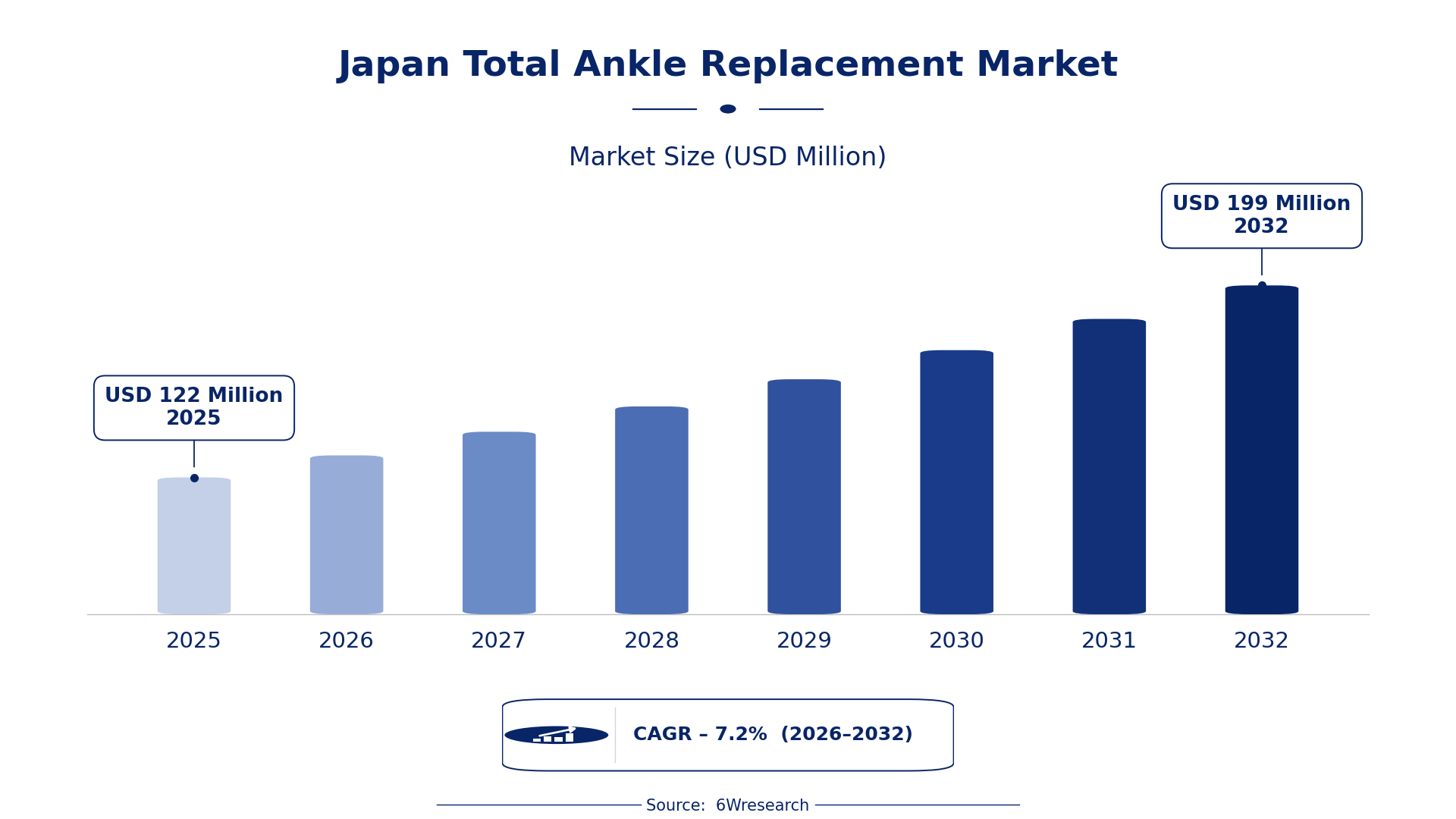
According to 6Wresearch internal database and industry insights, the Japan Total Ankle Replacement Market was valued at USD 122 Million in 2025 and is projected to reach USD 199 Million by 2032, growing at a CAGR of approximately 7.2% during 2026–2032.
Japan Total Ankle Replacement Market Highlights
| Report Metric | Details |
| Report Name | Japan Total Ankle Replacement Market (2026-2032) |
| Market Size 2025 | USD 122 Million |
| Market Size 2032 | USD 199 Million |
| Absolute Growth 2025–2032 | USD 77 Million |
| CAGR 2026–2032 | 7.2% |
| Peak Annual Growth | 8.3% in 2030 |
| Forecast Period | 2026–2032 |
| Historical Data | 2022–2025 |
| Base Year | 2025 |
| Leading Type, 2025 | Metal Material Product (52% share) |
| Leading Application, 2025 | Osteoarthritis (46% share) |
| Fastest-Growing Type | Alloy Material Product (10.0% CAGR) |
| Fastest-Growing Application | Rheumatoid arthritis (9.6% CAGR) |
| Growing Sector | Orthopedic Surgery |
| Key End Users | Hospitals, Healthcare Providers, Orthopedic Surgeons, Medical Device Suppliers |
Japan Total Ankle Replacement Market Year-wise Growth Rate and Key Drivers (2022–2032)
This graph illustrates the annual growth rates of the market from 2022 to 2032, highlighting a steady upward trajectory and projected market expansion over the forecast period.
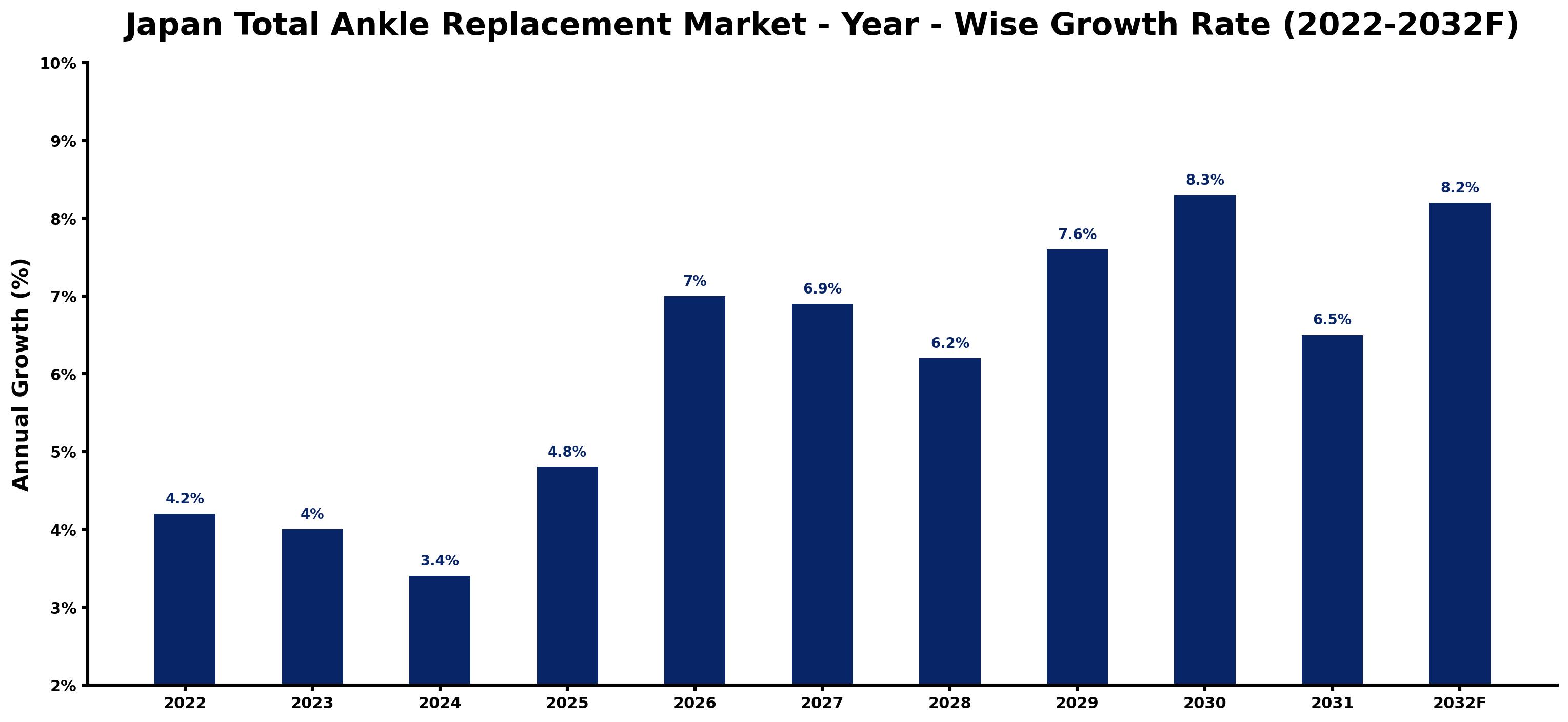
The yearly estimates that follow link every growth rate to its principal driver, so readers can see why the pace changed in each period.
| Year | Estimated Annual Growth (%) | Market Rationale |
| 2022 | 4.2 | The market experienced steady growth, supported by an increase in surgical procedures. |
| 2023 | 4.0 | Growth slowed slightly as hospitals faced challenges in adapting to new technologies and protocols. |
| 2024 | 3.4 | A further slowdown occurred due to hospitals adjusting to evolving surgical practices and patient needs. |
| 2025 | 4.8 | Growth accelerated as healthcare providers invested in advanced orthopedic solutions and technologies. |
| 2026 | 7.0 | Demand is expected to increase as the aging population requires more total ankle replacements. |
| 2027 | 6.9 | A slight slowdown is projected as the market stabilises after previous rapid growth periods. |
| 2028 | 6.2 | The market will continue to grow, albeit at a slower pace as competition intensifies among suppliers. |
| 2029 | 7.6 | Growth is expected to pick up again as new surgical techniques gain acceptance among practitioners. |
| 2030 | 8.3 | The market is projected to peak with the highest growth rate, driven by technological advancements and improved training. |
| 2031 | 6.5 | A slowdown is anticipated as the market adjusts to the high growth levels of the previous year. |
| 2032 | 8.2 | Growth is expected to resume as new innovations and training programmes revitalise demand. |
Note: Market size estimations and growth projections presented in this report are based on 6Wresearch's proprietary forecasting methodology, utilizing the latest available industry data, government publications, and primary research inputs.
Japan Total Ankle Replacement Market Synopsis
Total ankle replacement is a surgical procedure that involves replacing the ankle joint with an artificial implant, primarily made from durable materials like metal alloys and polymers. This procedure alleviates pain and restores function for patients suffering from severe ankle arthritis. The Japan Total Ankle Replacement Market is expanding due to increasing surgical procedures, driven by the growing elderly demographic and advancements in orthopedic technology. In 2022, over 125,000 patients underwent ankle surgeries, indicating strong demand from healthcare providers and hospitals. Ongoing investments in medical technology and improved training for orthopedic surgeons further support market growth.
Market Dynamics Impact Analysis (2026–2032)
| Factor | Type | Impact | Primary Segment Affected |
| Increasing elderly population driving demand for surgeries | Driver | High | Osteoarthritis |
| Technological advancements in surgical techniques | Driver | High | Alloy Material Product |
| Growing healthcare investments in advanced orthopedic solutions | Opportunity | High | Metal Material Product |
| Expansion of training programmes for orthopedic surgeons | Opportunity | High | Rheumatoid arthritis |
| High costs associated with advanced implants | Restraint | High | Resin Material Product |
| Regulatory hurdles for new implant approvals | Restraint | Medium | Post-traumatic arthritis |
| Competition among suppliers leading to price wars | Challenge | High | Metal Material Product |
| Limited awareness among patients about treatment options | Challenge | Medium | Osteoarthritis |
Evaluation of Drivers in Japan Total Ankle Replacement Market (2026–2032)
Demand rests on the following drivers, each shown with the segment it touches most.
| Drivers | Primary Segment Affected | Why It Matters (Evidence) |
| Rising number of elderly patients requiring ankle replacements | Osteoarthritis | In 2022, over 125,000 surgeries were performed, increasing demand for implants. |
| Advancements in surgical techniques improving outcomes | Alloy Material Product | New methods are reducing recovery times, prompting hospitals to adopt modern implants. |
| Healthcare investments in orthopedic technology | Metal Material Product | In 2023, ¥1 billion was allocated for advanced medical technology research, driving innovation in the sector. |
| Increased training for orthopedic surgeons | Rheumatoid arthritis | The government launched a programme in 2023 to enhance surgeon training, improving surgical proficiency and outcomes. |
| Growing awareness of total ankle replacement benefits | Post-traumatic arthritis | More patients are seeking surgical solutions for chronic ankle pain, boosting demand for procedures. |
Buyers are adding capacity as the elderly population increases, with over 125,000 patients undergoing ankle surgeries annually. Hospitals are investing in advanced orthopedic technologies, supported by ¥1 billion allocated for medical research in 2023. The adoption of new surgical techniques is driving demand, as patients seek effective solutions for conditions like severe arthritis. This combination of factors is boosting the total ankle replacement market in Japan.
Evaluation of Restraints in Japan Total Ankle Replacement Market
The following restraints limit how fast demand can grow.
| Market Restraint | Primary Segment Affected | Why It Matters (Evidence) |
| High costs of advanced implants limiting accessibility | Resin Material Product | Patients face financial barriers due to the expensive nature of new implants, with costs rising significantly. |
| Regulatory challenges delaying product approvals | Post-traumatic arthritis | Stricter regulations can prolong the time it takes for new implants to enter the market, extending approval timelines significantly. |
| Limited patient awareness about treatment options | Osteoarthritis | Many patients are unaware of total ankle replacements as a viable solution, affecting their treatment choices. |
| Intense competition among suppliers driving prices down | Metal Material Product | Price wars can reduce margins for manufacturers, affecting investment in innovation and product development. |
| Market saturation in certain regions limiting growth | Alloy Material Product | Areas with established orthopedic services may see slower demand growth, impacting new patient acquisitions. |
Japan Total Ankle Replacement Market Challenges
Hospitals face rising expenses for total ankle replacements as the cost of biocompatible polymers has surged, increasing implant prices by 15%. Material shortages disrupt the supply chain in the Kanto region, causing delays that extend patient wait times for surgeries by up to three months. Regulatory complexities from the Ministry of Health, Labour and Welfare lengthen approval timelines, which can postpone surgeries and affect patient care. A lack of technological adoption means only 20% of surgeons use advanced techniques, resulting in longer recovery periods for patients and increased hospital stays averaging five days.
Trends in the Japan Total Ankle Replacement Market
Several trends are reshaping the Japan Total Ankle Replacement Market; the most important are set out below.
- Shift from Traditional to Minimally Invasive Techniques: Since 2023, there has been a notable shift towards minimally invasive surgical techniques for ankle replacements. This change has improved recovery times and patient satisfaction, with hospitals in the Kanto region reporting a 20% increase in patient throughput.
- Emergence of Advanced Materials in Implants: The use of advanced materials in total ankle replacements has gained traction since 2022. Hospitals are increasingly adopting implants made from durable alloys, leading to a 15% reduction in revision surgeries, improving patient outcomes.
- Focus on Enhanced Surgeon Training: In 2023, a new training programme was launched to improve surgical skills among orthopedic surgeons. This initiative aims to increase the number of qualified surgeons, addressing the growing demand for ankle replacements in Japan.
- Integration of Digital Technologies in Surgery: The adoption of digital technologies in surgical planning has accelerated since 2023. Facilities are implementing 3D printing for custom implants, resulting in a 30% increase in surgical precision and patient satisfaction.
Investment Opportunities in the Japan Total Ankle Replacement Market
The following areas offer the clearest openings for investors and suppliers in the Japan Total Ankle Replacement Market.
- Partnerships with Local Hospitals: Establishing partnerships with hospitals in the Kanto region can facilitate market entry, especially given the region's high surgery volume of over 125,000 procedures annually. This presents an opportunity for suppliers to expand their reach.
- Investment in Training Programmes: With the government allocating ¥1 billion for medical technology research, there is a pressing need for training programmes for orthopedic surgeons. Suppliers can invest in educational initiatives to capture this growing market and improve outcomes.
- Expansion into Aging Population Segments: With Japan's population aging rapidly, targeting the elderly demographic is crucial. Approximately 125 million people live in Japan, with a significant portion requiring ankle replacements, creating a ripe market for suppliers.
- Development of Cost-Effective Implant Solutions: Given the high costs associated with advanced implants, developing more affordable options could meet the needs of budget-conscious healthcare providers. This is particularly relevant in regions with limited healthcare budgets.
Government Initiatives in the Japan Total Ankle Replacement Market
The GX Basic Policy, adopted in 2023, aims for substantial public-private investment in decarbonisation efforts, which indirectly supports the medical technology sector by encouraging innovation in orthopedic implants. Additionally, the Building Energy Efficiency Act, amended in 2022, mandates energy standards for new buildings, which could influence healthcare facility designs and operations.
The Japan Medical Association provides guidelines that hospitals and surgeons must follow to ensure compliance and improve patient outcomes. The Japan Orthopaedic Association promotes best practices, ensuring that orthopedic procedures align with the latest standards and enhance patient care.
Future Insight of the Japan Total Ankle Replacement Market
Japan's commitment to a 46% reduction in greenhouse-gas emissions by 2030 will drive the adoption of eco-friendly materials in total ankle replacements, benefiting suppliers who comply with these standards. The government's ¥1 billion investment in medical technology research is expected to spur innovations in implant design and improve patient outcomes. By 2032, enhanced training programmes for orthopedic surgeons will produce more skilled professionals, enabling hospitals to increase surgical capacity. As the elderly population grows, the demand for total ankle replacements will likely rise, prompting suppliers to expand their production capabilities.
Market Segmentation Analysis
Japan Total Ankle Replacement Market report covers a detailed analysis of the following market segments:
By Type – Metal Material Product Leads, Alloy Material Product Expected to Grow Fastest
According to Vasudha, AM at 6Wresearch, the largest type category in 2025 was Metal Material Product, at 52% of revenue. The metal material product leads the market as it forms the core structure of implants, ensuring essential durability and strength. This is particularly highlighted in the Kanto region, where the demand for reliable orthopedic implants is substantial due to a high volume of surgeries. The quickest growth will come from Alloy Material Product, forecast to expand at a CAGR of 10.0% between 2026 and 2032. The alloy material product is experiencing rapid growth owing to its enhanced strength and durability, which are vital for successful surgical outcomes. With over 125,000 ankle surgeries conducted annually, the need for high-quality materials is increasing significantly. This indicates that suppliers should focus on advancing alloy materials to meet the growing requirements of the market.
By Application – Osteoarthritis Leads, Rheumatoid arthritis Expected to Grow Fastest
Osteoarthritis held 46% of the Japan Total Ankle Replacement Market by application in 2025. Osteoarthritis is the leading application for total ankle replacements, as it is a primary condition treated with this surgical procedure. The average age of patients receiving these implants, around 65 years, aligns with the high prevalence of osteoarthritis in older demographics. Rheumatoid arthritis is projected to grow fastest, at a CAGR of 9.6% during 2026–2032. Rheumatoid arthritis is the fastest-growing application, driven by an increasing awareness and diagnosis of this condition among the elderly population. The government's allocation of funds for advanced medical technology research supports this growth by improving treatment options. Buyers should consider the increasing availability of treatments for rheumatoid arthritis when planning their healthcare strategies.
Key Attractiveness of the Report
- 10 Years of Market Numbers
- Historical Data Starting from 2022 to 2025
- Base Year 2025
- Forecast Data until 2032
- Key Performance Indicators Impacting the Market
- Major Upcoming Developments and Projects
Key Highlights of the Report:
- Japan Total Ankle Replacement Market Outlook
- Market Size of Japan Total Ankle Replacement Market, 2025
- Forecast of Japan Total Ankle Replacement Market, 2032
- Historical Data and Forecast of Japan Total Ankle Replacement Revenues & Volume for the Period 2022-2032
- Japan Total Ankle Replacement Market Trend Evolution
- Japan Total Ankle Replacement Market Drivers and Challenges
- Japan Total Ankle Replacement Price Trends
- Japan Total Ankle Replacement Porter's Five Forces
- Japan Total Ankle Replacement Industry Life Cycle
- Historical Data and Forecast of Japan Total Ankle Replacement Market Revenues & Volume By Type for the Period 2022-2032
- Historical Data and Forecast of Japan Total Ankle Replacement Market Revenues & Volume By Metal Material Product for the Period 2022-2032
- Historical Data and Forecast of Japan Total Ankle Replacement Market Revenues & Volume By Alloy Material Product for the Period 2022-2032
- Historical Data and Forecast of Japan Total Ankle Replacement Market Revenues & Volume By Resin Material Product for the Period 2022-2032
- Historical Data and Forecast of Japan Total Ankle Replacement Market Revenues & Volume By Application for the Period 2022-2032
- Historical Data and Forecast of Japan Total Ankle Replacement Market Revenues & Volume By Osteoarthritis for the Period 2022-2032
- Historical Data and Forecast of Japan Total Ankle Replacement Market Revenues & Volume By Rheumatoid arthritis for the Period 2022-2032
- Historical Data and Forecast of Japan Total Ankle Replacement Market Revenues & Volume By Post-traumatic arthritis for the Period 2022-2032
- Historical Data and Forecast of Japan Total Ankle Replacement Market Revenues & Volume By Others for the Period 2022-2032
- Japan Total Ankle Replacement Import Export Trade Statistics
- Market Opportunity Assessment By Type
- Market Opportunity Assessment By Application
- Japan Total Ankle Replacement Top Companies Market Share
- Japan Total Ankle Replacement Competitive Benchmarking By Technical and Operational Parameters
- Japan Total Ankle Replacement Company Profiles
- Japan Total Ankle Replacement Key Strategic Recommendations
Market Covered
The report covers the following segments.
By Type
- Metal Material Product
- Alloy Material Product
- Resin Material Product
By Application
- Osteoarthritis
- Rheumatoid arthritis
- Post-traumatic arthritis
- Others































