Japan Traditional Music Market Size & Growth Rate
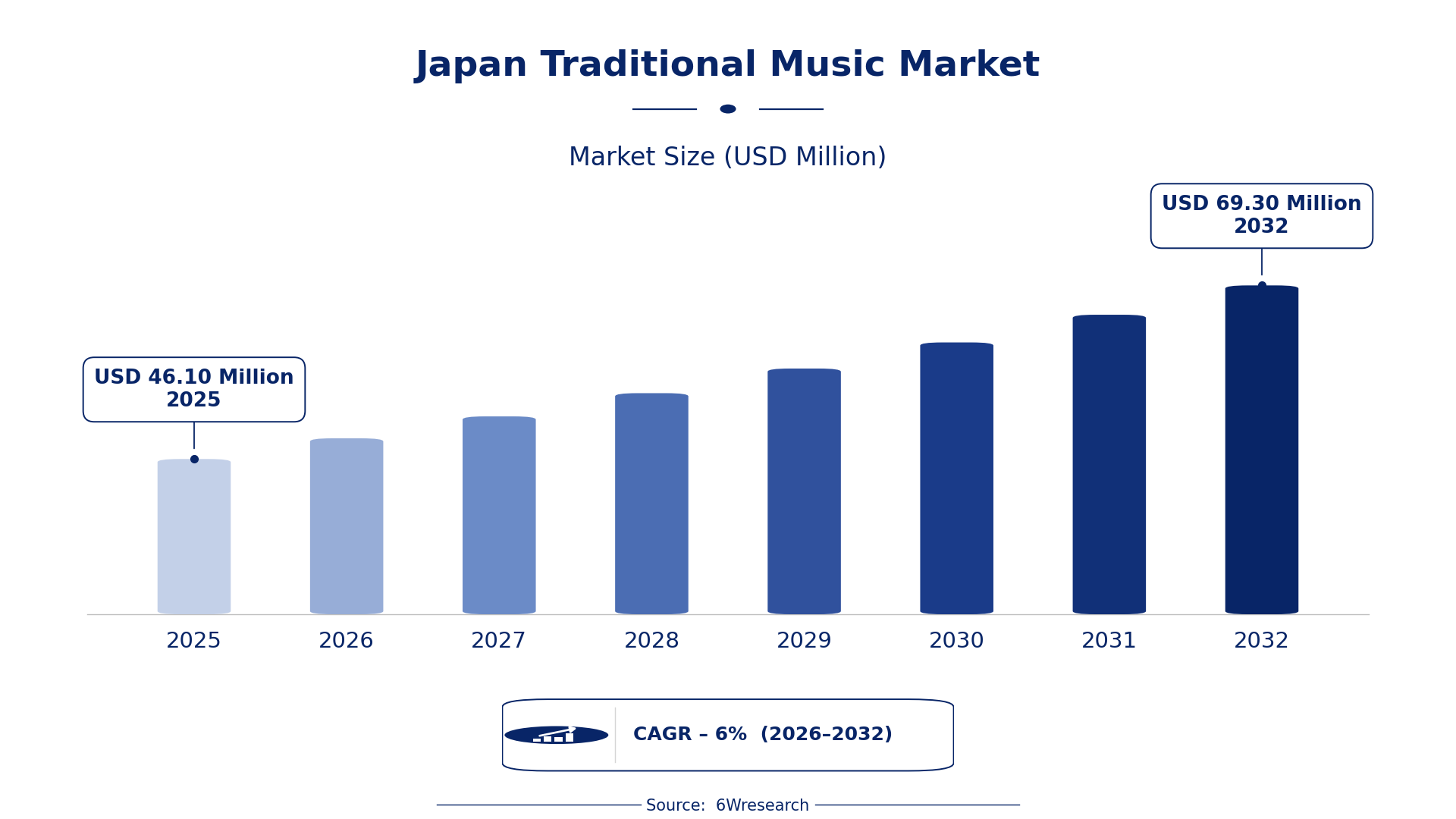
According to 6Wresearch internal database and industry insights, the Japan Traditional Music Market was valued at USD 46.10 Million in 2025 and is projected to reach USD 69.30 Million by 2032, growing at a CAGR of approximately 6% during 2026–2032.
Japan Traditional Music Market Highlights
| Report Metric | Details |
| Report Name | Japan Traditional Music Market (2026-2032) |
| Market Size 2025 | USD 46.10 Million |
| Market Size 2032 | USD 69.30 Million |
| Absolute Growth 2025–2032 | USD 23.20 Million |
| CAGR 2026–2032 | 6% |
| Peak Annual Growth | 7.1% in 2026 |
| Forecast Period | 2026–2032 |
| Historical Data | 2022–2025 |
| Base Year | 2025 |
| Leading Type, 2025 | Live Music Events (55% share) |
| Growing Sector | Cultural Events |
| Key End Users | Cultural institutions, educational institutions, event organizers, local governments |
Japan Traditional Music Market Year-wise Growth Rate and Key Drivers (2022–2032)
This graph illustrates the annual growth rates of the market from 2022 to 2032, highlighting a steady upward trajectory and projected market expansion over the forecast period.
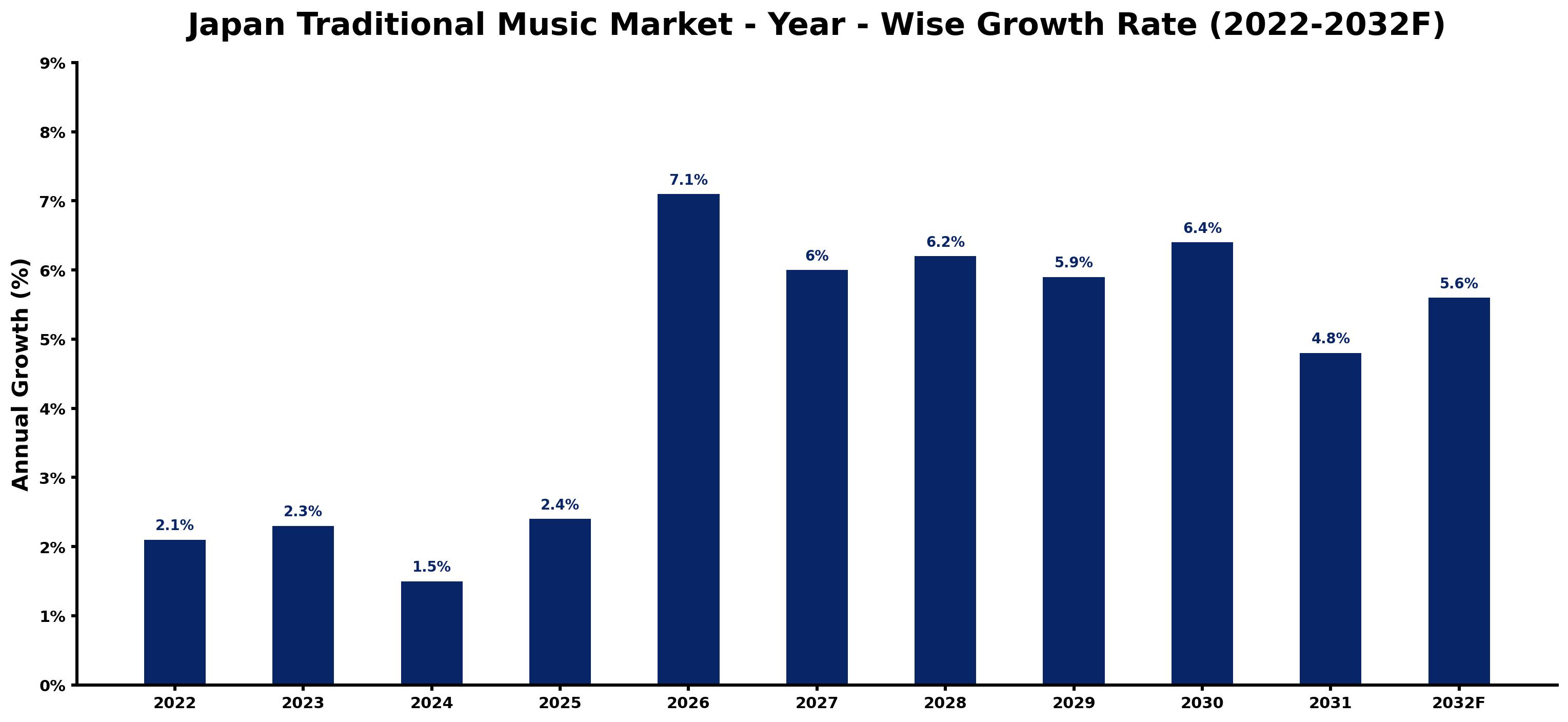
The table below sets out the estimated growth rate for each year and the main factor behind it.
| Year | Estimated Annual Growth (%) | Market Rationale |
| 2022 | 2.1 | The market maintained a steady growth rate, reflecting ongoing interest in cultural heritage. |
| 2023 | 2.3 | Growth continued at a faster pace, driven by increased participation in cultural events. |
| 2024 | 1.5 | The market experienced a slowdown as the growth rate dipped compared to the previous year. |
| 2025 | 2.4 | Growth accelerated again, supported by more traditional music events across the country. |
| 2026 | 7.1 | The market is expected to peak with high demand for live performances and cultural festivals. |
| 2027 | 6.0 | Growth is projected to slow slightly, but demand for live events will remain strong among audiences. |
| 2028 | 6.2 | The market is anticipated to rebound with faster growth as cultural institutions promote traditional music. |
| 2029 | 5.9 | Growth is expected to slow again, reflecting a stabilisation in the number of events held. |
| 2030 | 6.4 | The market will see renewed interest, with more investments in traditional music education. |
| 2031 | 4.8 | Growth is projected to slow further, but the demand for live events will continue to support the market. |
| 2032 | 5.6 | The market is expected to grow faster as traditional music gains more recognition. |
Note: Market size estimations and growth projections presented in this report are based on 6Wresearch's proprietary forecasting methodology, utilizing the latest available industry data, government publications, and primary research inputs.
Japan Traditional Music Market Synopsis
Traditional music in Japan encompasses a range of genres, including folk, classical, and contemporary styles, often highlighted through live performances and cultural festivals. In 2022, more than 1,500 traditional music events took place, showcasing a vibrant cultural scene. The Japan Traditional Music Market is growing as domestic interest in cultural heritage rises, driven by initiatives from cultural institutions and government programmes that aim to integrate traditional music into education and public events, promoting community engagement and participation.
Market Dynamics Impact Analysis (2026–2032)
| Factor | Type | Impact | Primary Segment Affected |
| Increasing number of live music events attracting larger audiences | Driver | High | Live Music Events |
| Growing integration of traditional music into school curricula | Driver | High | Live Music Events |
| Expansion of cultural festivals promoting traditional music | Opportunity | High | Live Music Events |
| Investment in workshops and training for traditional music instruments | Opportunity | Medium | Live Music Events |
| Limited availability of tangible recording formats for traditional music | Restraint | Medium | Tangible Recording Formats |
| Competition from modern music genres affecting audience engagement | Restraint | High | Live Music Events |
| Challenges in attracting younger audiences to traditional music | Challenge | High | Live Music Events |
| High costs associated with organizing large-scale traditional music events | Challenge | Medium | Live Music Events |
Evaluation of Drivers in Japan Traditional Music Market (2026–2032)
The main growth drivers and the segments they affect most are set out below.
| Drivers | Primary Segment Affected | Why It Matters (Evidence) |
| Increased participation in cultural events | Live Music Events | In 2022, over 1,500 traditional music events were held, drawing larger audiences and boosting demand. |
| Integration of traditional music into education | Live Music Events | The 2023 initiative aims to incorporate traditional music into school curricula, encouraging student engagement. |
| Support from cultural institutions | Live Music Events | The Japan Traditional Music Association promotes traditional arts, increasing public interest and attendance. |
| Growing number of shamisen players | Live Music Events | With around 10,000 shamisen players, the instrument's popularity drives more live performances. |
| Recognition of traditional music as cultural heritage | Live Music Events | Several forms of traditional music are listed by UNESCO, raising awareness and interest. |
Increased participation in cultural events is driving the steady rise in orders, with over 1,500 traditional music events held in 2022 attracting larger audiences and boosting demand. Cultural institutions are promoting public engagement and attendance at live performances, while the popularity of instruments like the shamisen fuels demand for live music events. UNESCO's recognition of various traditional music forms further raises awareness and interest among audiences.
Evaluation of Restraints in Japan Traditional Music Market
Below are the constraints most often cited by buyers and suppliers, with the segment each affects.
| Market Restraint | Primary Segment Affected | Why It Matters (Evidence) |
| Limited availability of tangible recording formats for traditional music | Tangible Recording Formats | Traditional music is primarily experienced through live events, with recordings being less popular among audiences. |
| Competition from modern music genres affecting audience engagement | Live Music Events | Modern genres attract younger audiences, leading to a decline in attendance at traditional music events. |
| Challenges in attracting younger audiences to traditional music | Live Music Events | Younger generations show less interest in traditional music, impacting overall market growth. |
| High costs associated with organizing large-scale traditional music events | Live Music Events | Event organizers face substantial expenses, which can limit the number of performances held. |
| Regulatory restrictions on event promotions | Live Music Events | Strict regulations can hinder marketing efforts for traditional music events, impacting audience turnout. |
Japan Traditional Music Market Challenges
Producers of traditional music recordings contend with fierce competition from contemporary genres, which erodes their market share and diminishes revenues. A shortage of skilled performers, with only around 10,000 shamisen players in Japan, limits the quality and frequency of events, resulting in fewer cultural experiences for audiences. Disruptions in the supply of traditional instruments, such as the koto, can delay performances and increase costs for producers. Technological barriers, particularly in online promotion, restrict audience reach, leading to lower attendance at events and reduced engagement from younger demographics.
Trends in the Japan Traditional Music Market
The shifts below are changing how Japan Traditional Music Market products are bought and supplied.
- Shift from Recorded to Live Performances: A clear shift towards live performances is taking place as audiences seek authentic experiences. The annual Takamatsu Traditional Music Festival attracts thousands of visitors each year, underscoring this trend.
- Integration of Traditional Music into Education: The Ministry of Education's 2023 initiative aims to weave traditional music into school curricula, enhancing appreciation among students. This initiative is set to reach numerous schools across the nation.
- Support for Cultural Festivals: Local governments are increasingly promoting traditional music through cultural festivals. The number of festivals dedicated to traditional music has risen, boosting visibility and engagement, with over 100 festivals reported annually.
- Rising Interest in Traditional Music Workshops: An increasing number of workshops for traditional music instruments are being organised, particularly in Kyoto Prefecture. These workshops draw participants, with many sessions reporting full attendance, reflecting a growing interest.
Investment Opportunities in the Japan Traditional Music Market
The following opportunities in the Japan Traditional Music Market pair current demand with a clear way in.
- Investment in Live Music Events: A promising opportunity exists to invest in live music events, particularly in urban areas like Tokyo, where cultural interest is high. The number of events is projected to rise by 20% over the next few years.
- Development of Tangible Recording Formats: Investing in tangible recording formats for traditional music could satisfy niche market demand. Cultural institutions in regions like Kyoto are potential buyers for these products, with a projected market size of USD 5 million.
- Expansion of Traditional Music Workshops: With rising interest in traditional music, there is an opportunity to establish workshops in various prefectures. Collaborating with local cultural centres can facilitate entry into this market, targeting areas with high tourist traffic.
- Support for Cultural Festivals: The growing number of cultural festivals presents an opportunity to sponsor or participate in these events. Engaging with local governments can boost visibility and strengthen community ties, with over 200 festivals expected in the coming years.
Government Initiatives in the Japan Traditional Music Market
The GX Basic Policy adopted in 2023 aims to promote cultural heritage through public-private partnerships, encouraging investment in traditional music projects. This policy builds on the Industrial Standardization Act, which governs standards for cultural assets, ensuring quality and preservation of traditional music forms. The policy is expected to generate JPY 10 billion in funding for cultural initiatives over the next five years.
The Japan Arts Council plays a crucial role in funding traditional music projects. It approves grants for cultural initiatives, ensuring that traditional music receives the necessary support for preservation and promotion, with an annual budget of JPY 2 billion allocated for these efforts.
Future Insight of the Japan Traditional Music Market
The integration of traditional music into school curricula will cultivate a new generation of enthusiasts who appreciate cultural heritage. Increased funding from the Japan Arts Council will support more projects, elevating the profile of various music forms. The annual Takamatsu Traditional Music Festival is expected to attract over 10,000 visitors, boosting local economies and community involvement. By 2032, collaborations between traditional and contemporary artists will flourish, broadening the audience base and revitalising interest in Japan's cultural assets.
Market Segmentation Analysis
Japan Traditional Music Market report covers a detailed analysis of the following market segments:
By Type – Live Music Events Lead and Record the Fastest Growth
According to Vasudha, AM at 6Wresearch, Live Music Events held 55% of the Japan Traditional Music Market by type in 2025. Live music events hold the largest share in Japan's traditional music market as they serve as essential experiences for audiences. With over 1,500 events taking place in 2022, these occasions promote community involvement and cultural appreciation. The same category are also set to grow fastest, at a CAGR of 7.9% during 2026–2032. The rapid growth of live music events is fuelled by initiatives like the Tokyo Cultural Program, which actively encourages public participation. This support will likely ensure that live performances continue to thrive and attract larger audiences. Suppliers should prioritise live event strategies to meet the increasing demand for traditional music experiences.
Key Attractiveness of the Report
- 10 Years of Market Numbers
- Historical Data Starting from 2022 to 2025
- Base Year 2025
- Forecast Data until 2032
- Key Performance Indicators Impacting the Market
- Major Upcoming Developments and Projects
Key Highlights of the Report:
- Japan Traditional Music Market Outlook
- Market Size of Japan Traditional Music Market, 2025
- Forecast of Japan Traditional Music Market, 2032
- Historical Data and Forecast of Japan Traditional Music Revenues & Volume for the Period 2022-2032
- Japan Traditional Music Market Trend Evolution
- Japan Traditional Music Market Drivers and Challenges
- Japan Traditional Music Price Trends
- Japan Traditional Music Porter's Five Forces
- Japan Traditional Music Industry Life Cycle
- Historical Data and Forecast of Japan Traditional Music Market Revenues & Volume By Type for the Period 2022-2032
- Historical Data and Forecast of Japan Traditional Music Market Revenues & Volume By Tangible Recording Formats for the Period 2022-2032
- Historical Data and Forecast of Japan Traditional Music Market Revenues & Volume By Live Music Events for the Period 2022-2032
- Japan Traditional Music Import Export Trade Statistics
- Market Opportunity Assessment By Type
- Japan Traditional Music Top Companies Market Share
- Japan Traditional Music Competitive Benchmarking By Technical and Operational Parameters
- Japan Traditional Music Company Profiles
- Japan Traditional Music Key Strategic Recommendations
Market Covered
The report covers the following segments.
By Type
- Tangible Recording Formats
- Live Music Events































