Japan Transfusion Bottles Market Size & Growth Rate
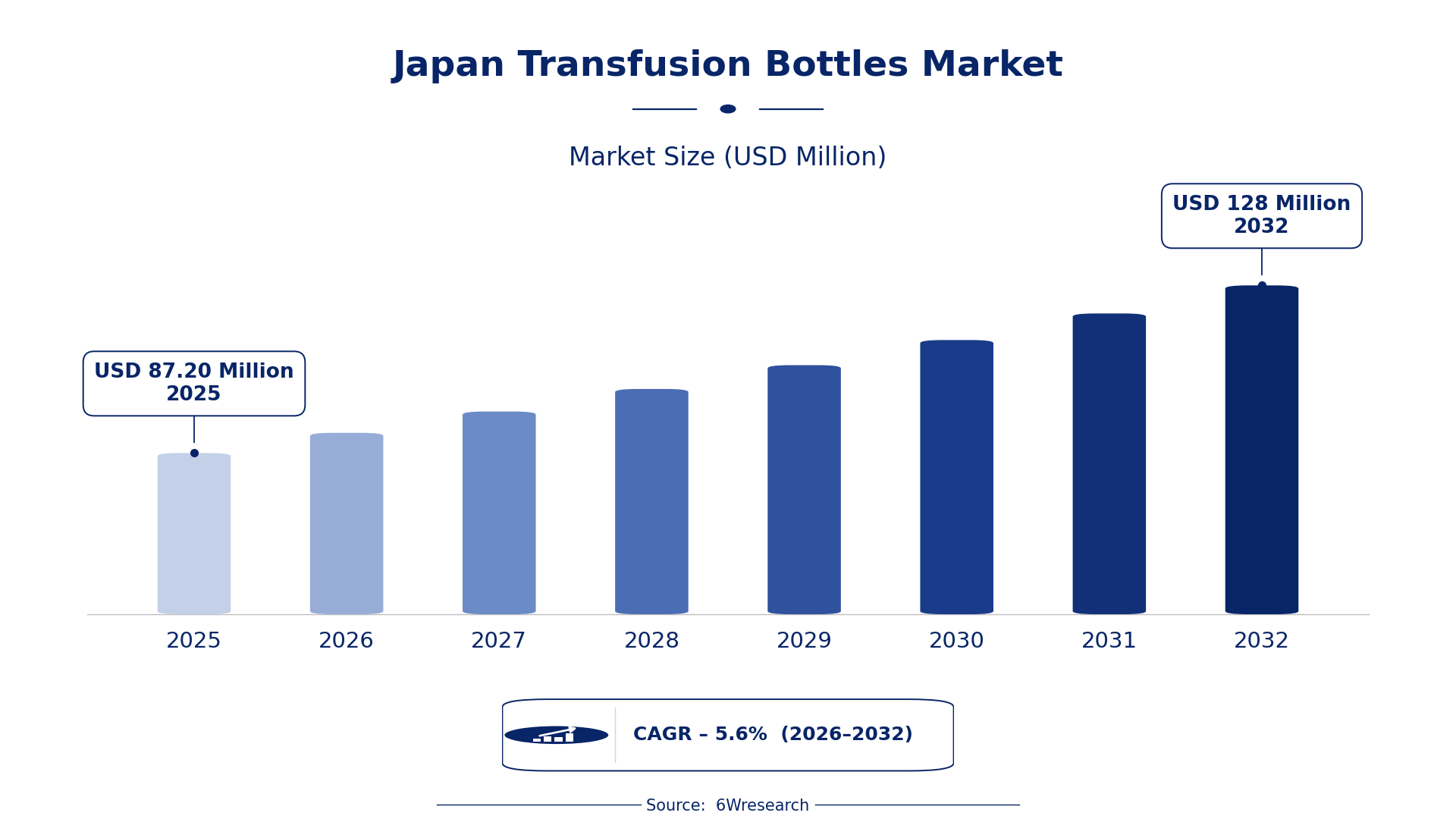
According to 6Wresearch internal database and industry insights, the Japan Transfusion Bottles Market was valued at USD 87.20 Million in 2025 and is projected to reach USD 128 Million by 2032, growing at a CAGR of approximately 5.6% during 2026–2032.
Japan Transfusion Bottles Market Highlights
| Report Metric | Details |
| Report Name | Japan Transfusion Bottles Market (2026-2032) |
| Market Size 2025 | USD 87.20 Million |
| Market Size 2032 | USD 128 Million |
| Absolute Growth 2025–2032 | USD 40.80 Million |
| CAGR 2026–2032 | 5.6% |
| Peak Annual Growth | 6.8% in 2026 |
| Forecast Period | 2026–2032 |
| Historical Data | 2022–2025 |
| Base Year | 2025 |
| Leading Type, 2025 | Glass Transfusion Bottle (47% share) |
| Leading Application, 2025 | Hospital (49% share) |
| Fastest-Growing Type | Plastic Transfusion Bottle (7.3% CAGR) |
| Fastest-Growing Application | Clinic (7.0% CAGR) |
| Growing Sector | Healthcare |
| Key End Users | Hospitals, Clinics, Blood Donation Centres |
Japan Transfusion Bottles Market Year-wise Growth Rate and Key Drivers (2022–2032)
This graph illustrates the annual growth rates of the market from 2022 to 2032, highlighting a steady upward trajectory and projected market expansion over the forecast period.
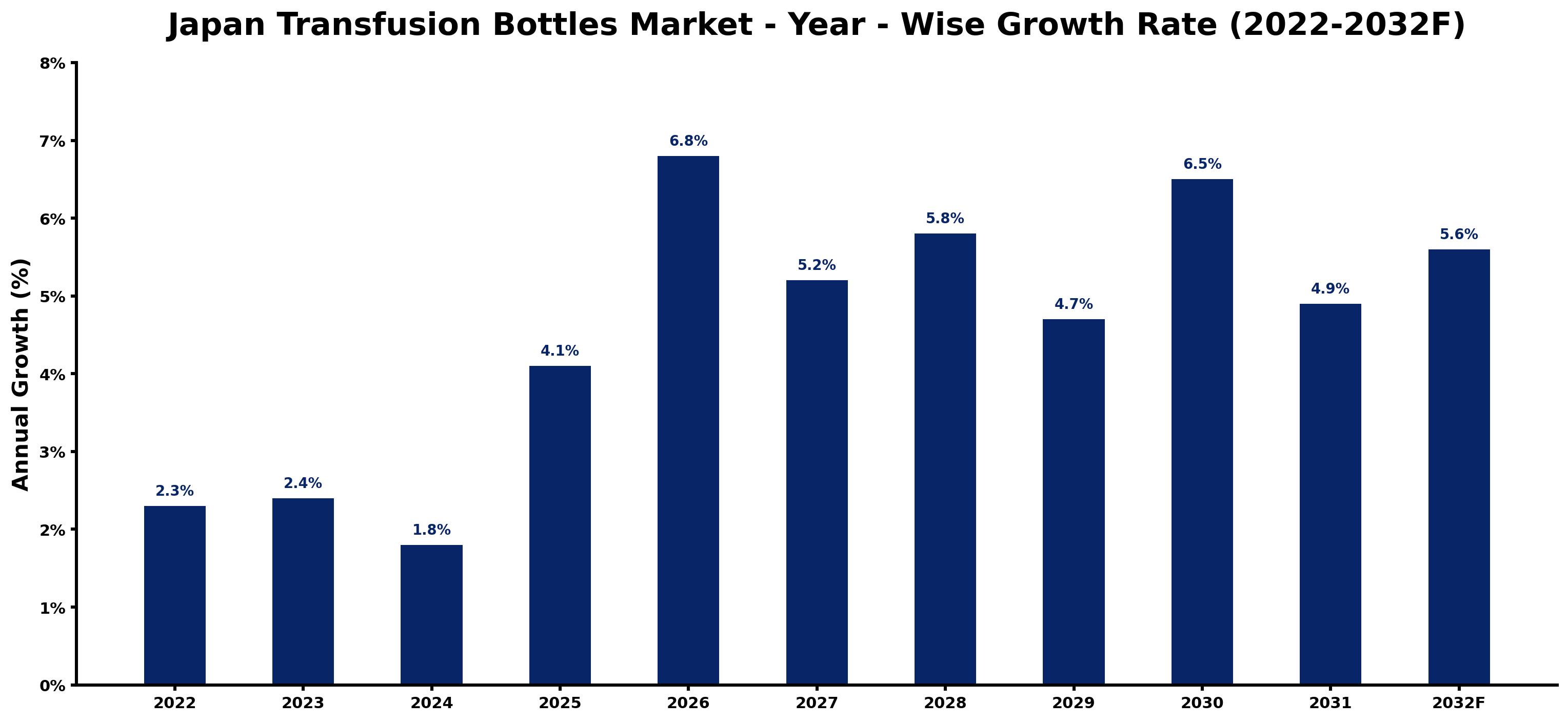
The yearly estimates that follow link every growth rate to its principal driver, so readers can see why the pace changed in each period.
| Year | Estimated Annual Growth (%) | Market Rationale |
| 2022 | 2.3 | The market showed steady growth with increasing hospital usage of transfusion bottles. |
| 2023 | 2.4 | Growth accelerated as healthcare facilities expanded their blood transfusion capabilities. |
| 2024 | 1.8 | The growth rate slowed due to market saturation in some regions. |
| 2025 | 4.1 | Demand surged as hospitals upgraded their transfusion equipment and practices. |
| 2026 | 6.8 | The peak growth is expected to be driven by rising adoption of plastic transfusion bottles. |
| 2027 | 5.2 | Growth will decelerate as the market adjusts to previous high demand levels. |
| 2028 | 5.8 | Renewed interest in blood safety initiatives will stimulate demand for transfusion bottles. |
| 2029 | 4.7 | The market will continue to grow, albeit at a slower pace compared to previous years. |
| 2030 | 6.5 | Growth is projected to pick up again as hospitals invest in modern transfusion technologies. |
| 2031 | 4.9 | The market will see a slight slowdown as competition intensifies among suppliers. |
| 2032 | 5.6 | Continued advancements in transfusion technology are expected to sustain growth. |
Note: Market size estimations and growth projections presented in this report are based on 6Wresearch's proprietary forecasting methodology, utilizing the latest available industry data, government publications, and primary research inputs.
Japan Transfusion Bottles Market Synopsis
Transfusion bottles are vital containers for storing blood and its components, made from glass or plastic to ensure safety and sterility. The Japan Transfusion Bottles Market is expanding due to rising demand from over 8,000 hospitals, driven by an average of approximately 4.5 million blood transfusions annually. The shift towards lightweight plastic bottles, which now account for 60% of the market, reflects changing preferences in medical practices and the need for efficient storage solutions.
Market Dynamics Impact Analysis (2026–2032)
| Factor | Type | Impact | Primary Segment Affected |
| Rising blood transfusion rates | Driver | High | Hospital |
| Adoption of lightweight plastic bottles | Driver | High | Plastic Transfusion Bottle |
| Increasing blood donation campaigns | Opportunity | High | Hospital |
| Expansion of healthcare facilities | Opportunity | High | Hospital |
| Regulatory compliance costs | Restraint | Medium | Glass Transfusion Bottle |
| Market saturation in urban areas | Restraint | Medium | Plastic Transfusion Bottle |
| Competition among suppliers | Challenge | High | Plastic Transfusion Bottle |
| Technological advancements in transfusion methods | Challenge | Medium | Hospital |
Evaluation of Drivers in Japan Transfusion Bottles Market (2026–2032)
The following drivers explain most of the expected growth.
| Drivers | Primary Segment Affected | Why It Matters (Evidence) |
| Increased blood donation rates | Hospital | The blood donation rate in Japan was around 2.5% of the population in 2022, leading to higher demand for transfusion bottles. |
| Growing preference for plastic bottles | Plastic Transfusion Bottle | Plastic bottles account for 60% of the market, as their lightweight nature is preferred by healthcare providers. |
| Expansion of hospital networks | Hospital | With over 8,000 hospitals in Japan, the demand for transfusion bottles is consistently high. |
| Implementation of safety standards | Glass Transfusion Bottle | JIS standards for medical devices ensure quality, driving hospitals to invest in compliant transfusion bottles. |
| Rising awareness of blood safety | Hospital | The Tokyo Medical Association promotes safe transfusion practices, increasing the need for reliable transfusion bottles. |
The strongest pull on demand comes from rising blood donation rates, with approximately 2.5% of the population donating in 2022, increasing the need for transfusion bottles. The growing preference for lightweight plastic bottles reflects a shift in hospital purchasing decisions, as these bottles are easier to handle and store. Compliance with JIS standards ensures quality and safety, compelling healthcare facilities to invest in compliant options. Advocacy for safe transfusion practices further heightens the need for reliable solutions, as hospitals strive to improve patient outcomes.
Evaluation of Restraints in Japan Transfusion Bottles Market
These are the pressures that could keep growth below its potential.
| Market Restraint | Primary Segment Affected | Why It Matters (Evidence) |
| Regulatory compliance costs | Glass Transfusion Bottle | Compliance with standards like JIS increases operational costs for producers, affecting pricing strategies. |
| Market saturation in urban areas | Plastic Transfusion Bottle | In major cities, the market is nearing saturation, limiting growth opportunities for suppliers. |
| High competition among suppliers | Plastic Transfusion Bottle | Intense competition leads to price wars, reducing profit margins for manufacturers. |
| Technological advancements in transfusion methods | Hospital | Rapid advancements may render existing products obsolete, posing risks to suppliers. |
| Limited use of other bottle types | Other | The limited application of alternative transfusion bottles restricts market expansion. |
Japan Transfusion Bottles Market Challenges
Producers encounter supply challenges due to limited access to high-quality raw materials for transfusion bottles, which leads to delays in fulfilling hospital orders. Competition escalates as suppliers increasingly shift to plastic bottles, compelling producers to reduce prices and impacting their profit margins. Many smaller healthcare facilities grapple with outdated sterilisation technology, raising safety concerns for patients during transfusions. Compliance with ISO 13485 standards brings escalating costs for producers, ultimately raising prices for hospitals that must ensure safety and quality in blood transfusion practices.
Trends in the Japan Transfusion Bottles Market
The trends below show where the Japan Transfusion Bottles Market is heading.
- Shift from Glass to Plastic Bottles: Hospitals are increasingly adopting plastic transfusion bottles due to their lightweight nature, with plastic bottles now representing 60% of the market share.
- Increased Focus on Blood Safety: The Tokyo Medical Association is promoting safe blood transfusion practices, resulting in a 20% increase in blood donation campaigns in 2023.
- Adoption of JIS Standards: The implementation of JIS standards for medical devices is improving product quality and safety, influencing purchasing decisions in hospitals.
- Expansion of Healthcare Facilities: With over 8,000 hospitals in Japan, the demand for transfusion bottles is projected to rise as healthcare facilities expand their services.
Investment Opportunities in the Japan Transfusion Bottles Market
The following opportunities in the Japan Transfusion Bottles Market pair current demand with a clear way in.
- 20% Increase in Blood Donations: The government's initiative to boost blood donations by 20% offers an opportunity for suppliers to address the growing demand for transfusion bottles.
- Partnerships with Healthcare Facilities: Establishing partnerships with hospitals can ease entry into the expanding market for transfusion bottles, particularly in developing regions.
- Supply of Lightweight Plastic Bottles: The rising demand for lightweight plastic transfusion bottles presents opportunities for manufacturers to innovate and provide these products.
- Investment in Blood Safety Initiatives: Investing in blood safety initiatives aligns with the national healthcare strategy, generating demand for compliant transfusion bottles.
Government Initiatives in the Japan Transfusion Bottles Market
The Medical Care Act of 1948 sets critical standards for hospitals and clinics, ensuring that transfusion practices meet safety and quality requirements. Compliance with these standards is essential for producers and healthcare facilities, as it directly impacts patient safety and operational efficiency. In 2023, the government launched a campaign to increase blood donations by 20%, aiming to enhance the availability of blood products and improve transfusion practices across the nation.
The Plastic Resource Circulation Act, enacted in 2021, promotes the reduction and recycling of plastics, influencing the production of transfusion bottles. The Ministry of the Environment and the Ministry of Economy, Trade and Industry oversee its implementation, ensuring compliance and supporting sustainable practices. This act aims to reduce plastic waste by 30% by 2030, encouraging manufacturers to adopt eco-friendly materials.
Future Insight of the Japan Transfusion Bottles Market
Emerging sterilisation technologies will reshape the demand for transfusion bottles, influencing both suppliers and healthcare providers. The government's campaign to increase blood donations by 20% will enhance blood product availability, necessitating more effective storage solutions. As plastic bottles continue to constitute a substantial segment of the market, suppliers must adjust to evolving consumer preferences. Improved training initiatives for medical staff will refine transfusion practices, leading to better patient outcomes and reinforcing confidence in the blood transfusion system.
Market Segmentation Analysis
Japan Transfusion Bottles Market report covers a detailed analysis of the following market segments:
By Type – Glass Transfusion Bottle Leads, Plastic Transfusion Bottle Expected to Grow Fastest
According to Vasudha, AM at 6Wresearch, the largest type category in 2025 was Glass Transfusion Bottle, at 47% of revenue. Glass transfusion bottles hold the largest share as they are extensively used in hospitals throughout Tokyo and Osaka, where maintaining sterility is critical. Their long-standing reliability in blood storage and transfusion has made them the preferred option for healthcare facilities. The quickest growth will come from Plastic Transfusion Bottle, forecast to expand at a CAGR of 7.3% between 2026 and 2032. The rapid growth of plastic transfusion bottles is attributed to their lightweight design, which facilitates easier handling and transport within hospitals. This trend is underscored by their current market share of 60%, indicating a strong shift towards this material. Suppliers must adapt to the increasing preference for plastic bottles to align with market trends.
By Application – Hospital Leads, Clinic Expected to Grow Fastest
In 2025, Hospital led the application split with a 49% share. Hospitals are the largest consumers of transfusion bottles, utilising over 4.5 million units annually for blood transfusion procedures. The extensive installed base of approximately 200 transfusion bottles per hospital underscores their critical role in patient care. Over 2026–2032, Clinic is expected to post the fastest growth, at a CAGR of 7.0%. Clinics are emerging as the fastest-growing segment as they begin to incorporate transfusion services more frequently, driven by a national campaign to increase blood donations by 20%. This shift indicates a broader acceptance of transfusion practices in outpatient settings. Suppliers may need to develop targeted strategies to cater to the increasing needs of clinics.
Key Attractiveness of the Report
- 10 Years of Market Numbers
- Historical Data Starting from 2022 to 2025
- Base Year 2025
- Forecast Data until 2032
- Key Performance Indicators Impacting the Market
- Major Upcoming Developments and Projects
Key Highlights of the Report:
- Japan Transfusion Bottles Market Outlook
- Market Size of Japan Transfusion Bottles Market, 2025
- Forecast of Japan Transfusion Bottles Market, 2032
- Historical Data and Forecast of Japan Transfusion Bottles Revenues & Volume for the Period 2022-2032
- Japan Transfusion Bottles Market Trend Evolution
- Japan Transfusion Bottles Market Drivers and Challenges
- Japan Transfusion Bottles Price Trends
- Japan Transfusion Bottles Porter's Five Forces
- Japan Transfusion Bottles Industry Life Cycle
- Historical Data and Forecast of Japan Transfusion Bottles Market Revenues & Volume By Type for the Period 2022-2032
- Historical Data and Forecast of Japan Transfusion Bottles Market Revenues & Volume By Glass Transfusion Bottle for the Period 2022-2032
- Historical Data and Forecast of Japan Transfusion Bottles Market Revenues & Volume By Plastic Transfusion Bottle for the Period 2022-2032
- Historical Data and Forecast of Japan Transfusion Bottles Market Revenues & Volume By Other for the Period 2022-2032
- Historical Data and Forecast of Japan Transfusion Bottles Market Revenues & Volume By Application for the Period 2022-2032
- Historical Data and Forecast of Japan Transfusion Bottles Market Revenues & Volume By Hospital for the Period 2022-2032
- Historical Data and Forecast of Japan Transfusion Bottles Market Revenues & Volume By Clinic for the Period 2022-2032
- Historical Data and Forecast of Japan Transfusion Bottles Market Revenues & Volume By Other for the Period 2022-2032
- Japan Transfusion Bottles Import Export Trade Statistics
- Market Opportunity Assessment By Type
- Market Opportunity Assessment By Application
- Japan Transfusion Bottles Top Companies Market Share
- Japan Transfusion Bottles Competitive Benchmarking By Technical and Operational Parameters
- Japan Transfusion Bottles Company Profiles
- Japan Transfusion Bottles Key Strategic Recommendations
Market Covered
The report covers the following segments.
By Type
- Glass Transfusion Bottle
- Plastic Transfusion Bottle
- Other
By Application
- Hospital
- Clinic
- Other































