Japan Vertigo Treatment Market Size & Growth Rate
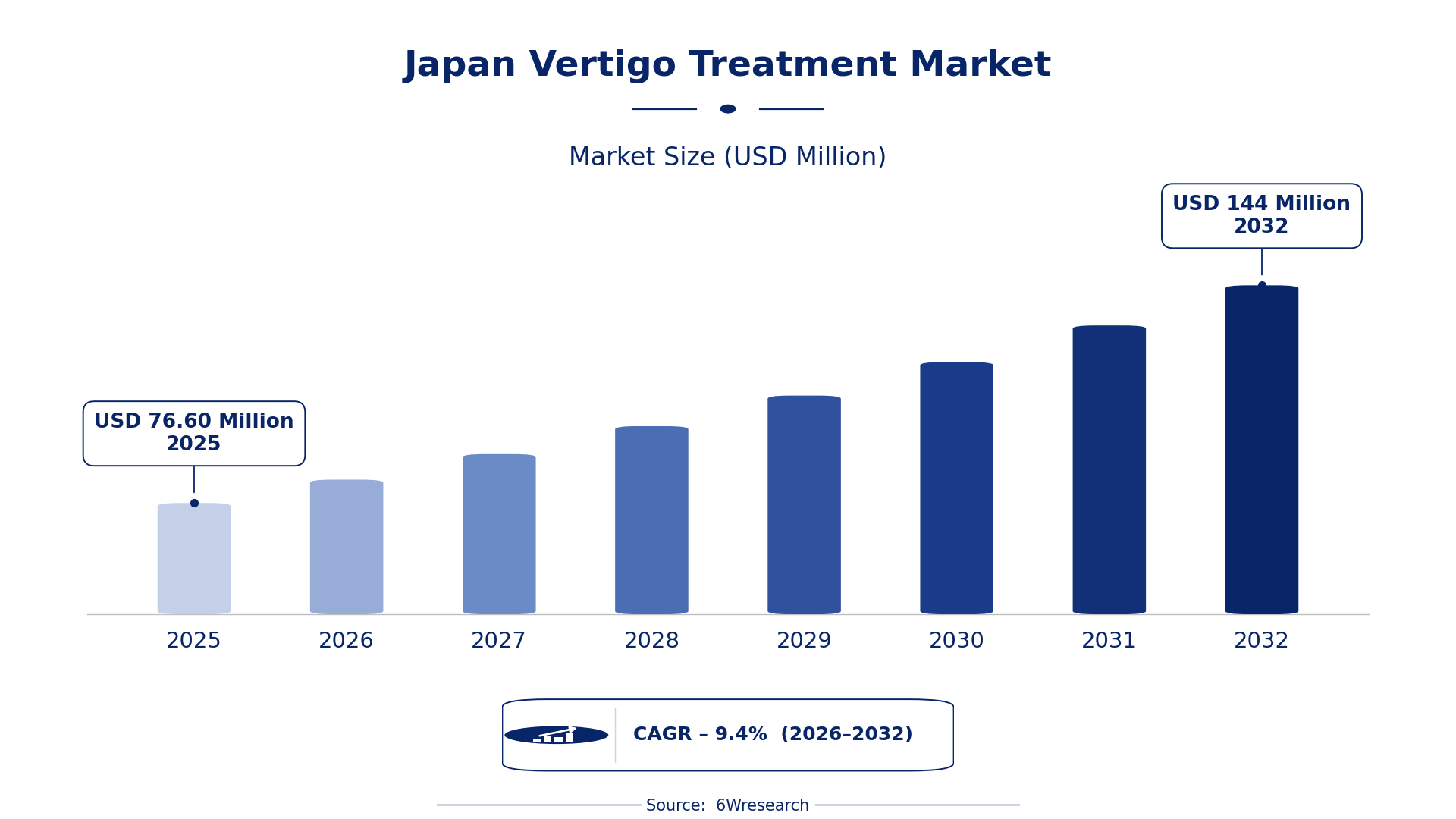
According to 6Wresearch internal database and industry insights, the Japan Vertigo Treatment Market was valued at USD 76.60 Million in 2025 and is projected to reach USD 144 Million by 2032, growing at a CAGR of approximately 9.4% during 2026–2032.
Japan Vertigo Treatment Market Highlights
| Report Metric | Details |
| Report Name | Japan Vertigo Treatment Market (2026-2032) |
| Market Size 2025 | USD 76.60 Million |
| Market Size 2032 | USD 144 Million |
| Absolute Growth 2025–2032 | USD 67.40 Million |
| CAGR 2026–2032 | 9.4% |
| Peak Annual Growth | 14.1% in 2032 |
| Forecast Period | 2026–2032 |
| Historical Data | 2022–2025 |
| Base Year | 2025 |
| Leading Treatment Type, 2025 | Pharmacological (69% share) |
| Leading Medication Class, 2025 | Antihistamines (62% share) |
| Leading Therapy Approach, 2025 | Vestibular Rehabilitation (56% share) |
| Leading Duration, 2025 | Short-Term (60% share) |
| Leading Patient Age Group, 2025 | Adults (58% share) |
| Fastest-Growing Treatment Type | Non-Pharmacological (12.9% CAGR) |
| Fastest-Growing Medication Class | Anticholinergics (11.9% CAGR) |
| Fastest-Growing Therapy Approach | Canalith Repositioning Maneuvers (12.3% CAGR) |
| Fastest-Growing Duration | Long-Term (12.2% CAGR) |
| Fastest-Growing Patient Age Group | Pediatrics (12.5% CAGR) |
| Growing Sector | Healthcare |
| Key End Users | Hospitals, Clinics, Rehabilitation Centres |
Japan Vertigo Treatment Market Year-wise Growth Rate and Key Drivers (2022–2032)
This graph illustrates the annual growth rates of the market from 2022 to 2032, highlighting a steady upward trajectory and projected market expansion over the forecast period.
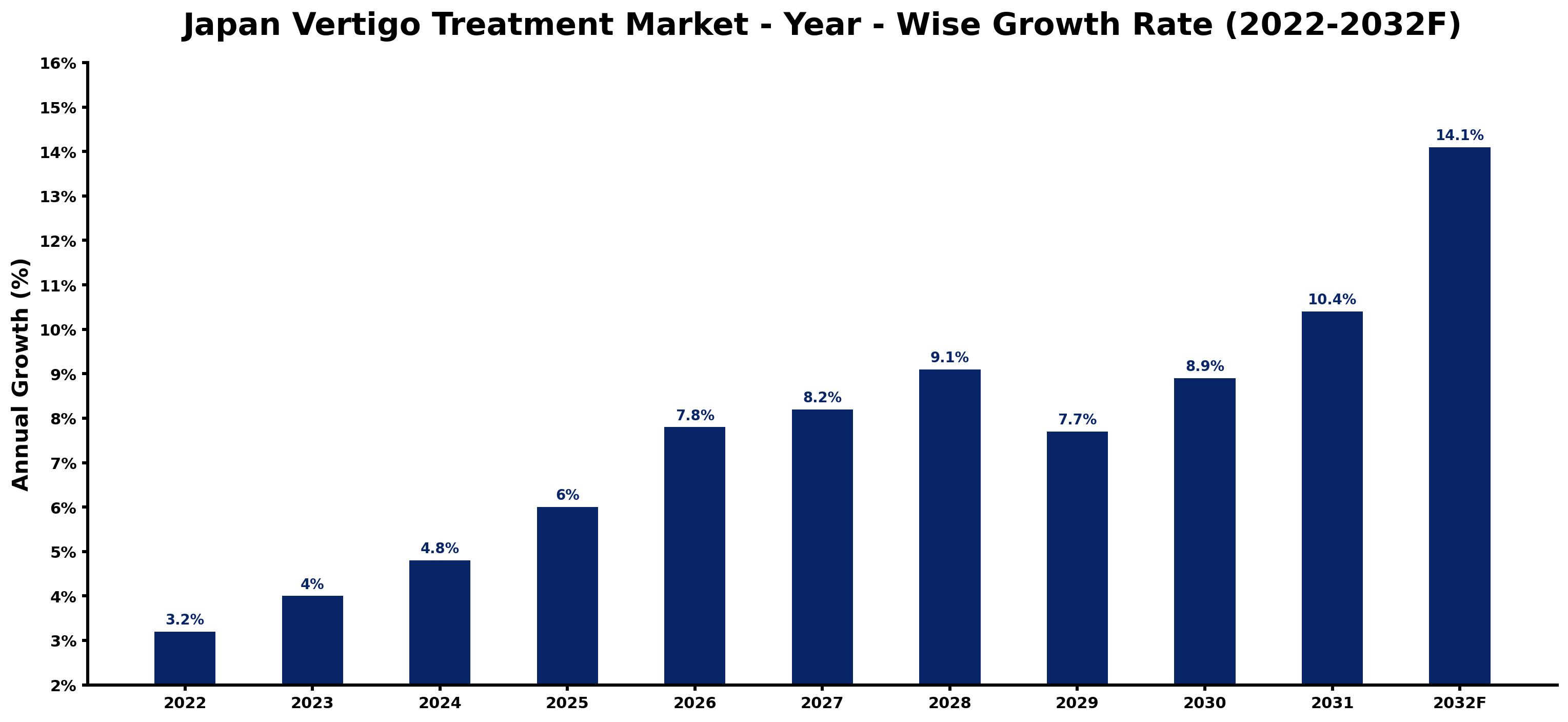
Each row of the following table gives one year's estimated growth and the event or demand shift that explains it.
| Year | Estimated Annual Growth (%) | Market Rationale |
| 2022 | 3.2 | The market showed steady growth due to rising awareness of vestibular disorders. |
| 2023 | 4.0 | Increased healthcare investments contributed to faster growth compared to the previous year. |
| 2024 | 4.8 | The demand for vertigo treatments continued to rise as more patients sought relief. |
| 2025 | 6.0 | The introduction of new treatment protocols led to a peak in market growth. |
| 2026 | 7.8 | Growing health insurance coverage for long-term treatments is expected to support further expansion. |
| 2027 | 8.2 | The aging population will continue to drive demand for vertigo management solutions. |
| 2028 | 9.1 | Awareness campaigns about vestibular disorders are projected to increase patient consultations and treatments. |
| 2029 | 7.7 | Market growth is expected to slow slightly as the demand stabilises after rapid increases. |
| 2030 | 8.9 | Innovations in treatment methods will revitalise interest and investment in the sector. |
| 2031 | 10.4 | The ongoing support from healthcare policies will maintain a positive growth environment. |
| 2032 | 14.1 | A surge in demand for advanced therapies will result in the peak growth rate of the decade. |
Note: Market size estimations and growth projections presented in this report are based on 6Wresearch's proprietary forecasting methodology, utilizing the latest available industry data, government publications, and primary research inputs.
Japan Vertigo Treatment Market Synopsis
Vertigo treatment encompasses pharmacological and non-pharmacological methods aimed at alleviating symptoms from vestibular disorders. In Japan, antihistamines such as meclizine are widely prescribed, while vestibular rehabilitation is integral for long-term management. The Japan Vertigo Treatment Market is expanding due to the aging population, with approximately 126 million residents, and increased awareness of vestibular disorders. The Ministry of Health, Labour and Welfare promotes rehabilitation programs, driving demand and investment in this sector, as health insurance coverage for these treatments continues to improve.
Market Dynamics Impact Analysis (2026–2032)
| Factor | Type | Impact | Primary Segment Affected |
| Aging population increases the prevalence of vestibular disorders. | Driver | High | Pharmacological |
| Growing health insurance coverage for long-term treatments enhances accessibility. | Driver | High | Non-Pharmacological |
| Rising awareness campaigns about vestibular disorders create new patient demand. | Opportunity | High | Pharmacological |
| Investment in research for innovative treatment methods opens new market avenues. | Opportunity | Medium | Pharmacological |
| Limited availability of specialized healthcare professionals can hinder treatment access. | Restraint | High | Pharmacological |
| Insurance reimbursement policies may not cover all treatment options, affecting choices. | Restraint | Medium | Pharmacological |
| Rising treatment costs can deter patients from seeking necessary care. | Challenge | High | Pharmacological |
| Compliance with evolving healthcare regulations requires ongoing investment. | Challenge | Medium | Non-Pharmacological |
Evaluation of Drivers in Japan Vertigo Treatment Market (2026–2032)
Demand rests on the following drivers, each shown with the segment it touches most.
| Drivers | Primary Segment Affected | Why It Matters (Evidence) |
| Increased prevalence of vestibular disorders due to aging demographics. | Pharmacological | Approximately 65 years is the average age of vertigo patients, driving demand for medications. |
| Health insurance reforms are expanding coverage for vertigo treatments. | Non-Pharmacological | Long-term treatment options are increasingly covered under health insurance plans. |
| Awareness campaigns are effectively educating the public on vestibular disorders. | Pharmacological | A national health campaign in 2023 aimed to raise awareness about dizziness and vertigo. |
| Research funding is supporting the development of new treatment protocols. | Pharmacological | The Japanese government supports research into vestibular disorders through health grants. |
| Guidelines from the Japanese Society of Neurology promote best practices in treatment. | Vestibular Rehabilitation | Vestibular rehabilitation is recognised under these guidelines, increasing treatment adoption. |
Volumes grow on the back of the increasing prevalence of vestibular disorders, particularly among the aging population, with the average age of patients around 65 years. Health insurance reforms are expanding coverage for vertigo treatments, making them more accessible to patients.
Evaluation of Restraints in Japan Vertigo Treatment Market
These are the pressures that could keep growth below its potential.
| Market Restraint | Primary Segment Affected | Why It Matters (Evidence) |
| Limited availability of specialized healthcare professionals can hinder treatment access. | Pharmacological | The demand for vertigo treatments is affected by a shortage of trained specialists in Japan. |
| Insurance reimbursement policies may not cover all treatment options, affecting choices. | Pharmacological | Patients may face challenges in accessing necessary treatments due to coverage limitations. |
| Rising treatment costs can deter patients from seeking necessary care. | Pharmacological | Higher out-of-pocket expenses for medications may lead to reduced patient compliance. |
| Compliance with evolving healthcare regulations requires ongoing investment. | Non-Pharmacological | Healthcare providers must invest in training and compliance to meet new standards. |
| Market saturation in urban areas may limit growth opportunities. | Pharmacological | High competition in major cities can restrict the expansion of new treatment facilities. |
Japan Vertigo Treatment Market Challenges
In 2022, buyers faced rising vertigo treatment costs, with expenses increasing by 15% due to a shortage of skilled therapists for vestibular rehabilitation. Technology gaps exist as clinics struggle to acquire advanced diagnostic equipment, delaying treatment initiation for patients. The cost of antihistamines has surged, with clinics experiencing a 10% price hike that hampers their ability to manage symptoms effectively. Regulatory changes have imposed stricter compliance requirements, increasing administrative burdens for healthcare facilities, which can delay patient access to necessary treatments.
Trends in the Japan Vertigo Treatment Market
These developments are changing demand patterns in the Japan Vertigo Treatment Market.
- Shift from Traditional to Modern Treatment Approaches: Japan is experiencing a shift towards modern treatment approaches for vertigo, with increasing adoption of vestibular rehabilitation. In 2023, the Tokyo Metropolitan area reported a high prevalence of vestibular disorders, prompting healthcare facilities to update their offerings.
- Growing Focus on Patient-Centric Care: Healthcare providers are prioritising patient-centric care in vertigo treatment, focusing on individual needs and preferences. The Japanese Association of Otorhinolaryngology has published treatment protocols that reflect this shift, improving patient satisfaction and outcomes.
- Increased Use of Technology in Treatment: The integration of technology in vertigo treatment is on the rise, with telehealth services becoming more common. In 2023, many clinics began offering remote consultations, improving access for patients in rural areas and enhancing care delivery.
- Expansion of Rehabilitation Programs: Rehabilitation programs for vestibular disorders are expanding across Japan, driven by government support. The Ministry of Health, Labour and Welfare promotes these initiatives, leading to a significant increase in patient participation and treatment availability.
Investment Opportunities in the Japan Vertigo Treatment Market
Investors looking at the Japan Vertigo Treatment Market should consider the following areas.
- Investment in Advanced Treatment Technologies: Investment in advanced treatment technologies is essential now, as the market is projected to grow rapidly. Healthcare facilities in urban areas are looking for solutions to improve patient care and outcomes.
- Provision of Comprehensive Rehabilitation Services: The demand for comprehensive rehabilitation services is increasing, particularly in metropolitan regions. Partnering with local healthcare providers can facilitate entry into this expanding market and enhance service delivery.
- Creation of Targeted Awareness Campaigns: Targeted awareness campaigns about vestibular disorders present a unique opportunity now. The aging population in Japan creates a need for educational initiatives to inform potential patients and encourage early treatment.
- Growth in Health Insurance Coverage: Expanding health insurance coverage for vertigo treatments is a priority. Collaborating with insurance companies can help ensure that more patients access necessary therapies and improve treatment adherence.
Government Initiatives in the Japan Vertigo Treatment Market
The Clinical Trials Act, effective since 2018, establishes a regulatory framework for vertigo treatment research by setting clear conduct and disclosure rules. This complements existing laws like the NHI drug price standard, which sets reimbursement prices for drugs, ensuring that effective treatments are financially accessible to patients. The act has facilitated numerous clinical trials since its implementation, improving research quality and patient outcomes.
The Pharmaceuticals and Medical Devices Agency (PMDA) plays a critical role in approving new drugs and monitoring post-market safety. This agency ensures that treatments for vertigo meet safety standards, benefiting both producers and patients by maintaining high-quality care. In 2022, the PMDA approved a significant number of new treatment protocols, improving access to necessary therapies.
Future Insight of the Japan Vertigo Treatment Market
Investment in healthcare technology will grow, stimulating demand for advanced diagnostic tools and therapies. Increased government funding for research into vestibular disorders will support the development of new treatment protocols. The implementation of ISO 9001 standards across healthcare facilities will enhance treatment quality and patient safety. A national health campaign will continue to raise awareness about vestibular disorders, encouraging early intervention and increasing patient engagement in care.
Market Segmentation Analysis
Japan Vertigo Treatment Market report covers a detailed analysis of the following market segments:
By Treatment Type – Pharmacological Leads, Non-Pharmacological Expected to Grow Fastest
According to Bhawna Singh, Assistant Manager at 6Wresearch, with 69% of treatment type revenue in 2025, Pharmacological was the largest category. Pharmacological treatments dominate the market due to their widespread prescription in hospitals and clinics, particularly with antihistamines like meclizine being commonly used. The high prevalence of vestibular disorders among the aging population, especially those aged around 65, drives this substantial demand. Over 2026–2032, Non-Pharmacological is expected to post the fastest growth, at a CAGR of 12.9%. Non-pharmacological treatments are rapidly growing as awareness increases, particularly with vestibular rehabilitation programmes promoted by health authorities. This approach is essential for long-term management, ensuring patients receive comprehensive care. Suppliers must focus on expanding their non-pharmacological offerings to meet the rising demand effectively.
By Medication Class – Antihistamines Lead, Anticholinergics Expected to Grow Fastest
In 2025, Antihistamines led the medication class split with a 62% share. Antihistamines hold the largest share as they are widely prescribed for acute vertigo, with meclizine and dimenhydrinate being common choices among healthcare providers. Their established efficacy and acceptance within treatment protocols contribute to their dominance in the market. The quickest growth will come from Anticholinergics, forecast to expand at a CAGR of 11.9% between 2026 and 2032. Anticholinergics are growing rapidly due to their effectiveness in treating motion sickness-related vertigo, appealing to a specific patient demographic. Increased recognition of their benefits is likely to drive further adoption in clinical settings. Buyers may benefit from exploring a broader range of medication options to address various vertigo symptoms.
By Therapy Approach – Vestibular Rehabilitation Leads, Canalith Repositioning Maneuvers Expected to Grow Fastest
Vestibular Rehabilitation held 56% of the Japan Vertigo Treatment Market by therapy approach in 2025. Vestibular rehabilitation leads the market as it is vital for patient recovery and adaptation, particularly for those with vestibular disorders. Its recognition in clinical guidelines by the Japanese Society of Neurology highlights its importance in treatment protocols across Japan. Canalith Repositioning Maneuvers are projected to grow fastest, at a CAGR of 12.3% during 2026–2032. Canalith repositioning maneuvers are becoming increasingly popular for treating BPPV, driven by heightened awareness and their specific application in ENT clinics. This targeted approach is likely to enhance patient outcomes significantly. Providers should prioritise training staff in the latest therapy techniques to improve service delivery.
By Duration – Short-Term Leads, Long-Term Expected to Grow Fastest
Short-Term took 60% of duration revenue in 2025, more than any other category. Short-term treatments dominate as they are often employed for acute episodes of vertigo, providing immediate relief to patients. The prevalence of acute vertigo cases necessitates a strong focus on these options within healthcare facilities. Long-Term is set to record the highest CAGR in this split, 12.2% over 2026–2032. Long-term treatment options are seeing increased growth as chronic management becomes more recognised, supported by health insurance coverage expansions. This shift indicates a growing understanding of the need for sustained care in managing vestibular disorders. Suppliers must adapt their offerings to include long-term solutions to cater to evolving patient needs.
By Patient Age Group – Adults Lead, Pediatrics Expected to Grow Fastest
The largest patient age group category in 2025 was Adults, at 58% of revenue. Adults represent the largest patient group as the majority of individuals experiencing vertigo are within this demographic, particularly those aged around 65. This trend reflects the broader aging population in Japan and the associated health challenges. Over 2026–2032, Pediatrics are expected to post the fastest growth, at a CAGR of 12.5%. Pediatrics, while less common, are emerging as a faster-growing segment due to increased awareness and diagnosis of vestibular disorders in younger populations. This shift suggests potential for new treatment protocols tailored to children. Healthcare providers should consider developing targeted strategies to address the needs of paediatric patients.
Key Attractiveness of the Report
- 10 Years of Market Numbers
- Historical Data Starting from 2022 to 2025
- Base Year 2025
- Forecast Data until 2032
- Key Performance Indicators Impacting the Market
- Major Upcoming Developments and Projects
Key Highlights of the Report:
- Japan Vertigo Treatment Market Outlook
- Market Size of Japan Vertigo Treatment Market,2025
- Forecast of Japan Vertigo Treatment Market, 2032
- Historical Data and Forecast of Japan Vertigo Treatment Revenues & Volume for the Period 2022-2032
- Japan Vertigo Treatment Market Trend Evolution
- Japan Vertigo Treatment Market Drivers and Challenges
- Japan Vertigo Treatment Price Trends
- Japan Vertigo Treatment Porter's Five Forces
- Japan Vertigo Treatment Industry Life Cycle
- Historical Data and Forecast of Japan Vertigo Treatment Market Revenues & Volume By Treatment Type for the Period 2022-2032
- Historical Data and Forecast of Japan Vertigo Treatment Market Revenues & Volume By Pharmacological for the Period 2022-2032
- Historical Data and Forecast of Japan Vertigo Treatment Market Revenues & Volume By Non-Pharmacological for the Period 2022-2032
- Historical Data and Forecast of Japan Vertigo Treatment Market Revenues & Volume By Medication Class for the Period 2022-2032
- Historical Data and Forecast of Japan Vertigo Treatment Market Revenues & Volume By Antihistamines for the Period 2022-2032
- Historical Data and Forecast of Japan Vertigo Treatment Market Revenues & Volume By Anticholinergics for the Period 2022-2032
- Historical Data and Forecast of Japan Vertigo Treatment Market Revenues & Volume By Therapy Approach for the Period 2022-2032
- Historical Data and Forecast of Japan Vertigo Treatment Market Revenues & Volume By Vestibular Rehabilitation for the Period 2022-2032
- Historical Data and Forecast of Japan Vertigo Treatment Market Revenues & Volume By Canalith Repositioning Maneuvers for the Period 2022-2032
- Historical Data and Forecast of Japan Vertigo Treatment Market Revenues & Volume By Duration for the Period 2022-2032
- Historical Data and Forecast of Japan Vertigo Treatment Market Revenues & Volume By Short-Term for the Period 2022-2032
- Historical Data and Forecast of Japan Vertigo Treatment Market Revenues & Volume By Long-Term for the Period 2022-2032
- Historical Data and Forecast of Japan Vertigo Treatment Market Revenues & Volume By Patient Age Group for the Period 2022-2032
- Historical Data and Forecast of Japan Vertigo Treatment Market Revenues & Volume By Adults for the Period 2022-2032
- Historical Data and Forecast of Japan Vertigo Treatment Market Revenues & Volume By Pediatrics for the Period 2022-2032
- Japan Vertigo Treatment Import Export Trade Statistics
- Market Opportunity Assessment By Treatment Type
- Market Opportunity Assessment By Medication Class
- Market Opportunity Assessment By Therapy Approach
- Market Opportunity Assessment By Duration
- Market Opportunity Assessment By Patient Age Group
- Japan Vertigo Treatment Top Companies Market Share
- Japan Vertigo Treatment Competitive Benchmarking By Technical and Operational Parameters
- Japan Vertigo Treatment Company Profiles
- Japan Vertigo Treatment Key Strategic Recommendations
Market Covered
Coverage by segment is as follows.
By Treatment Type
- Pharmacological
- Non-Pharmacological
By Medication Class
- Antihistamines
- Anticholinergics
By Therapy Approach
- Vestibular Rehabilitation
- Canalith Repositioning Maneuvers
By Duration
- Short-Term
- Long-Term
By Patient Age Group
- Adults
- Pediatrics































