Japan Veterinary X-Ray Market Size & Growth Rate
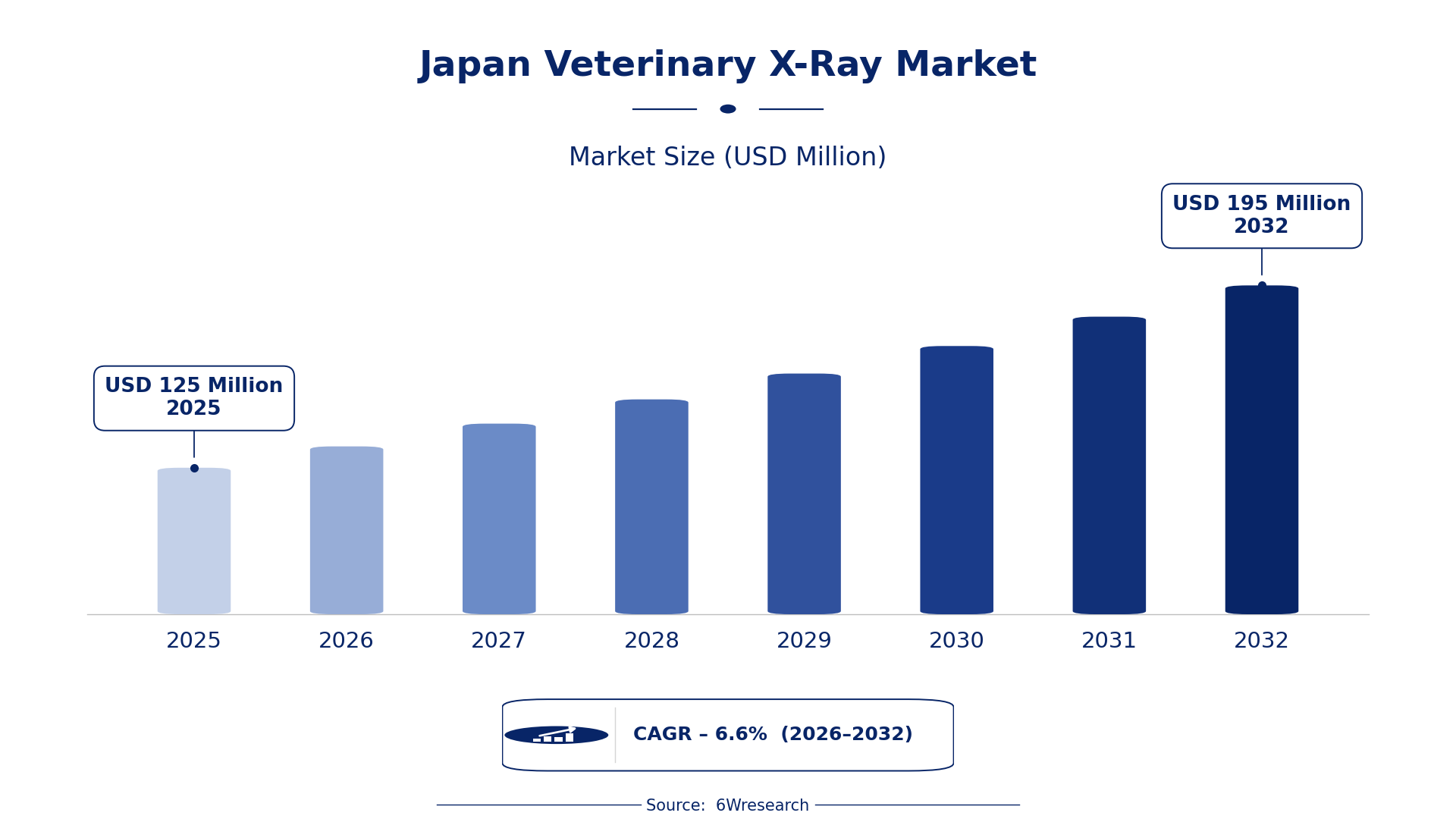
According to 6Wresearch internal database and industry insights, the Japan Veterinary X-Ray Market was valued at USD 125 Million in 2025 and is projected to reach USD 195 Million by 2032, growing at a CAGR of approximately 6.6% during 2026–2032.
Japan Veterinary X-Ray Market Highlights
| Report Metric | Details |
| Report Name | Japan Veterinary X-Ray Market (2026-2032) |
| Market Size 2025 | USD 125 Million |
| Market Size 2032 | USD 195 Million |
| Absolute Growth 2025–2032 | USD 70 Million |
| CAGR 2026–2032 | 6.6% |
| Peak Annual Growth | 7.3% in 2028 |
| Forecast Period | 2026–2032 |
| Historical Data | 2022–2025 |
| Base Year | 2025 |
| Leading System Type, 2025 | Digital Radiography (65% share) |
| Leading Animal Type, 2025 | Small Animals (68% share) |
| Leading Application, 2025 | Bone Fracture Diagnosis (64% share) |
| Leading Technology, 2025 | Direct Digital (61% share) |
| Leading End User, 2025 | Veterinary Clinics (57% share) |
| Fastest-Growing System Type | Computed Radiography (9.0% CAGR) |
| Fastest-Growing Animal Type | Large Animals (8.7% CAGR) |
| Fastest-Growing Application | Dental Imaging (8.3% CAGR) |
| Fastest-Growing Technology | Phosphor Plate (9.2% CAGR) |
| Fastest-Growing End User | Veterinary Hospitals (8.0% CAGR) |
| Growing Sector | Veterinary Services |
| Key End Users | Veterinary Clinics, Veterinary Hospitals, Animal Health Practitioners |
Japan Veterinary X-Ray Market Year-wise Growth Rate and Key Drivers (2022–2032)
This graph illustrates the annual growth rates of the market from 2022 to 2032, highlighting a steady upward trajectory and projected market expansion over the forecast period.
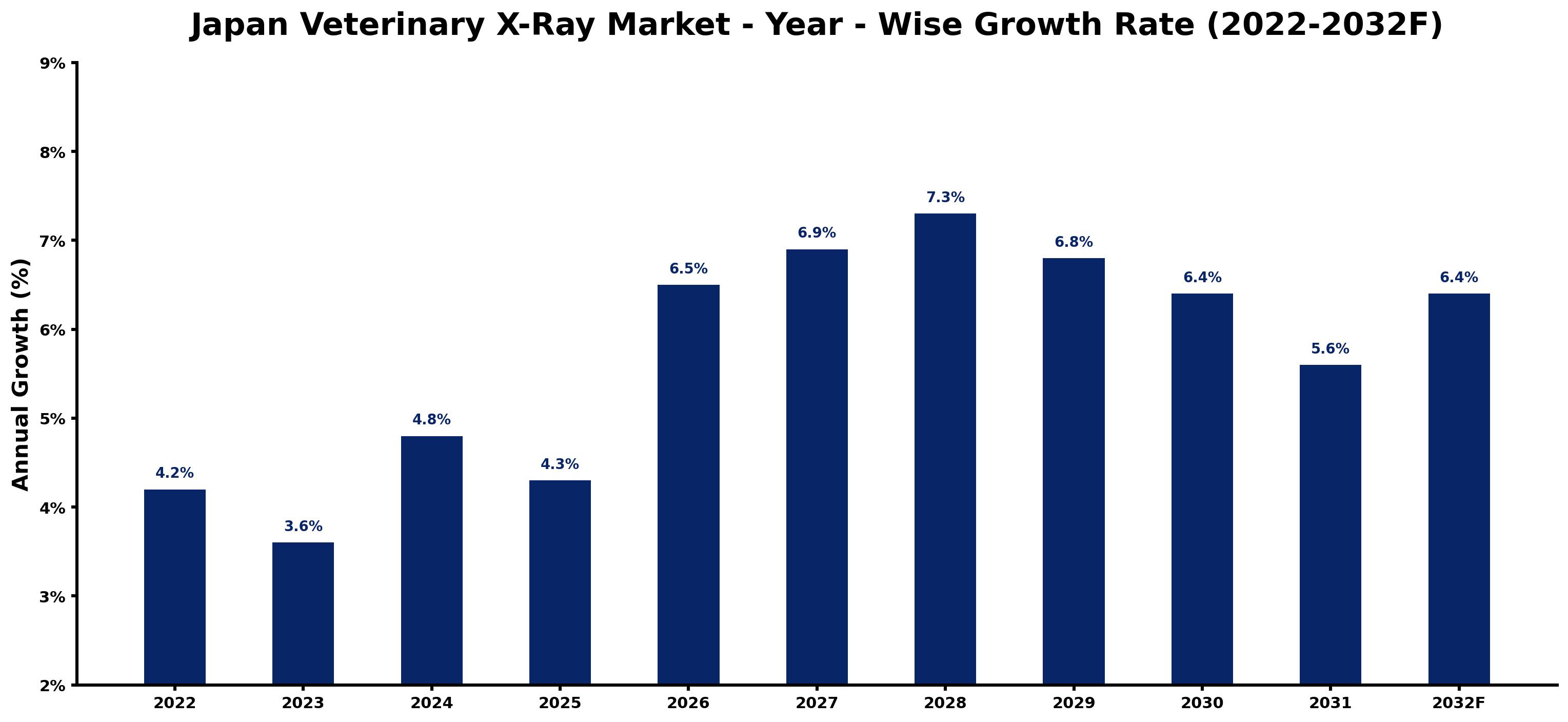
Each row of the following table gives one year's estimated growth and the event or demand shift that explains it.
| Year | Estimated Annual Growth (%) | Market Rationale |
| 2022 | 4.2 | The market exhibited steady growth due to increasing veterinary services demand. |
| 2023 | 3.6 | Growth slowed as veterinary clinics adjusted to operational norms after the previous year. |
| 2024 | 4.8 | Demand rose as veterinary clinics expanded services and upgraded equipment. |
| 2025 | 4.3 | Growth slowed slightly as market conditions stabilised after previous increases. |
| 2026 | 6.5 | Demand is expected to increase with advancements in imaging technology and veterinary practices. |
| 2027 | 6.9 | Rising interest in animal health will drive further demand for diagnostic imaging. |
| 2028 | 7.3 | The market is projected to peak as veterinary clinics adopt the latest X-ray technologies. |
| 2029 | 6.8 | Growth is expected to slow as market saturation begins to affect new purchases. |
| 2030 | 6.4 | Demand will continue to slow as competition intensifies among service providers. |
| 2031 | 5.6 | The market is projected to experience a slowdown as buyers become more selective. |
| 2032 | 6.4 | Demand is expected to increase again as new veterinary facilities open across Japan. |
Note: Market size estimations and growth projections presented in this report are based on 6Wresearch's proprietary forecasting methodology, utilizing the latest available industry data, government publications, and primary research inputs.
Japan Veterinary X-Ray Market Synopsis
Veterinary X-Ray systems serve as crucial imaging devices for diagnosing health issues in animals, utilising advanced technologies such as digital and computed radiography. The primary applications include diagnosing bone fractures and dental problems in both pets and livestock. The Japan Veterinary X-Ray Market is growing due to heightened demand from veterinary clinics, spurred by increased pet ownership and advancements in imaging technology. The ongoing development of veterinary infrastructure and a heightened focus on animal health further drive market expansion, presenting substantial opportunities for suppliers in this sector.
Market Dynamics Impact Analysis (2026–2032)
| Factor | Type | Impact | Primary Segment Affected |
| Increasing pet ownership drives demand for diagnostic imaging. | Driver | High | Veterinary Clinics |
| Technological advancements in imaging systems enhance diagnostic capabilities. | Driver | High | Digital Radiography |
| Growing interest in animal health creates opportunities for new veterinary clinics. | Opportunity | High | Veterinary Clinics |
| Rural areas require more imaging solutions for large animals. | Opportunity | Medium | Large Animals |
| High initial investment costs can deter new veterinary practices. | Restraint | High | Veterinary Clinics |
| Limited availability of trained personnel affects service delivery. | Restraint | Medium | Veterinary Hospitals |
| Compliance with stringent regulations can increase operational costs. | Challenge | High | Veterinary Clinics |
| Need for continuous training to keep up with technological advancements. | Challenge | Medium | Veterinary Hospitals |
Evaluation of Drivers in Japan Veterinary X-Ray Market (2026–2032)
Key forces behind demand, with the segment each one moves most, are listed below.
| Drivers | Primary Segment Affected | Why It Matters (Evidence) |
| Rising pet ownership increases the need for veterinary services. | Veterinary Clinics | In 2022, pet ownership in Japan reached 19 million households, driving demand for imaging services. |
| Technological advancements improve diagnostic accuracy and efficiency. | Digital Radiography | Digital systems provide immediate imaging results, enhancing diagnostic capabilities and reducing waiting times. |
| Growing awareness of animal health encourages regular check-ups. | Veterinary Hospitals | Increased spending on pet healthcare reached USD 2.5 billion in 2023, boosting imaging demand. |
| Expansion of veterinary clinics enhances service offerings. | Veterinary Clinics | The number of veterinary clinics in Japan increased by 5% from 2020 to 2023, driving demand. |
| Government initiatives support veterinary infrastructure development. | Veterinary Hospitals | The Next-Generation Medical Infrastructure Act promotes advanced medical technologies in veterinary settings. |
What keeps demand rising is the increasing pet ownership in Japan, which reached 19 million households in 2022, resulting in higher needs for veterinary services. Advancements in imaging systems provide immediate results, improving diagnostic accuracy. In 2023, spending on pet healthcare reached USD 2.5 billion, encouraging regular veterinary check-ups. The expansion of veterinary clinics, which grew by 5% from 2020 to 2023, further boosts demand for imaging services.
Evaluation of Restraints in Japan Veterinary X-Ray Market
The table below lists the restraints and the evidence behind each.
| Market Restraint | Primary Segment Affected | Why It Matters (Evidence) |
| High initial investment costs deter new veterinary practices. | Veterinary Clinics | The average cost of setting up a new veterinary clinic with imaging equipment can exceed USD 500,000. |
| Limited availability of trained personnel affects service delivery. | Veterinary Hospitals | Only 30% of veterinary graduates specialise in imaging, leading to a skills gap. |
| Compliance with stringent regulations increases operational costs. | Veterinary Clinics | Meeting safety and quality standards can add 15% to operational costs for clinics. |
| Market saturation limits growth opportunities for existing players. | Veterinary Clinics | The number of veterinary clinics has reached over 10,000, causing competition to intensify. |
| Technological obsolescence requires continuous investment in upgrades. | Veterinary Hospitals | Veterinary hospitals must invest up to USD 100,000 every few years to stay current. |
Japan Veterinary X-Ray Market Challenges
Over 30% of veterinary clinics report sourcing delays for essential X-Ray systems, primarily due to a limited number of local suppliers. This shortage can extend lead times by up to four months, hindering veterinarians' ability to provide timely diagnostics. Material costs have surged by 15%, forcing clinics to adjust their budgets and potentially limiting their purchasing power for imaging equipment. Local producers face stiff competition from imported systems, which can offer lower prices, threatening the market share of domestic suppliers and putting pressure on their profitability.
Trends in the Japan Veterinary X-Ray Market
The following changes are redrawing the Japan Veterinary X-Ray Market.
- Shift from Traditional to Digital Imaging: Since 2021, veterinary clinics have increasingly adopted digital X-ray systems, with 65% of new installations being digital. This shift improves diagnostic capabilities and reduces waiting times for results.
- Increase in Preventive Care: In 2023, 70% of pet owners opted for preventive health check-ups, driving demand for imaging services. This trend reflects a growing awareness of animal health and wellness.
- Expansion of Veterinary Services in Rural Areas: In 2022, rural veterinary clinics reported a 20% increase in service offerings, including imaging. This expansion caters to the needs of large animal owners, improving accessibility.
- Focus on Dental Imaging: Dental imaging is gaining traction, with an 8.3% CAGR projected from 2026 to 2032. This trend is driven by increased awareness of oral health among pet owners.
Investment Opportunities in the Japan Veterinary X-Ray Market
The opportunities below stand out in the Japan Veterinary X-Ray Market for new entrants and existing suppliers.
- Veterinary Clinics Seeking Advanced Imaging Solutions: With 10,000 veterinary clinics in Japan, there is a growing demand for advanced imaging solutions. Investing in digital radiography systems can meet this need, particularly in urban areas.
- Rural Areas Lacking Imaging Facilities: Approximately 30% of rural areas lack access to veterinary imaging services. Supplying mobile imaging units can address this gap, especially in regions with large animal populations.
- Emerging Demand for Dental Imaging: The dental imaging segment is projected to grow, with a notable increase in demand. Suppliers can target veterinary clinics focusing on dental health services to capitalise on this trend.
- Veterinary Hospitals Expanding Services: As veterinary hospitals expand their service offerings, there is a need for advanced imaging technologies. Investing in high-quality imaging systems can help meet this demand.
Government Initiatives in the Japan Veterinary X-Ray Market
The Long-Term Care Insurance Act, enacted in 1997 and in force since 2000, has established funding mechanisms for nursing care and support services, indirectly benefiting veterinary clinics by improving overall animal healthcare access. The Semiconductor and Digital Industry Strategy, introduced in June 2021, aims to support domestic semiconductor manufacturing, ensuring that veterinary imaging systems can rely on locally sourced components, thus improving production efficiency and reducing dependency on imports.
The Digital Agency, established in September 2021, oversees the implementation of digital transformation initiatives, including the approval of common system standards for veterinary facilities. This agency funds projects aimed at improving digital capabilities in veterinary practices, ensuring that clinics can adopt advanced imaging technologies and enhance diagnostic accuracy.
Future Insight of the Japan Veterinary X-Ray Market
A new veterinary imaging facility is set to commence operations in 2025, improving access to advanced X-Ray technology for clinics. By 2032, the adoption of digital imaging standards will streamline diagnostic processes, benefiting both buyers and suppliers. Increased partnerships between veterinary schools and technology developers will drive advancements, ensuring practitioners have access to the latest tools. As demand for accurate diagnostics rises, suppliers will need to focus on research and development to stay competitive.
Market Segmentation Analysis
Japan Veterinary X-Ray Market report covers a detailed analysis of the following market segments:
By System Type – Digital Radiography Leads, Computed Radiography Expected to Grow Fastest
According to Bhawna Singh, Assistant Manager at 6Wresearch, Digital Radiography accounted for 65% of the market by system type in 2025. Digital Radiography holds the largest share as it provides immediate imaging results crucial for diagnosing various health issues in animals. Its prevalent use in veterinary clinics across Japan ensures timely and effective treatment for numerous patients. Computed Radiography is set to record the highest CAGR in this split, 9.0% over 2026–2032. Computed Radiography is experiencing rapid growth because it offers flexibility in imaging techniques, which is increasingly attractive to veterinary practices looking to enhance their diagnostic capabilities. The rising number of clinics seeking versatile imaging options is driving its swift adoption. Suppliers should focus on advancing computed radiography technology to meet the growing demand for flexible imaging solutions.
By Animal Type – Small Animals Lead, Large Animals Expected to Grow Fastest
In 2025, Small Animals led the animal type split with a 68% share. Small Animals dominate the market as they represent the most common users of veterinary X-Ray systems, particularly pets like dogs and cats. The high pet ownership rates in urban areas of Japan drive consistent demand for imaging services. The quickest growth will come from Large Animals, forecast to expand at a CAGR of 8.7% between 2026 and 2032. Large Animals are growing in adoption due to increased veterinary services in rural areas, where livestock health management is becoming a priority. This trend reflects a broader recognition of the importance of veterinary care for agricultural animals. Buyers in rural areas may need to invest in larger imaging systems to cater to the needs of livestock.
By Application – Bone Fracture Diagnosis Leads, Dental Imaging Expected to Grow Fastest
Bone Fracture Diagnosis took 64% of application revenue in 2025, more than any other category. Bone Fracture Diagnosis leads the applications as it is vital for effectively treating injuries in both pets and livestock. The high incidence of bone-related conditions necessitates reliable imaging solutions in veterinary practices. Over 2026–2032, Dental Imaging is expected to post the fastest growth, at a CAGR of 8.3%. Dental Imaging is experiencing the fastest growth as the importance of oral health assessments gains recognition in veterinary care. Growing awareness among pet owners about the significance of dental health is driving this trend. Veterinary clinics may benefit from expanding their dental imaging capabilities to attract a larger client base.
By Technology – Direct Digital Leads, Phosphor Plate Expected to Grow Fastest
Direct Digital held 61% of the Japan Veterinary X-Ray Market by technology in 2025. Direct Digital technology leads the market because it provides high-quality images instantly, which is essential for accurate diagnoses in veterinary practices. Its efficiency and reliability make it the preferred choice among veterinarians. Phosphor Plate is projected to grow fastest, at a CAGR of 9.2% during 2026–2032. Phosphor Plate technology is growing quickly as it is still used in some older systems, appealing to practices that are transitioning to newer technologies. This transition reflects a broader trend towards modernising veterinary imaging capabilities. Suppliers should prepare for a shift towards direct digital solutions while supporting existing users of phosphor plate technology.
By End User – Veterinary Clinics Lead, Veterinary Hospitals Expected to Grow Fastest
With 57% of end user revenue in 2025, Veterinary Clinics was the largest category. Veterinary Clinics represent the largest segment as they are the primary users of X-Ray systems, addressing the diagnostic needs of a high volume of pets. Their widespread presence in urban centres guarantees a steady demand for veterinary imaging services. Veterinary Hospitals are set to record the highest CAGR in this split, 8.0% over 2026–2032. Veterinary Hospitals are expanding quickly as they require advanced imaging technologies to provide comprehensive care for a broader range of animals. This growth reflects a shift towards more specialised veterinary practices that demand superior diagnostic tools. Suppliers should tailor their products to meet the sophisticated imaging needs of veterinary hospitals.
Key Attractiveness of the Report
- 10 Years of Market Numbers
- Historical Data Starting from 2022 to 2025
- Base Year 2025
- Forecast Data until 2032
- Key Performance Indicators Impacting the Market
- Major Upcoming Developments and Projects
Key Highlights of the Report:
- Japan Veterinary X-Ray Market Outlook
- Market Size of Japan Veterinary X-Ray Market,2025
- Forecast of Japan Veterinary X-Ray Market, 2032
- Historical Data and Forecast of Japan Veterinary X-Ray Revenues & Volume for the Period 2022-2032
- Japan Veterinary X-Ray Market Trend Evolution
- Japan Veterinary X-Ray Market Drivers and Challenges
- Japan Veterinary X-Ray Price Trends
- Japan Veterinary X-Ray Porter's Five Forces
- Japan Veterinary X-Ray Industry Life Cycle
- Historical Data and Forecast of Japan Veterinary X-Ray Market Revenues & Volume By System Type for the Period 2022-2032
- Historical Data and Forecast of Japan Veterinary X-Ray Market Revenues & Volume By Digital Radiography for the Period 2022-2032
- Historical Data and Forecast of Japan Veterinary X-Ray Market Revenues & Volume By Computed Radiography for the Period 2022-2032
- Historical Data and Forecast of Japan Veterinary X-Ray Market Revenues & Volume By Animal Type for the Period 2022-2032
- Historical Data and Forecast of Japan Veterinary X-Ray Market Revenues & Volume By Small Animals for the Period 2022-2032
- Historical Data and Forecast of Japan Veterinary X-Ray Market Revenues & Volume By Large Animals for the Period 2022-2032
- Historical Data and Forecast of Japan Veterinary X-Ray Market Revenues & Volume By Application for the Period 2022-2032
- Historical Data and Forecast of Japan Veterinary X-Ray Market Revenues & Volume By Bone Fracture Diagnosis for the Period 2022-2032
- Historical Data and Forecast of Japan Veterinary X-Ray Market Revenues & Volume By Dental Imaging for the Period 2022-2032
- Historical Data and Forecast of Japan Veterinary X-Ray Market Revenues & Volume By Technology for the Period 2022-2032
- Historical Data and Forecast of Japan Veterinary X-Ray Market Revenues & Volume By Direct Digital for the Period 2022-2032
- Historical Data and Forecast of Japan Veterinary X-Ray Market Revenues & Volume By Phosphor Plate for the Period 2022-2032
- Historical Data and Forecast of Japan Veterinary X-Ray Market Revenues & Volume By End User for the Period 2022-2032
- Historical Data and Forecast of Japan Veterinary X-Ray Market Revenues & Volume By Veterinary Clinics for the Period 2022-2032
- Historical Data and Forecast of Japan Veterinary X-Ray Market Revenues & Volume By Veterinary Hospitals for the Period 2022-2032
- Japan Veterinary X-Ray Import Export Trade Statistics
- Market Opportunity Assessment By System Type
- Market Opportunity Assessment By Animal Type
- Market Opportunity Assessment By Application
- Market Opportunity Assessment By Technology
- Market Opportunity Assessment By End User
- Japan Veterinary X-Ray Top Companies Market Share
- Japan Veterinary X-Ray Competitive Benchmarking By Technical and Operational Parameters
- Japan Veterinary X-Ray Company Profiles
- Japan Veterinary X-Ray Key Strategic Recommendations
Market Covered
Segments analysed in this report are listed below.
By System Type
- Digital Radiography
- Computed Radiography
By Animal Type
- Small Animals
- Large Animals
By Application
- Bone Fracture Diagnosis
- Dental Imaging
By Technology
- Direct Digital
- Phosphor Plate
By End User
- Veterinary Clinics
- Veterinary Hospitals































