Japan Water and Wastewater Sensors Market Size & Growth Rate
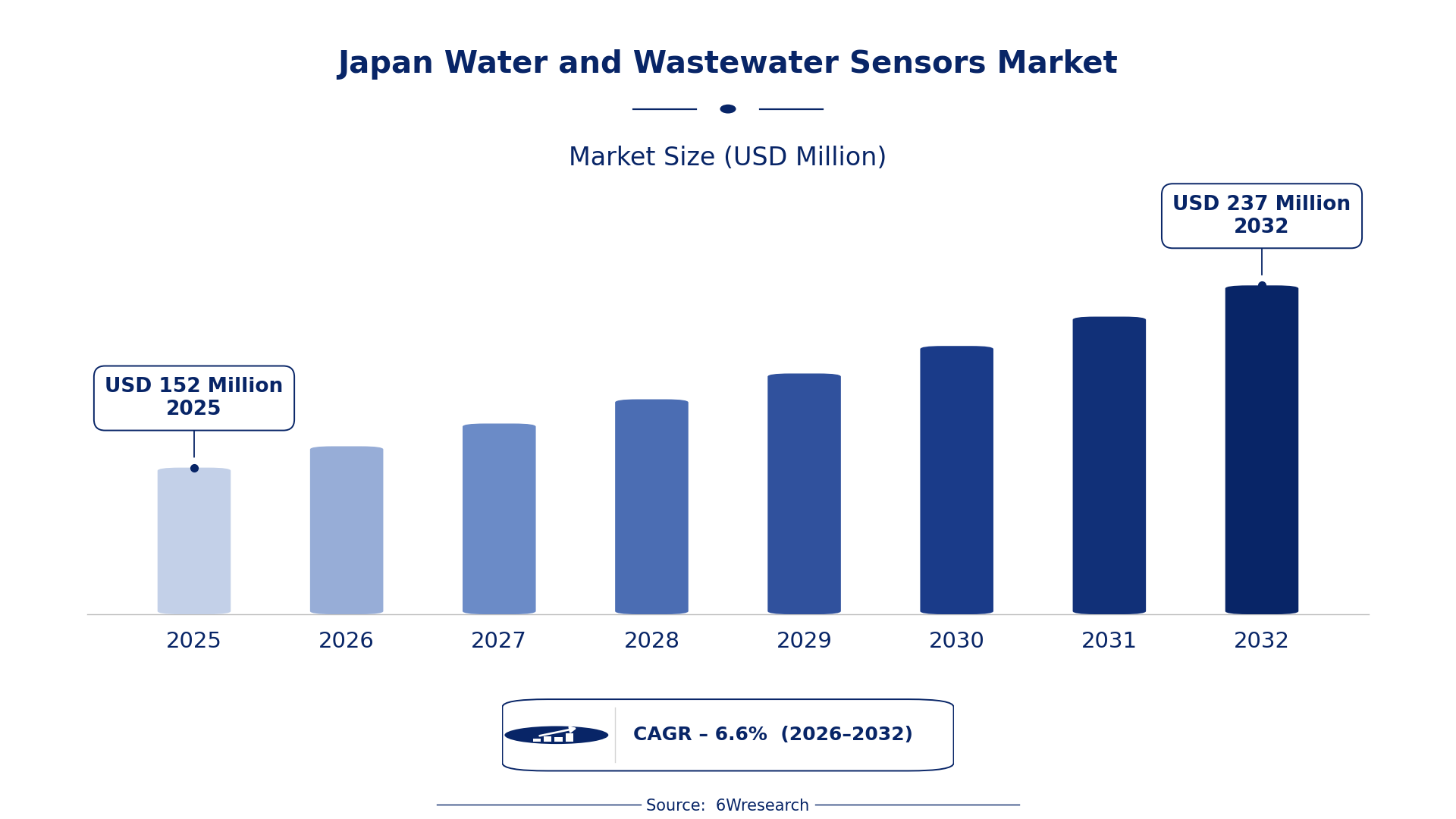
According to 6Wresearch internal database and industry insights, the Japan Water and Wastewater Sensors Market was valued at USD 152 Million in 2025 and is projected to reach USD 237 Million by 2032, growing at a CAGR of approximately 6.6% during 2026–2032.
Japan Water and Wastewater Sensors Market Highlights
| Report Metric | Details |
| Report Name | Japan Water and Wastewater Sensors Market (2026-2032) |
| Market Size 2025 | USD 152 Million |
| Market Size 2032 | USD 237 Million |
| Absolute Growth 2025–2032 | USD 85 Million |
| CAGR 2026–2032 | 6.6% |
| Peak Annual Growth | 7.8% in 2028 |
| Forecast Period | 2026–2032 |
| Historical Data | 2022–2025 |
| Base Year | 2025 |
| Leading Type, 2025 | PH Sensors (44% share) |
| Leading Application, 2025 | Drinking Water (61% share) |
| Fastest-Growing Type | DO Sensors (9.7% CAGR) |
| Fastest-Growing Application | Industrial Wastewater (8.5% CAGR) |
| Growing Sector | Water Quality Management |
| Key End Users | Municipalities, industrial facilities, environmental agencies |
Japan Water and Wastewater Sensors Market Year-wise Growth Rate and Key Drivers (2022–2032)
This graph illustrates the annual growth rates of the market from 2022 to 2032, highlighting a steady upward trajectory and projected market expansion over the forecast period.
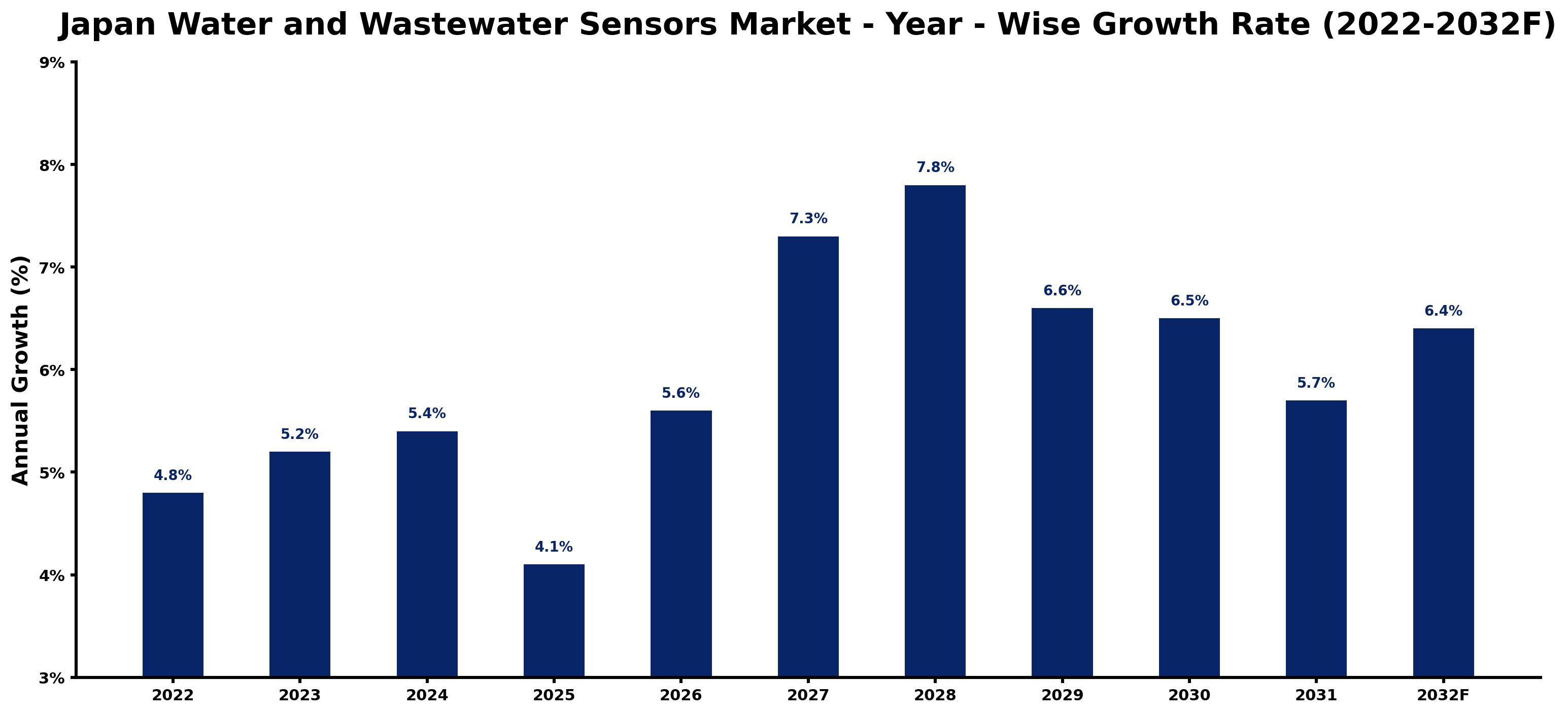
Year by year, the estimates below pair each growth rate with the development that shaped it.
| Year | Estimated Annual Growth (%) | Market Rationale |
| 2022 | 4.8 | The market experienced steady growth, driven by increasing awareness of water quality issues. |
| 2023 | 5.2 | Growth accelerated as investments in water infrastructure projects gained momentum. |
| 2024 | 5.4 | The market continued to expand due to heightened regulatory compliance demands. |
| 2025 | 4.1 | Growth slowed slightly as some projects reached completion, yet demand remained strong. |
| 2026 | 5.6 | Investment in advanced sensor technologies is projected to drive renewed growth. |
| 2027 | 7.3 | Rising environmental concerns will lead to increased purchases of monitoring equipment. |
| 2028 | 7.8 | The market is expected to peak as new regulations come into effect. |
| 2029 | 6.6 | Growth will moderate as the market stabilises after peak demand. |
| 2030 | 6.5 | Continued focus on sustainability will maintain a steady growth rate. |
| 2031 | 5.7 | The market will see a slowdown as saturation in certain applications occurs. |
| 2032 | 6.4 | Growth is anticipated to pick up again as new technologies are adopted. |
Note: Market size estimations and growth projections presented in this report are based on 6Wresearch's proprietary forecasting methodology, utilizing the latest available industry data, government publications, and primary research inputs.
Japan Water and Wastewater Sensors Market Synopsis
Water and wastewater sensors are essential devices that monitor and analyse water quality, ensuring safe drinking water and compliance with environmental regulations. The Japan Water and Wastewater Sensors Market benefits from an installed base exceeding 500,000 units, reflecting a strong commitment to water quality management. Growth is driven by increasing domestic demand, regulatory compliance needs, and significant investments in water infrastructure, highlighted by the ¥10 billion allocated for improvements in 2023.
Market Dynamics Impact Analysis (2026–2032)
| Factor | Type | Impact | Primary Segment Affected |
| Increasing regulatory compliance requirements drive demand for monitoring solutions. | Driver | High | Drinking Water |
| Investment in advanced sensor technologies enhances monitoring capabilities. | Driver | High | Industrial Wastewater |
| Growing urbanisation creates opportunities for sensor deployment in new facilities. | Opportunity | High | Drinking Water |
| Rising environmental awareness boosts demand for wastewater monitoring solutions. | Opportunity | Medium | Industrial Wastewater |
| High initial costs of advanced sensors may limit adoption in some sectors. | Restraint | Medium | Drinking Water |
| Limited awareness of sensor benefits in rural areas restricts market growth. | Restraint | Medium | Industrial Wastewater |
| Competition from low-cost alternatives may pressure pricing strategies. | Challenge | High | Drinking Water |
| Technological advancements may outpace current infrastructure capabilities. | Challenge | Medium | Industrial Wastewater |
Evaluation of Drivers in Japan Water and Wastewater Sensors Market (2026–2032)
The table below links each growth driver to the segment it affects and the evidence for it.
| Drivers | Primary Segment Affected | Why It Matters (Evidence) |
| Increased investment in water infrastructure projects boosts sensor demand. | Drinking Water | Japan allocated ¥10 billion for water infrastructure improvements in 2023, leading to higher sensor purchases. |
| Growing industrial activity drives the need for wastewater monitoring. | Industrial Wastewater | The industrial sector accounts for approximately 60% of total water usage, necessitating effective monitoring solutions. |
| Rising public awareness of water quality issues encourages sensor adoption. | Drinking Water | Over 127 million residents require safe drinking water, increasing demand for monitoring solutions. |
| Regulatory compliance drives purchases of advanced monitoring technologies. | Industrial Wastewater | JIS standards govern water quality testing, pushing industries to invest in compliant sensor systems. |
| Technological advancements improve sensor capabilities, attracting buyers. | Drinking Water | ISO 9001 certification among manufacturers ensures high-quality products, supporting market growth. |
Purchasing is picking up as Japan invests ¥10 billion in water infrastructure improvements, driving demand for sensors. Awareness of water quality issues is increasing among the 127 million residents requiring safe drinking water. The industrial sector, which accounts for 60% of total water usage, drives the need for effective wastewater monitoring solutions. Compliance with JIS standards encourages industries to adopt advanced sensor technologies. The presence of ISO 9001 certified manufacturers ensures high-quality products, attracting more buyers to the market.
Evaluation of Restraints in Japan Water and Wastewater Sensors Market
The following restraints limit how fast demand can grow.
| Market Restraint | Primary Segment Affected | Why It Matters (Evidence) |
| High initial costs of advanced sensors limit adoption in some sectors. | Drinking Water | The average cost of advanced sensors can deter smaller municipalities from investing in necessary technologies. |
| Limited awareness of sensor benefits in rural areas restricts market growth. | Industrial Wastewater | Many rural facilities lack knowledge about the advantages of modern monitoring solutions. |
| Competition from low-cost alternatives may pressure pricing strategies. | Drinking Water | Budget-conscious buyers may be attracted to low-cost sensors, affecting premium product sales. |
| Technological advancements may outpace current infrastructure capabilities. | Industrial Wastewater | Some facilities may struggle to integrate new sensor technologies into existing systems. |
| Regulatory changes may create uncertainty for manufacturers and buyers. | Drinking Water | Frequent updates to JIS standards can lead to confusion regarding compliance requirements. |
Japan Water and Wastewater Sensors Market Challenges
Producers face rising operational expenses as Japan's national minimum wage reaches JPY 1,055 per hour, which can inflate sensor prices for buyers. Distributors encounter supply delays due to stringent JIS standards that require extensive testing, complicating sensor availability. Regulatory compliance burdens producers, increasing operational complexity and costs, which can ultimately raise prices for buyers. Competition from advanced water treatment facilities in the Tohoku region compels producers to innovate swiftly, straining resources and potentially increasing costs for end-users.
Trends in the Japan Water and Wastewater Sensors Market
These developments are changing demand patterns in the Japan Water and Wastewater Sensors Market.
- New Water Quality Monitoring Initiatives: Japan's Ministry of the Environment launched a program in 2022 to improve water quality monitoring. This initiative aims to ensure compliance with JIS standards, encouraging manufacturers to innovate and upgrade their sensor technologies.
- Demand for Real-Time Monitoring Solutions: The demand for real-time monitoring solutions is increasing as industries seek to meet environmental regulations. This trend is clear in the industrial sector, where advanced sensors are becoming essential for effective wastewater management.
- Municipalities Adopting Smart Water Management Practices: Municipalities are increasingly adopting smart water management practices, integrating sensors with digital platforms. The Tokyo metropolitan area illustrates this shift, implementing advanced monitoring systems to optimise water usage.
- Environmental Sustainability as a Priority: Environmental sustainability is becoming a priority for industries, leading to higher demand for wastewater monitoring solutions. The industrial sector's commitment to reducing water usage aligns with regulatory compliance and environmental standards.
Investment Opportunities in the Japan Water and Wastewater Sensors Market
The following areas offer the clearest openings for investors and suppliers in the Japan Water and Wastewater Sensors Market.
- Partnering with Local Authorities: Partnering with local authorities can facilitate sensor deployment in municipal projects. Japan's population exceeding 127 million creates a strong opportunity for sensor suppliers to meet drinking water needs.
- Investing in Advanced Sensor Technologies: Now is the ideal time to invest in advanced sensor technologies as industries seek to improve compliance. The industrial wastewater sector, projected to grow at 8.5%, presents a significant opportunity for innovative solutions.
- Expanding Sensor Offerings in Rural Markets: Expanding sensor offerings into rural markets can capture untapped demand. With limited awareness of benefits, educational initiatives can drive adoption in these areas, supported by local government partnerships.
- Developing Integrated Monitoring Solutions: Creating integrated monitoring solutions that combine multiple sensor types can meet diverse needs. The Tohoku region, known for advanced water treatment facilities, is an ideal area for such innovations.
Government Initiatives in the Japan Water and Wastewater Sensors Market
The Water Supply Act (1957) sets strict standards for drinking-water quality and supply, ensuring that producers must comply with regulations. This legislation mandates regular testing and reporting, which directly impacts the operations of water suppliers and their sensor requirements.
The Ministry of the Environment oversees the implementation of the Waste Management and Public Cleansing Act (1970), which regulates waste treatment and disposal. This agency funds various projects aimed at improving water quality monitoring, benefiting both producers and buyers in the market.
Future Insight of the Japan Water and Wastewater Sensors Market
The launch of advanced water treatment facilities by 2032 will improve monitoring capabilities, benefiting both suppliers and buyers. Technological advancements will enable real-time data collection, ensuring adherence to JIS standards. Collaborations with the Japan Water Works Association will promote best practices, improving water management quality. The integration of smart technology in treatment facilities will streamline operations, enhancing efficiency and reducing costs for buyers.
Market Segmentation Analysis
Japan Water and Wastewater Sensors Market report covers a detailed analysis of the following market segments:
By Type – PH Sensors Lead, DO Sensors Expected to Grow Fastest
According to Vasudha, AM at 6Wresearch, PH Sensors accounted for 44% of the market by type in 2025. PH sensors hold the largest share as they are essential for maintaining safe drinking water quality in Japan. The reliance on these sensors is underscored by the need to support over 127 million residents who require access to clean water. DO Sensors are projected to grow fastest, at a CAGR of 9.7% during 2026–2032. The growth of DO sensors is propelled by increasing industrial activities that demand stringent monitoring of oxygen levels in water. This segment's expansion is further supported by the industrial sector's substantial water usage, accounting for approximately 60% of total consumption. This indicates that suppliers should focus on enhancing their offerings in DO sensors to meet the rising regulatory demands.
By Application – Drinking Water Leads, Industrial Wastewater Expected to Grow Fastest
The largest application category in 2025 was Drinking Water, at 61% of revenue. The drinking water application leads the market as it is the primary focus for ensuring safety and compliance with JIS standards. With a population of over 127 million, the demand for safe drinking water drives this segment's dominance. The quickest growth will come from Industrial Wastewater, forecast to expand at a CAGR of 8.5% between 2026 and 2032. Industrial wastewater monitoring is experiencing rapid growth due to heightened regulatory scrutiny and the need for compliance with environmental standards. The recent allocation of ¥10 billion for water infrastructure improvements indicates a strong push towards better monitoring solutions. Buyers in the industrial sector must prioritise investments in wastewater monitoring technologies to adhere to regulatory requirements.
Key Attractiveness of the Report
- 10 Years of Market Numbers
- Historical Data Starting from 2022 to 2025
- Base Year 2025
- Forecast Data until 2032
- Key Performance Indicators Impacting the Market
- Major Upcoming Developments and Projects
Key Highlights of the Report:
- Japan Water and Wastewater Sensors Market Outlook
- Market Size of Japan Water and Wastewater Sensors Market, 2025
- Forecast of Japan Water and Wastewater Sensors Market, 2032
- Historical Data and Forecast of Japan Water and Wastewater Sensors Revenues & Volume for the Period 2022-2032
- Japan Water and Wastewater Sensors Market Trend Evolution
- Japan Water and Wastewater Sensors Market Drivers and Challenges
- Japan Water and Wastewater Sensors Price Trends
- Japan Water and Wastewater Sensors Porter's Five Forces
- Japan Water and Wastewater Sensors Industry Life Cycle
- Historical Data and Forecast of Japan Water and Wastewater Sensors Market Revenues & Volume By Type for the Period 2022-2032
- Historical Data and Forecast of Japan Water and Wastewater Sensors Market Revenues & Volume By PH Sensors for the Period 2022-2032
- Historical Data and Forecast of Japan Water and Wastewater Sensors Market Revenues & Volume By DO Sensors for the Period 2022-2032
- Historical Data and Forecast of Japan Water and Wastewater Sensors Market Revenues & Volume By Temperature Sensors for the Period 2022-2032
- Historical Data and Forecast of Japan Water and Wastewater Sensors Market Revenues & Volume By Turbidity Sensors for the Period 2022-2032
- Historical Data and Forecast of Japan Water and Wastewater Sensors Market Revenues & Volume By Others for the Period 2022-2032
- Historical Data and Forecast of Japan Water and Wastewater Sensors Market Revenues & Volume By Application for the Period 2022-2032
- Historical Data and Forecast of Japan Water and Wastewater Sensors Market Revenues & Volume By Drinking Water for the Period 2022-2032
- Historical Data and Forecast of Japan Water and Wastewater Sensors Market Revenues & Volume By Industrial Wastewater for the Period 2022-2032
- Japan Water and Wastewater Sensors Import Export Trade Statistics
- Market Opportunity Assessment By Type
- Market Opportunity Assessment By Application
- Japan Water and Wastewater Sensors Top Companies Market Share
- Japan Water and Wastewater Sensors Competitive Benchmarking By Technical and Operational Parameters
- Japan Water and Wastewater Sensors Company Profiles
- Japan Water and Wastewater Sensors Key Strategic Recommendations
Market Covered
The report covers the following segments.
By Type
- PH Sensors
- DO Sensors
- Temperature Sensors
- Turbidity Sensors
- Others
By Application
- Drinking Water
- Industrial Wastewater































