Japan Wound Closure Devices Market Size & Growth Rate
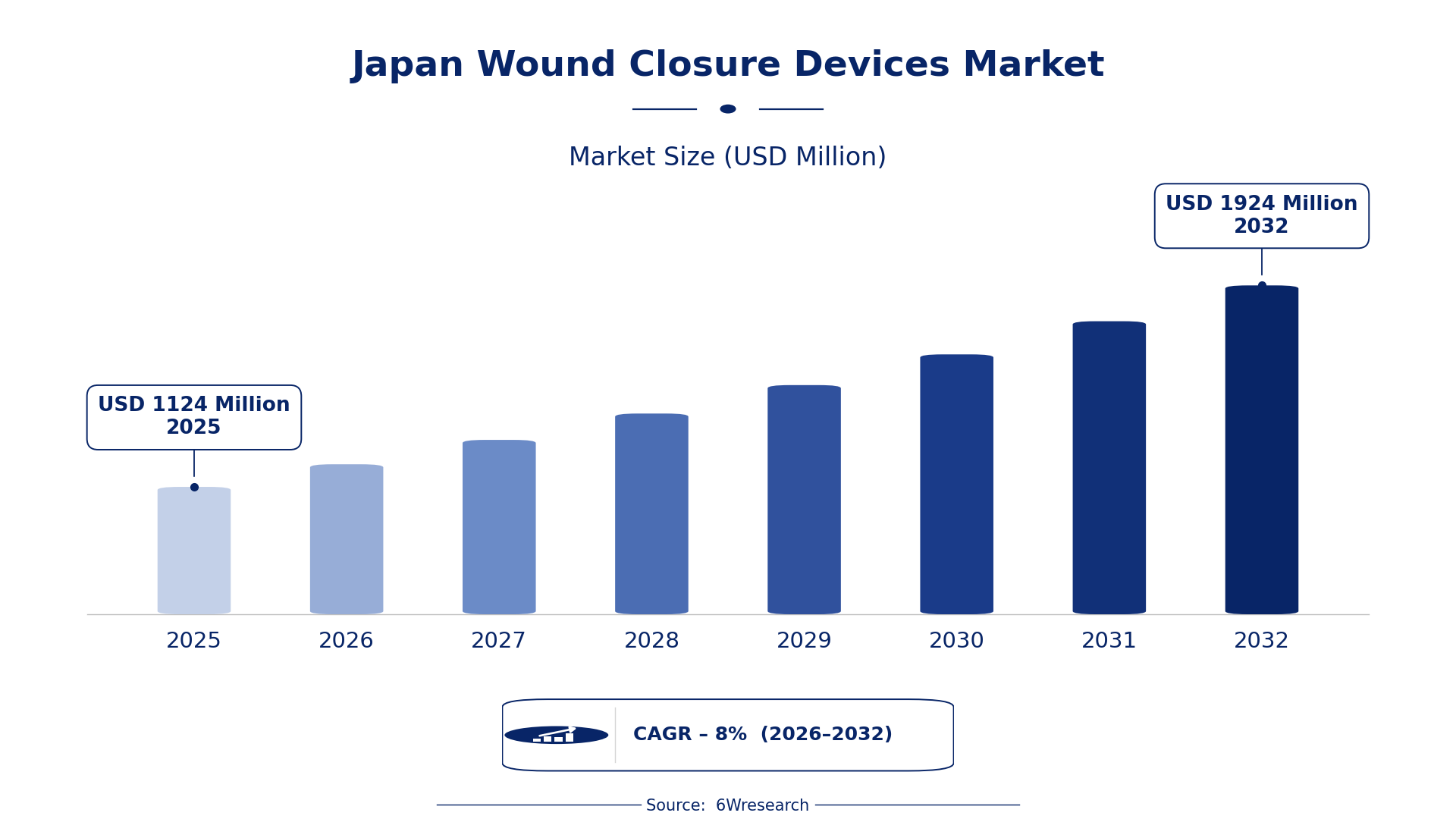
According to 6Wresearch internal database and industry insights, the Japan Wound Closure Devices Market was valued at USD 1,124 Million in 2025 and is projected to reach USD 1,924 Million by 2032, growing at a CAGR of approximately 8% during 2026–2032.
Japan Wound Closure Devices Market Highlights
| Report Metric | Details |
| Report Name | Japan Wound Closure Devices Market (2026-2032) |
| Market Size 2025 | USD 1,124 Million |
| Market Size 2032 | USD 1,924 Million |
| Absolute Growth 2025–2032 | USD 800 Million |
| CAGR 2026–2032 | 8% |
| Peak Annual Growth | 9.9% in 2028 |
| Forecast Period | 2026–2032 |
| Historical Data | 2022–2025 |
| Base Year | 2025 |
| Leading Product, 2025 | Sutures (38% share) |
| Leading Wound Type, 2025 | Acute (59% share) |
| Leading End-use, 2025 | Hospital (53% share) |
| Fastest-Growing Product | Sealants (11.1% CAGR) |
| Fastest-Growing Wound Type | Chronic (10.6% CAGR) |
| Fastest-Growing End-use | Clinics (9.9% CAGR) |
| Growing Sector | Hospital |
| Key End Users | Hospitals, Clinics, Trauma Centers |
Japan Wound Closure Devices Market Year-wise Growth Rate and Key Drivers (2022–2032)
This graph illustrates the annual growth rates of the market from 2022 to 2032, highlighting a steady upward trajectory and projected market expansion over the forecast period.
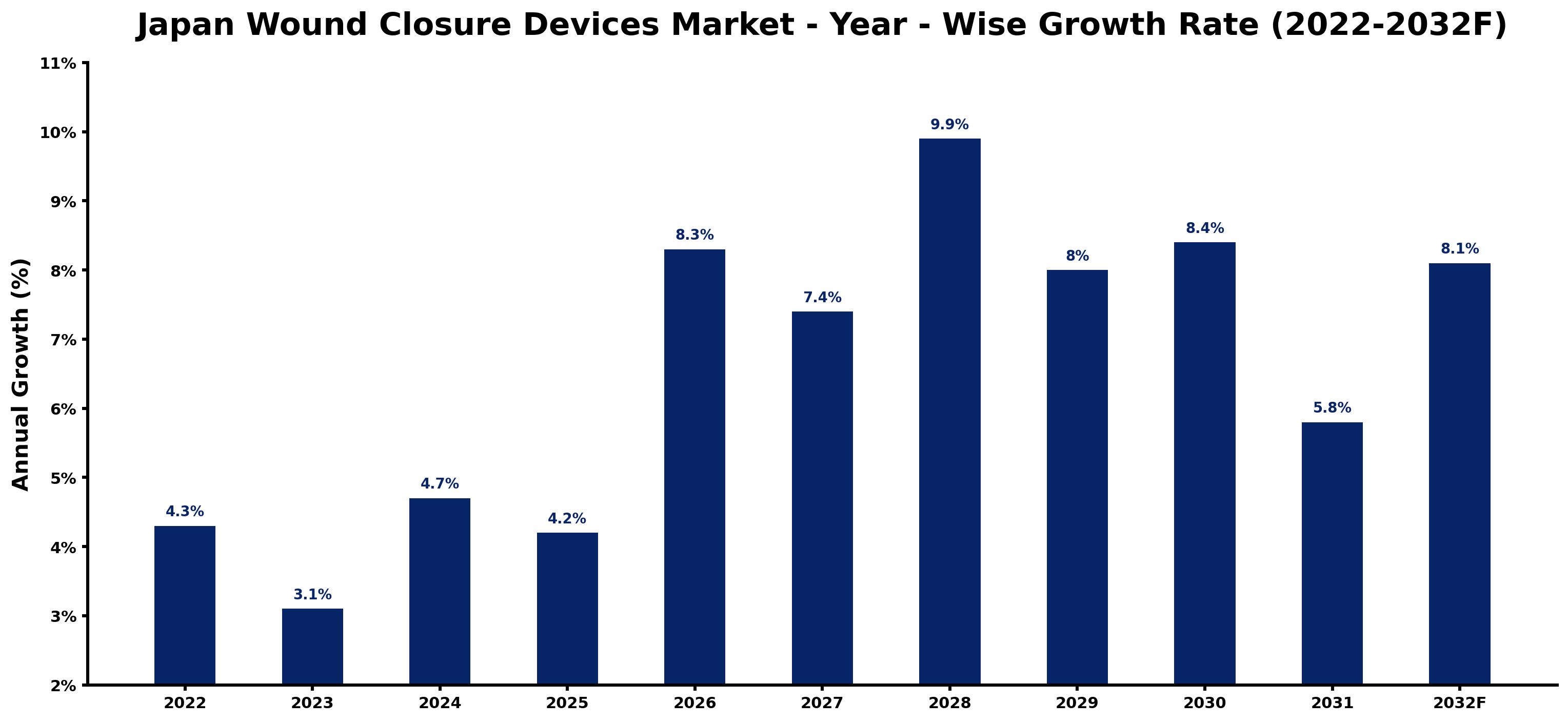
The yearly estimates that follow link every growth rate to its principal driver, so readers can see why the pace changed in each period.
| Year | Estimated Annual Growth (%) | Market Rationale |
| 2022 | 4.3 | The market showed steady growth as healthcare providers adapted to rising demand for wound management. |
| 2023 | 3.1 | Growth slowed as hospitals faced challenges in sourcing advanced wound closure technologies. |
| 2024 | 4.7 | Demand increased due to a rise in surgical procedures performed in hospitals across the country. |
| 2025 | 4.2 | The market continued to grow as healthcare facilities invested in improved wound care solutions. |
| 2026 | 8.3 | Growth accelerated as technological advancements in wound closure devices gained traction. |
| 2027 | 7.4 | The market experienced a slowdown as competition intensified among local manufacturers. |
| 2028 | 9.9 | Demand surged, driven by increased investments in trauma care facilities nationwide. |
| 2029 | 8.0 | Growth decelerated as market saturation began to affect purchasing decisions among hospitals. |
| 2030 | 8.4 | Demand rose again as innovative wound closure technologies entered the market. |
| 2031 | 5.8 | Growth slowed as hospitals focused on cost management amid rising operational expenses. |
| 2032 | 8.1 | The market is expected to expand as the elderly population increases, driving demand for effective wound management. |
Note: Market size estimations and growth projections presented in this report are based on 6Wresearch's proprietary forecasting methodology, utilizing the latest available industry data, government publications, and primary research inputs.
Japan Wound Closure Devices Market Synopsis
Wound closure devices are critical medical products used to close wounds and facilitate healing, made from materials like synthetic polymers and metals. According to the Japan Wound Closure Devices Market, a growing elderly population, with 29.3% aged 65 or older, is increasing the demand for chronic and acute wound management. Hospitals perform thousands of surgeries annually, further driving the need for effective closure solutions. Investment in trauma care facilities and adherence to quality standards like ISO 13485 are also key contributors to market growth.
Market Dynamics Impact Analysis (2026–2032)
| Factor | Type | Impact | Primary Segment Affected |
| Increasing elderly population driving demand for wound closure devices | Driver | High | Chronic |
| Technological advancements in wound closure methods | Driver | High | Sutures |
| Growing need for effective chronic wound management solutions | Opportunity | High | Chronic |
| Expansion of trauma care facilities enhancing service delivery | Opportunity | High | Acute |
| Regulatory challenges in product approval processes | Restraint | Medium | Sutures |
| High costs associated with advanced wound closure technologies | Restraint | Medium | Sealants |
| Limited access to advanced medical technologies in rural areas | Challenge | High | Trauma centers |
| Shortage of skilled healthcare professionals in wound management | Challenge | Medium | Clinics |
Evaluation of Drivers in Japan Wound Closure Devices Market (2026–2032)
The following drivers explain most of the expected growth.
| Drivers | Primary Segment Affected | Why It Matters (Evidence) |
| Growing elderly population | Chronic | Chronic wounds affect about 1% of the population, increasing demand for effective closure solutions. |
| Technological advancements in surgical techniques | Sutures | The average hospital performs thousands of surgeries annually, boosting the need for sutures. |
| Increased healthcare expenditure | Acute | Japan's national medical care expenditure was about JPY 46.7 trillion, driving investments in wound care. |
| Rising awareness of wound management best practices | Adhesives | The Japan Surgical Society promotes effective wound management, increasing the use of adhesives. |
| Expansion of trauma care facilities | Strips | In 2023, the government launched a program to enhance trauma care, increasing demand for strips. |
Buyers are adding capacity as the elderly population grows, with 29.3% aged 65 or older, creating a demand for chronic wound management solutions. In 2022, Japan's national medical care expenditure reached approximately JPY 46.7 trillion, enabling hospitals to invest in advanced wound closure technologies. The average hospital performs thousands of surgeries annually, leading to increased purchases of sutures and other closure devices.
Evaluation of Restraints in Japan Wound Closure Devices Market
The following restraints limit how fast demand can grow.
| Market Restraint | Primary Segment Affected | Why It Matters (Evidence) |
| Regulatory hurdles in product approval | Sutures | The PMD Act regulates the approval process, causing delays for manufacturers. |
| High costs of advanced wound closure technologies | Sealants | The price of advanced sealants can limit accessibility for smaller clinics. |
| Limited access to wound care technologies in rural areas | Trauma centers | Rural facilities often lack the latest technologies, affecting service delivery. |
| Shortage of skilled healthcare professionals | Clinics | The demand for skilled professionals exceeds supply, impacting wound management quality. |
| Market saturation in urban areas | Acute | High competition in urban markets limits growth opportunities for new entrants. |
Japan Wound Closure Devices Market Challenges
Producers face rising costs due to raw material price increases, which have surged by 15% recently. This situation arises from global supply chain disruptions, compelling hospitals to allocate larger budgets for wound closure devices. Regulatory hurdles prolong product approval processes, often extending timelines by six months, delaying access for buyers who require timely solutions. Intense competition among local manufacturers to meet stringent standards leads to price wars, eroding profit margins for suppliers. Supply chain inefficiencies contribute to longer lead times, causing hospitals to experience stock shortages and hindering their ability to provide prompt care.
Trends in the Japan Wound Closure Devices Market
The trends below show where the Japan Wound Closure Devices Market is heading.
- Shift towards Advanced Wound Management Techniques: Healthcare providers are increasingly adopting advanced wound management techniques, as seen in the Tokyo Metropolitan area, where facilities are equipped with the latest technologies. This shift is expected to improve patient outcomes and drive demand for new products.
- Transition from Traditional to Innovative Closure Devices: Since 2023, there has been a noticeable transition from traditional sutures to new closure devices in hospitals, with sutures accounting for a large portion of the market. This trend reflects the growing preference for efficiency and effectiveness in wound management.
- Emergence of Telemedicine in Wound Care: The rise of telemedicine in Japan has begun to influence wound care practices, with an increasing number of clinics adopting remote consultation services. This shift is projected to enhance patient access to wound management solutions.
- Increased Focus on Chronic Wound Management: The growing prevalence of chronic wounds, affecting about 1% of the population, has led to an increased focus on effective management solutions. This trend is driving demand for specialized products and services.
Investment Opportunities in the Japan Wound Closure Devices Market
The following areas offer the clearest openings for investors and suppliers in the Japan Wound Closure Devices Market.
- Partnerships with Local Healthcare Providers: Establishing partnerships with local healthcare providers in urban areas can facilitate market entry. The growing demand for wound closure devices is evident, with hospitals performing thousands of surgeries annually.
- Investment in Innovative Wound Closure Technologies: Investing in innovative wound closure technologies is timely, especially as Japan's healthcare expenditure reaches JPY 46.7 trillion. Hospitals are increasingly seeking advanced solutions to improve patient care.
- Supply of Specialized Chronic Wound Management Products: With chronic wounds affecting about 1% of the population, there is a pressing need for specialized products. Targeting clinics that focus on chronic wound management presents a lucrative opportunity.
- Expansion into Rural Healthcare Facilities: Expanding into rural healthcare facilities is essential, especially as these areas often lack advanced technologies. The government is allocating funds to improve medical infrastructure, creating entry points for suppliers.
Government Initiatives in the Japan Wound Closure Devices Market
The PMD Act, established in 2014, regulates the approval and manufacture of pharmaceuticals and medical devices, including wound closure products. Compliance with this law ensures that manufacturers meet safety and efficacy standards, impacting product availability in the market. Additionally, the Industrial Standardization Act governs JIS product and test standards, further ensuring quality in wound closure devices.
The Pharmaceuticals and Medical Devices Agency (PMDA) reviews pharmaceuticals and medical devices, ensuring safety and effectiveness. The Japan Agency for Medical Research and Development (AMED) funds medical research and development, supporting innovations in wound care. In 2023, the government allocated funds to improve trauma care facilities, directly impacting the availability of advanced wound closure solutions.
Future Insight of the Japan Wound Closure Devices Market
The advancement of 3D printing technology will revolutionise the production of wound closure devices by 2032, allowing for customised solutions tailored to individual patient needs. Increased government funding for trauma care facilities will enhance service quality and accessibility, benefiting healthcare providers and patients. The growing elderly population will drive demand for effective wound management solutions, necessitating the development of innovative care strategies. Adoption of ISO 13485 standards will improve quality management systems among suppliers, ensuring that buyers receive superior products.
Market Segmentation Analysis
Japan Wound Closure Devices Market report covers a detailed analysis of the following market segments:
By Product – Sutures Lead, Sealants Expected to Grow Fastest
According to Vasudha, AM at 6Wresearch, Sutures took 38% of product revenue in 2025, more than any other category. Sutures hold the largest share due to their critical function in stitching wounds across diverse medical environments, especially in hospitals. The average hospital in Japan performs thousands of surgeries each year, ensuring a steady requirement for these devices. The quickest growth will come from Sealants, forecast to expand at a CAGR of 11.1% between 2026 and 2032. Sealants are growing rapidly as they are increasingly recognised for their role as adjuncts in surgical procedures, improving the wound closure process. The introduction of advanced sealant technologies in trauma care facilities is driving their rising adoption. Suppliers should prioritise the availability of sealants to align with the increasing demand in surgical applications.
By Wound Type – Acute Leads, Chronic Expected to Grow Fastest
The largest wound type category in 2025 was Acute, at 59% of revenue. Acute wounds dominate the market as they are frequently addressed in emergency and surgical care, requiring immediate closure solutions. The prevalent use of sutures in these situations solidifies their market leadership in wound closure devices. Chronic is set to record the highest CAGR in this split, 10.6% over 2026–2032. Chronic wounds are expanding quickly due to the rising incidence of long-term conditions like ulcers, which affect about 1% of the population. The focus on effective management strategies for chronic wounds is propelling this segment's growth. Buyers should invest in advanced solutions for chronic wound management to meet the growing demand.
By End-use – Hospital Leads, Clinics Expected to Grow Fastest
With 53% of end-use revenue in 2025, Hospital was the largest category. Hospitals serve as the primary users of wound closure devices, utilising them extensively for surgical procedures. The large number of approximately 8,100 hospitals in Japan underlines the substantial demand generated by their surgical activities. Clinics are projected to grow fastest, at a CAGR of 9.9% during 2026–2032. Clinics are witnessing significant growth as they increasingly adopt wound closure devices for minor procedures, indicating a shift towards outpatient care. The government's commitment to improving medical infrastructure is enhancing access to these services in clinics. Suppliers should focus on adapting their offerings to support the growing needs of clinics as they expand their services.
Key Attractiveness of the Report
- 10 Years of Market Numbers
- Historical Data Starting from 2022 to 2025
- Base Year 2025
- Forecast Data until 2032
- Key Performance Indicators Impacting the Market
- Major Upcoming Developments and Projects
Key Highlights of the Report:
- Japan Wound Closure Devices Market Outlook
- Market Size of Japan Wound Closure Devices Market, 2025
- Forecast of Japan Wound Closure Devices Market, 2032
- Historical Data and Forecast of Japan Wound Closure Devices Revenues & Volume for the Period 2022-2032
- Japan Wound Closure Devices Market Trend Evolution
- Japan Wound Closure Devices Market Drivers and Challenges
- Japan Wound Closure Devices Price Trends
- Japan Wound Closure Devices Porter's Five Forces
- Japan Wound Closure Devices Industry Life Cycle
- Historical Data and Forecast of Japan Wound Closure Devices Market Revenues & Volume By Product for the Period 2022-2032
- Historical Data and Forecast of Japan Wound Closure Devices Market Revenues & Volume By Adhesives for the Period 2022-2032
- Historical Data and Forecast of Japan Wound Closure Devices Market Revenues & Volume By Staples for the Period 2022-2032
- Historical Data and Forecast of Japan Wound Closure Devices Market Revenues & Volume By Sutures for the Period 2022-2032
- Historical Data and Forecast of Japan Wound Closure Devices Market Revenues & Volume By Strips for the Period 2022-2032
- Historical Data and Forecast of Japan Wound Closure Devices Market Revenues & Volume By Sealants for the Period 2022-2032
- Historical Data and Forecast of Japan Wound Closure Devices Market Revenues & Volume By Wound Type for the Period 2022-2032
- Historical Data and Forecast of Japan Wound Closure Devices Market Revenues & Volume By Chronic for the Period 2022-2032
- Historical Data and Forecast of Japan Wound Closure Devices Market Revenues & Volume By Acute for the Period 2022-2032
- Historical Data and Forecast of Japan Wound Closure Devices Market Revenues & Volume By End-use for the Period 2022-2032
- Historical Data and Forecast of Japan Wound Closure Devices Market Revenues & Volume By Hospital for the Period 2022-2032
- Historical Data and Forecast of Japan Wound Closure Devices Market Revenues & Volume By Clinics for the Period 2022-2032
- Historical Data and Forecast of Japan Wound Closure Devices Market Revenues & Volume By Trauma centers for the Period 2022-2032
- Historical Data and Forecast of Japan Wound Closure Devices Market Revenues & Volume By Others for the Period 2022-2032
- Japan Wound Closure Devices Import Export Trade Statistics
- Market Opportunity Assessment By Product
- Market Opportunity Assessment By Wound Type
- Market Opportunity Assessment By End-use
- Japan Wound Closure Devices Top Companies Market Share
- Japan Wound Closure Devices Competitive Benchmarking By Technical and Operational Parameters
- Japan Wound Closure Devices Company Profiles
- Japan Wound Closure Devices Key Strategic Recommendations
Market Covered
Segments analysed in this report are listed below.
By Product
- Adhesives
- Staples
- Sutures
- Strips
- Sealants
By Wound Type
- Chronic
- Acute
By End-use
- Hospital
- Clinics
- Trauma centers
- Others































