Kenya Coconut Products Market Size Growth Rate
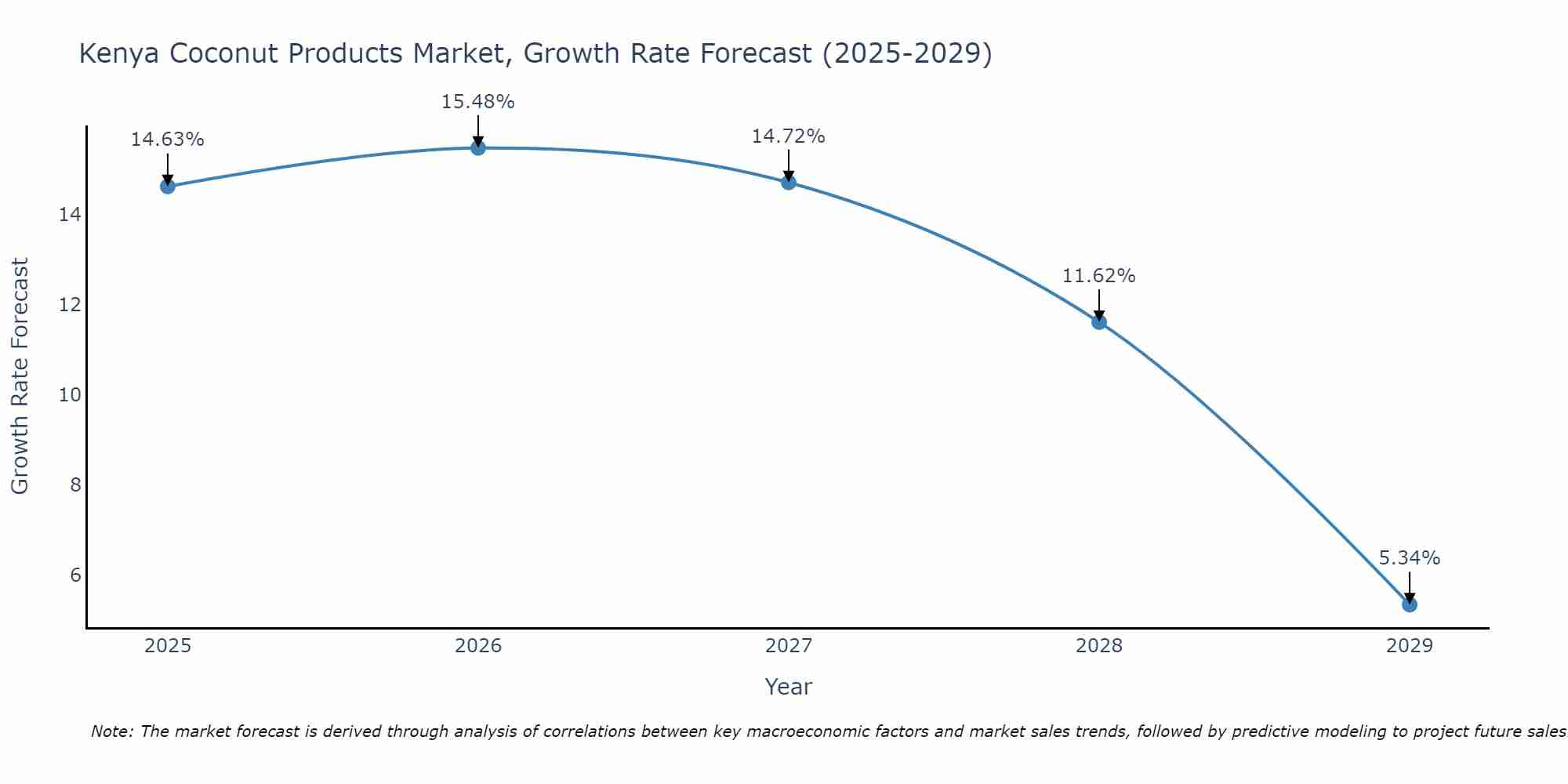
The Kenya Coconut Products Market is projected to witness mixed growth rate patterns during 2025 to 2029. Starting at 14.63% in 2025, the market peaks at 15.48% in 2026, and settles at 5.34% by 2029.
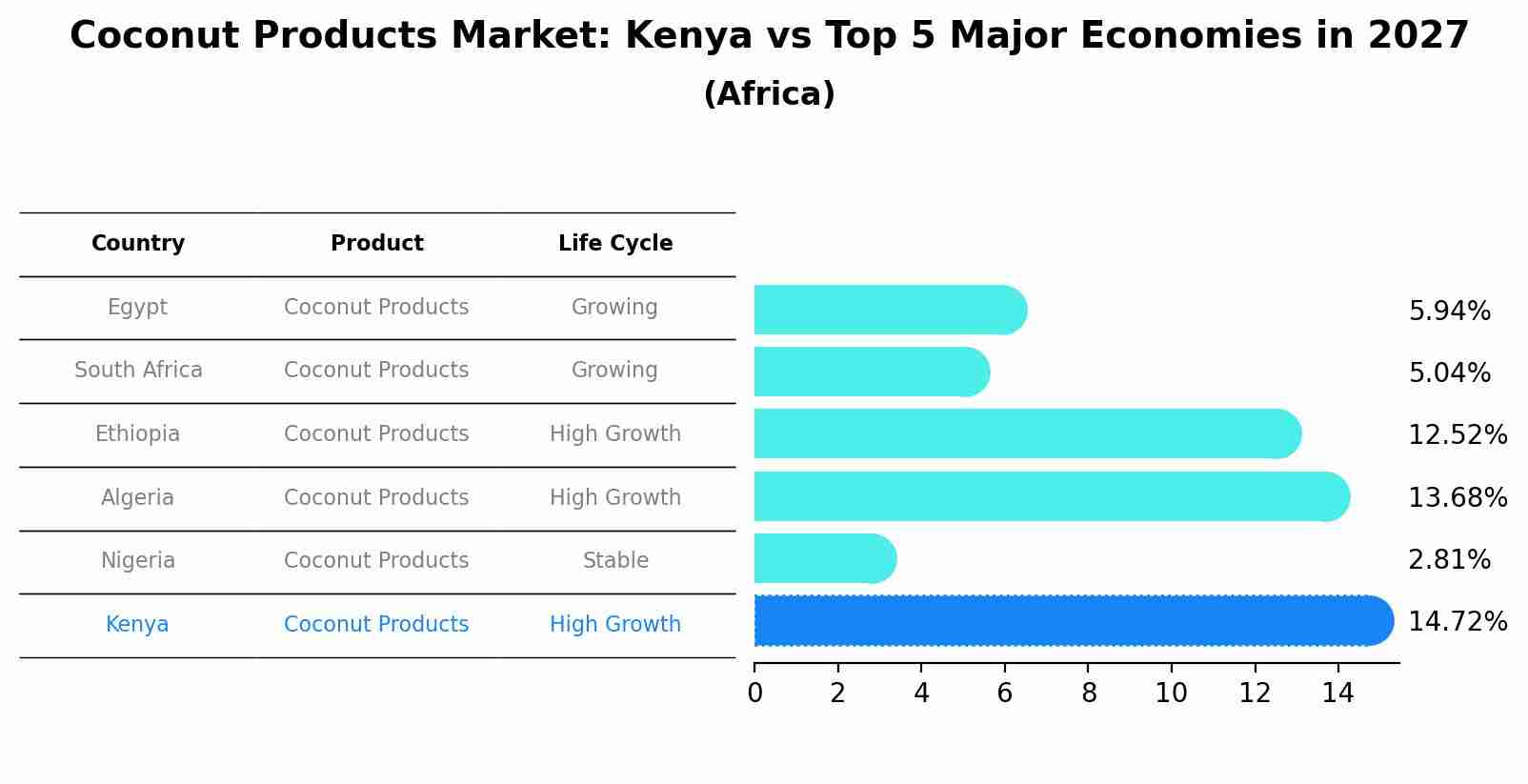
Coconut Products Market: Kenya vs Top 5 Major Economies in 2027 (Africa)
By 2027, the Coconut Products market in Kenya is anticipated to reach a growth rate of 14.72%, as part of an increasingly competitive Africa region, where Egypt remains at the forefront, supported by South Africa, Ethiopia, Algeria and Nigeria, driving innovations and market adoption across sectors.
Kenya Coconut Products Market Overview
The Kenya Coconut Products Market encompasses a diverse range of coconut-derived goods, including coconut water, coconut milk, desiccated coconut, and coconut-based snacks. Coconut products are valued for their nutritional attributes, flavor profiles, and versatility in culinary applications. In Kenya, coconut cultivation and processing support local economies, with market dynamics influenced by factors such as agricultural practices, supply chain logistics, and consumer preferences for healthy and natural foods.
Drivers of the market
In Kenya, the coconut products market is experiencing growth propelled by the versatility and nutritional value of coconut-derived ingredients, the demand for healthy and sustainable food options, and the expansion of coconut processing and value-added industries. Coconut products include coconut water, coconut milk, coconut cream, desiccated coconut, and coconut-based snacks, beverages, and desserts. The market expansion is driven by factors such as the growth of the health and wellness trend, the popularity of dairy alternatives, and the development of innovative coconut-based products such as coconut yogurt, ice cream, and energy bars.
Challenges of the market
Challenges in Kenya coconut products market include limited processing capacity and infrastructure constraints for value-added product manufacturing. Additionally, fluctuating coconut supply and quality control issues hinder market growth.
Government Policy of the market
Government policies in the coconut products market may include regulations for product quality and safety, import/export restrictions, and pricing policies for coconut product producers and traders. Additionally, there may be initiatives to promote investment in coconut processing infrastructure, support local manufacturers, and ensure compliance with international standards in the coconut products market.
Key Highlights of the Report:
- Kenya Coconut Products Market Outlook
- Market Size of Kenya Coconut Products Market, 2021
- Forecast of Kenya Coconut Products Market, 2028
- Historical Data and Forecast of Kenya Coconut Products Revenues & Volume for the Period 2018 - 2028
- Kenya Coconut Products Market Trend Evolution
- Kenya Coconut Products Market Drivers and Challenges
- Kenya Coconut Products Price Trends
- Kenya Coconut Products Porter's Five Forces
- Kenya Coconut Products Industry Life Cycle
- Historical Data and Forecast of Kenya Coconut Products Market Revenues & Volume By Type for the Period 2018 - 2028
- Historical Data and Forecast of Kenya Coconut Products Market Revenues & Volume By Coconut Water for the Period 2018 - 2028
- Historical Data and Forecast of Kenya Coconut Products Market Revenues & Volume By Coconut Oil for the Period 2018 - 2028
- Historical Data and Forecast of Kenya Coconut Products Market Revenues & Volume By Coconut Milk for the Period 2018 - 2028
- Historical Data and Forecast of Kenya Coconut Products Market Revenues & Volume By Dried Coconut Products for the Period 2018 - 2028
- Historical Data and Forecast of Kenya Coconut Products Market Revenues & Volume By Others for the Period 2018 - 2028
- Historical Data and Forecast of Kenya Coconut Products Market Revenues & Volume By Application for the Period 2018 - 2028
- Historical Data and Forecast of Kenya Coconut Products Market Revenues & Volume By Food for the Period 2018 - 2028
- Historical Data and Forecast of Kenya Coconut Products Market Revenues & Volume By Beverage for the Period 2018 - 2028
- Historical Data and Forecast of Kenya Coconut Products Market Revenues & Volume By Cosmetics for the Period 2018 - 2028
- Historical Data and Forecast of Kenya Coconut Products Market Revenues & Volume By Others for the Period 2018 - 2028
- Historical Data and Forecast of Kenya Coconut Products Market Revenues & Volume By Form for the Period 2018 - 2028
- Historical Data and Forecast of Kenya Coconut Products Market Revenues & Volume By Solid for the Period 2018 - 2028
- Historical Data and Forecast of Kenya Coconut Products Market Revenues & Volume By Liquid for the Period 2018 - 2028
- Kenya Coconut Products Import Export Trade Statistics
- Market Opportunity Assessment By Type
- Market Opportunity Assessment By Application
- Market Opportunity Assessment By Form
- Kenya Coconut Products Top Companies Market Share
- Kenya Coconut Products Competitive Benchmarking By Technical and Operational Parameters
- Kenya Coconut Products Company Profiles
- Kenya Coconut Products Key Strategic Recommendations






































