Myanmar Facade Market Size, Share & Growth Rate
The Myanmar Facade Market was estimated at USD 326 Million in 2025 and is projected to reach USD 445 Million by 2032, growing at a CAGR of 4.5% from 2026 to 2032. This robust growth trajectory is propelled by a surge in construction activities, particularly in urban centers, along with the increasing prioritization of energy-efficient and aesthetically appealing building exteriors. The market is also buoyed by government initiatives aimed at infrastructure development and foreign investments, fostering a conducive environment for facade innovations.
Myanmar Facade Market Year-wise Growth Rate and Key Drivers
This graph highlights how the Myanmar Facade Market has steadily grown over the years, supported by major growth factors.
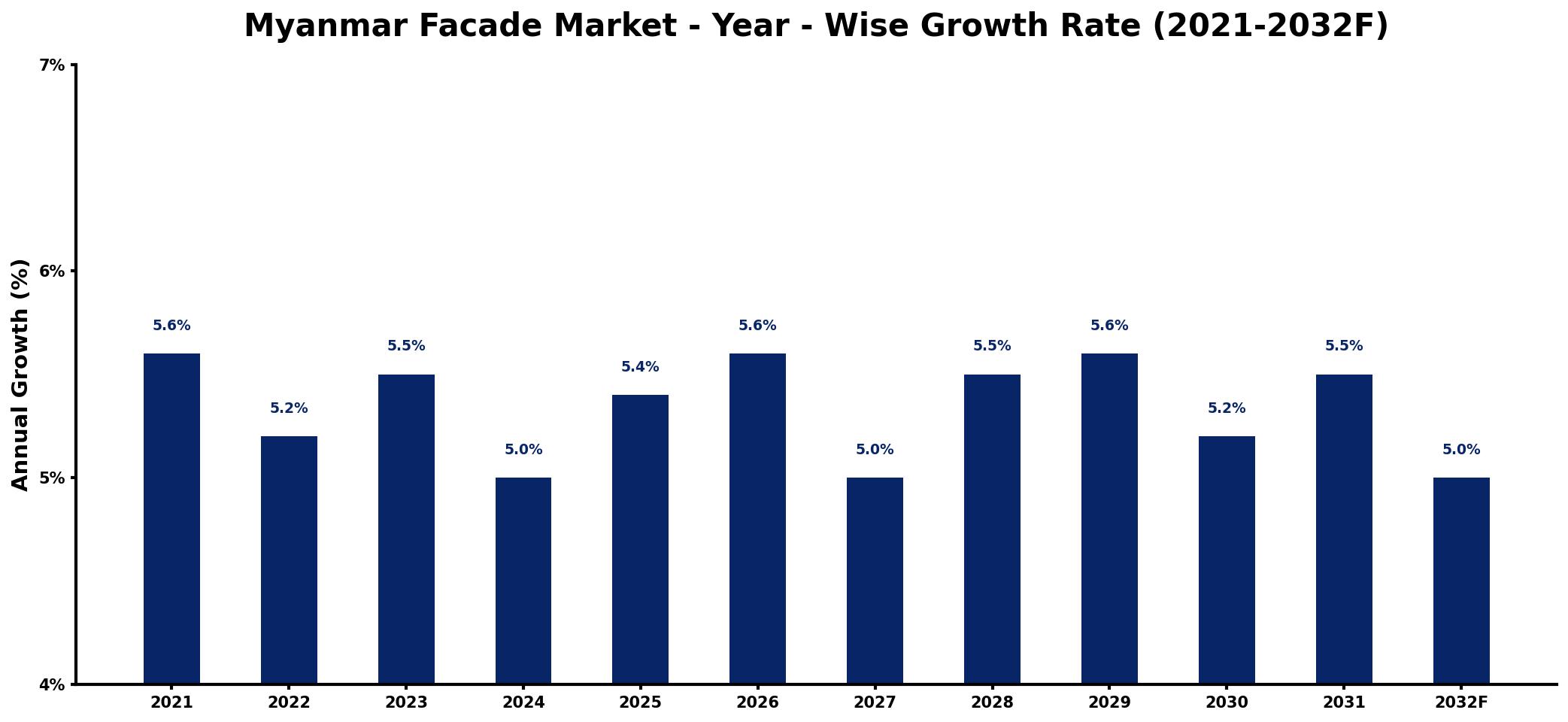
The table below presents the year‑wise growth rates along with the key drivers influencing the market
| Year | Growth Rate | Major Drivers |
| 2021 | 5.6% | Rising urban construction activities |
| 2022 | 5.2% | Increased investment in infrastructure |
| 2023 | 5.5% | Growing demand for sustainable materials |
| 2024 | 5.0% | Expansion of commercial real estate |
| 2025 | 5.4% | Surge in residential development projects |
| 2026 | 5.6% | Boost in public sector projects |
| 2027 | 5.0% | Heightened focus on energy efficiency |
| 2028 | 5.5% | Increased demand for aesthetic designs |
| 2029 | 5.6% | Growth in renovation and refurbishment |
| 2030 | 5.2% | Rising interest in innovative technologies |
| 2031 | 5.5% | expanding manufacturing base activity |
| 2032 | 5.0% | Growing need for urban revitalization |
Note: Market size estimations and growth projections presented in this report are based on 6Wresearch's proprietary forecasting methodology, utilizing the latest available industry data, government publications, and primary research inputs.
Myanmar Facade Market Synopsis
The strongest force currently shaping the Myanmar Facade Market is rapid urbanization. As cities expand and the demand for modern commercial and residential buildings increases, there is a corresponding rise in the need for innovative facade solutions that marry functionality with aesthetics.
Additionally, the focus on sustainable building practices is gaining momentum. Stakeholders in the construction sector are increasingly prioritizing the use of eco-friendly materials and energy-efficient technologies to create facades that not only enhance the visual appeal but also contribute to environmental sustainability.
Myanmar Facade Market Key Takeaways
- The market is characterized by a growing demand for sustainable and energy-efficient facade solutions.
- There is a notable shift towards innovative materials, including glass, aluminum, and composite panels.
- Government initiatives are creating favorable conditions for infrastructure investments and developments.
- Architectural designs reflecting local culture and heritage are gaining traction in facade projects.
- Challenges related to skilled labor shortages and material sourcing remain significant.
Evaluation of Restraints in Myanmar Facade Market
The Myanmar facade market faces several notable constraints that could inhibit its growth. A primary concern is the limited availability of skilled labor, which has a direct impact on both the quality of facade design and installation. This labor scarcity can lead to project delays, compromising timelines and overall quality. Moreover, the lack of standardized regulations within the construction industry poses challenges for quality control, potentially affecting safety and durability. In addition, the fluctuating costs and availability of high-quality materials can create significant uncertainties, further complicating the market landscape.
Myanmar Facade Market Trends
Current trends in the Myanmar Facade Market emphasize sustainability and innovation. The preference for green facades, living walls, and high-performance glazing systems is on the rise, reflecting a broader commitment to eco-friendly construction practices. Additionally, advancements in digitalization and automation are revolutionizing facade construction processes, enhancing both efficiency and quality. Aesthetic considerations are also paramount, with an increasing demand for facades that resonate with Myanmar's rich cultural heritage and architectural identity.
Myanmar Facade Market Opportunities
The burgeoning Myanmar Facade Market presents numerous investment opportunities, particularly in areas aligned with modern construction demands. The rise of infrastructure projects opens doors for investments in facade material manufacturing and technology that promotes energy efficiency. Furthermore, the increasing focus on green building practices, including the integration of solar panels and energy-efficient glass, highlights a vital area for growth. Investors have the chance to play a pivotal role in shaping a sustainable construction landscape while capitalizing on the ongoing urbanization trend.
Government Initiatives in the Myanmar Facade Market
The government of Myanmar is actively promoting sustainable urban development through various initiatives aimed at enhancing building aesthetics. Regulations have been established concerning building heights, design guidelines, and setback requirements, all intended to ensure that facades harmonize with their surroundings. Additionally, incentives are being offered to developers who incorporate energy-efficient technologies and sustainable practices into their facade designs, aligning with broader goals of environmental stewardship.
Future Insights of the Myanmar Facade Market
The future of the Myanmar Facade Market appears optimistic as the country undergoes rapid urbanization and a continued push for modern infrastructure development. The ongoing emphasis on energy efficiency and sustainability is likely to drive innovation in facade materials and designs. As construction standards improve and regulatory frameworks tighten, there will be an increasing adoption of high-quality facade solutions in both commercial and residential projects. This dynamic will undoubtedly pave the way for significant market growth through 2032 and beyond.
Myanmar Facade Market Latest Developments (2025 - 2026)
Recent developments in the Myanmar facade industry indicate a shift towards more sustainable practices. Key players are investing in research and development of eco-friendly materials that align with the growing consumer preference for green building solutions. Additionally, there is a noticeable trend towards enhanced collaboration among stakeholders in the construction sector, including partnerships aimed at technological advancement and innovative design approaches to meet market demands.
Myanmar Facade Market - Key Attractiveness of the Report
- 10 Years of Market Numbers
- Historical Data Starting from 2022 to 2025
- Base Year: 2025
- Forecast Data until 2032
- Key Performance Indicators Impacting the Market
- Major Upcoming Developments and Projects
Key Highlights of the Report:
- Myanmar Facade Market Outlook
- Market Size of Myanmar Facade Market, 2025
- Forecast of Myanmar Facade Market, 2032
- Historical Data and Forecast of Myanmar Facade Revenues & Volume for the Period 2022-2032F
- Myanmar Facade Market Trend Evolution
- Myanmar Facade Market Drivers and Challenges
- Myanmar Facade Price Trends
- Myanmar Facade Porter's Five Forces
- Myanmar Facade Industry Life Cycle
- Historical Data and Forecast of Myanmar Facade Market Revenues & Volume By Product for the Period 2022-2032F
- Historical Data and Forecast of Myanmar Facade Market Revenues & Volume By Ventilated Facades for the Period 2022-2032F
- Historical Data and Forecast of Myanmar Facade Market Revenues & Volume By Non-ventilated Facades for the Period 2022-2032F
- Historical Data and Forecast of Myanmar Facade Market Revenues & Volume By Others for the Period 2022-2032F
- Historical Data and Forecast of Myanmar Facade Market Revenues & Volume By End-use for the Period 2022-2032F
- Historical Data and Forecast of Myanmar Facade Market Revenues & Volume By Commercial for the Period 2022-2032F
- Historical Data and Forecast of Myanmar Facade Market Revenues & Volume By Residential for the Period 2022-2032F
- Historical Data and Forecast of Myanmar Facade Market Revenues & Volume By Industrial for the Period 2022-2032F
- Myanmar Facade Import Export Trade Statistics
- Market Opportunity Assessment By Product
- Market Opportunity Assessment By End-use
- Myanmar Facade Top Companies Market Share
- Myanmar Facade Competitive Benchmarking By Technical and Operational Parameters
- Myanmar Facade Company Profiles
- Myanmar Facade Key Strategic Recommendations






































