Nepal Functional Apparel Market Size, Share & Growth Rate
The Nepal Functional Apparel Market was estimated at USD 635 Million in 2025 and is projected to reach USD 926 Million by 2032, growing at a CAGR of 5.5% from 2026 to 2032. This upward trajectory is primarily fueled by an increasing number of health-conscious consumers and a surge in outdoor activities in the region. As more individuals engage in fitness and adventure sports, the demand for high-quality activewear and performance apparel is set to rise, driving growth across the market.
Nepal Functional Apparel Market Year-wise Growth Rate and Key Drivers
This graph highlights how the Nepal Functional Apparel Market has steadily grown over the years, supported by major growth factors.
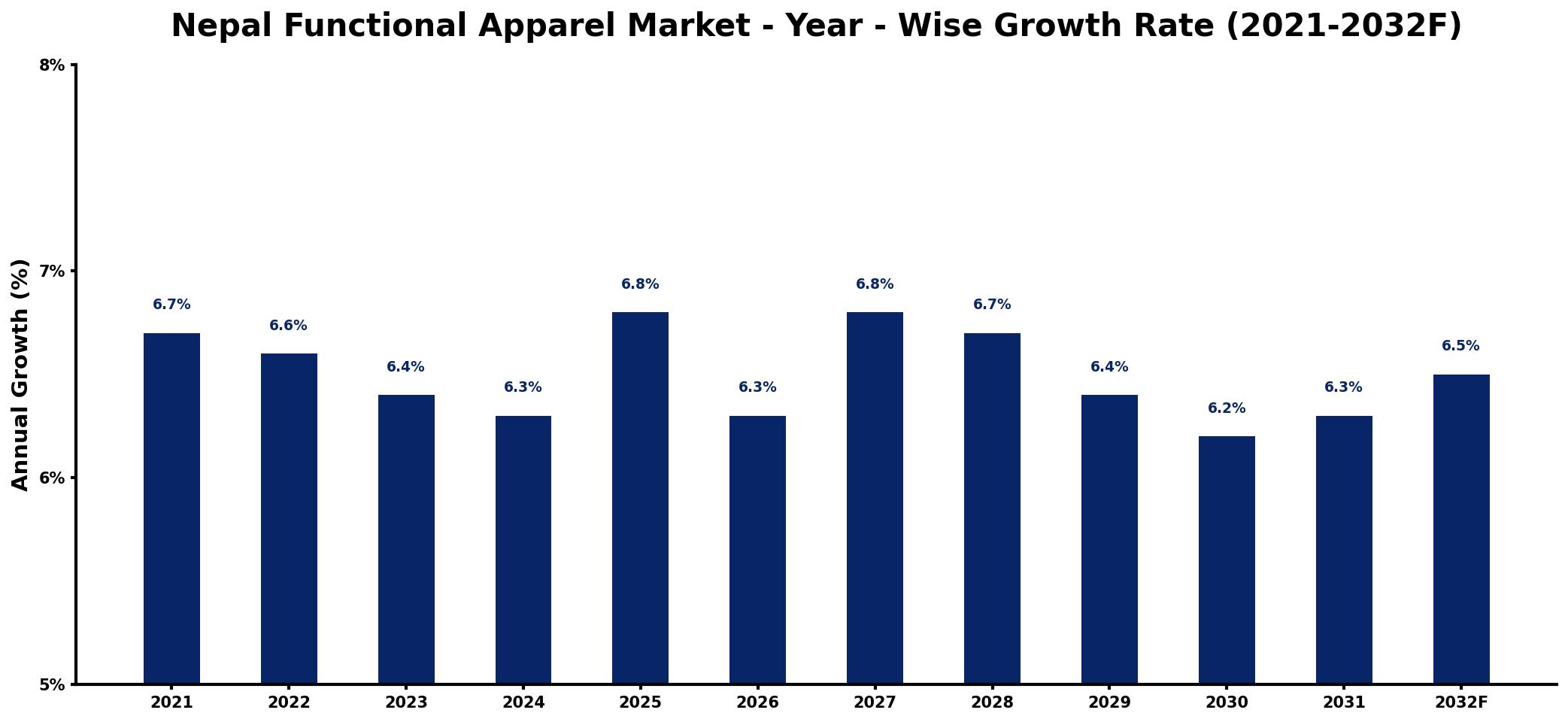
The table below presents the year‑wise growth rates along with the key drivers influencing the market
| Year | Growth Rate | Major Drivers |
| 2021 | 6.7% | Rising outdoor activity participation |
| 2022 | 6.6% | Increased health awareness trends |
| 2023 | 6.4% | Growth in e-commerce platforms |
| 2024 | 6.3% | Emerging fitness technology innovations |
| 2025 | 6.8% | Expansion of local manufacturing facilities |
| 2026 | 6.3% | Surge in environmental sustainability focus |
| 2027 | 6.8% | Enhanced distribution network efficiency |
| 2028 | 6.7% | Greater consumer customization options |
| 2029 | 6.4% | Boost in urban lifestyle adoption |
| 2030 | 6.2% | Increased corporate wellness programs |
| 2031 | 6.3% | rising infrastructure development spending |
| 2032 | 6.5% | Development of smart textile solutions |
Note: Market size estimations and growth projections presented in this report are based on 6Wresearch's proprietary forecasting methodology, utilizing the latest available industry data, government publications, and primary research inputs.
Nepal Functional Apparel Market Synopsis
The strongest force shaping the Nepal Functional Apparel Market today is the growing consumer awareness surrounding health and wellness. As awareness increases, consumers are seeking functional apparel that not only meets their active lifestyle needs but also offers comfort, durability, and technological enhancements.
This heightened awareness has led to a burgeoning interest in clothing that features advanced technologies, such as moisture-wicking and UV protection. Moreover, the incorporation of sustainable practices in manufacturing processes is further influencing consumer preferences, marking a significant shift toward eco-friendly apparel options in Nepal.
Nepal Functional Apparel Market Key Takeaways
- The Nepal Functional Apparel Market is witnessing steady growth driven by health and wellness trends.
- Innovative technologies in fabric and design are reshaping consumer expectations for performance apparel.
- Sustainability and eco-conscious manufacturing are becoming paramount for brands aiming to capture consumer loyalty.
- E-commerce platforms are enhancing accessibility, allowing consumers to explore a wider range of functional apparel options.
- The seasonal nature of outdoor activities presents unique challenges for maintaining consistent sales throughout the year.
Evaluation of Restraints in Nepal Functional Apparel Market
Despite its promising growth, the Nepal Functional Apparel Market faces several significant restraints. Limited consumer awareness regarding the full spectrum of benefits associated with functional clothing remains a challenge. Additionally, high production costs, particularly due to reliance on imported materials, hinder market expansion. Furthermore, the competitive landscape is intensifying, complicating efforts for smaller brands to establish a solid market presence. The cyclical nature of outdoor activities in Nepal also presents obstacles for brands seeking steady revenue streams.
Nepal Functional Apparel Market Trends
Several trends are shaping the demand landscape within the Nepal Functional Apparel Market. The growing popularity of athleisure wear illustrates a shift where consumers are integrating functional clothing into daily wear, thus blurring the lines between activewear and everyday attire. Additionally, there is an increasing emphasis on the incorporation of eco-friendly materials and sustainable production practices, as consumers prioritize ethical choices in their purchasing decisions.
Moreover, technology continues to play a crucial role in this market. Innovations such as odor-resistant fabrics and thermoregulating technologies are becoming increasingly sought after by the health-conscious consumer base. The focus on multi-functional apparel that combines style and performance is likely to gain further traction in the coming years.
Nepal Functional Apparel Market Opportunities
The investment opportunities in the Nepal Functional Apparel Market are vast and varied. The rising interest in outdoor activities such as trekking and hiking presents significant potential for specialized apparel designed to endure varying climatic conditions. Investors can explore avenues in both the manufacturing and distribution sectors to capitalize on this demand. Furthermore, developing eco-friendly functional apparel lines aligns with the growing trend of sustainability among consumers.
Collaborations with local artisans and designers can lead to the creation of culturally relevant functional apparel, tapping into a niche market that values both innovation and heritage. Such strategies not only enhance product appeal but also foster a sense of community and support for local economies.
Government Initiatives in the Nepal Functional Apparel Market
Government initiatives are crucial in supporting the growth of the Nepal Functional Apparel Market. Policies aimed at promoting local production and providing incentives for small and medium enterprises (SMEs) are actively in place. Programs such as the "Made in Nepal" campaign encourage domestic apparel manufacturing, ultimately enhancing product quality and sustainability practices. Additionally, the government is focused on ensuring compliance with international standards, thereby facilitating access to export markets.
Future Insights of the Nepal Functional Apparel Market
Looking ahead to 2026-2032, the Nepal Functional Apparel Market is poised for continued expansion. The confluence of increasing health awareness, a growing participation in outdoor activities, and technological advancements is likely to shape the future landscape. As brands innovate to meet evolving consumer demands and preferences, the market will witness enhanced product offerings that prioritize both functionality and style. The emphasis on sustainable practices will further bolster growth prospects, appealing to a socially conscious consumer base.
Nepal Functional Apparel Market Latest Developments (2025 - 2026)
In recent months, the Nepal Functional Apparel Market has observed an uptick in brands emphasizing sustainability in their product lines. Companies are increasingly launching collections made from recycled materials, catering to the environmentally conscious consumer. Additionally, the integration of smart technologies, such as wearable fitness trackers within apparel, is emerging as a noteworthy trend, enhancing the functionality of activewear. The growth of e-commerce platforms is also facilitating easier access for consumers to explore diverse functional apparel options.
Nepal Functional Apparel Market - Key Attractiveness of the Report
- 10 Years of Market Numbers
- Historical Data Starting from 2022 to 2025
- Base Year: 2025
- Forecast Data until 2032
- Key Performance Indicators Impacting the Market
- Major Upcoming Developments and Projects
Key Highlights of the Report:
- Nepal Functional Apparel Market Outlook
- Market Size of Nepal Functional Apparel Market, 2025
- Forecast of Nepal Functional Apparel Market, 2032
- Historical Data and Forecast of Nepal Functional Apparel Revenues & Volume for the Period 2022-2032F
- Nepal Functional Apparel Market Trend Evolution
- Nepal Functional Apparel Market Drivers and Challenges
- Nepal Functional Apparel Price Trends
- Nepal Functional Apparel Porter's Five Forces
- Nepal Functional Apparel Industry Life Cycle
- Historical Data and Forecast of Nepal Functional Apparel Market Revenues & Volume By Product Type for the Period 2022-2032F
- Historical Data and Forecast of Nepal Functional Apparel Market Revenues & Volume By Sportswear for the Period 2022-2032F
- Historical Data and Forecast of Nepal Functional Apparel Market Revenues & Volume By Activewear for the Period 2022-2032F
- Historical Data and Forecast of Nepal Functional Apparel Market Revenues & Volume By Protective Clothing for the Period 2022-2032F
- Historical Data and Forecast of Nepal Functional Apparel Market Revenues & Volume By Others for the Period 2022-2032F
- Historical Data and Forecast of Nepal Functional Apparel Market Revenues & Volume By Application for the Period 2022-2032F
- Historical Data and Forecast of Nepal Functional Apparel Market Revenues & Volume By Sports Industry for the Period 2022-2032F
- Historical Data and Forecast of Nepal Functional Apparel Market Revenues & Volume By Outdoor Clothing for the Period 2022-2032F
- Historical Data and Forecast of Nepal Functional Apparel Market Revenues & Volume By Healthcare sector for the Period 2022-2032F
- Historical Data and Forecast of Nepal Functional Apparel Market Revenues & Volume By Distribution Channel for the Period 2022-2032F
- Historical Data and Forecast of Nepal Functional Apparel Market Revenues & Volume By Offline Store for the Period 2022-2032F
- Historical Data and Forecast of Nepal Functional Apparel Market Revenues & Volume By Online Store for the Period 2022-2032F
- Nepal Functional Apparel Import Export Trade Statistics
- Market Opportunity Assessment By Product Type
- Market Opportunity Assessment By Application
- Market Opportunity Assessment By Distribution Channel
- Nepal Functional Apparel Top Companies Market Share
- Nepal Functional Apparel Competitive Benchmarking By Technical and Operational Parameters
- Nepal Functional Apparel Company Profiles
- Nepal Functional Apparel Key Strategic Recommendations






































