Peru Functional Apparel Market Size, Share & Growth Rate
The Peru Functional Apparel Market was estimated at USD 278 Million in 2025 and is projected to reach USD 390 Million by 2032, growing at a CAGR of 5.0% from 2026 to 2032. This growth trajectory is primarily fueled by a heightened consumer focus on fitness and health, coupled with the increasing popularity of outdoor activities. As awareness of the advantages of functional apparel rises, consumers are gravitating towards high-performance clothing that seamlessly blends comfort with durability.
Peru Functional Apparel Market Year-wise Growth Rate and Key Drivers
This graph highlights how the Peru Functional Apparel Market has steadily grown over the years, supported by major growth factors.
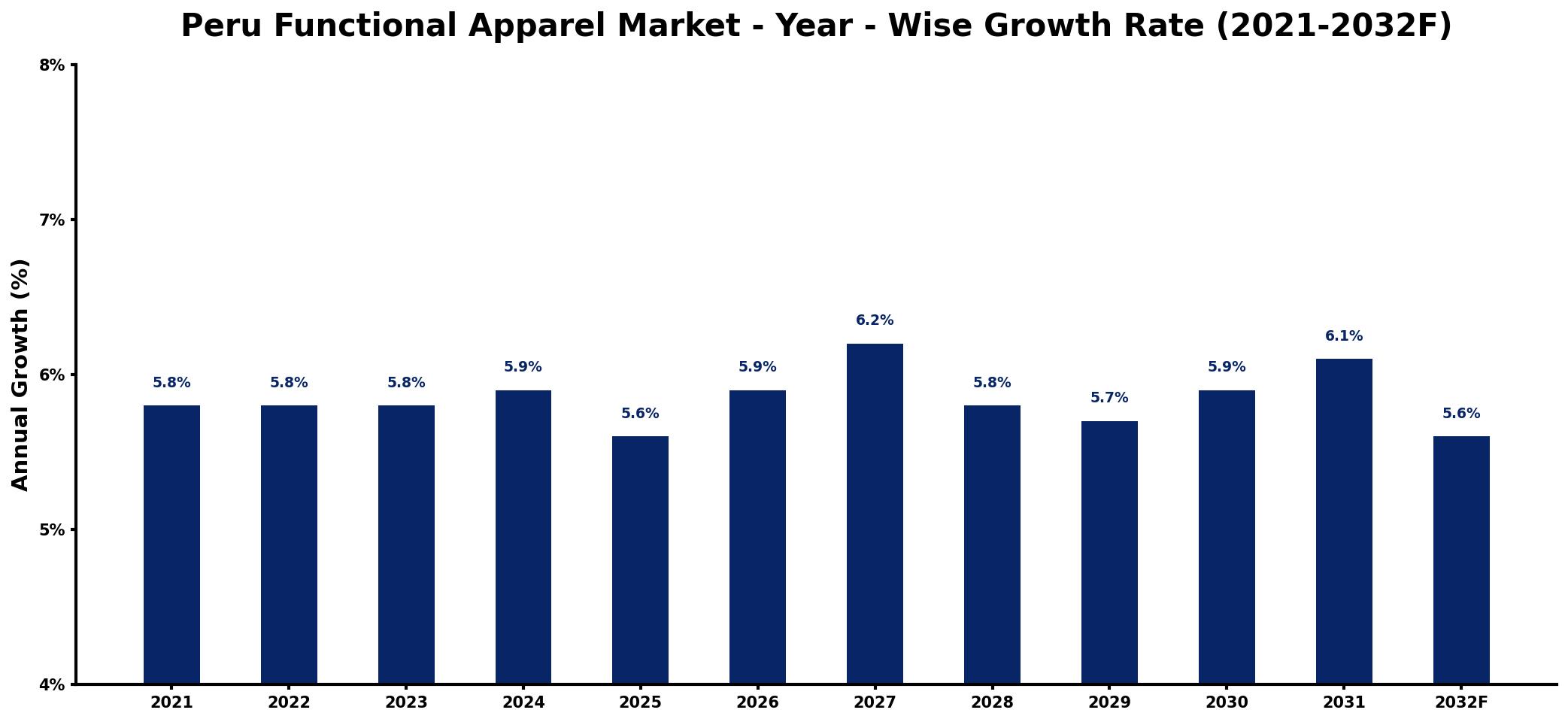
The table below presents the year‑wise growth rates along with the key drivers influencing the market
| Year | Growth Rate | Major Drivers |
| 2021 | 5.8% | Rise in health awareness initiatives |
| 2022 | 5.8% | Increased outdoor recreational activities |
| 2023 | 5.8% | Growth in fitness technology adoption |
| 2024 | 5.9% | Expansion of e-commerce platforms |
| 2025 | 5.6% | Surge in eco-friendly investments |
| 2026 | 5.9% | Increase in urban lifestyle trends |
| 2027 | 6.2% | Boost in active lifestyle campaigns |
| 2028 | 5.8% | Growth of athleisure market segment |
| 2029 | 5.7% | rising procurement volume requirements |
| 2030 | 5.9% | increased capital investment inflows |
| 2031 | 6.1% | improved raw material availability |
| 2032 | 5.6% | expanding industrial usage applications |
Note: Market size estimations and growth projections presented in this report are based on 6Wresearch's proprietary forecasting methodology, utilizing the latest available industry data, government publications, and primary research inputs.
Peru Functional Apparel Market Synopsis
In Peru, the surge in demand for functional apparel is predominantly linked to the rising prevalence of health-conscious lifestyles among consumers. Athletes and outdoor enthusiasts are particularly driving this demand, as they seek garments that provide moisture-wicking, UV protection, and odor resistance. This shift is mirrored by a robust interest in athleisure wear, where consumers desire stylish options that perform well across various activities.
Furthermore, the market's growth is being catalyzed by a rise in e-commerce platforms and a proliferation of specialized retailers offering diverse options. This accessibility is essential in educating potential buyers about the unique benefits of functional apparel, enabling them to make informed purchasing decisions and fostering a more extensive consumer base.
Peru Functional Apparel Market Key Takeaways
- The market is driven by increasing consumer awareness of performance-enhancing clothing benefits.
- Innovations in fabrics and sustainability are shaping product offerings in the industry.
- Growth is propelled by the rising popularity of fitness and outdoor activities.
- Customization and personalization in apparel are becoming increasingly important to consumers.
- The government's supportive policies are enhancing market competitiveness and sustainability.
Evaluation of Restraints in Peru Functional Apparel Market
Despite the positive trajectory, several restraints hinder the growth of the Peru Functional Apparel Market. A general lack of consumer awareness regarding the benefits of functional apparel limits market penetration. Additionally, high price points compared to conventional clothing can deter budget-conscious consumers. The perception of functional apparel as less stylish poses further challenges, necessitating effective marketing strategies to reshape this narrative. Lastly, local brands must contend with strong international competition, requiring them to differentiate their offerings significantly.
Peru Functional Apparel Market Trends
The current trends in the Peru Functional Apparel Market reflect a significant shift towards sustainable and eco-friendly materials. As consumers become more environmentally conscious, they are seeking out brands that prioritize sustainability in their manufacturing processes. Additionally, innovative performance features like temperature regulation and advanced moisture management are gaining traction, catering to the specific needs of fitness enthusiasts and outdoor adventurers alike. The growing trend towards versatility in clothing is prompting brands to create multi-functional garments that transition seamlessly from workout to casual wear.
Peru Functional Apparel Market Opportunities
The Peru functional apparel market is ripe with investment opportunities driven by a burgeoning middle class and increasing health awareness. Brands can capitalize on the demand for specialized sportswear, athleisure, and outdoor gear tailored specifically to the preferences of Peruvian consumers. Collaborations with local designers could enhance product relevance and appeal. Additionally, leveraging e-commerce can help brands expand their reach, allowing them to tap into a wider audience eager for high-performance clothing solutions.
Government Initiatives in the Peru Functional Apparel Market
The Peruvian government has recognized the potential of the functional apparel sector, implementing various supportive policies to foster growth. These initiatives include incentives for companies investing in research and development of innovative materials, as well as tax breaks for manufacturers that focus on environmentally sustainable production. Regulations ensuring safety and quality standards in apparel manufacturing further bolster consumer confidence, paving the way for a robust and competitive market.
Future Insights of the Peru Functional Apparel Market
Looking forward to 2026-2032, the Peru Functional Apparel Market is expected to continue on its upward trajectory, driven by evolving consumer preferences and increasing disposable incomes. The demand for functional clothing is likely to rise as the popularity of outdoor and fitness activities grows. With brands focusing on innovative, high-performance, and stylish apparel, the market shows promise for diversification and expansion in the near future. This alignment with consumer lifestyles positions the market for sustained growth.
Peru Functional Apparel Market Latest Developments (2025 - 2026)
In recent months, there has been a noticeable shift in the types of functional apparel being offered in Peru. Brands are increasingly incorporating advanced technologies into their fabrics, such as enhanced moisture management and improved breathability features. Additionally, there are emerging collaborations between apparel companies and local influencers aimed at promoting the benefits of functional clothing. Retail channels are also evolving, with more brands establishing online sales platforms to reach the digitally savvy consumer base.
Peru Functional Apparel Market - Key Attractiveness of the Report
- 10 Years of Market Numbers
- Historical Data Starting from 2022 to 2025
- Base Year: 2025
- Forecast Data until 2032
- Key Performance Indicators Impacting the Market
- Major Upcoming Developments and Projects
Key Highlights of the Report:
- Peru Functional Apparel Market Outlook
- Market Size of Peru Functional Apparel Market, 2025
- Forecast of Peru Functional Apparel Market, 2032
- Historical Data and Forecast of Peru Functional Apparel Revenues & Volume for the Period 2022-2032F
- Peru Functional Apparel Market Trend Evolution
- Peru Functional Apparel Market Drivers and Challenges
- Peru Functional Apparel Price Trends
- Peru Functional Apparel Porter's Five Forces
- Peru Functional Apparel Industry Life Cycle
- Historical Data and Forecast of Peru Functional Apparel Market Revenues & Volume By Product Type for the Period 2022-2032F
- Historical Data and Forecast of Peru Functional Apparel Market Revenues & Volume By Sportswear for the Period 2022-2032F
- Historical Data and Forecast of Peru Functional Apparel Market Revenues & Volume By Activewear for the Period 2022-2032F
- Historical Data and Forecast of Peru Functional Apparel Market Revenues & Volume By Protective Clothing for the Period 2022-2032F
- Historical Data and Forecast of Peru Functional Apparel Market Revenues & Volume By Others for the Period 2022-2032F
- Historical Data and Forecast of Peru Functional Apparel Market Revenues & Volume By Application for the Period 2022-2032F
- Historical Data and Forecast of Peru Functional Apparel Market Revenues & Volume By Sports Industry for the Period 2022-2032F
- Historical Data and Forecast of Peru Functional Apparel Market Revenues & Volume By Outdoor Clothing for the Period 2022-2032F
- Historical Data and Forecast of Peru Functional Apparel Market Revenues & Volume By Healthcare sector for the Period 2022-2032F
- Historical Data and Forecast of Peru Functional Apparel Market Revenues & Volume By Distribution Channel for the Period 2022-2032F
- Historical Data and Forecast of Peru Functional Apparel Market Revenues & Volume By Offline Store for the Period 2022-2032F
- Historical Data and Forecast of Peru Functional Apparel Market Revenues & Volume By Online Store for the Period 2022-2032F
- Peru Functional Apparel Import Export Trade Statistics
- Market Opportunity Assessment By Product Type
- Market Opportunity Assessment By Application
- Market Opportunity Assessment By Distribution Channel
- Peru Functional Apparel Top Companies Market Share
- Peru Functional Apparel Competitive Benchmarking By Technical and Operational Parameters
- Peru Functional Apparel Company Profiles
- Peru Functional Apparel Key Strategic Recommendations






































