New Zealand Plastic Bottles Market Growth Rate Analysis (2025 - 2031)
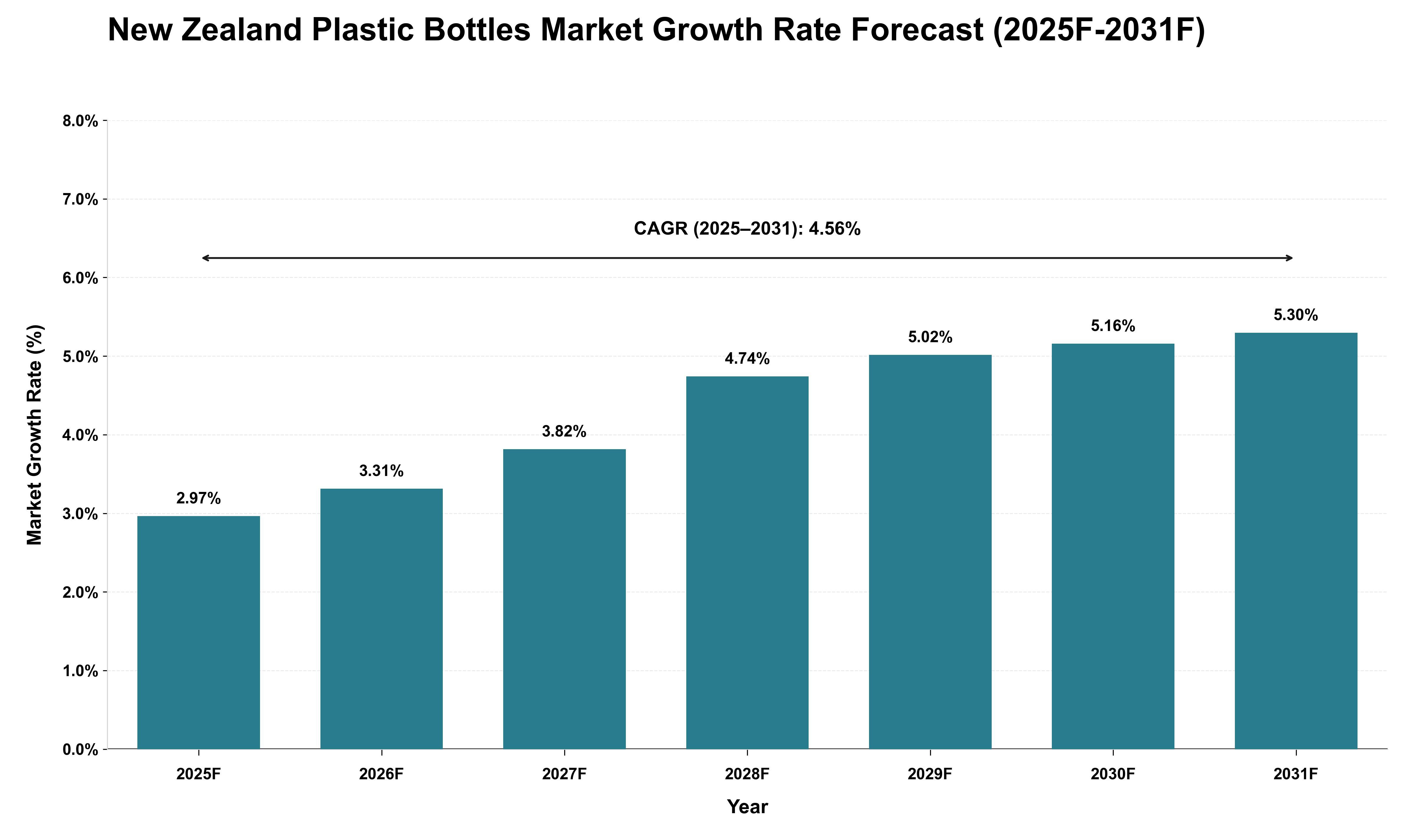
The projected growth trajectory for the New Zealand plastic bottles market will exhibit a notable acceleration, as indicated by the increasing annual growth rates from 2.97% in 2025 to 5.30% by 2031. This upward trend reflects a response to evolving regulatory frameworks aimed at reducing plastic waste and promoting sustainable packaging solutions, which will likely drive demand for innovative bottle designs and materials. Additionally, anticipated shifts in trade policy may influence import dependencies, particularly as New Zealand seeks to balance domestic production with international sourcing of raw materials. The expected cyclical trends within the consumer goods sector will further contribute to this growth, as rising environmental awareness among consumers prompts manufacturers to adapt their offerings. Overall, these macroeconomic factors will create a conducive environment for sustained expansion in the plastic bottles market throughout the forecast period.
Key Highlights of the Report:
- New Zealand Plastic Bottles Market Outlook
- Market Size of New Zealand Plastic Bottles Market, 2024
- Forecast of New Zealand Plastic Bottles Market, 2031
- Historical Data and Forecast of New Zealand Plastic Bottles Revenues & Volume for the Period 2021-2031
- New Zealand Plastic Bottles Market Trend Evolution
- New Zealand Plastic Bottles Market Drivers and Challenges
- New Zealand Plastic Bottles Price Trends
- New Zealand Plastic Bottles Porter`s Five Forces
- New Zealand Plastic Bottles Industry Life Cycle
- Historical Data and Forecast of New Zealand Plastic Bottles Market Revenues & Volume By Raw Material Type for the Period 2021-2031
- Historical Data and Forecast of New Zealand Plastic Bottles Market Revenues & Volume By Polyethylene Terephthalate (PET) for the Period 2021-2031
- Historical Data and Forecast of New Zealand Plastic Bottles Market Revenues & Volume By Poly Propylene (PP) for the Period 2021-2031
- Historical Data and Forecast of New Zealand Plastic Bottles Market Revenues & Volume By Low-density Polyethylene (LDPE) for the Period 2021-2031
- Historical Data and Forecast of New Zealand Plastic Bottles Market Revenues & Volume By High-density Polyethylene (HDPE) for the Period 2021-2031
- Historical Data and Forecast of New Zealand Plastic Bottles Market Revenues & Volume By Other Raw Materials for the Period 2021-2031
- Historical Data and Forecast of New Zealand Plastic Bottles Market Revenues & Volume By End-user for the Period 2021-2031
- Historical Data and Forecast of New Zealand Plastic Bottles Market Revenues & Volume By Beverage for the Period 2021-2031
- Historical Data and Forecast of New Zealand Plastic Bottles Market Revenues & Volume By Food for the Period 2021-2031
- Historical Data and Forecast of New Zealand Plastic Bottles Market Revenues & Volume By Cosmetics for the Period 2021-2031
- Historical Data and Forecast of New Zealand Plastic Bottles Market Revenues & Volume By Pharmaceutical for the Period 2021-2031
- Historical Data and Forecast of New Zealand Plastic Bottles Market Revenues & Volume By Household Care for the Period 2021-2031
- Historical Data and Forecast of New Zealand Plastic Bottles Market Revenues & Volume By Other for the Period 2021-2031
- New Zealand Plastic Bottles Import Export Trade Statistics
- Market Opportunity Assessment By Raw Material Type
- Market Opportunity Assessment By End-user
- New Zealand Plastic Bottles Top Companies Market Share
- New Zealand Plastic Bottles Competitive Benchmarking By Technical and Operational Parameters
- New Zealand Plastic Bottles Company Profiles
- New Zealand Plastic Bottles Key Strategic Recommendations






































