Nigeria Fuel Oil Market Top 5 Importing Countries and Market Competition (HHI) Analysis
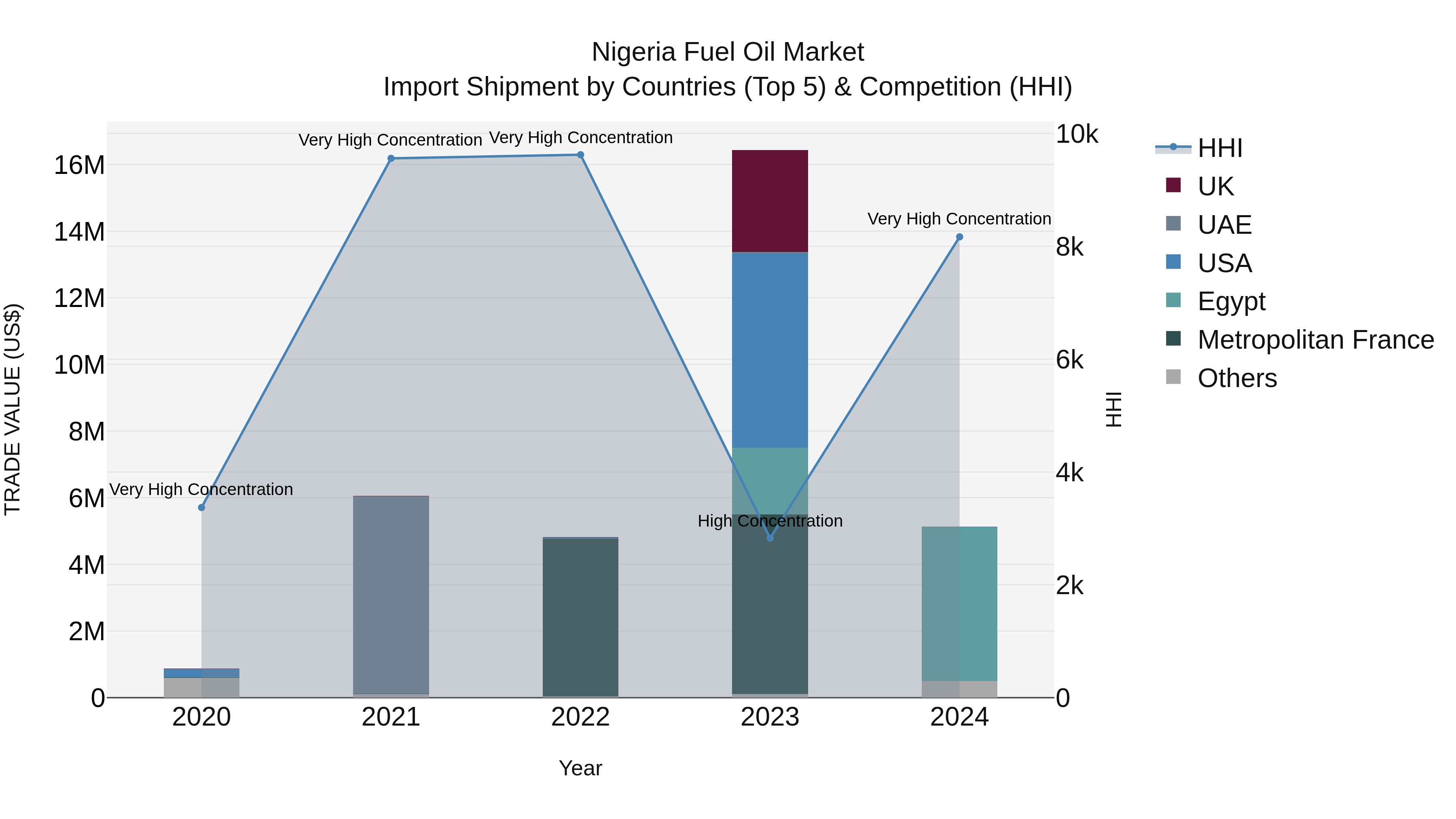
The fuel oil import market in Nigeria saw a significant increase in concentration in 2024, with top exporters such as Egypt, Belgium, India, Singapore, and the UAE dominating the shipments. The high Herfindahl-Hirschman Index (HHI) indicates a very competitive landscape. Despite the impressive compound annual growth rate (CAGR) of 55.72% from 2020 to 2024, the negative growth rate of -68.77% in 2024 suggests a recent decline in import volumes. This dynamic market requires close monitoring to understand the shifting trends in fuel oil imports to Nigeria.
Nigeria Fuel Oil Market Overview
The Nigeria Fuel Oil Market is driven by industrial demand, particularly in the manufacturing and power generation sectors. Fuel oil is used as a primary energy source in boilers, furnaces, and other industrial applications. The market growth is influenced by economic activities, energy policies, and global oil prices.
Drivers of the market
The fuel oil market in Nigeria is driven by the country`s energy needs and industrial activities. Fuel oil is used in power generation, industrial heating, and marine bunkering. Nigeria, being an oil-producing country, has a well-established fuel oil market to meet domestic energy demands. Moreover, the growth of industries such as manufacturing, construction, and transportation contributes to the demand for fuel oil. The market is also influenced by global oil prices and government policies related to energy and fuel subsidies.
Challenges of the market
The Nigeria Fuel Oil Market is challenged by fluctuating global oil prices, which impact market stability and profitability. Issues such as the dependency on imported fuel oils and the lack of local refining capacity further exacerbate market volatility. Regulatory constraints and environmental concerns related to fuel oil consumption also pose challenges to market growth. Additionally, the market faces competition from alternative energy sources, which influences consumer preferences and market demand.
Government Policy of the market
The Nigeria government has established regulations to control the production, distribution, and use of fuel oil in the country. The Department of Petroleum Resources (DPR) sets standards for the quality and safety of fuel oil products, ensuring compliance with international specifications. The agency monitors the importation and refining of fuel oil to prevent adulteration and ensure consumer safety. Additionally, the Ministry of Petroleum Resources collaborates with industry stakeholders to promote investment in infrastructure and technologies that enhance the efficiency and reliability of the fuel oil market.
Key Highlights of the Report:
- Nigeria Fuel Oil Market Outlook
- Market Size of Nigeria Fuel Oil Market, 2024
- Forecast of Nigeria Fuel Oil Market, 2031
- Historical Data and Forecast of Nigeria Fuel Oil Revenues & Volume for the Period 2018 - 2031
- Nigeria Fuel Oil Market Trend Evolution
- Nigeria Fuel Oil Market Drivers and Challenges
- Nigeria Fuel Oil Price Trends
- Nigeria Fuel Oil Porter's Five Forces
- Nigeria Fuel Oil Industry Life Cycle
- Historical Data and Forecast of Nigeria Fuel Oil Market Revenues & Volume By Application for the Period 2018 - 2031
- Historical Data and Forecast of Nigeria Fuel Oil Market Revenues & Volume By Marine for the Period 2018 - 2031
- Historical Data and Forecast of Nigeria Fuel Oil Market Revenues & Volume By Industrial for the Period 2018 - 2031
- Historical Data and Forecast of Nigeria Fuel Oil Market Revenues & Volume By Others for the Period 2018 - 2031
- Nigeria Fuel Oil Import Export Trade Statistics
- Market Opportunity Assessment By Application
- Nigeria Fuel Oil Top Companies Market Share
- Nigeria Fuel Oil Competitive Benchmarking By Technical and Operational Parameters
- Nigeria Fuel Oil Company Profiles
- Nigeria Fuel Oil Key Strategic Recommendations






































