Norway Tuna Market Growth Rate Analysis (2021-2031)
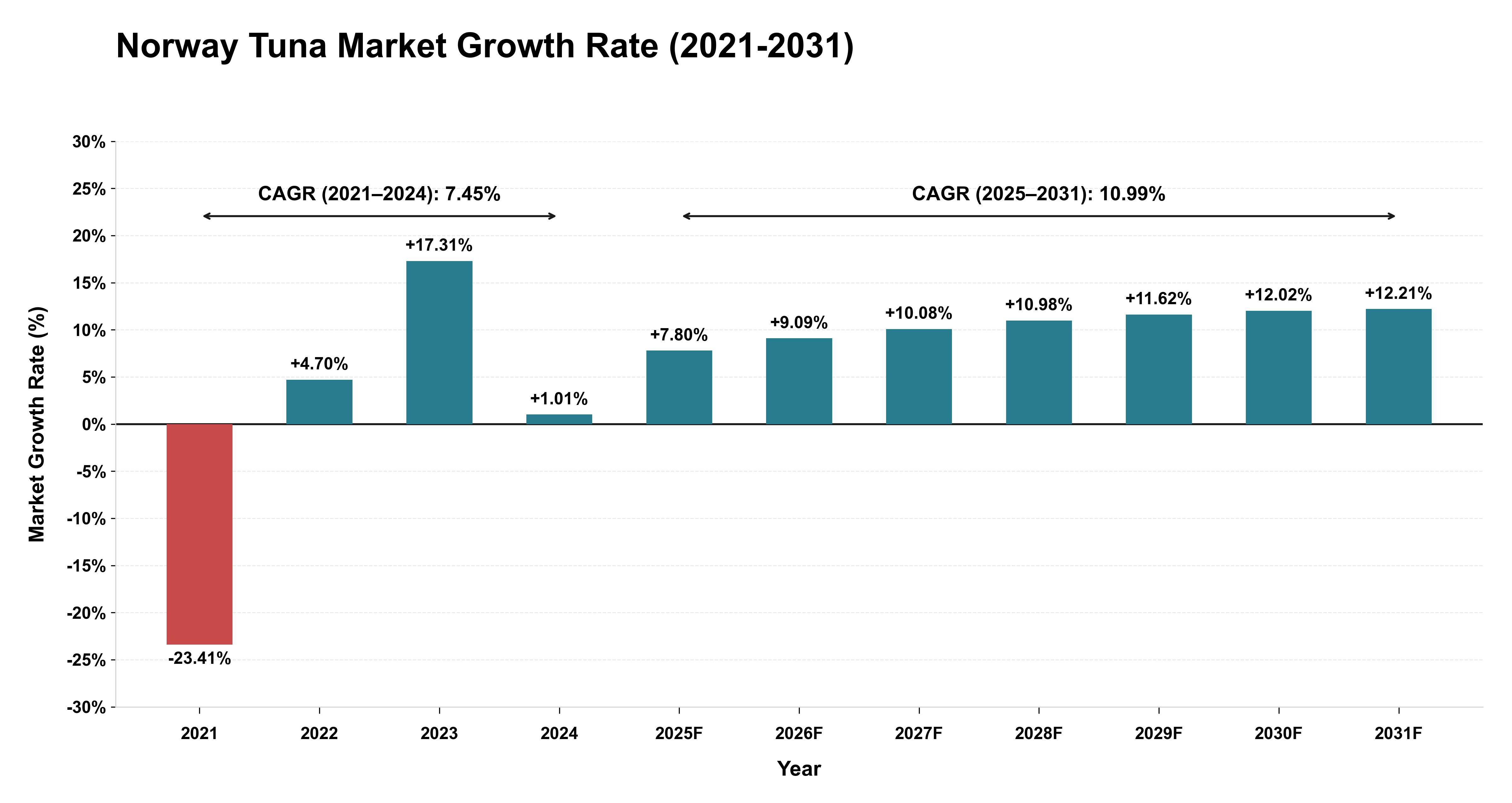
The Norway Tuna market faced a challenging start in 2021 with a sharp decline of -23.41%, attributed to external factors impacting consumer demand. However, the market swiftly rebounded in 2022 with a growth of 4.70%, signaling resilience and adaptability. Subsequently, from 2023 to 2024, the market demonstrated steady growth rates of 17.31% and 1.01% respectively, indicating a stabilization phase post the initial turbulence. Looking ahead, the forecast anticipates an accelerated expansion with a CAGR of 10.99% from 2025 to 2031, reflecting growing consumer preferences and market maturity. The positive trajectory is underpinned by consistent growth rates ranging from 7.80% to 12.21% annually during this period, showcasing a robust and promising outlook for the Norway Tuna market as it enters a phase of sustained growth and development.
Norway Tuna Market Overview
Norways tuna market is relatively small compared to its extensive salmon industry, but it plays a key role in the seafood sector. The demand for fresh and processed tuna is growing, driven by the countrys focus on healthy eating and the popularity of sushi. Although much of the tuna consumed in Norway is imported, efforts are underway to increase domestic sourcing through sustainable fishing practices.
Drivers of the market
The tuna market in Norway is driven by the high demand for tuna as a source of protein, both domestically and in export markets. Norway`s growing interest in healthy eating habits, where tuna is favored for its high protein and low-fat content, is contributing to this demand. Additionally, the expansion of Norways seafood processing and export capabilities strengthens the tuna market. Sustainable fishing practices and the rising popularity of tuna in various culinary applications are further enhancing market growth.
Challenges of the market
In the tuna market, sustainability issues present significant challenges. Overfishing and the depletion of tuna stocks have raised concerns among consumers and regulatory bodies alike. Companies must navigate complex sustainability certifications and traceability requirements, which can be resource-intensive. Furthermore, fluctuations in global supply chains, influenced by geopolitical tensions and climate change, can disrupt the availability of tuna, impacting pricing and market stability.
Government Policy of the market
Norway`s tuna market is affected by both domestic and international fisheries regulations that promote sustainable fishing practices. The government actively participates in international agreements to manage tuna stocks responsibly, ensuring the long-term viability of tuna fisheries. Initiatives aimed at certifying sustainable seafood sources also enhance consumer trust and market growth, making sustainable practices a focal point for industry stakeholders.
Key Highlights of the Report:
- Norway Tuna Market Outlook
- Market Size of Norway Tuna Market, 2024
- Forecast of Norway Tuna Market, 2031
- Historical Data and Forecast of Norway Tuna Revenues & Volume for the Period 2021-2031
- Norway Tuna Market Trend Evolution
- Norway Tuna Market Drivers and Challenges
- Norway Tuna Price Trends
- Norway Tuna Porter`s Five Forces
- Norway Tuna Industry Life Cycle
- Historical Data and Forecast of Norway Tuna Market Revenues & Volume By Type for the Period 2021-2031
- Historical Data and Forecast of Norway Tuna Market Revenues & Volume By Canned for the Period 2021-2031
- Historical Data and Forecast of Norway Tuna Market Revenues & Volume By Frozen for the Period 2021-2031
- Historical Data and Forecast of Norway Tuna Market Revenues & Volume By Fresh for the Period 2021-2031
- Norway Tuna Import Export Trade Statistics
- Market Opportunity Assessment By Type
- Norway Tuna Top Companies Market Share
- Norway Tuna Competitive Benchmarking By Technical and Operational Parameters
- Norway Tuna Company Profiles
- Norway Tuna Key Strategic Recommendations






































