Peru Apiculture Market Top 5 Importing Countries and Market Competition (HHI) Analysis
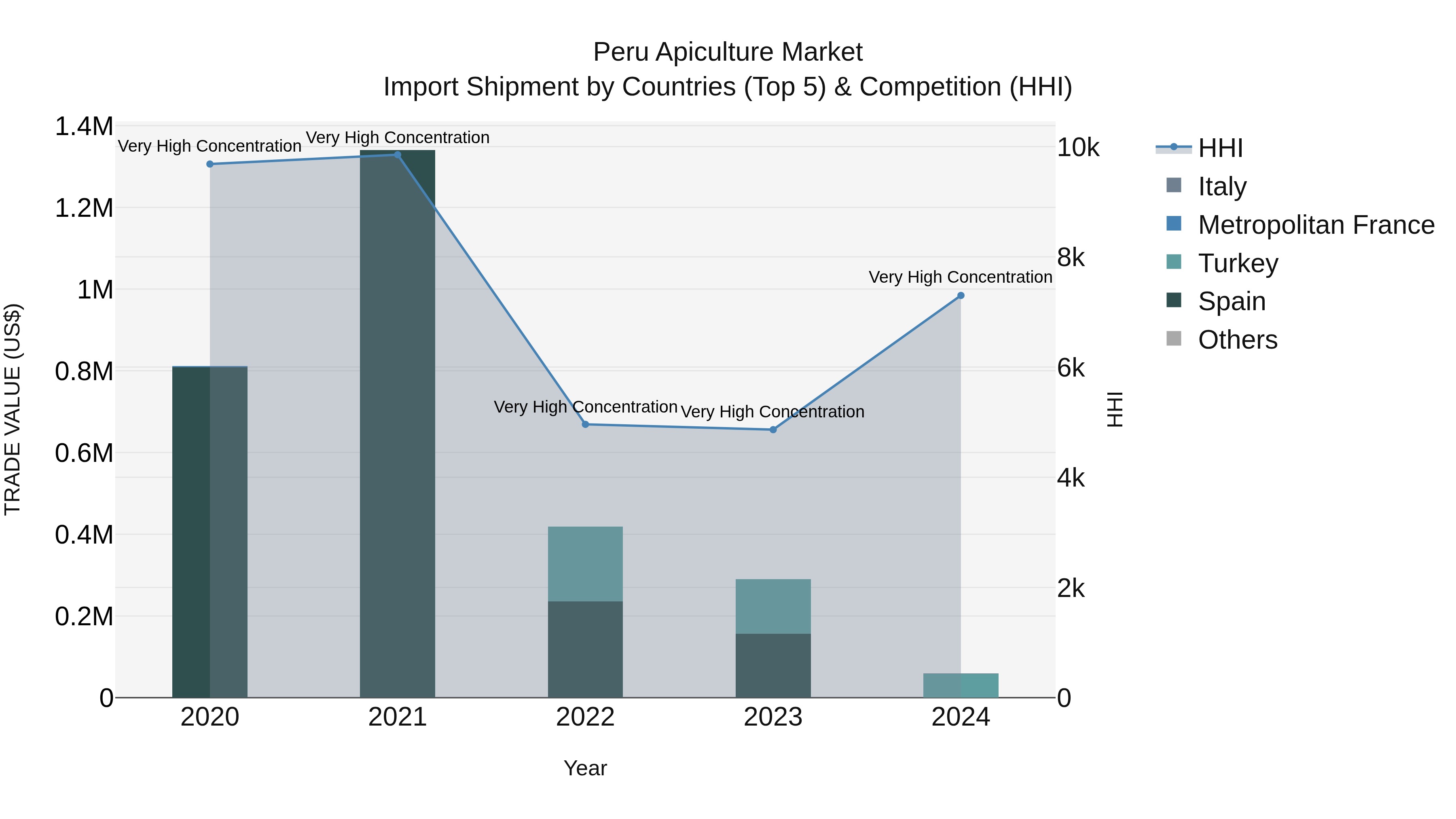
Peru`s apiculture import market in 2024 continued to show high concentration with top exporting countries including Turkey, Italy, Metropolitan France, and Spain. Despite a significant negative CAGR of -47.92% from 2020 to 2024, the market experienced a sharp decline with a growth rate of -79.38% from 2023 to 2024. These trends suggest a challenging period for the apiculture import industry in Peru, indicating potential shifts in supply chains and market dynamics that importers need to navigate carefully.
Peru Apiculture Market Synopsis
The Peru apiculture market is experiencing steady growth driven by increasing demand for honey both domestically and internationally. The country`s diverse climate and abundant flora provide an ideal environment for beekeeping, resulting in high-quality honey production. Small-scale beekeepers dominate the market, with a focus on organic and sustainable practices to meet the growing consumer preference for natural products. Peru`s honey exports have been on the rise, particularly to countries in North America and Europe, where there is a strong demand for organic honey. Government initiatives to support the apiculture industry, such as training programs and technical assistance, are further boosting market growth. Overall, the Peru apiculture market presents promising opportunities for beekeepers and honey producers looking to capitalize on the increasing global demand for high-quality, natural honey products.
Peru Apiculture Market Trends
The Peru Apiculture Market is experiencing growth driven by increasing awareness of the health benefits of honey and other bee products. Consumers are seeking natural and organic alternatives, leading to a higher demand for locally sourced honey and bee products in Peru. The market is also benefiting from the rise in eco-tourism, with beekeeping tours and experiences becoming popular among tourists. Additionally, there is a growing interest in sustainable and ethical beekeeping practices, which is shaping the market dynamics. The government is also supporting the apiculture sector through initiatives to promote beekeeping and improve production standards. Overall, the Peru Apiculture Market is witnessing a positive trend towards sustainable, natural, and locally sourced bee products.
Peru Apiculture Market Challenges
In the Peru Apiculture market, some of the key challenges faced include limited access to modern beekeeping technologies and practices, which can hinder productivity and quality standards. Additionally, fluctuations in weather patterns and environmental factors can impact honey production and the health of bee colonies, leading to inconsistent yields. Lack of standardized regulations and quality control measures also pose challenges in ensuring product quality and market competitiveness. Furthermore, competition from imported honey products and the presence of counterfeit or adulterated honey in the market can undermine consumer trust and affect the reputation of local beekeepers. Overall, addressing these challenges through improved technology adoption, sustainable practices, and regulatory support is essential for the growth and sustainability of the Peru Apiculture market.
Peru Apiculture Market Investment Opportunities
The Peru apiculture market presents promising investment opportunities due to the country`s diverse flora and favorable climate for beekeeping. With a growing global demand for natural honey and beeswax products, investing in Peruvian apiculture offers potential for high returns. The country`s rich biodiversity provides a wide range of nectar sources for bees, resulting in unique and high-quality honey varieties. Additionally, the increasing awareness of the health benefits of honey and other bee products further boosts market potential. Investors can consider opportunities in honey production, beekeeping equipment and technology, as well as value-added products such as beeswax candles and skincare items. Partnering with local beekeepers or establishing sustainable beekeeping practices can also contribute to the conservation of Peru`s natural ecosystems while reaping the benefits of this lucrative market.
Peru Apiculture Market Future Outlook
The future outlook for the Peru Apiculture Market appears promising, with steady growth expected in the coming years. Factors contributing to this positive outlook include increasing consumer awareness of the health benefits of honey and other bee products, growing demand for natural and organic products, and the rising trend of sustainable and ethical beekeeping practices. Additionally, the global demand for honey and related products is on the rise, presenting export opportunities for Peruvian apiculture businesses. However, challenges such as climate change effects on bee populations, competition from imported honey, and regulatory constraints may impact market growth. Overall, with the right strategies focusing on product quality, sustainability, and market expansion, the Peru Apiculture Market is poised for a bright future.
Key Highlights of the Report:
- Peru Apiculture Market Outlook
- Market Size of Peru Apiculture Market, 2024
- Forecast of Peru Apiculture Market, 2031
- Historical Data and Forecast of Peru Apiculture Revenues & Volume for the Period 2021 - 2031
- Peru Apiculture Market Trend Evolution
- Peru Apiculture Market Drivers and Challenges
- Peru Apiculture Price Trends
- Peru Apiculture Porter's Five Forces
- Peru Apiculture Industry Life Cycle
- Historical Data and Forecast of Peru Apiculture Market Revenues & Volume By Product Type for the Period 2021 - 2031
- Historical Data and Forecast of Peru Apiculture Market Revenues & Volume By Honey for the Period 2021 - 2031
- Historical Data and Forecast of Peru Apiculture Market Revenues & Volume By Beeswax for the Period 2021 - 2031
- Historical Data and Forecast of Peru Apiculture Market Revenues & Volume By Live-bees for the Period 2021 - 2031
- Historical Data and Forecast of Peru Apiculture Market Revenues & Volume By Others for the Period 2021 - 2031
- Historical Data and Forecast of Peru Apiculture Market Revenues & Volume By Application for the Period 2021 - 2031
- Historical Data and Forecast of Peru Apiculture Market Revenues & Volume By Medical for the Period 2021 - 2031
- Historical Data and Forecast of Peru Apiculture Market Revenues & Volume By Food Beverages for the Period 2021 - 2031
- Historical Data and Forecast of Peru Apiculture Market Revenues & Volume By Cosmetics for the Period 2021 - 2031
- Historical Data and Forecast of Peru Apiculture Market Revenues & Volume By Others for the Period 2021 - 2031
- Peru Apiculture Import Export Trade Statistics
- Market Opportunity Assessment By Product Type
- Market Opportunity Assessment By Application
- Peru Apiculture Top Companies Market Share
- Peru Apiculture Competitive Benchmarking By Technical and Operational Parameters
- Peru Apiculture Company Profiles
- Peru Apiculture Key Strategic Recommendations






































