Romania Fatty Alcohol Market Size (2020-2030)
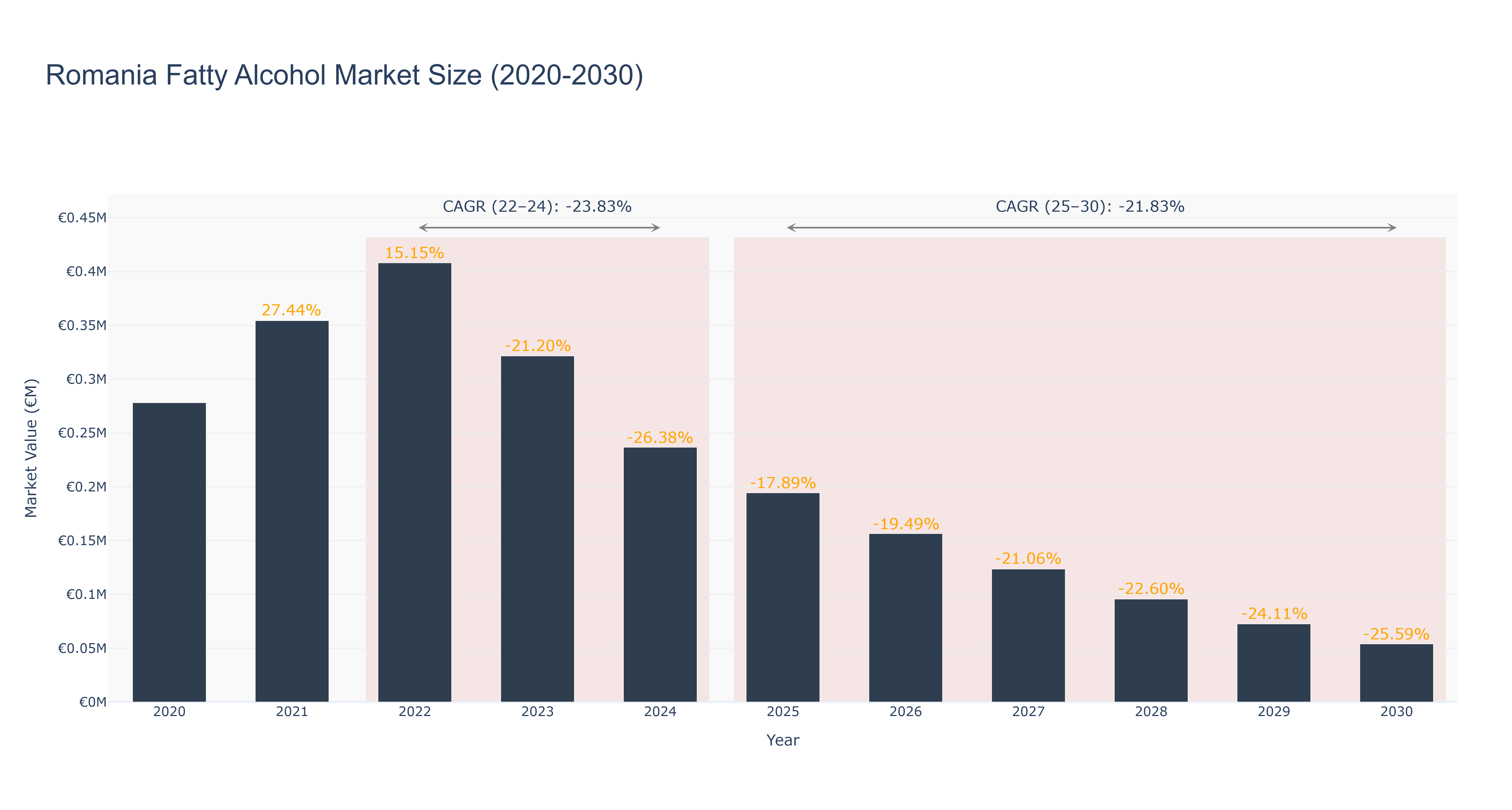
The Romania Fatty Alcohol Market witnessed a peak market size of €0.41 million in 2022, followed by a steady decline to €0.05 million in 2030. The actual market size decreased from €0.41 million in 2022 to €0.24 million in 2024, with a negative growth trend attributed to -23.83% CAGR. The forecasted market size from 2025 to 2030 is expected to continue shrinking, with a CAGR of -21.83%. The market downturn can be attributed to factors such as economic uncertainties, changing consumer preferences, and global market fluctuations impacting the demand for fatty alcohols. Looking ahead, Romania is set to invest in sustainable production processes and innovative technologies to revitalize the market and meet evolving consumer demands for eco-friendly products.
Romania Fatty Alcohol Market: Production & Trade Performance (2019-2025)
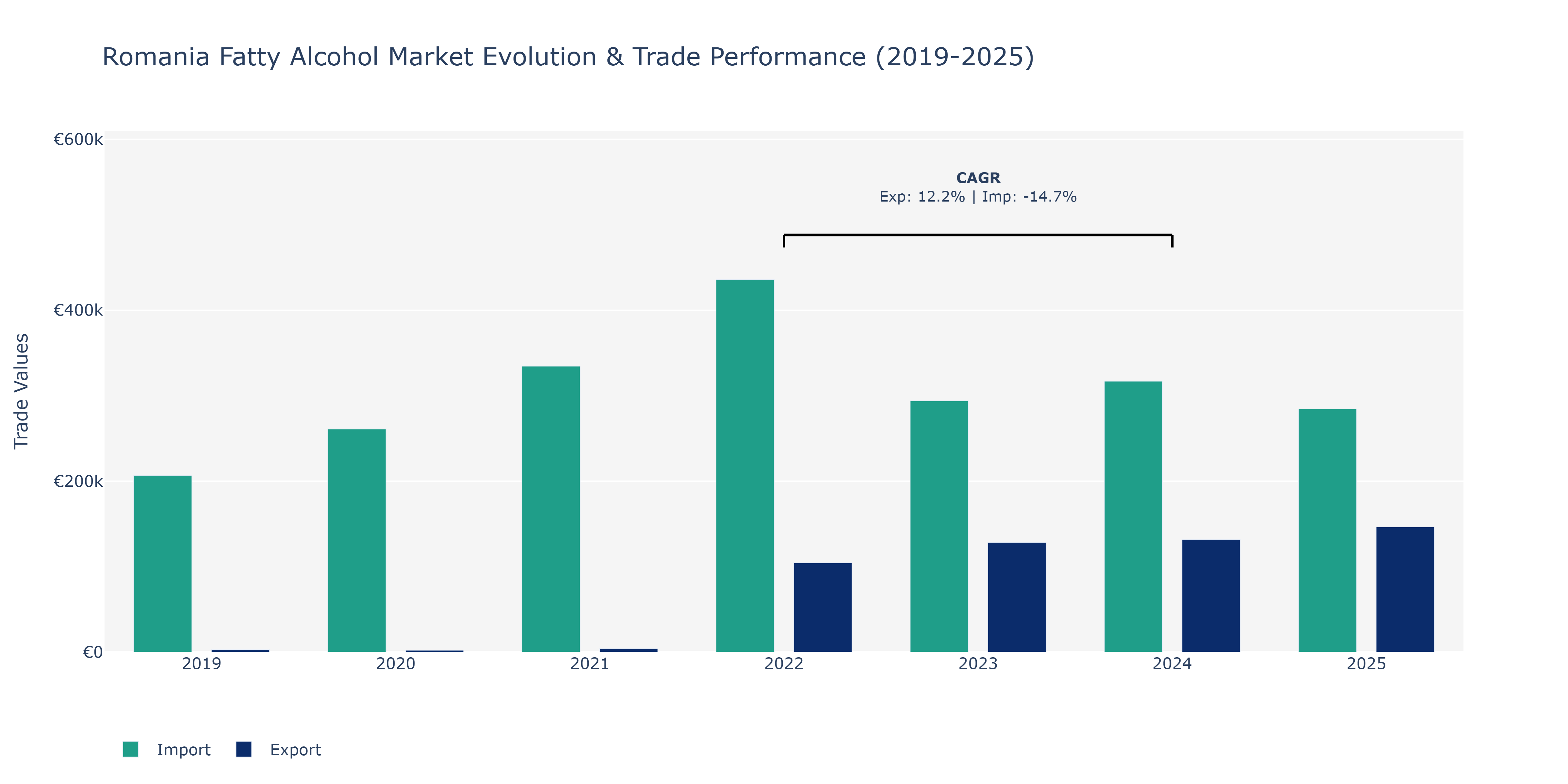
In the Romania Fatty Alcohol Market, exports showcased a fluctuating trajectory over the years. Starting at €2.84 thousand in 2019, exports declined to €2.09 thousand in 2020 before experiencing a significant upturn to €3.87 thousand in 2021. The peak point was observed in 2022 at €104.5 thousand, indicating a substantial surge. Conversely, imports followed a more stable pattern, amounting to €206.59 thousand in 2019, escalating to €334.62 thousand in 2021, and reaching €435.81 thousand in 2022, marking a consistent upward trend. However, in 2023 and 2024, imports decreased to €293.99 thousand and €317.05 thousand, respectively. The year 2025 saw a slight decline in exports to €146.46 thousand and imports to €284.39 thousand. These fluctuations can be attributed to various factors, including changes in consumer demand, global market dynamics, and regulatory policies impacting trade flows in the fatty alcohol sector. The surge in exports in 2022 could be linked to increased production capacity or enhanced product quality, aligning with growing international demand for fatty alcohols. On the other hand, the fluctuating import levels in 2023 and 2024 might have been influenced by shifts in pricing, availability of raw materials, or evolving import regulations affecting market dynamics. To maintain competitiveness and capitalize on market opportunities, stakeholders in the Romania Fatty Alcohol Market should closely monitor these trends and adapt their strategies accordingly to navigate the evolving landscape successfully.
Romania Fatty Alcohol Market Synopsis
The Romania Fatty Alcohol Market is experiencing steady growth driven by increasing demand from industries such as personal care, pharmaceuticals, and cleaning products. Fatty alcohols are widely used in the production of soaps, detergents, cosmetics, and pharmaceuticals due to their emollient and cleansing properties. The market is witnessing a shift towards natural and sustainable products, leading to a rise in demand for fatty alcohols derived from renewable sources such as coconut and palm oil. Key players in the Romania Fatty Alcohol Market include Ecogreen Oleochemicals, VVF LLC, and KLK OLEO, who are focusing on product innovation and expanding their production capacities to meet the growing market demand. Regulatory trends promoting environmentally friendly products are also influencing market growth in Romania.
Romania Fatty Alcohol Market Trends
The Romania Fatty Alcohol Market is experiencing growth driven by increasing demand in various industries such as personal care, pharmaceuticals, and agrochemicals. Consumers are showing a preference for natural and eco-friendly products, leading to a rise in the production and consumption of fatty alcohols derived from renewable sources like palm oil and coconut oil. Manufacturers are focusing on product innovation to cater to changing consumer preferences and are also investing in sustainable practices to reduce their environmental impact. The market is witnessing a trend towards the development of specialty fatty alcohols with specific properties to meet the diverse needs of different industries. Overall, the Romania Fatty Alcohol Market is poised for steady growth in the coming years as consumers continue to prioritize sustainability and natural ingredients in their products.
Romania Fatty Alcohol Market Challenges
The Romania Fatty Alcohol Market faces several challenges, including fluctuating raw material prices, increasing competition from imported products, and changing consumer preferences towards more sustainable and eco-friendly options. Additionally, regulatory issues and compliance requirements, as well as volatile economic conditions, can pose obstacles for market players. Adapting to these challenges requires companies in the Romania Fatty Alcohol Market to invest in research and development for innovative products, establish strong distribution networks, and maintain a focus on sustainability to meet evolving consumer demands and regulatory standards. Overall, navigating these complexities while ensuring product quality and market competitiveness remains a key challenge for businesses operating in the Romania Fatty Alcohol Market.
Romania Fatty Alcohol Market Investment Opportunities
The Romania fatty alcohol market presents promising investment opportunities due to the increasing demand for fatty alcohols in various industries such as personal care, pharmaceuticals, and detergents. With a growing population and rising disposable income levels, there is a higher consumption of personal care products and cleaning agents, driving the demand for fatty alcohols as key ingredients. Investing in the production or distribution of fatty alcohols in Romania could be lucrative, especially considering the country`s strategic location within Europe and access to key markets. Additionally, as consumers become more environmentally conscious, there is a shift towards sustainable and natural ingredients, presenting opportunities for investments in eco-friendly fatty alcohol production processes. Overall, the Romania fatty alcohol market offers potential for growth and profitability for savvy investors.
Jordan Agar Market Government Policies
The Romania Fatty Alcohol Market is influenced by various government policies aimed at regulating the production, import, and export of fatty alcohols. The Romanian government has implemented policies such as import tariffs and quotas to protect local producers and promote self-sufficiency in the industry. Additionally, environmental regulations and quality standards play a crucial role in ensuring the sustainability and safety of fatty alcohol production processes. The government also provides support through incentives and subsidies to encourage innovation and investment in the sector. Overall, the regulatory framework in Romania emphasizes sustainability, competitiveness, and compliance with international standards to maintain a strong position in the global fatty alcohol market.
Romania Fatty Alcohol Market Future Outlook
The future outlook for the Romania Fatty Alcohol Market appears positive, driven by increasing demand from various industries such as personal care, pharmaceuticals, and industrial applications. The market is expected to witness steady growth due to rising disposable incomes, changing consumer lifestyles, and growing awareness about sustainable products. Additionally, the expanding industrial sector and investments in infrastructure projects are likely to boost the demand for fatty alcohols in the country. Manufacturers are focusing on product innovation, sustainable production practices, and strategic partnerships to capitalize on emerging opportunities in the market. Overall, the Romania Fatty Alcohol Market is poised for growth, supported by favorable market dynamics and evolving consumer preferences.
Key Highlights of the Report:
- Romania Fatty Alcohol Market Outlook
- Market Size of Romania Fatty Alcohol Market, 2021
- Forecast of Romania Fatty Alcohol Market, 2031
- Historical Data and Forecast of Romania Fatty Alcohol Revenues & Volume for the Period 2018 - 2031
- Romania Fatty Alcohol Market Trend Evolution
- Romania Fatty Alcohol Market Drivers and Challenges
- Romania Fatty Alcohol Price Trends
- Romania Fatty Alcohol Porter's Five Forces
- Romania Fatty Alcohol Industry Life Cycle
- Historical Data and Forecast of Romania Fatty Alcohol Market Revenues & Volume By Product for the Period 2018 - 2031
- Historical Data and Forecast of Romania Fatty Alcohol Market Revenues & Volume By C6-C10 for the Period 2018 - 2031
- Historical Data and Forecast of Romania Fatty Alcohol Market Revenues & Volume By C11-C14 for the Period 2018 - 2031
- Historical Data and Forecast of Romania Fatty Alcohol Market Revenues & Volume By C15-C22 for the Period 2018 - 2031
- Historical Data and Forecast of Romania Fatty Alcohol Market Revenues & Volume By Application for the Period 2018 - 2031
- Historical Data and Forecast of Romania Fatty Alcohol Market Revenues & Volume By Soaps & Detergents for the Period 2018 - 2031
- Historical Data and Forecast of Romania Fatty Alcohol Market Revenues & Volume By Personal Care for the Period 2018 - 2031
- Historical Data and Forecast of Romania Fatty Alcohol Market Revenues & Volume By Lubricants for the Period 2018 - 2031
- Historical Data and Forecast of Romania Fatty Alcohol Market Revenues & Volume By Amines for the Period 2018 - 2031
- Historical Data and Forecast of Romania Fatty Alcohol Market Revenues & Volume By Others for the Period 2018 - 2031
- Romania Fatty Alcohol Import Export Trade Statistics
- Market Opportunity Assessment By Product
- Market Opportunity Assessment By Application
- Romania Fatty Alcohol Top Companies Market Share
- Romania Fatty Alcohol Competitive Benchmarking By Technical and Operational Parameters
- Romania Fatty Alcohol Company Profiles
- Romania Fatty Alcohol Key Strategic Recommendations






































