Romania Healthcare & Medical Tourism Market Growth Rate
According to 6Wresearch internal database and industry insights, the Romania Healthcare & Medical Tourism Market is projected to grow at a compound annual growth rate (CAGR) of 9.1% during the forecast period (2026-2032).
Romania Healthcare & Medical Tourism Market Year-wise Growth Rate and Key Drivers
This graph highlights how the Romania Healthcare & Medical Tourism Market has steadily grown over the past five years, supported by major growth factors.
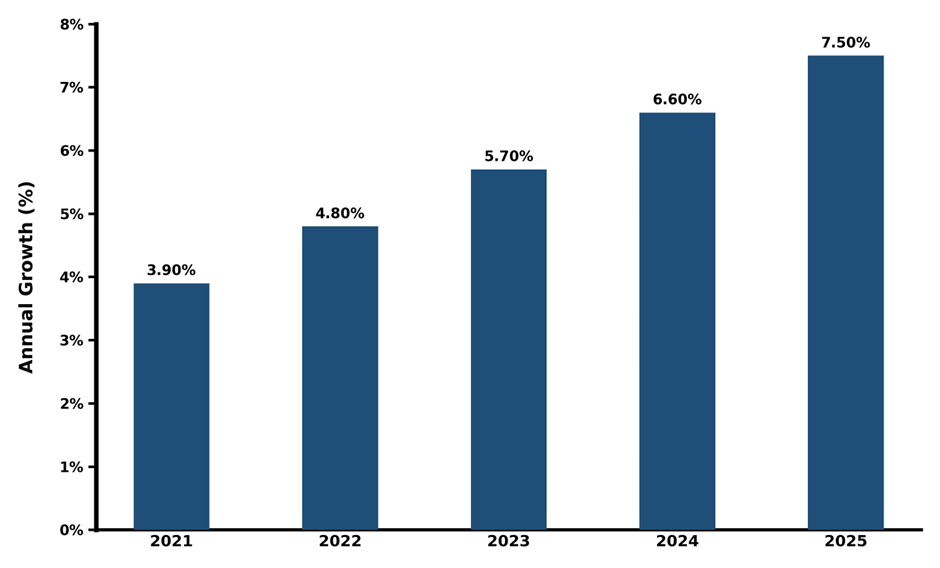
The table below presents the year‑wise growth rates along with the key drivers influencing the market
| Year | Est. Annual Growth (%) | Growth Drivers |
| 2021 | 3.9% | Increasing demand for affordable medical procedures among international patients |
| 2022 | 4.8% | Expansion of private hospitals and advanced specialty clinics |
| 2023 | 5.7% | Rising investments in modern diagnostic and surgical technologies |
| 2024 | 6.6% | Government initiatives promoting healthcare infrastructure and tourism |
| 2025 | 7.5% | Growing popularity of cosmetic and orthopedic treatments in Romania |
Topics Covered in the Romania Healthcare & Medical Tourism Market Report
The Romania Healthcare & Medical Tourism Market report thoroughly covers the market by specialty type. The market report provides an unbiased and detailed analysis of ongoing market trends, opportunities/high growth areas, and market drivers, which help stakeholders devise and align their market strategies according to the current and future market dynamics.
Romania Healthcare & Medical Tourism Market Highlights
| Report Name |
Romania Healthcare & Medical Tourism Market |
| Forecast period | 2026-2032 |
| CAGR | 9.1% |
| Market Size |
Cosmetics |
Romania Healthcare & Medical Tourism Market Synopsis
Romania Healthcare & Medical Tourism Market is anticipated to witness substantial growth due to the increased demand for affordable healthcare, improvement in the healthcare system, and more people coming into the country from foreign countries as patients. Romania is fast emerging as an attractive destination for medical tourists in search of high-quality healthcare at low costs especially in cosmetic surgeries, orthopedics, and dentistry. Moreover, with the establishment of more private hospitals featuring state-of-the-art technology and skilled medical personnel, Romania is gaining more ground in the European market of medical tourism.
Evaluation of Growth Drivers in the Romania Healthcare & Medical Tourism Market (2026-2032)
Below mentioned are some prominent drivers and their influence on the market dynamics:
| Drivers | Primary Segments Affected | Why it Matters (Evidence) |
| Affordable Medical Treatment Costs | Cosmetics; Orthopedics | International patients prefer Romania for cost-effective healthcare procedures. |
| Expansion of Private Healthcare Facilities | General Surgery; Cardiology | Modern hospitals improve treatment quality and patient experience. |
| Increasing Adoption of Advanced Medical Technologies | Fertility & Gynecology; Others | Technological advancements enhance treatment precision and recovery outcomes. |
| Growth in International Patient Inflow | Cosmetics; General Surgery | Medical tourism demand increases hospital revenues and specialty service expansion. |
| Government Support for Healthcare Modernization | All Segments; Cardiology | Infrastructure upgrades improve Romania’s competitiveness in medical tourism. |
Romania Healthcare & Medical Tourism Market is expected to grow at the CAGR of 9.1% during the forecast period of 2026-2032. Growth is mainly fueled by rising global demand for low-cost and quality medical care in specialties like plastic surgery, orthopedic surgery, and assisted reproduction. The medical tourism industry in Romania has been boosted by increased investments in cutting-edge medical equipment, sophisticated private hospitals, and internationally certified healthcare centers. Moreover, the presence of competent medical practitioners and shorter waiting times than in some other Western European countries has been attracting more foreign patients. Additionally, government-led healthcare modernization campaigns and tourism marketing strategies are adding to market growth. Growing consciousness about wellness tourism and customized healthcare solutions will further enhance the growth of the medical tourism industry in Romania.
Evaluation of Restraints in the Romania Healthcare & Medical Tourism Market
Below mentioned are some major restraints and their influence on the market dynamics:
| Restraints | Primary Segments Affected | What This Means (Evidence) |
| Shortage of Specialized Healthcare Professionals | Cardiology; Fertility & Gynecology | Limited specialist availability affects treatment capacity and patient handling. |
| Uneven Healthcare Infrastructure Development | General Surgery; Others | Rural healthcare facilities lag behind urban medical centers in quality standards. |
| Regulatory and Accreditation Challenges | Cosmetics; Orthopedics | International accreditation requirements increase operational complexity for hospitals. |
| Language and Communication Barriers | All Segments; Others | Communication gaps may affect patient comfort and treatment coordination. |
| Rising Healthcare Operational Costs | Cardiology; General Surgery | Increasing operational expenses impact treatment pricing competitiveness. |
Romania Healthcare & Medical Tourism Industry Challenges
Despite the growing demand for medical tourism services, the Romania Healthcare & Medical Tourism Industry faces several challenges that could affect long-term market expansion. Among the most problems are the inadequate numbers of highly-specialized doctors in particular medical domains. In addition to that, the disparities in the development of the healthcare infrastructure in rural and urban regions create differences in service provision quality around the country. Finally, regulatory compliance and accreditation also cost substantial sums for hospitals. Rising expenses for the operation of facilities and employing personnel put pressure on treatment costs. Language-related issues and patient coordination problems continue to be a key concern as well.
Romania Healthcare & Medical Tourism Market Trends
Key trends in the Romania Healthcare & Medical Tourism Market Growth are:
- Increased International Demand for Cosmetology: Romania is experiencing an increase in international demand for cosmetic surgery and other aesthetic services due to the reasonable costs.
- Widespread Use of Digital Health Services: The adoption of telemedicine services and digitized health records has become prevalent in hospitals in recent years.
- International Certification of Hospitals: Health care facilities have been obtaining international certifications for better health care delivery and more international patients.
Investment Opportunities in the Romania Healthcare & Medical Tourism Market
Some best investment opportunities in the Romania Healthcare & Medical Tourism Market include:
- Expansion of Private Hospitals – Growing demands for specialist care services lead to new opportunities for advanced private medical hospitals.
- Cosmetic and Aesthetic Treatment Clinics – The growing trend of medical tourism in the field of cosmetic treatments can help in developing cosmetic treatment clinics.
- Healthcare Digitalization Platforms – Telemedicine and patient management platforms present significant opportunities for growth in the healthcare industry.
Top 5 Leading Players in the Romania Healthcare & Medical Tourism Market
Some leading players operating in the Romania Healthcare & Medical Tourism Market include:
1. MedLife
| Company Name | MedLife |
|---|---|
| Established Year | 1996 |
| Headquarters | Bucharest, Romania |
| Official Website | - |
MedLife operates one of Romania’s largest private healthcare networks offering advanced medical treatments, diagnostic services, and surgical procedures. The company focuses on modern healthcare technologies, patient-centered care, and expanding specialty medical services to support both domestic and international medical tourism demand.
2. Regina Maria
| Company Name | Regina Maria |
|---|---|
| Established Year | 1995 |
| Headquarters | Bucharest, Romania |
| Official Website | - |
Regina Maria provides premium healthcare services including cardiology, orthopedics, fertility treatments, and cosmetic procedures. The company emphasizes international healthcare standards, digital healthcare integration, and personalized patient experiences while strengthening Romania’s position as a competitive medical tourism destination.
3. Sanador
| Company Name | Sanador |
|---|---|
| Established Year | 2001 |
| Headquarters | Bucharest, Romania |
| Official Website | Click Here |
Sanador operates advanced hospitals and specialty clinics equipped with modern diagnostic and surgical technologies. The company focuses on high-quality medical services, minimally invasive procedures, and international patient care solutions to support the growing healthcare and medical tourism market in Romania.
4. Monza Hospital
| Company Name | Monza Hospital |
|---|---|
| Established Year | 2012 |
| Headquarters | Bucharest, Romania |
| Official Website | Click Here |
Monza Hospital specializes in cardiology, cardiovascular surgery, orthopedics, and advanced medical treatments. The company emphasizes modern healthcare infrastructure, internationally trained medical professionals, and specialized treatment programs designed to attract both Romanian and international patients seeking quality healthcare services.
5. Ponderas Academic Hospital
| Company Name | Ponderas Academic Hospital |
|---|---|
| Established Year | 2011 |
| Headquarters | Bucharest, Romania |
| Official Website | - |
Ponderas Academic Hospital provides advanced surgical procedures, obesity treatment, and minimally invasive medical services. The company focuses on robotic surgery technologies, international healthcare quality standards, and patient-focused treatment solutions to strengthen Romania’s healthcare and medical tourism capabilities.
Government Regulations Introduced in the Romania Healthcare & Medical Tourism Market
According to Romania’s Government Data, a number of measures have been undertaken to improve the infrastructure of the health sector and make Romania more attractive to medical tourists. For example, Romania’s National Health Strategy encourages investments in the modernization of hospitals, digital health care systems, and sophisticated diagnostic tools within the public and private sectors of the health care industry. The Romanian government has also encouraged cooperation between local health care institutions and their counterparts in other European countries to enhance the quality of services provided and ensure patient safety. In addition, Romania has adopted measures to encourage wellness tourism, rehabilitation, and international accreditation of health care institutions.
Future Insights of the Romania Healthcare & Medical Tourism Market
The outlook for the Romania Healthcare & Medical Tourism Market Share is positive due to increasing healthcare investments, rising demand for affordable specialized treatments, and continuous modernization of medical infrastructure across the country. The country can be predicted to enhance its competitiveness as a destination for medical tourism in Europe due to advancements in digital health care services, accreditation of hospitals, and innovative surgical technology. Additionally, increasing global awareness about the affordable quality health care services in Romania is projected to attract foreign patients looking for procedures related to aesthetics, orthopedics, reproductive medicine, and cardiology. Healthcare innovation and tourism growth through government support are also forecasted to offer future growth prospects for the industry.
Market Segmentation Analysis
The report offers a comprehensive study of the subsequent market segments and their leading categories.
Cosmetics to Dominate the Market – By Specialty Type
According to Mohit, Senior Research Analyst, 6Wresearch, the Cosmetics segment dominates the Romania Healthcare & Medical Tourism Market due to increasing international demand for affordable cosmetic surgeries and aesthetic treatments. There has been a surge in demand for beauty surgeries, due to the expertise and experience possessed by Romanian surgeons. Moreover, the cost factor is another significant driver of demand growth, as procedures performed in Romania are relatively low-priced than those in Western Europe. Increasing preference for minimally invasive beauty surgeries and wellness surgeries is propelling market growth.
Orthopedics Segment to Witness Significant Growth – By Specialty Type
There has been significant growth in the Orthopedics Segment in the Romania Healthcare & Medical Tourism Market due to the rise in foreign tourists who want joint replacements and sports injuries treated at affordable costs. There are advanced orthopedic operations performed in Romania at favorable costs while the treatment standards remain high. Moreover, the use of minimally invasive surgery and robot-assisted orthopedic surgeries is enhancing the effectiveness of treatments.
Key Attractiveness of the Report
- 10 Years of Market Numbers.
- Historical Data Starting from 2022 to 2025.
- Base Year: 2025.
- Forecast Data until 2032.
- Key Performance Indicators Impacting the Market.
- Major Upcoming Developments and Projects.
Key Highlights of the Report:
- Romania Healthcare & Medical Tourism Market Outlook
- Market Size of Romania Healthcare & Medical Tourism Market, 2025
- Forecast of Romania Healthcare & Medical Tourism Market, 2032
- Historical Data and Forecast of Romania Healthcare & Medical Tourism Revenues & Volume for the Period 2022- 2032
- Romania Healthcare & Medical Tourism Market Trend Evolution
- Romania Healthcare & Medical Tourism Market Drivers and Challenges
- Romania Healthcare & Medical Tourism Price Trends
- Romania Healthcare & Medical Tourism Porter's Five Forces
- Romania Healthcare & Medical Tourism Industry Life Cycle
- Historical Data and Forecast of Romania Healthcare & Medical Tourism Market Revenues & Volume By Specialty Type for the Period 2022- 2032
- Historical Data and Forecast of Romania Healthcare & Medical Tourism Market Revenues & Volume By General Surgery for the Period 2022- 2032
- Historical Data and Forecast of Romania Healthcare & Medical Tourism Market Revenues & Volume By Orthopedics for the Period 2022- 2032
- Historical Data and Forecast of Romania Healthcare & Medical Tourism Market Revenues & Volume By Cardiology for the Period 2022- 2032
- Historical Data and Forecast of Romania Healthcare & Medical Tourism Market Revenues & Volume By Fertility & Gynecology for the Period 2022- 2032
- Historical Data and Forecast of Romania Healthcare & Medical Tourism Market Revenues & Volume By Cosmetics for the Period 2022- 2032
- Historical Data and Forecast of Romania Healthcare & Medical Tourism Market Revenues & Volume By Others for the Period 2022- 2032
- Romania Healthcare & Medical Tourism Import Export Trade Statistics
- Market Opportunity Assessment By Specialty Type
- Romania Healthcare & Medical Tourism Top Companies Market Share
- Romania Healthcare & Medical Tourism Competitive Benchmarking By Technical and Operational Parameters
- Romania Healthcare & Medical Tourism Company Profiles
- Romania Healthcare & Medical Tourism Key Strategic Recommendations
Market Covered
The report offers a comprehensive study of the subsequent market segments:
By Specialty Type
- General Surgery
- Orthopedics
- Cardiology
- Fertility & Gynecology
- Cosmetics
- Others






































