Romania Inorganic Chemicals Market Size (2020-2030)
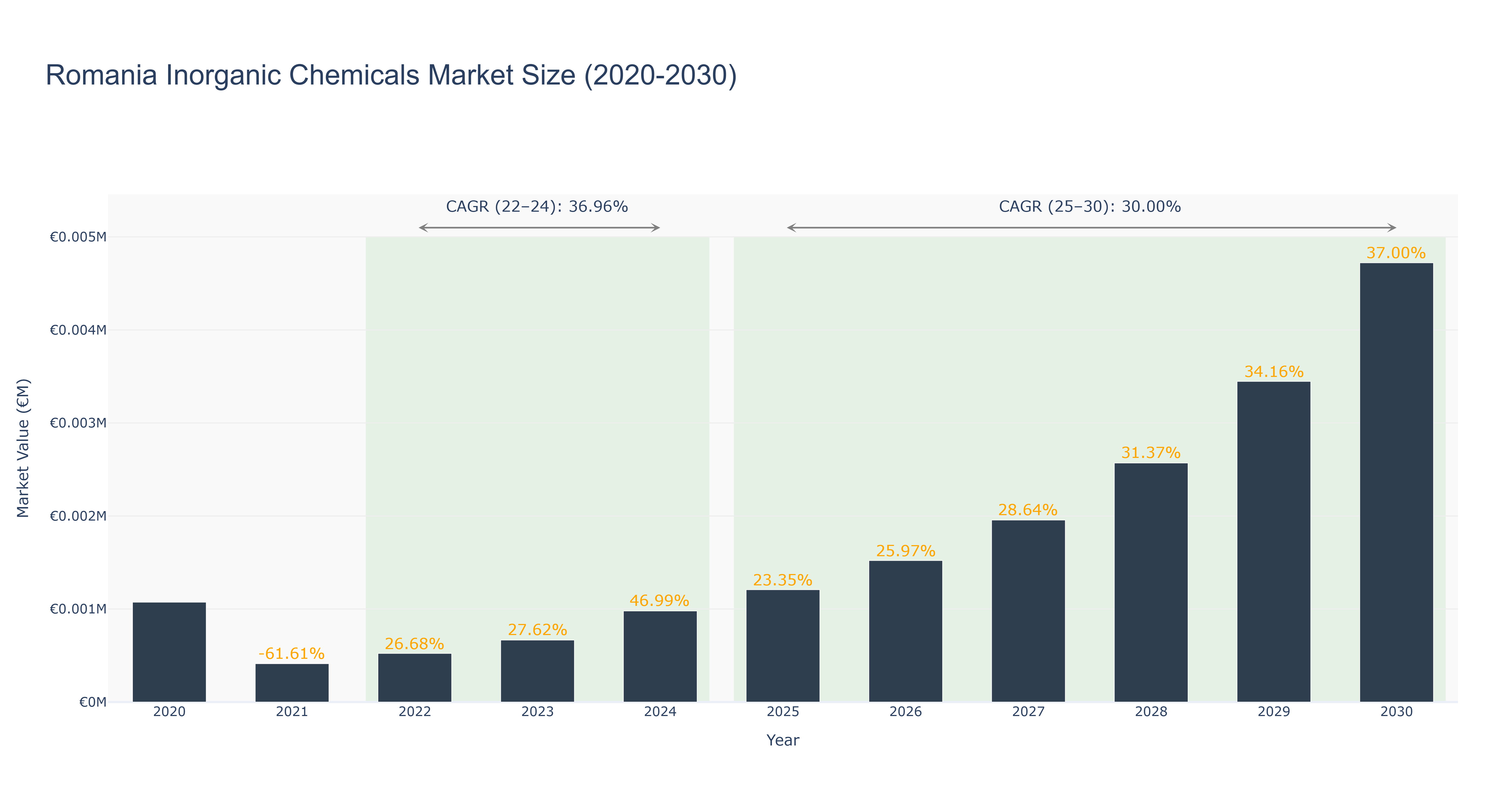
The Romania Inorganic Chemicals Market has experienced a dynamic trajectory, marked by significant fluctuations in market size. After a challenging decline in 2021, where the market size plummeted to €411.60 million, the sector rebounded robustly, achieving a peak market size of €978.10 million in 2024, with an impressive actual CAGR of 36.96% from 2022 to 2024. Looking ahead, the forecasted period from 2025 to 2030 anticipates continued growth, with projected market sizes reaching €4.72 billion by 2030 and a CAGR of 30.00%. Key drivers for this growth include increasing industrial demand, investments in sustainable production technologies, and expanding applications across various sectors. As Romania enhances its chemical manufacturing capabilities, upcoming investments in infrastructure and innovation are expected to further strengthen the market, positioning it as a vital player in the European inorganic chemicals landscape.
Romania Inorganic Chemicals Market: Production & Trade Performance (2019-2025)
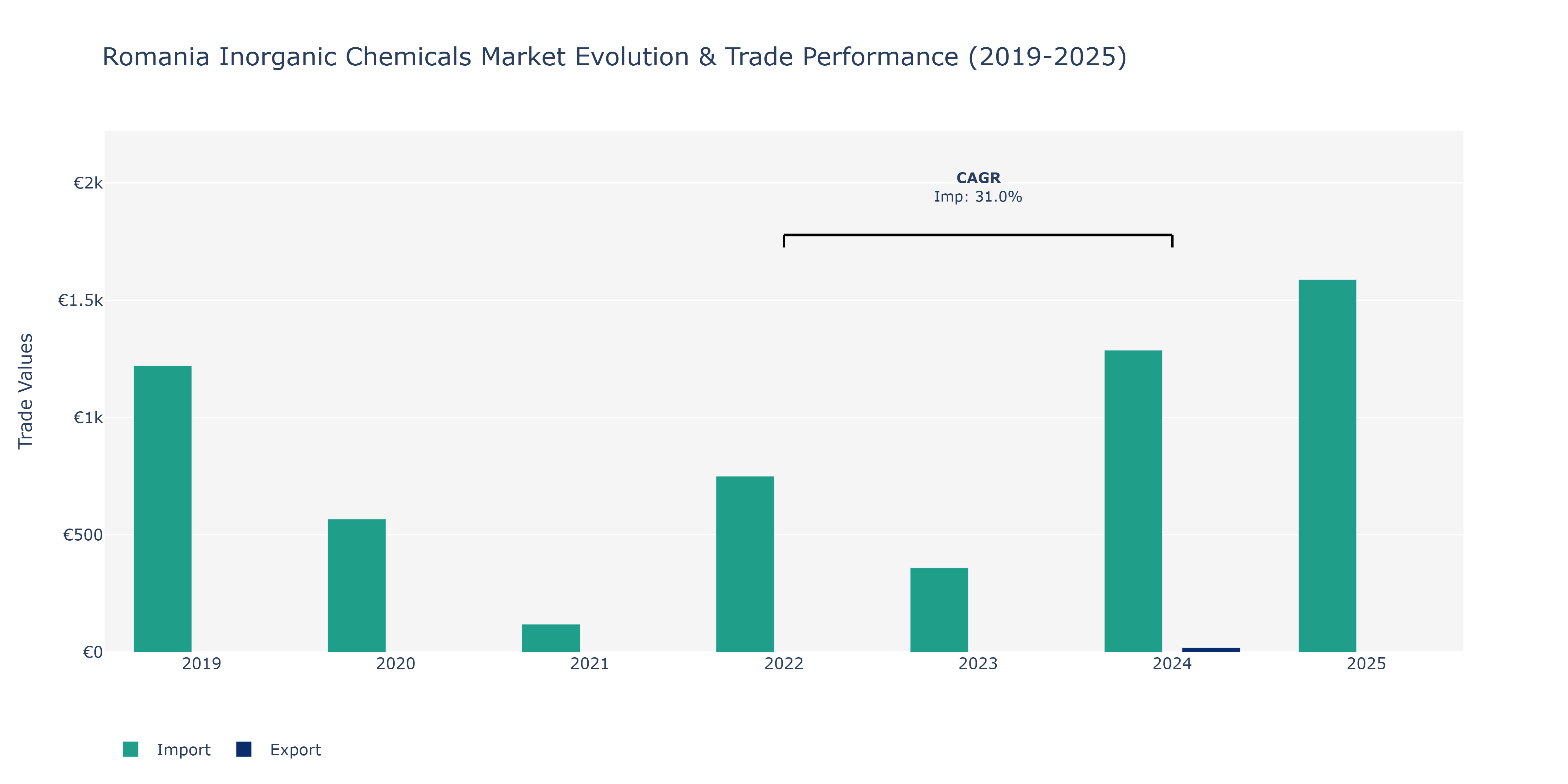
The Romania Inorganic Chemicals Market witnessed fluctuations in exports and imports between 2019 and 2025. In 2019, imports stood at €1.22 thousand, declining sharply in 2020 to €567 million due to economic uncertainties. The trend reversed in 2021 with imports decreasing further to €119 million, possibly impacted by supply chain disruptions. A notable peak in imports was observed in 2022, reaching €750 million, attributed to increased demand for raw materials. However, imports surged in 2025 to €1.59 thousand, indicating a strategic shift in procurement strategies or a push for enhanced manufacturing capabilities. In 2024, exports commenced at €19 million, showcasing potential market diversification efforts. Factors such as evolving regulatory landscapes, technological advancements, and global demand shifts may have influenced these trends in the Romania Inorganic Chemicals Market.
Key Highlights of the Report:
- Romania Inorganic Chemicals Market Outlook
- Market Size of Romania Inorganic Chemicals Market, 2025
- Forecast of Romania Inorganic Chemicals Market, 2032
- Historical Data and Forecast of Romania Inorganic Chemicals Revenues & Volume for the Period 2022-2032F
- Romania Inorganic Chemicals Market Trend Evolution
- Romania Inorganic Chemicals Market Drivers and Challenges
- Romania Inorganic Chemicals Price Trends
- Romania Inorganic Chemicals Porter's Five Forces
- Romania Inorganic Chemicals Industry Life Cycle
- Historical Data and Forecast of Romania Inorganic Chemicals Market Revenues & Volume By Type for the Period 2022-2032F
- Historical Data and Forecast of Romania Inorganic Chemicals Market Revenues & Volume By Ammonia for the Period 2022-2032F
- Historical Data and Forecast of Romania Inorganic Chemicals Market Revenues & Volume By Chlor alkali for the Period 2022-2032F
- Historical Data and Forecast of Romania Inorganic Chemicals Market Revenues & Volume By Ammonium nitrate for the Period 2022-2032F
- Historical Data and Forecast of Romania Inorganic Chemicals Market Revenues & Volume By Ammonium sulfate for the Period 2022-2032F
- Historical Data and Forecast of Romania Inorganic Chemicals Market Revenues & Volume By Inorganic acid for the Period 2022-2032F
- Historical Data and Forecast of Romania Inorganic Chemicals Market Revenues & Volume By Sodium hydroxide for the Period 2022-2032F
- Historical Data and Forecast of Romania Inorganic Chemicals Market Revenues & Volume By Hydrogen peroxide for the Period 2022-2032F
- Historical Data and Forecast of Romania Ammonia Inorganic Chemicals Market Revenues & Volume By Oxygen for the Period 2022-2032F
- Romania Inorganic Chemicals Import Export Trade Statistics
- Market Opportunity Assessment By Type
- Romania Inorganic Chemicals Top Companies Market Share
- Romania Inorganic Chemicals Competitive Benchmarking By Technical and Operational Parameters
- Romania Inorganic Chemicals Company Profiles
- Romania Inorganic Chemicals Key Strategic Recommendations






































