Russia Peas Market Size, Share & Growth Rate
The Russia Peas Market was estimated at USD 204 Million in 2025 and is projected to reach USD 224 Million by 2032, growing at a CAGR of 1.3% from 2026 to 2032. This growth trajectory is driven by a heightened consumer inclination towards plant-based protein sources, amplified by the rising awareness of the nutritional benefits peas offer. Additionally, the market is bolstered by governmental support for sustainable agricultural practices, which align with the increasing trend of vegetarian and vegan diets in the region.
Russia Peas Market Year-wise Growth Rate and Key Drivers
This graph highlights how the Russia Peas Market has steadily grown over the years, supported by major growth factors.
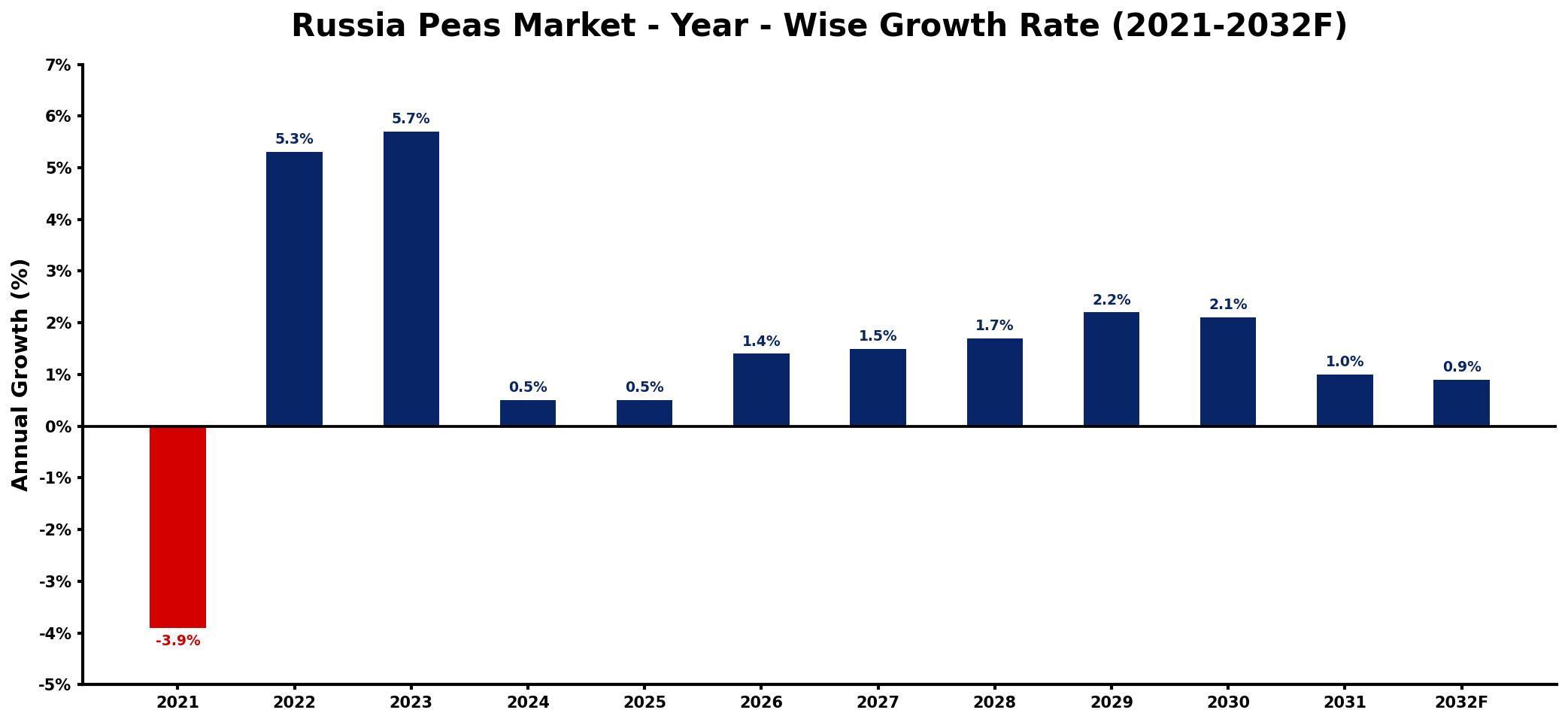
The table below presents the year‑wise growth rates along with the key drivers influencing the market
| Year | Growth Rate | Major Drivers |
| 2021 | -3.9% | Supply chain disruptions impact availability |
| 2022 | 5.3% | Increased consumer interest in nutrition |
| 2023 | 5.7% | improved processing technologies adoption |
| 2024 | 0.5% | Expansion of organic farming initiatives |
| 2025 | 0.5% | Rise in health food trends |
| 2026 | 1.4% | Investment in sustainable agriculture technologies |
| 2027 | 1.5% | Increased exports to international markets |
| 2028 | 1.7% | Diversification of agricultural production methods |
| 2029 | 2.2% | Adoption of innovative farming practices |
| 2030 | 2.1% | Strengthening of local food systems |
| 2031 | 1.0% | Enhanced research in crop development |
| 2032 | 0.9% | Growing popularity of vegetarian diets |
Note: Market size estimations and growth projections presented in this report are based on 6Wresearch's proprietary forecasting methodology, utilizing the latest available industry data, government publications, and primary research inputs.
Russia Peas Market Synopsis
In recent years, the Russia Peas Market has gained notable traction, primarily due to the growing emphasis on health and nutrition among consumers. Peas, recognized for their high protein and fiber content, are becoming a staple in both household kitchens and food manufacturing.
The popularity of peas extends beyond their health benefits; their versatility in culinary applications—from soups to snacks—has made them increasingly prevalent in various food products. This shift in consumer behavior signals a shift in the food landscape, where demand for sustainable and nutritious options is paramount.
Russia Peas Market Key Takeaways
- The market is driven by increasing consumer demand for plant-based proteins.
- Health benefits of peas, including high fiber and vitamin content, are significant growth factors.
- Government policies support sustainable agriculture and domestic production.
- Peas are gaining traction in various food applications, enhancing their market presence.
- Challenges such as weather fluctuations and supply chain issues require strategic management.
Evaluation of Restraints in Russia Peas Market
Despite the growth potential, the Russia Peas Market faces several restraints. Fluctuating weather patterns pose a threat to crop yields, affecting both quality and quantity. Additionally, logistical challenges surrounding transportation and storage can hinder the freshness of peas in the supply chain. Market volatility and competitive pressures from alternative protein sources further complicate the landscape. Producers must navigate these complexities with effective supply chain management and strategic planning to sustain market growth.
Russia Peas Market Trends
Several trends are shaping the Russia Peas Market landscape. The rise in health consciousness is prompting consumers to seek out peas as a nutritious food option, leading to increased incorporation in functional foods and plant-based meat alternatives. Furthermore, the sustainability narrative is gaining traction; peas are increasingly favored for their low environmental impact compared to conventional protein sources. Innovations in food technology, enhancing the processing and preservation of peas, are also noteworthy trends that promise to bolster market dynamics.
Russia Peas Market Opportunities
The investment landscape within the Russia Peas Market is ripe with opportunities. The growing consumer awareness of the health benefits associated with peas, coupled with government initiatives promoting agricultural self-sufficiency, creates a fertile ground for growth. Investors can explore avenues in innovative cultivation practices, processing technologies, and distribution methods, aiming to cater to the expanding market of health-focused consumers. Capitalizing on the domestic production of peas presents a strategic advantage for stakeholders looking to meet rising demand.
Government Initiatives in the Russia Peas Market
The Russian government has implemented several initiatives to bolster the peas market, primarily focusing on enhancing domestic agricultural production. Policies include offering subsidies and incentives for pea cultivation, which aim to increase output and reduce reliance on imports. Furthermore, regulatory frameworks are in place to ensure food safety and quality standards, aiding in the promotion of local producers. These governmental efforts are pivotal in fostering a stable and supportive environment for the peas market.
Future Insights of the Russia Peas Market
Looking ahead to 2026-2032, the Russia Peas Market is poised for sustained growth. The increasing demand for healthier dietary options, paired with government backing for local agriculture, will likely continue to drive market expansion. However, stakeholders must remain vigilant about external factors such as climate variability and potential market disruptions. Overall, the forward momentum of the peas market hinges on addressing these challenges while seizing opportunities for innovation and efficiency.
Russia Peas Market Latest Developments (2025 - 2026)
Recent developments within the Russia Peas Market indicate a heightened focus on sustainability and technological advancements in agricultural practices. Industry stakeholders are increasingly collaborating on innovative solutions to enhance crop resilience against climate change. Additionally, there is a surge in product diversification, with new entrants exploring unique applications of peas in processed foods and snacks. These developments reflect a dynamic market responding to evolving consumer preferences and environmental challenges.
Russia Peas Market - Key Attractiveness of the Report
- 10 Years of Market Numbers
- Historical Data Starting from 2022 to 2025
- Base Year: 2025
- Forecast Data until 2032
- Key Performance Indicators Impacting the Market
- Major Upcoming Developments and Projects
Key Highlights of the Report:
- Russia Peas Market Outlook
- Market Size of Russia Peas Market, 2025
- Forecast of Russia Peas Market, 2032
- Historical Data and Forecast of Russia Peas Revenues & Volume for the Period 2022-2032F
- Russia Peas Market Trend Evolution
- Russia Peas Market Drivers and Challenges
- Russia Peas Price Trends
- Russia Peas Porter's Five Forces
- Russia Peas Industry Life Cycle
- Historical Data and Forecast of Russia Peas Market Revenues & Volume By Type for the Period 2022-2032F
- Historical Data and Forecast of Russia Peas Market Revenues & Volume By Field Peas for the Period 2022-2032F
- Historical Data and Forecast of Russia Peas Market Revenues & Volume By Garden Peas for the Period 2022-2032F
- Historical Data and Forecast of Russia Peas Market Revenues & Volume By Others for the Period 2022-2032F
- Historical Data and Forecast of Russia Peas Market Revenues & Volume By Application for the Period 2022-2032F
- Historical Data and Forecast of Russia Peas Market Revenues & Volume By Food for the Period 2022-2032F
- Historical Data and Forecast of Russia Peas Market Revenues & Volume By Others for the Period 2022-2032F
- Historical Data and Forecast of Russia Peas Market Revenues & Volume By Distribution Channel for the Period 2022-2032F
- Historical Data and Forecast of Russia Peas Market Revenues & Volume By Online for the Period 2022-2032F
- Historical Data and Forecast of Russia Peas Market Revenues & Volume By Offline for the Period 2022-2032F
- Historical Data and Forecast of Russia Peas Market Revenues & Volume By Others for the Period 2022-2032F
- Russia Peas Import Export Trade Statistics
- Market Opportunity Assessment By Type
- Market Opportunity Assessment By Application
- Market Opportunity Assessment By Distribution Channel
- Russia Peas Top Companies Market Share
- Russia Peas Competitive Benchmarking By Technical and Operational Parameters
- Russia Peas Company Profiles
- Russia Peas Key Strategic Recommendations






































