Singapore Coffee Market: Import Trend Analysis
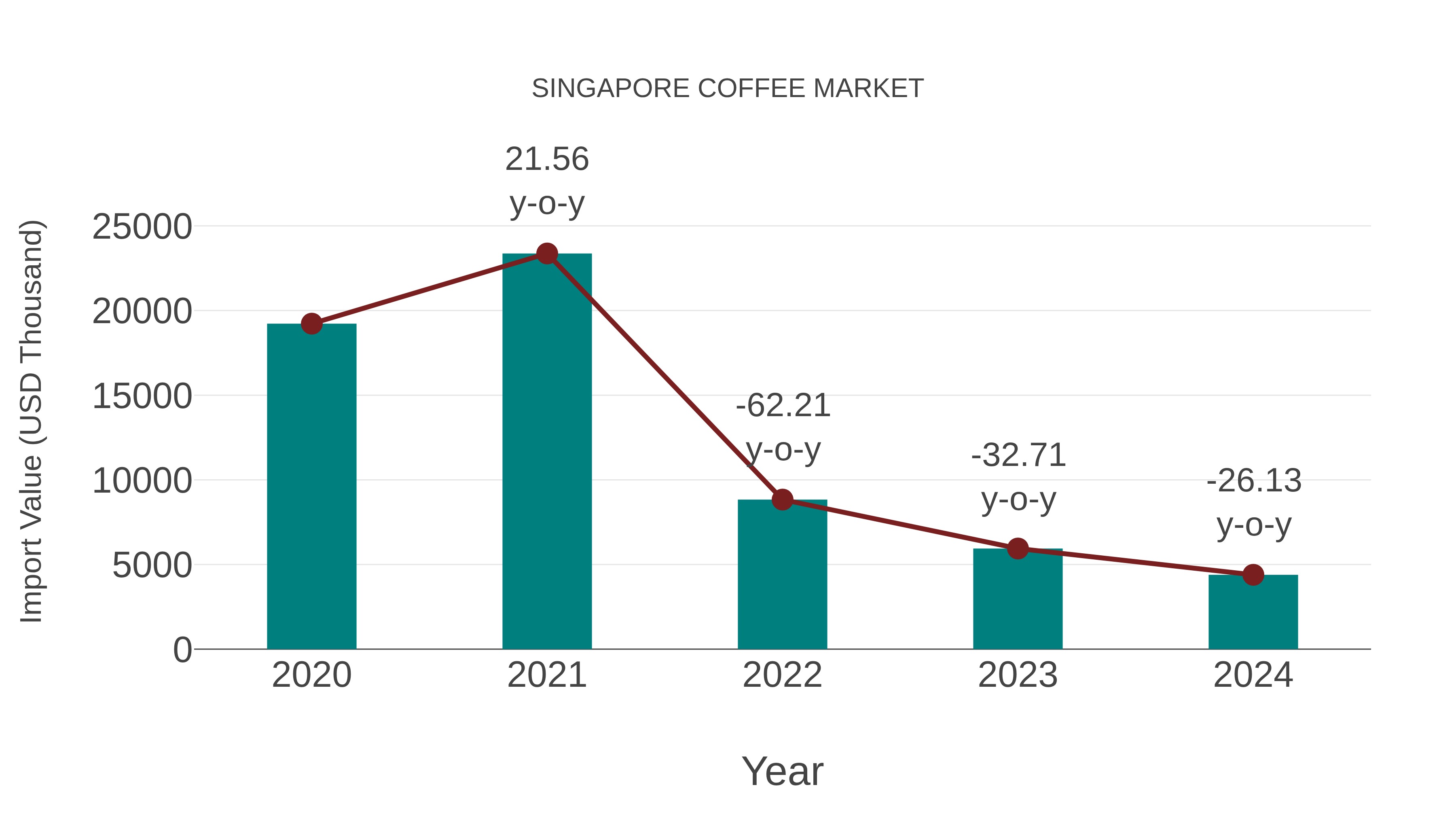
In the Singapore coffee market, the import trend experienced a notable decline from 2023 to 2024, with a growth rate of -26.13%. Over the period of 2020-2024, the compound annual growth rate (CAGR) stood at -30.87%. This significant decrease in imports could be attributed to shifts in consumer preferences or changes in global trade dynamics impacting market stability.
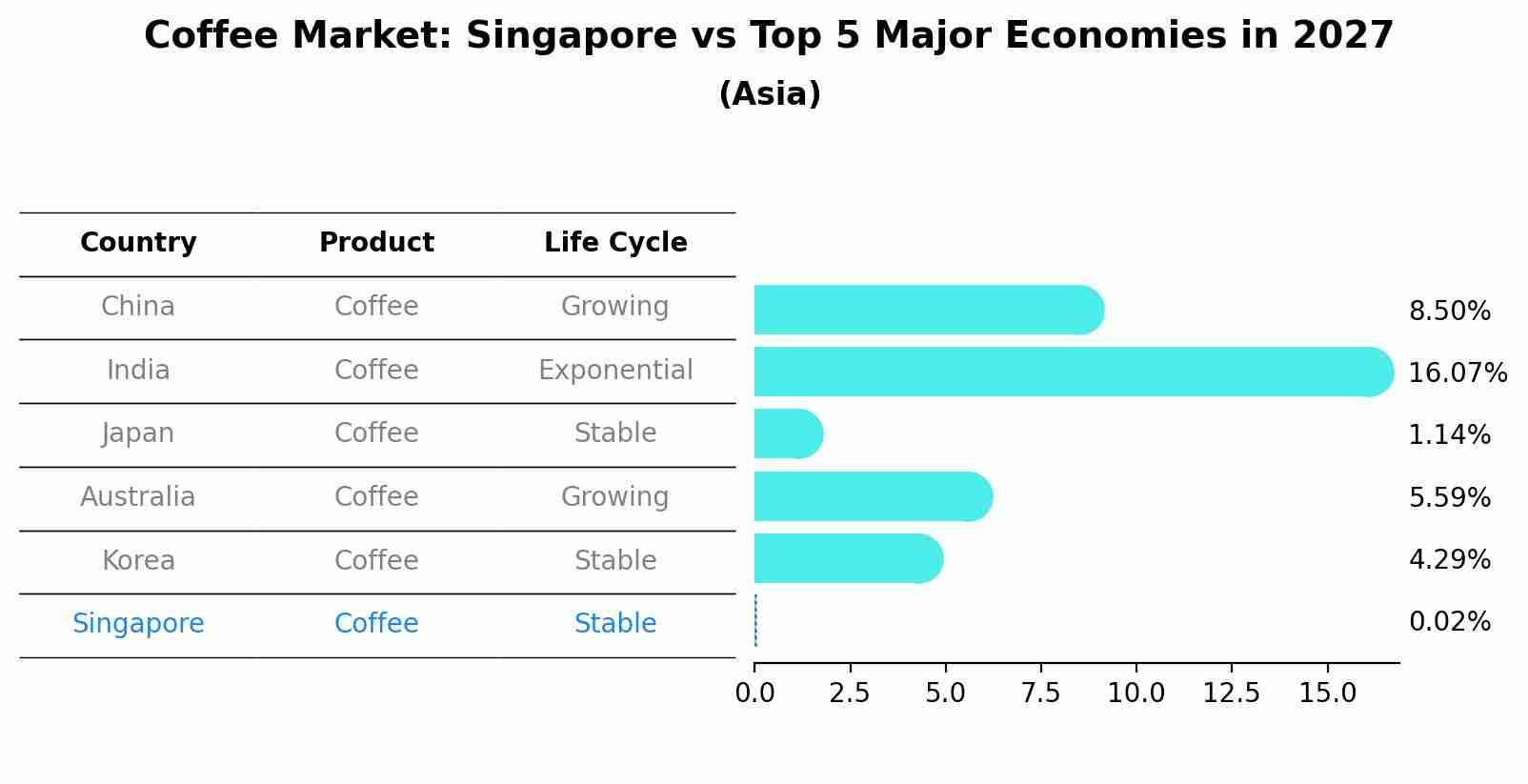
Coffee Market: Singapore vs Top 5 Major Economies in 2027 (Asia)
In the Asia region, the Coffee market in Singapore is projected to expand at a stable growth rate of 0.02% by 2027. The largest economy is China, followed by India, Japan, Australia and South Korea.
Singapore Coffee Market Synopsis
Coffee remains a staple in Singaporean culture, with a thriving coffee culture that includes specialty coffee shops and a diverse range of coffee products. The market continues to grow, driven by the desire for premium, high-quality coffee experiences. This includes single-origin beans, artisanal coffee blends, and innovative brewing methods. Singaporeans are increasingly valuing the entire coffee experience, from bean to cup.
Drivers of the Market
Singapore coffee market is vibrant and dynamic, with a diverse range of coffee options available to consumers. The coffee culture in Singapore is thriving, driven by the popularity of specialty coffee shops and the passion for unique coffee experiences. The market is further boosted by the growing trend of home brewing and the increasing availability of high-quality coffee beans and equipment. The desire for premium coffee, artisanal roasts, and innovative coffee beverages continues to propel the industry forward. With a discerning consumer base and a strong coffee culture, the outlook for the coffee market in Singapore remains positive.
Challenges of the Market
The Singapore coffee market faces several challenges that impact its outlook. Firstly, there is intense competition among coffee shops and chains, making it difficult for new entrants to gain a foothold. Moreover, the rising cost of coffee beans due to climate change and supply chain disruptions has led to increased prices for consumers, potentially impacting demand. Additionally, the shift towards healthier beverage options and concerns about the environmental impact of coffee production pose challenges for traditional coffee consumption. To thrive in this market, businesses need to focus on sustainability, quality, and innovation to attract and retain consumers.
COVID-19 Impact on the Market
The coffee market in Singapore has been a thriving sector with a strong coffee culture deeply rooted in the country. Before the pandemic, the coffee market was marked by the proliferation of coffee shops, specialty cafes, and a growing preference for artisanal and gourmet coffee. However, the COVID-19 pandemic significantly impacted the coffee industry. Lockdowns and social distancing measures led to reduced foot traffic at coffee shops, affecting sales and revenue. Many coffee establishments adapted by offering takeaway and delivery services. Additionally, the supply chain disruptions affected the importation of coffee beans, leading to fluctuations in prices and availability. Despite these challenges, the coffee market remained resilient, with many consumers opting to brew their coffee at home. The market is now on a path to recovery as restrictions ease, and coffee shops regain their popularity as social hubs. The demand for premium and specialty coffee is expected to remain strong as consumers continue to appreciate high-quality coffee experiences.
Key Players in the Market
Coffee culture in Singapore has been thriving, with a significant coffee-drinking population. Traditional kopitiams (coffee shops) coexist with international coffee chains like Starbucks and Costa Coffee. Local brands like Ya Kun Kaya Toast and Toast Box have also made their mark. In recent years, there has been a trend towards specialty and artisanal coffee, with independent coffee shops gaining popularity. Key players shaping the Singapore coffee market include both international giants and local favorites, all vying to capture the diverse tastes of coffee enthusiasts in the city-state.
Key Highlights of the Report:
- Singapore Coffee Market Outlook
- Market Size of Singapore Coffee Market, 2023
- Forecast of Singapore Coffee Market, 2030
- Historical Data and Forecast of Singapore Coffee Revenues & Volume for the Period 2020-2030
- Singapore Coffee Market Trend Evolution
- Singapore Coffee Market Drivers and Challenges
- Singapore Coffee Price Trends
- Singapore Coffee Porter's Five Forces
- Singapore Coffee Industry Life Cycle
- Historical Data and Forecast of Singapore Coffee Market Revenues & Volume By Product Type for the Period 2020-2030
- Historical Data and Forecast of Singapore Coffee Market Revenues & Volume By Whole-Bean for the Period 2020-2030
- Historical Data and Forecast of Singapore Coffee Market Revenues & Volume By Ground Coffee for the Period 2020-2030
- Historical Data and Forecast of Singapore Coffee Market Revenues & Volume By Instant Coffee for the Period 2020-2030
- Historical Data and Forecast of Singapore Coffee Market Revenues & Volume By Coffee Pods and Capsules for the Period 2020-2030
- Historical Data and Forecast of Singapore Coffee Market Revenues & Volume By Distribution Channel for the Period 2020-2030
- Historical Data and Forecast of Singapore Coffee Market Revenues & Volume By On-Trade for the Period 2020-2030
- Historical Data and Forecast of Singapore Coffee Market Revenues & Volume By Off-Trade for the Period 2020-2030
- Singapore Coffee Import Export Trade Statistics
- Market Opportunity Assessment By Product Type
- Market Opportunity Assessment By Distribution Channel
- Singapore Coffee Top Companies Market Share
- Singapore Coffee Competitive Benchmarking By Technical and Operational Parameters
- Singapore Coffee Company Profiles
- Singapore Coffee Key Strategic Recommendations






































