Singapore Two Wheeler Market Summary
The singapore two wheeler market was estimated at USD 456 Million in 2025 and is projected to reach USD 636 Million by 2032, growing at a CAGR of 5.5% from 2026 to 2032.
Singapore Two Wheeler Market Year-wise Growth Rate and Key Drivers
This graph highlights how the Singapore Two Wheeler Market has steadily grown over the past five years, supported by major growth factors.
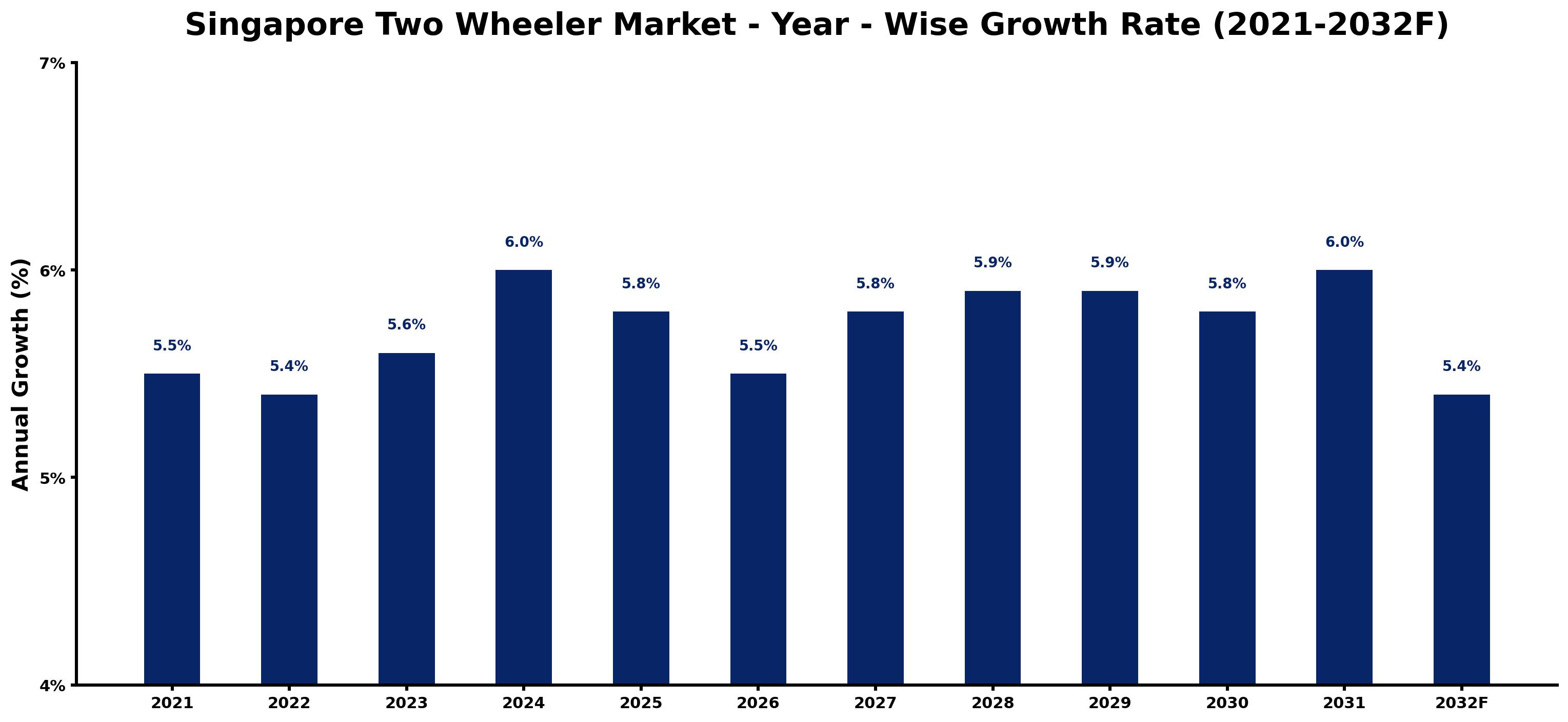
The table below presents the year wise growth rates along with the key drivers influencing the market
| Year | Growth Rate | Major Drivers |
| 2021 | 5.5% | Urban mobility trends emphasize efficiency, positioning two-wheelers as optimal solutions. |
| 2022 | 5.4% | Consumer preferences shift towards affordable transportation options amidst rising living costs. |
| 2023 | 5.6% | Increased environmental awareness leads to higher interest in electric two-wheelers. |
| 2024 | 6.0% | Integration of smart technologies enhances rider experience, appealing to tech-savvy consumers. |
| 2025 | 5.8% | Infrastructure improvements support expanded usage of two-wheelers in urban areas. |
| 2026 | 5.5% | Corporate partnerships with ride-hailing apps boost demand for shared two-wheeler services. |
| 2027 | 5.8% | Growing youth population seeks convenient, cost-effective commuting alternatives. |
| 2028 | 5.9% | Emergence of subscription models caters to changing ownership perceptions among consumers. |
| 2029 | 5.9% | Enhanced safety features, such as smart helmets, attract safety-conscious buyers. |
| 2030 | 5.8% | Government incentives for electric vehicle purchases increase market competitiveness. |
| 2031 | 6.0% | Local manufacturing initiatives reduce costs and improve supply chain efficiencies. |
| 2032 | 5.4% | Cultural shifts towards sustainability further embed two-wheelers in everyday life. |
Note - Market size estimations and growth projections presented in this report are based on 6Wresearch's advanced forecasting approach, validated with industry datasets as of June 2026.
Singapore Two Wheeler Market Synopsis
The Singapore Two Wheeler Market is projected to reach 5.5% and witness significant growth during the forecast period (2026-2032). This growth trajectory can be attributed to several factors including the rising demand for convenient transportation options, increased disposable incomes, and proactive government initiatives aimed at promoting electric vehicles. The shift towards two wheelers is also being driven by growing environmental concerns, as they are identified as more eco-friendly alternatives to traditional vehicles such as cars and buses, which tend to have higher emissions. As a result, stakeholders in this market are increasingly investing in the development of electric scooters and motorcycles, which are expected to further contribute to the expansion of the Singapore two wheeler market during this forecast period.
Singapore Two Wheeler Market Growth Drivers
The Singapore Two Wheeler Market is supported by several growth drivers that are shaping its future. Firstly, the demand for practical and efficient transportation is escalating among urban residents, leading to an increase in two wheeler adoption. As urbanization continues to rise, the need for mobility solutions that are not only economical but also less congested becomes critical. Secondly, the surge in disposable incomes among Singaporeans has facilitated a growth in consumer spending on two wheelers, particularly electric models which are perceived as sustainable investments.
- Government initiatives promoting electric vehicles are contributing to market growth. These initiatives aim to reduce overall vehicular emissions and encourage the adoption of greener transportation methods.
- The increasing environmental awareness among the population is driving consumers to opt for two wheelers over conventional vehicles. This shift is expected to accelerate as more individuals prioritize eco-friendly choices.
- Advancements in technology have led to improved performance and safety features in two wheelers, making them more appealing. Innovative design and engineering are enhancing user experience, resulting in higher sales.
- The rise in e-commerce and food delivery services is further fueling demand for two wheelers, as these vehicles are often more suitable for navigating dense urban environments.
- Promotions and incentives offered by financial institutions for the purchase of electric two wheelers are also expected to stimulate market growth as consumers are encouraged to invest in these vehicles.
Singapore Two Wheeler Market Challenges and Restraints
Despite the positive outlook, the Singapore Two Wheeler Market faces challenges that may hinder its growth. One significant challenge is the intense competition from car manufacturers. As automobile technology continues to evolve, potential two wheeler customers often weigh their options against more established four-wheel transport solutions. Additionally, infrastructure limitations, such as limited parking space and the presence of heavy traffic, may deter potential buyers from choosing two wheelers over cars. Moreover, the initial cost of electric two wheelers, although decreasing, remains a barrier for many consumers.
- The perceived safety risks associated with riding two wheelers, particularly in busy urban areas, can lead to hesitancy among prospective buyers. Consumer concerns about safety are an important factor influencing market dynamics.
- Regulatory challenges related to vehicle emissions and road use can pose obstacles to manufacturers and consumers alike, affecting the growth trajectory of the market.
- Market volatility concerning raw material prices for manufacturing two wheelers can impact production costs and, consequently, pricing strategies.
- Potential changes in government policies regarding subsidies or incentives for electric vehicles may affect the market dynamics, making it essential for stakeholders to remain informed about regulatory shifts.
- Consumer preferences are evolving, and staying attuned to these changes is critical for manufacturers and service providers to fulfill market demands effectively.
Singapore Two Wheeler Market Government Investment and Initiatives
The Singapore government has been proactive in fostering the development of the two wheeler market through various investment initiatives and policies. The government's commitment to sustainability and reducing carbon footprints is reflected in its support for electric vehicles. Financial grants, incentives for electric vehicle purchases, and investments in charging infrastructure are notable aspects of its strategic framework. Moreover, government-funded awareness campaigns are designed to educate the public about the environmental benefits of using two wheelers, particularly electric models.
- The Urban Redevelopment Authority is involved in creating integrated transport solutions that incorporate two wheelers as a viable option for short-distance commutes, which is aligned with wider urban planning initiatives.
- Various pilot programs are being implemented to assess the effectiveness of electric two wheelers in urban logistics, further encouraging businesses to explore alternative transport solutions.
- Incentives for research and development in the green technology sector are fostering innovation within the two wheeler market, enabling manufacturers to advance their electric models.
- Public sector investments in infrastructure aimed at supporting two wheeler use, such as dedicated lanes and parking facilities, reflect a long-term commitment to enhancing the urban commute experience.
- The introduction of policies aimed at regulating emissions from conventional vehicles indirectly boosts the attractiveness of two wheelers as a cleaner alternative, enhancing their market viability.
Singapore Two Wheeler Market Latest Developments (May 2025 - June 2026)
Between May 2025 and June 2026, several developments have been observed in the Singapore Two Wheeler Market that signal a positive shift towards sustainable transport solutions. The expansion of electric scooter charging infrastructure has made electric two wheelers more accessible and convenient for users, resulting in increased adoption rates. Additionally, various collaborations between technology firms and vehicle manufacturers have emerged, focusing on enhancing the efficiency and safety features of electric two wheelers. This resurgence of interest in two wheelers has also been reflected in consumer events aimed at showcasing the latest models and technologies available in the market, which have drawn significant public interest.
- Research initiatives focusing on battery technology and performance improvements have gained momentum, indicating a commitment to enhancing the range and reliability of electric two wheelers.
- The introduction of smart features in two wheelers, such as IoT capabilities, has captured consumer attention, leading to an increase in demand for technologically advanced models.
- Increased focus on sustainability-oriented marketing strategies has influenced consumer perceptions positively, making electric two wheelers more appealing to environmentally conscious riders.
- Public-private partnerships aimed at promoting shared electric two wheeler services have emerged, indicating a collaborative approach to improving urban mobility solutions.
- Consumer awareness campaigns highlighting the advantages and benefits of electric two wheelers have resulted in a noticeable uptick in sales, reinforcing the market's growth trajectory.
Singapore Two Wheeler Market - Key Attractiveness of the Report
- 10 Years of Market Numbers
- Historical Data Starting from 2022 to 2025
- Base Year: 2025
- Forecast Data until 2032
- Key Performance Indicators Impacting the Market
- Major Upcoming Developments and Projects
Key Highlights of the Report:
- Singapore Two Wheeler Market Outlook
- Market Size of Singapore Two Wheeler Market, 2025
- Forecast of Singapore Two Wheeler Market, 2032F
- Historical Data and Forecast of Singapore Two Wheeler Revenues & Volume for the Period 2022-2032F
- Singapore Two Wheeler Market Trend Evolution
- Singapore Two Wheeler Market Drivers and Challenges
- Singapore Two Wheeler Price Trends
- Singapore Two Wheeler Porter's Five Forces
- Singapore Two Wheeler Industry Life Cycle
- Historical Data and Forecast of Singapore Two Wheeler Market Revenues & Volume By Vehicle Type for the Period 2022-2032F
- Historical Data and Forecast of Singapore Two Wheeler Market Revenues & Volume By Motorcycle for the Period 2022-2032F
- Historical Data and Forecast of Singapore Two Wheeler Market Revenues & Volume By Scooter/Moped for the Period 2022-2032F
- Historical Data and Forecast of Singapore Two Wheeler Market Revenues & Volume By Engine Capacity for the Period 2022-2032F
- Historical Data and Forecast of Singapore Two Wheeler Market Revenues & Volume By Up to 125cc for the Period 2022-2032F
- Historical Data and Forecast of Singapore Two Wheeler Market Revenues & Volume By 126-250cc for the Period 2022-2032F
- Historical Data and Forecast of Singapore Two Wheeler Market Revenues & Volume By 251-500cc for the Period 2022-2032F
- Historical Data and Forecast of Singapore Two Wheeler Market Revenues & Volume By Above 500cc for the Period 2022-2032F
- Singapore Two Wheeler Import Export Trade Statistics
- Market Opportunity Assessment By Vehicle Type
- Market Opportunity Assessment By Engine Capacity
- Singapore Two Wheeler Top Companies Market Share
- Singapore Two Wheeler Competitive Benchmarking By Technical and Operational Parameters
- Singapore Two Wheeler Company Profiles
- Singapore Two Wheeler Key Strategic Recommendations






































