Spain Tire Material Market: Import Trend Analysis
In 2024, Spain`s tire material market saw a steady increase in imports, driven by rising demand for raw materials and components. The country experienced a notable uptick in inbound shipments of key materials, reflecting a growing reliance on foreign suppliers to meet domestic market needs.
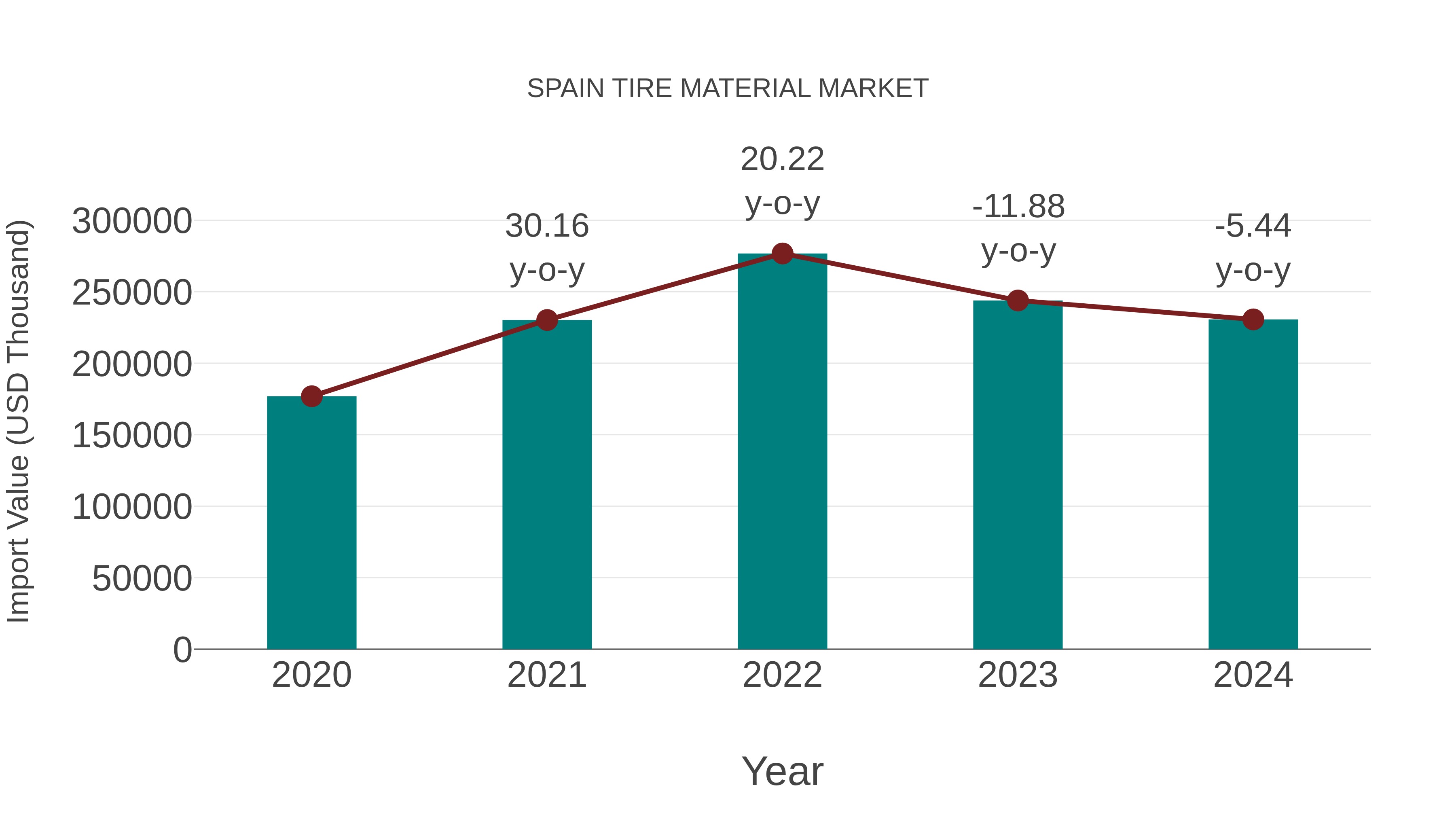
Spain Tire Material Market Overview
The Spain Tire Material Market is witnessing steady growth driven by factors such as the increasing demand for automobile production, technological advancements in tire manufacturing, and the rise in vehicle ownership. Key materials in the market include natural rubber, synthetic rubber, steel cords, carbon black, and chemicals. The market is characterized by the presence of major tire manufacturers like Michelin, Bridgestone, and Continental, who are focusing on developing sustainable and eco-friendly tire materials. Sustainability initiatives, such as using renewable raw materials and reducing carbon emissions, are gaining traction in the market. The growing emphasis on performance, safety, and environmental concerns are expected to shape the future of the Spain Tire Material Market, with a shift towards innovative materials and technologies.
Spain Tire Material Market Trends and Opportunities
The Spain Tire Material Market is experiencing significant trends and opportunities, driven by the growing demand for sustainable and eco-friendly materials in tire manufacturing. The shift towards lightweight and fuel-efficient vehicles is fueling the demand for advanced materials such as silica, which can improve tire performance and reduce rolling resistance. Additionally, the increasing focus on reducing carbon emissions and enhancing tire durability is driving the adoption of innovative materials like bio-based rubber and recycled materials. Opportunities exist for companies to invest in research and development of novel materials to meet these evolving market demands, as well as to capitalize on the growing emphasis on circular economy practices within the tire industry. Overall, the Spain Tire Material Market presents promising prospects for sustainable and innovative materials that can drive future growth and competitiveness.
Spain Tire Material Market Challenges
In the Spain Tire Material Market, some of the challenges faced include fluctuating raw material prices, increasing competition from low-cost manufacturers in other regions, and stringent environmental regulations. The volatility of raw material prices, particularly for rubber and synthetic materials, can impact the overall production costs for tire manufacturers. Additionally, the competition from manufacturers in countries with lower production costs can put pressure on Spanish companies to remain competitive. Furthermore, the growing emphasis on sustainability and environmental regulations require tire material producers to invest in eco-friendly practices and technologies, adding to their operational costs. These challenges highlight the need for tire material companies in Spain to innovate, streamline operations, and adapt to changing market dynamics to maintain their competitiveness in the industry.
Spain Tire Material Market Drivers
The Spain Tire Material Market is primarily driven by factors such as the growing automotive industry, increasing demand for vehicles, and rising focus on sustainable and eco-friendly materials. The automotive sector in Spain is witnessing steady growth, leading to a higher demand for tires, which in turn drives the demand for tire materials. Additionally, the increasing awareness about environmental concerns and regulations promoting the use of sustainable materials in tire production is also a significant driver in the market. Manufacturers are increasingly adopting eco-friendly materials such as natural rubber and silica for tire production to reduce the environmental impact. Overall, the Spain Tire Material Market is influenced by the growth in the automotive sector and the shift towards sustainable materials in tire manufacturing.
Spain Tire Material Market Government Policies
In Spain, the tire material market is subject to various government policies aimed at promoting sustainability and environmental protection. The Spanish government has implemented regulations requiring tire manufacturers to comply with strict standards for the recycling and disposal of used tires to minimize environmental impact. Additionally, there are incentives and subsidies in place to encourage the development and use of eco-friendly tire materials, such as recycled rubber and bio-based compounds. The government also supports research and innovation in the tire industry to advance technologies that improve the efficiency and sustainability of tire materials. Overall, the regulatory framework in Spain for the tire material market is focused on driving towards a more sustainable and environmentally friendly approach in line with global trends towards circular economy practices.
Spain Tire Material Market Future Outlook
The Spain Tire Material Market is expected to witness steady growth in the coming years, driven by factors such as increasing vehicle sales, growing demand for advanced and eco-friendly tire materials, and technological advancements in the automotive industry. The market is likely to experience a shift towards sustainable and innovative materials like silica, natural rubber, and high-performance polymers to meet stringent regulatory requirements and address environmental concerns. Additionally, the rising focus on improving fuel efficiency and enhancing tire performance is anticipated to drive the adoption of new materials and technologies in the tire manufacturing sector. Overall, the Spain Tire Material Market is poised for expansion and innovation, with a strong emphasis on sustainability and performance in the foreseeable future.
Key Highlights of the Report:
- Spain Tire Material Market Outlook
- Market Size of Spain Tire Material Market, 2025
- Forecast of Spain Tire Material Market, 2032
- Historical Data and Forecast of Spain Tire Material Revenues & Volume for the Period 2022 - 2032F
- Spain Tire Material Market Trend Evolution
- Spain Tire Material Market Drivers and Challenges
- Spain Tire Material Price Trends
- Spain Tire Material Porter's Five Forces
- Spain Tire Material Industry Life Cycle
- Historical Data and Forecast of Spain Tire Material Market Revenues & Volume By Type for the Period 2022 - 2032F
- Historical Data and Forecast of Spain Tire Material Market Revenues & Volume By Elastomers for the Period 2022 - 2032F
- Historical Data and Forecast of Spain Tire Material Market Revenues & Volume By Reinforcing Fillers for the Period 2022 - 2032F
- Historical Data and Forecast of Spain Tire Material Market Revenues & Volume By Plasticizers for the Period 2022 - 2032F
- Historical Data and Forecast of Spain Tire Material Market Revenues & Volume By Chemicals for the Period 2022 - 2032F
- Historical Data and Forecast of Spain Tire Material Market Revenues & Volume By Metal Reinforcements for the Period 2022 - 2032F
- Historical Data and Forecast of Spain Tire Material Market Revenues & Volume By Textile Reinforcements for the Period 2022 - 2032F
- Historical Data and Forecast of Spain Tire Material Market Revenues & Volume By Vehicle Type for the Period 2022 - 2032F
- Historical Data and Forecast of Spain Tire Material Market Revenues & Volume By Passenger Cars for the Period 2022 - 2032F
- Historical Data and Forecast of Spain Tire Material Market Revenues & Volume By Trucks for the Period 2022 - 2032F
- Historical Data and Forecast of Spain Tire Material Market Revenues & Volume By Buses for the Period 2022 - 2032F
- Historical Data and Forecast of Spain Tire Material Market Revenues & Volume By LCV for the Period 2022 - 2032F
- Spain Tire Material Import Export Trade Statistics
- Market Opportunity Assessment By Type
- Market Opportunity Assessment By Vehicle Type
- Spain Tire Material Top Companies Market Share
- Spain Tire Material Competitive Benchmarking By Technical and Operational Parameters
- Spain Tire Material Company Profiles
- Spain Tire Material Key Strategic Recommendations






































