Sri Lanka Construction Aggregates Market: Import Trend Analysis
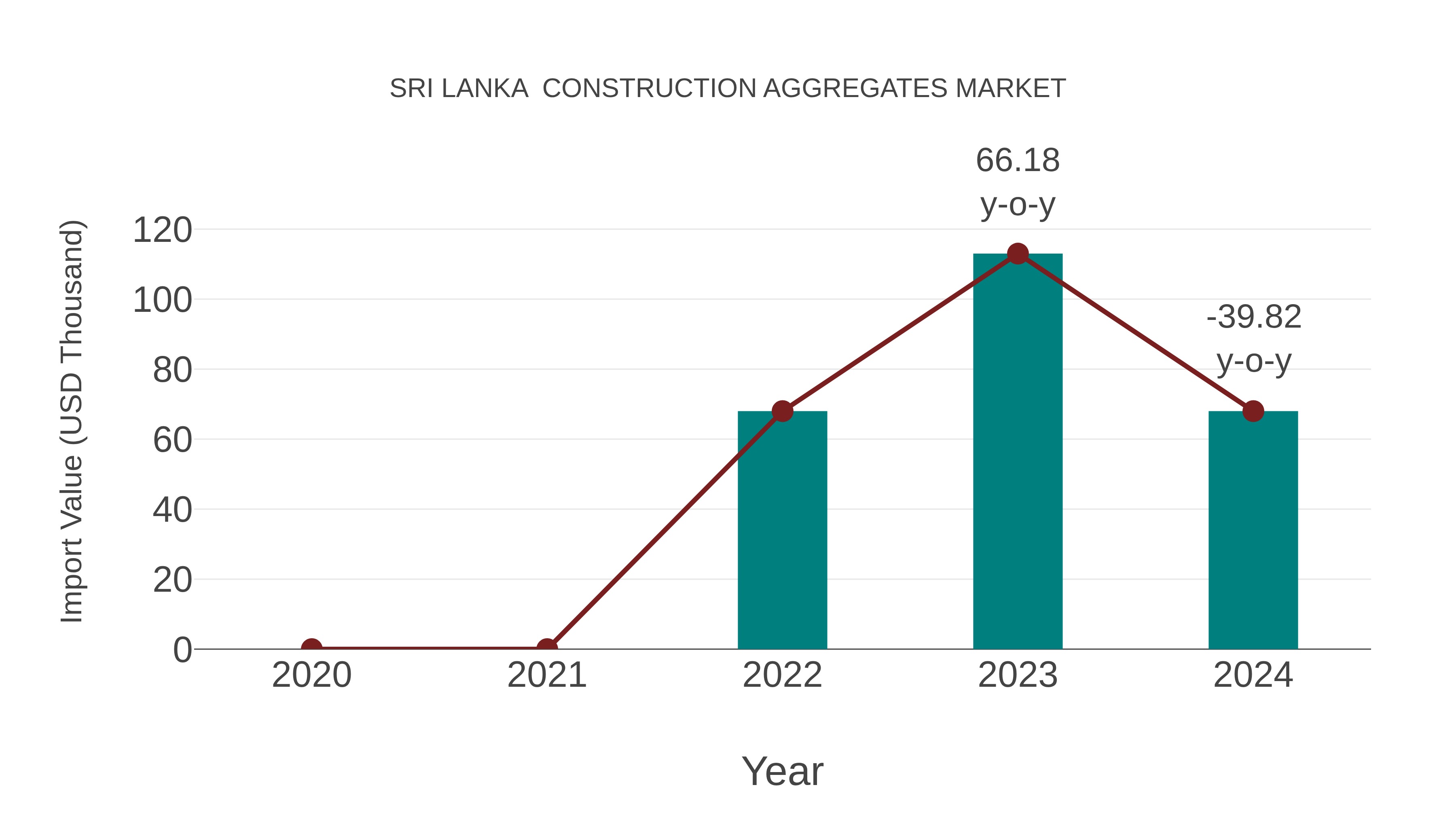
In 2023-2024, Sri Lanka construction aggregates market witnessed a -39.82% decline in import trends. This significant decrease may be attributed to various factors impacting the construction industry or changes in government policies affecting imports.
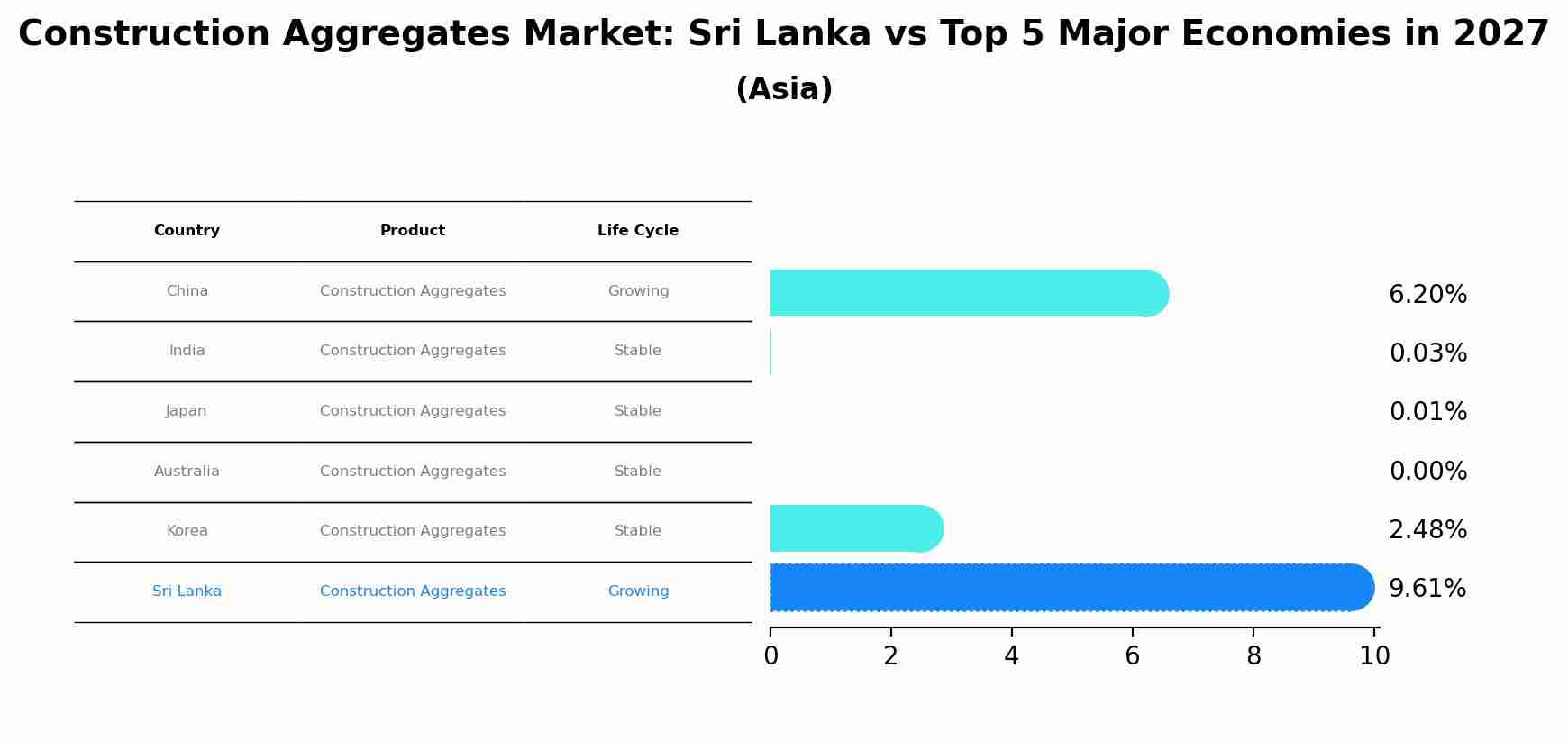
Construction Aggregates Market: Sri Lanka vs Top 5 Major Economies in 2027 (Asia)
Sri Lanka's Construction Aggregates market is anticipated to experience a growing growth rate of 9.61% by 2027, reflecting trends observed in the largest economy China, followed by India, Japan, Australia and South Korea.
Sri Lanka Construction Aggregates Market Overview
In Sri Lanka, the construction aggregates market is experiencing significant growth due to the booming construction industry. The rise in residential, commercial, and infrastructure projects has led to increased demand for aggregates such as sand, gravel, and crushed stone. Sustainable sourcing and efficient supply chains are crucial to meet the growing needs of the construction sector, ensuring the availability of quality materials.
Drivers of the market
In Sri Lanka, the construction aggregates market is primarily driven by the booming construction sector. Urbanization and infrastructure development projects such as roads, bridges, and housing are fueling the demand for aggregates. Additionally, the government`s focus on infrastructure development and public-private partnerships are contributing factors driving growth in this market.
Challenges of the market
The construction aggregates market in Sri Lanka encounters challenges such as environmental regulations, sustainable sourcing of raw materials, and logistical constraints. Balancing the demand-supply dynamics amidst infrastructure development projects and urban expansion requires efficient quarry management and transportation networks. Moreover, ensuring compliance with quality standards and addressing community concerns about environmental impacts are critical challenges for stakeholders in this market.
Government Policy of the market
In Sri Lanka, the government has established regulations to manage the extraction and use of construction aggregates sustainably. These policies focus on environmental conservation and ensuring that aggregate extraction does not adversely affect local ecosystems. Additionally, there are measures in place to promote the use of recycled aggregates to reduce environmental impact.
Key Highlights of the Report:
- Sri Lanka Construction Aggregates Market Outlook
- Market Size of Sri Lanka Construction Aggregates Market, 2019
- Forecast of Sri Lanka Construction Aggregates Market, 2026
- Historical Data and Forecast of Sri Lanka Construction Aggregates Revenues & Volume for the Period 2016 - 2026
- Sri Lanka Construction Aggregates Market Trend Evolution
- Sri Lanka Construction Aggregates Market Drivers and Challenges
- Sri Lanka Construction Aggregates Price Trends
- Sri Lanka Construction Aggregates Porter's Five Forces
- Sri Lanka Construction Aggregates Industry Life Cycle
- Historical Data and Forecast of Sri Lanka Construction Aggregates Market Revenues & Volume By Product Type for the Period 2016 - 2026
- Historical Data and Forecast of Sri Lanka Construction Aggregates Market Revenues & Volume By Crushed stone for the Period 2016 - 2026
- Historical Data and Forecast of Sri Lanka Construction Aggregates Market Revenues & Volume By Sand for the Period 2016 - 2026
- Historical Data and Forecast of Sri Lanka Construction Aggregates Market Revenues & Volume By Gravel for the Period 2016 - 2026
- Historical Data and Forecast of Sri Lanka Construction Aggregates Market Revenues & Volume By Other aggregates for the Period 2016 - 2026
- Historical Data and Forecast of Sri Lanka Construction Aggregates Market Revenues & Volume By Applications for the Period 2016 - 2026
- Historical Data and Forecast of Sri Lanka Construction Aggregates Market Revenues & Volume By Commercial for the Period 2016 - 2026
- Historical Data and Forecast of Sri Lanka Construction Aggregates Market Revenues & Volume By Residential for the Period 2016 - 2026
- Historical Data and Forecast of Sri Lanka Construction Aggregates Market Revenues & Volume By Industrial for the Period 2016 - 2026
- Historical Data and Forecast of Sri Lanka Construction Aggregates Market Revenues & Volume By Infrastructure for the Period 2016 - 2026
- Sri Lanka Construction Aggregates Import Export Trade Statistics
- Market Opportunity Assessment By Product Type
- Market Opportunity Assessment By Applications
- Sri Lanka Construction Aggregates Top Companies Market Share
- Sri Lanka Construction Aggregates Competitive Benchmarking By Technical and Operational Parameters
- Sri Lanka Construction Aggregates Company Profiles
- Sri Lanka Construction Aggregates Key Strategic Recommendations






































