Sri Lanka Packaged Water Market: Import Trend Analysis
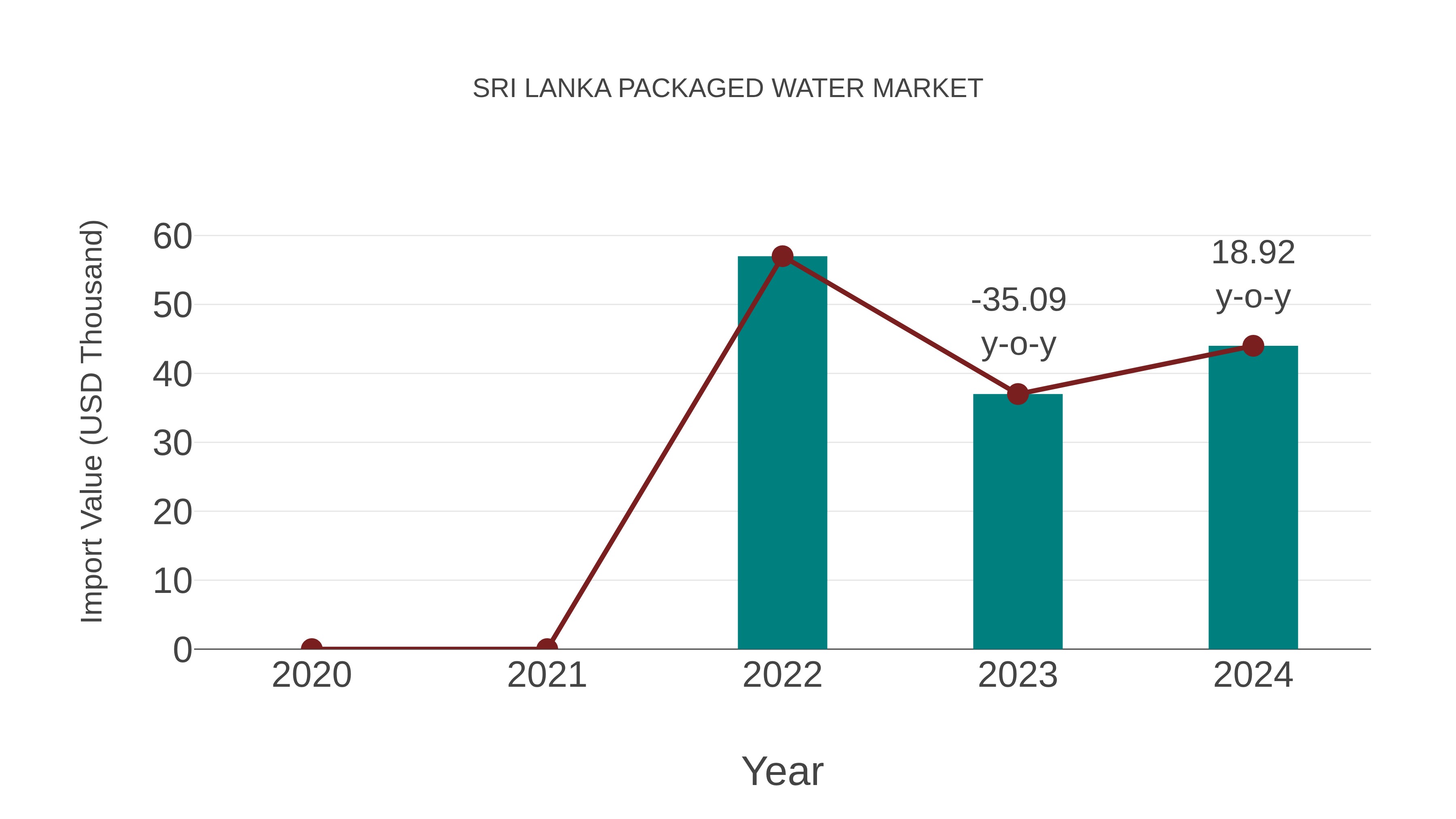
Sri Lanka import trend for the packaged water market saw a growth rate of 18.92% from 2023 to 2024, with a compound annual growth rate (CAGR) of -12.14% from 2020 to 2024. This decline in CAGR may be attributed to shifts in consumer preferences or changes in trade policies.
Sri Lanka Packaged water Market Overview
The Sri Lanka packaged water market is experiencing steady growth driven by increasing health consciousness among consumers and the convenience of on-the-go hydration. The market is dominated by key players such as Nestle, Coca-Cola, and local brands like Elephant House and Aquafresh. The demand for packaged water is driven by factors such as rising disposable income, urbanization, and tourism. The market is highly competitive with companies focusing on product innovation, packaging design, and distribution channels to stand out in the market. With growing concerns about water quality and the convenience of single-use packaging, there is also a rising trend towards sustainable and eco-friendly packaging solutions. Overall, the Sri Lanka packaged water market is expected to continue its growth trajectory in the coming years.
Sri Lanka Packaged water Market Trends and Opportunities
Currently, the Sri Lanka Packaged water market is experiencing a growing demand due to factors such as increasing health consciousness among consumers, convenience, and concerns about water quality. The market is witnessing a shift towards premium and functional packaged water products, including flavored waters, vitamin-infused waters, and alkaline water. Opportunities lie in the development of innovative packaging solutions, sustainable practices, and expanding distribution networks to reach rural areas. Collaborations with hotels, restaurants, and other hospitality sectors can also drive market growth. Additionally, the adoption of e-commerce platforms for selling packaged water products presents a promising avenue for market expansion. Overall, the Sri Lanka Packaged water market shows potential for further growth and diversification through strategic product development and market penetration efforts.
Sri Lanka Packaged water Market Challenges
In the Sri Lanka packaged water market, some of the key challenges faced include increasing competition from both domestic and international brands, fluctuating prices of raw materials such as plastic packaging, ensuring consistent quality and safety standards to meet consumer expectations, and navigating through strict regulations and government policies related to the production and distribution of packaged water. Additionally, maintaining a strong distribution network, especially in remote or rural areas, can be a challenge due to infrastructural limitations and logistical issues. Developing innovative marketing strategies to differentiate products in a saturated market and managing environmental concerns related to plastic waste and sustainability also pose significant challenges for companies operating in the packaged water sector in Sri Lanka.
Sri Lanka Packaged water Market Drivers
The Sri Lanka Packaged water market is primarily driven by increasing health consciousness among consumers, growing concerns over water contamination and safety, and the convenience offered by packaged water for on-the-go consumption. Rising disposable incomes and changing lifestyles have also contributed to the market growth as more consumers opt for ready-to-drink packaged water instead of traditional sources. Additionally, the tourism industry in Sri Lanka plays a significant role in driving the demand for packaged water, as tourists prefer safe and hygienic drinking water options while traveling. The market is further bolstered by aggressive marketing strategies by key players, innovative packaging formats, and a focus on sustainability and environmental responsibility, which resonate well with the eco-conscious consumer base.
Sri Lanka Packaged water Market Government Policy
Government policies related to the Sri Lanka Packaged water Market include regulations set by the Food Control Administration under the Food Act, which ensures the safety and quality of packaged water products through regular inspections and testing. The National Water Supply and Drainage Board also plays a role in monitoring water sources and ensuring compliance with quality standards. Additionally, the Consumer Affairs Authority oversees pricing and labeling requirements for packaged water products, aimed at protecting consumers from unfair practices. The government has implemented measures to promote sustainability in the industry, such as encouraging the use of eco-friendly packaging materials and promoting responsible water usage. Overall, these policies aim to safeguard public health, ensure product quality, and promote sustainable practices within the Sri Lanka Packaged water Market.
Sri Lanka Packaged water Market Future Outlook
The future outlook for the Sri Lanka Packaged water market looks promising, with a projected growth driven by factors such as increasing health consciousness among consumers, rising disposable incomes, and a growing awareness of the importance of safe drinking water. The market is expected to witness a surge in demand for convenient and portable hydration solutions, especially in urban areas and among the younger population. Additionally, the shift towards eco-friendly packaging and sustainable practices is likely to shape the market landscape, with a growing preference for recyclable materials. As the market continues to evolve, companies are anticipated to focus on product innovation, branding, and expanding distribution channels to capitalize on the growing consumer base.
Key Highlights of the Report:
- Sri Lanka Packaged water Market Outlook
- Market Size of Sri Lanka Packaged water Market, 2025
- Forecast of Sri Lanka Packaged water Market, 2032
- Historical Data and Forecast of Sri Lanka Packaged water Revenues & Volume for the Period 2022 - 2032F
- Sri Lanka Packaged water Market Trend Evolution
- Sri Lanka Packaged water Market Drivers and Challenges
- Sri Lanka Packaged water Price Trends
- Sri Lanka Packaged water Porter's Five Forces
- Sri Lanka Packaged water Industry Life Cycle
- Historical Data and Forecast of Sri Lanka Packaged water Market Revenues & Volume By Product for the Period 2022 - 2032F
- Historical Data and Forecast of Sri Lanka Packaged water Market Revenues & Volume By Still for the Period 2022 - 2032F
- Historical Data and Forecast of Sri Lanka Packaged water Market Revenues & Volume By Carbonated for the Period 2022 - 2032F
- Historical Data and Forecast of Sri Lanka Packaged water Market Revenues & Volume By Flavored for the Period 2022 - 2032F
- Historical Data and Forecast of Sri Lanka Packaged water Market Revenues & Volume By Functional for the Period 2022 - 2032F
- Sri Lanka Packaged water Import Export Trade Statistics
- Market Opportunity Assessment By Product
- Sri Lanka Packaged water Top Companies Market Share
- Sri Lanka Packaged water Competitive Benchmarking By Technical and Operational Parameters
- Sri Lanka Packaged water Company Profiles
- Sri Lanka Packaged water Key Strategic Recommendations






































