Singapore Packaged Water Market: Import Trend Analysis
In 2024, Singapore`s packaged water market witnessed a notable increase in imports. This trend indicated a growing reliance on foreign sources to meet domestic demand for packaged water products.
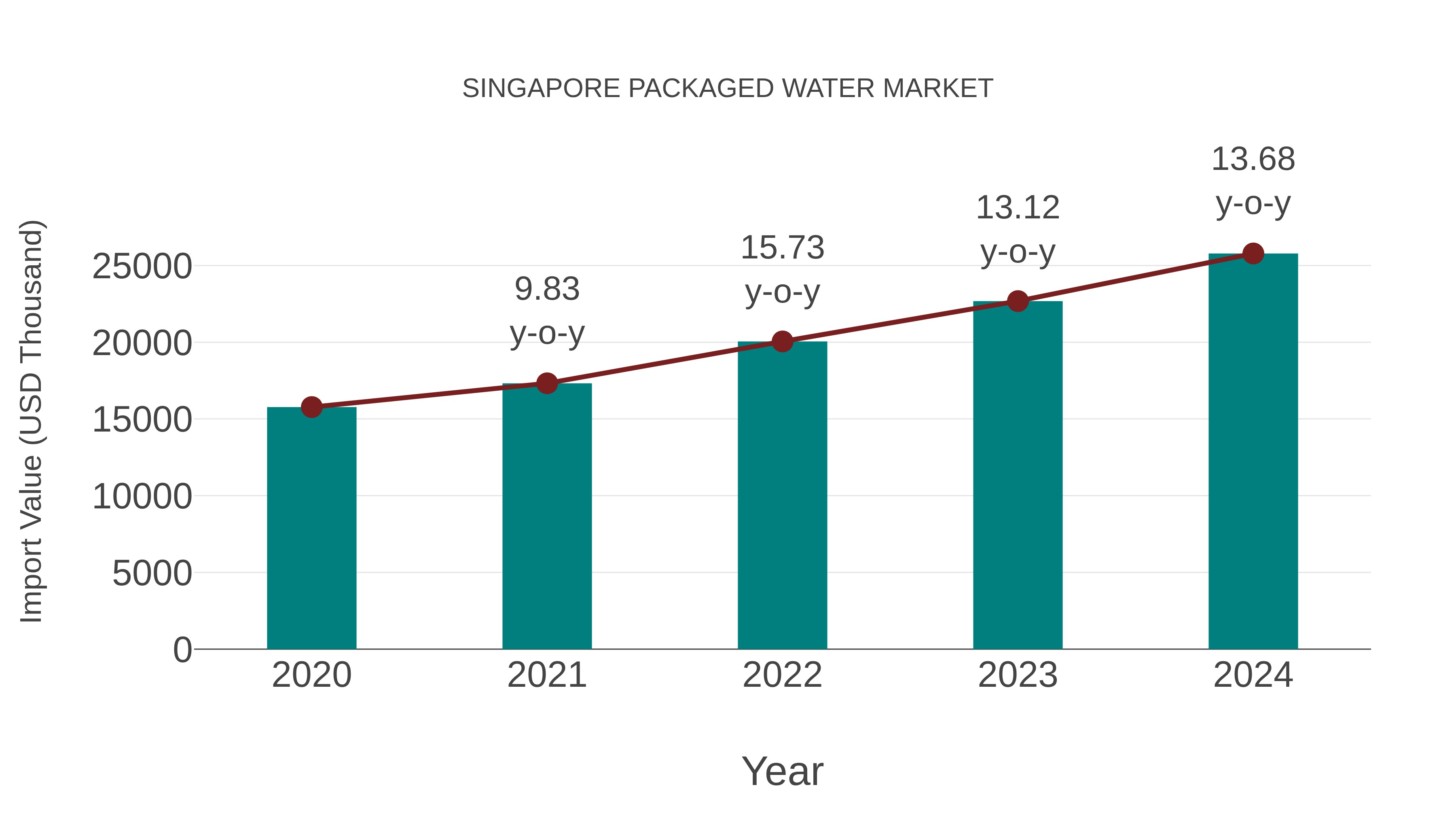
Singapore Packaged water Market Overview
The Singapore packaged water market is characterized by a high level of competition and a strong focus on product innovation and sustainability. Key players in the market include local brands such as F&N Magnolia and Cactus, as well as global giants like Coca-Cola and PepsiCo. The market is driven by factors such as increasing health consciousness among consumers, convenience, and the rise in disposable income. Premium and functional waters are gaining popularity, with growing demand for natural ingredients and added benefits such as vitamins and minerals. Sustainability practices, including eco-friendly packaging and water conservation efforts, are becoming increasingly important in shaping consumer preferences. Overall, the Singapore packaged water market is poised for steady growth, driven by evolving consumer preferences and a competitive landscape.
Singapore Packaged water Market Trends and Opportunities
The Singapore packaged water market is experiencing growth due to increasing health consciousness among consumers seeking convenient and safe hydration options. Key trends include the rising popularity of functional and premium bottled waters, such as alkaline and flavored varieties, as well as sustainable packaging solutions to address environmental concerns. Opportunities for market players lie in product innovation, such as introducing new flavors and packaging formats to cater to evolving consumer preferences. Additionally, strategic partnerships with retailers and e-commerce platforms can help expand distribution channels and reach a wider audience. With the growing demand for convenient and healthy beverages, the Singapore packaged water market presents a promising landscape for companies willing to invest in product differentiation and sustainability initiatives.
Singapore Packaged water Market Challenges
In the Singapore packaged water market, one of the main challenges faced is intense competition among numerous brands offering similar products. This leads to price wars and pressure on profit margins for companies operating in the market. Additionally, the growing concern among consumers about environmental sustainability and the use of plastic packaging has led to a shift towards more eco-friendly alternatives, posing a challenge for traditional packaged water companies. Regulatory changes and increasing government focus on reducing plastic waste further add to the challenges faced by players in the market. To stay competitive and address these challenges, companies in the Singapore packaged water market need to innovate by offering sustainable packaging solutions, investing in marketing strategies to differentiate their products, and maintaining a strong brand presence to attract and retain customers.
Singapore Packaged water Market Drivers
The Singapore Packaged water market is primarily driven by factors such as increasing health consciousness among consumers, growing urbanization leading to a rise in on-the-go consumption, and the convenience offered by packaged water in terms of portability and hygiene. Additionally, the emphasis on hydration for overall well-being, especially in a tropical climate like Singapore, further fuels the demand for packaged water. The availability of a wide range of flavored and functional waters catering to different consumer preferences also contributes to market growth. Furthermore, the increasing focus on sustainability and environmentally friendly packaging options is influencing consumer choices, leading to the adoption of eco-friendly packaged water brands in Singapore.
Singapore Packaged water Market Government Policy
In Singapore, the Packaged Water Market is regulated by the Singapore Food Agency (SFA) under the Sale of Food Act and Food Regulations. The SFA sets strict standards for the quality and safety of packaged water to ensure consumer protection. All packaged water products must comply with these regulations, including requirements for labeling, packaging, and storage. Additionally, the SFA conducts regular inspections and testing of packaged water to monitor compliance with the set standards. Companies operating in the Packaged Water Market in Singapore are required to adhere to these regulations to maintain the quality and safety of their products and to prevent any health risks to consumers.
Singapore Packaged water Market Future Outlook
The Singapore Packaged water market is expected to witness steady growth in the coming years, driven by factors such as increasing health consciousness among consumers, rising disposable incomes, and growing concerns over water quality. The demand for convenient and safe drinking water options is likely to fuel the market`s expansion, with a shift towards premium and functional bottled water products. Moreover, the emphasis on sustainability and eco-friendly packaging solutions is expected to shape the market landscape, with consumers showing a preference for environmentally friendly packaging materials. Innovation in product offerings, such as flavored and infused water variants, is also anticipated to contribute to market growth. Overall, the Singapore Packaged water market is poised for positive growth prospects in the foreseeable future.
Key Highlights of the Report:
- Singapore Packaged water Market Outlook
- Market Size of Singapore Packaged water Market, 2025
- Forecast of Singapore Packaged water Market, 2032
- Historical Data and Forecast of Singapore Packaged water Revenues & Volume for the Period 2022 - 2032F
- Singapore Packaged water Market Trend Evolution
- Singapore Packaged water Market Drivers and Challenges
- Singapore Packaged water Price Trends
- Singapore Packaged water Porter's Five Forces
- Singapore Packaged water Industry Life Cycle
- Historical Data and Forecast of Singapore Packaged water Market Revenues & Volume By Product for the Period 2022 - 2032F
- Historical Data and Forecast of Singapore Packaged water Market Revenues & Volume By Still for the Period 2022 - 2032F
- Historical Data and Forecast of Singapore Packaged water Market Revenues & Volume By Carbonated for the Period 2022 - 2032F
- Historical Data and Forecast of Singapore Packaged water Market Revenues & Volume By Flavored for the Period 2022 - 2032F
- Historical Data and Forecast of Singapore Packaged water Market Revenues & Volume By Functional for the Period 2022 - 2032F
- Singapore Packaged water Import Export Trade Statistics
- Market Opportunity Assessment By Product
- Singapore Packaged water Top Companies Market Share
- Singapore Packaged water Competitive Benchmarking By Technical and Operational Parameters
- Singapore Packaged water Company Profiles
- Singapore Packaged water Key Strategic Recommendations






































