Switzerland Canned Tuna Market: Import Trend Analysis
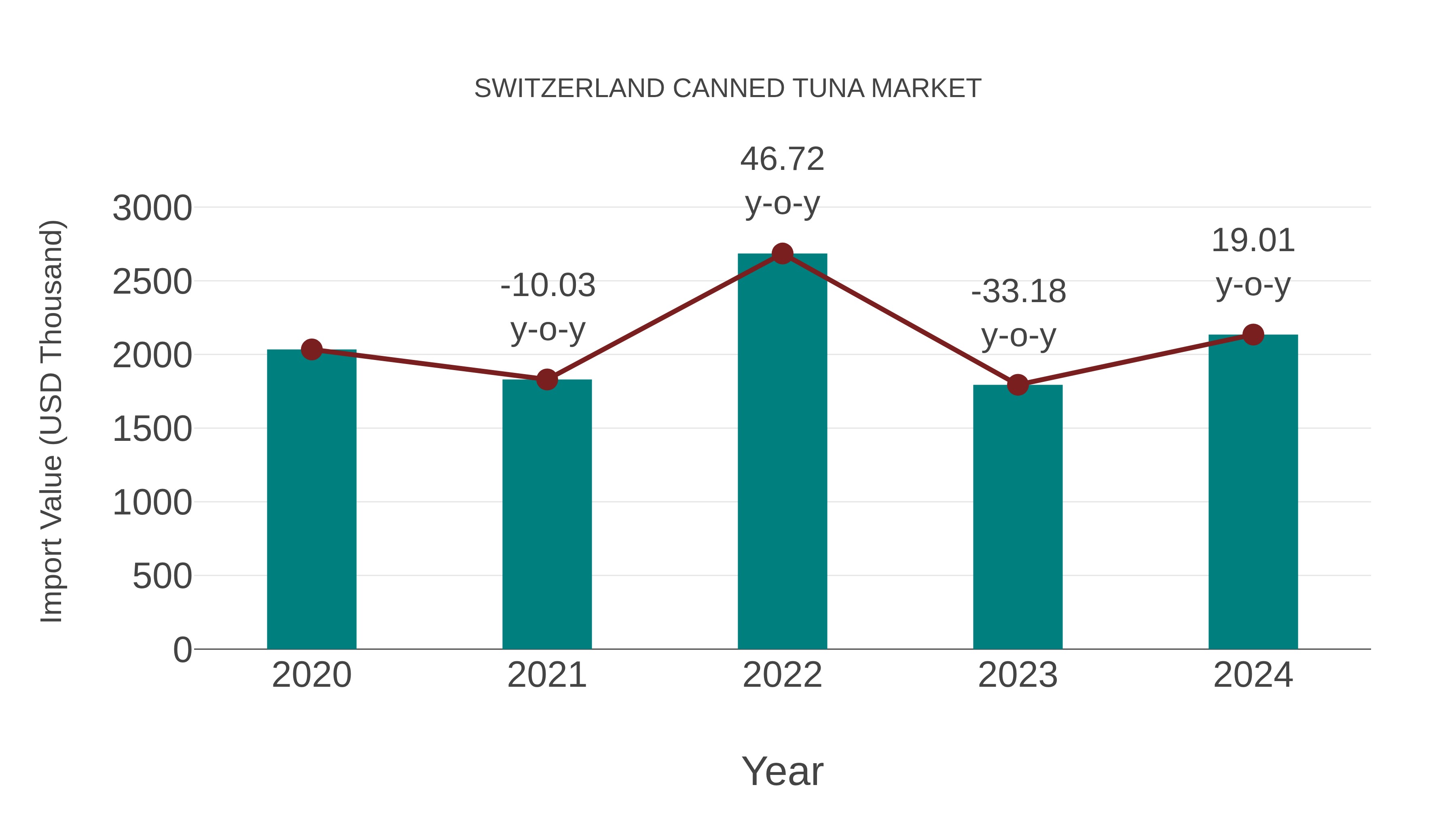
Switzerland import trend for canned tuna saw a growth rate of 19.01% from 2023 to 2024, with a compound annual growth rate (CAGR) of 1.22% from 2020 to 2024. This increase could be attributed to changing consumer preferences towards healthier food options.
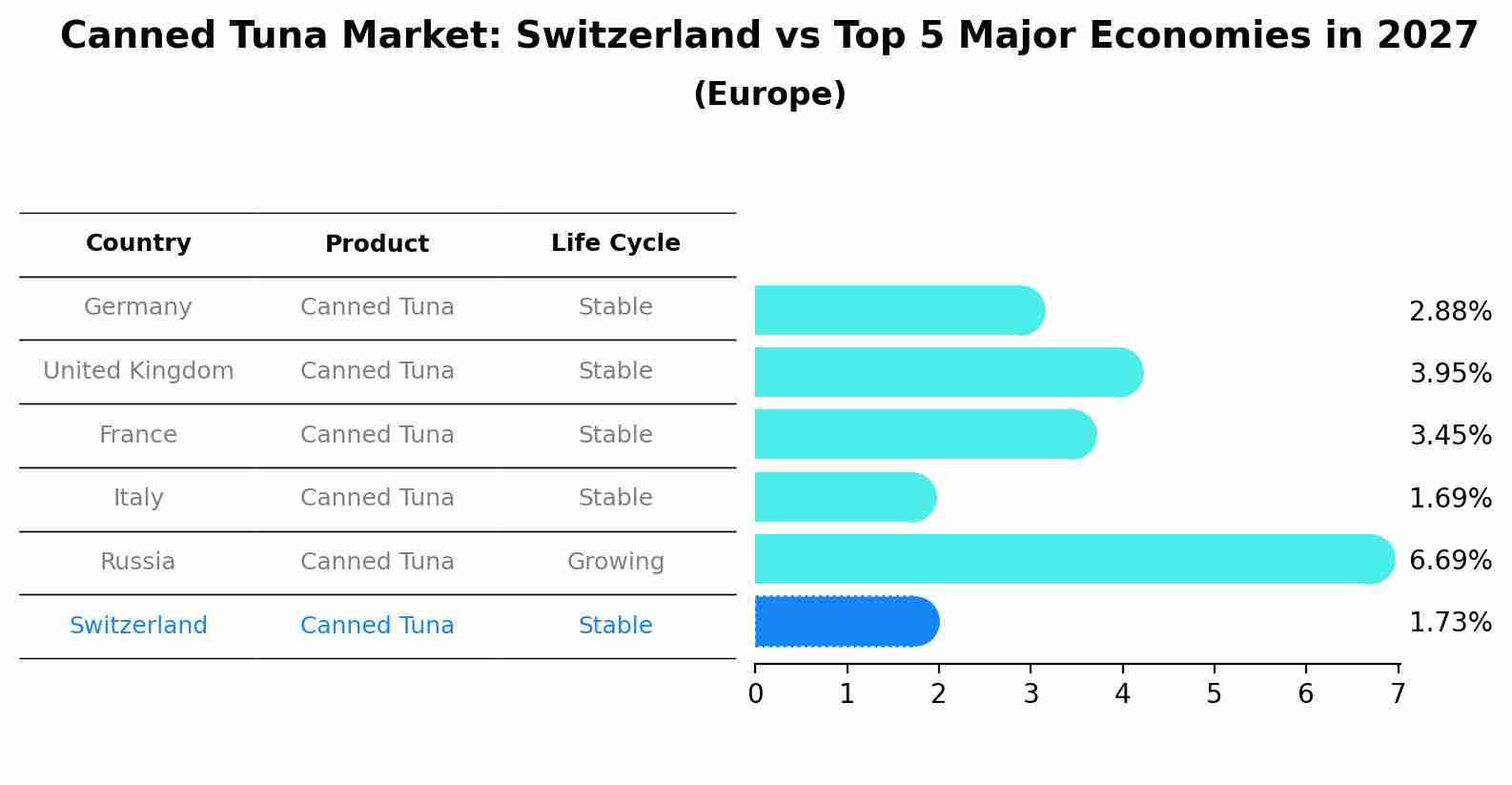
Canned Tuna Market: Switzerland vs Top 5 Major Economies in 2027 (Europe)
In the Europe region, the Canned Tuna market in Switzerland is projected to expand at a stable growth rate of 1.73% by 2027. The largest economy is Germany, followed by United Kingdom, France, Italy and Russia.
Switzerland Canned Tuna Market Overview
The canned tuna market in Switzerland is characterized by a strong demand for both convenience and quality. Tuna is a staple protein source in many Swiss households, favored for its versatility and nutritional profile. As consumers become increasingly health-conscious, there is a growing preference for sustainably sourced and premium-quality tuna products. This has led to innovations in packaging and product offerings, including varieties such as flavored, organic, and line-caught tuna. The market is also influenced by culinary trends, with canned tuna being used in salads, sandwiches, and gourmet recipes. Efforts to raise awareness about sustainable fishing practices are likely to shape the future of this market.
Drivers of the market
The canned tuna market in Switzerland is benefiting from the increasing consumer preference for healthy, protein-rich snacks and meal options. Tuna, known for its versatility and nutritional benefits, is increasingly being recognized as a convenient source of lean protein. Additionally, the trend towards sustainable seafood consumption has led to heightened demand for canned tuna sourced from environmentally responsible fisheries. Innovations in product offerings, including flavored and ready-to-eat options, have also contributed to market growth, making canned tuna an appealing choice for busy consumers seeking nutritious meal solutions.
Challenges of the market
The canned tuna market in Switzerland is confronted with significant challenges, especially around sustainability and environmental impact. Consumers are becoming more aware of overfishing and bycatch issues, prompting demand for sustainably sourced tuna, which increases procurement costs. Moreover, competition from fresh and frozen tuna is stiff, as these are seen as healthier and fresher alternatives. Volatility in global tuna prices, as well as high tariffs on imported canned goods, further exacerbate the markets profitability concerns.
Government Policy of the market
The canned tuna market in Switzerland is heavily regulated by policies promoting sustainable fishing practices. Swiss import regulations require compliance with international conservation standards, such as those outlined by the Marine Stewardship Council (MSC). The government also imposes health and safety regulations on the processing and packaging of canned tuna, ensuring product quality and environmental sustainability.
Key Highlights of the Report:
- Switzerland Canned Tuna Market Outlook
- Market Size of Switzerland Canned Tuna Market, 2025
- Forecast of Switzerland Canned Tuna Market, 2032
- Historical Data and Forecast of Switzerland Canned Tuna Revenues & Volume for the Period 2022-2032F
- Switzerland Canned Tuna Market Trend Evolution
- Switzerland Canned Tuna Market Drivers and Challenges
- Switzerland Canned Tuna Price Trends
- Switzerland Canned Tuna Porter`s Five Forces
- Switzerland Canned Tuna Industry Life Cycle
- Historical Data and Forecast of Switzerland Canned Tuna Market Revenues & Volume By Product for the Period 2022-2032F
- Historical Data and Forecast of Switzerland Canned Tuna Market Revenues & Volume By Skipjack for the Period 2022-2032F
- Historical Data and Forecast of Switzerland Canned Tuna Market Revenues & Volume By Yellowfin for the Period 2022-2032F
- Historical Data and Forecast of Switzerland Canned Tuna Market Revenues & Volume By Others for the Period 2022-2032F
- Historical Data and Forecast of Switzerland Canned Tuna Market Revenues & Volume By Distribution Channel for the Period 2022-2032F
- Historical Data and Forecast of Switzerland Canned Tuna Market Revenues & Volume By Hypermarket & Supermarket for the Period 2022-2032F
- Historical Data and Forecast of Switzerland Canned Tuna Market Revenues & Volume By Specialty Stores for the Period 2022-2032F
- Historical Data and Forecast of Switzerland Canned Tuna Market Revenues & Volume By Online for the Period 2022-2032F
- Switzerland Canned Tuna Import Export Trade Statistics
- Market Opportunity Assessment By Product
- Market Opportunity Assessment By Distribution Channel
- Switzerland Canned Tuna Top Companies Market Share
- Switzerland Canned Tuna Competitive Benchmarking By Technical and Operational Parameters
- Switzerland Canned Tuna Company Profiles
- Switzerland Canned Tuna Key Strategic Recommendations






































