Tunisia Bathroom Linen Market Size, Share & Growth Rate
The Tunisia Bathroom Linen Market was estimated at USD 266 Million in 2025 and is projected to reach USD 376 Million by 2032, growing at a CAGR of 5.1% from 2026 to 2032. This growth trajectory is fueled by an increasing focus on home aesthetics, driven by urbanization and rising disposable incomes among consumers. The trend toward eco-friendly and luxurious products is shaping purchasing behaviors, as consumers seek out high-quality bathroom linens that blend function with style.
Tunisia Bathroom Linen Market Year-wise Growth Rate and Key Drivers
This graph highlights how the Tunisia Bathroom Linen Market has steadily grown over the years, supported by major growth factors.
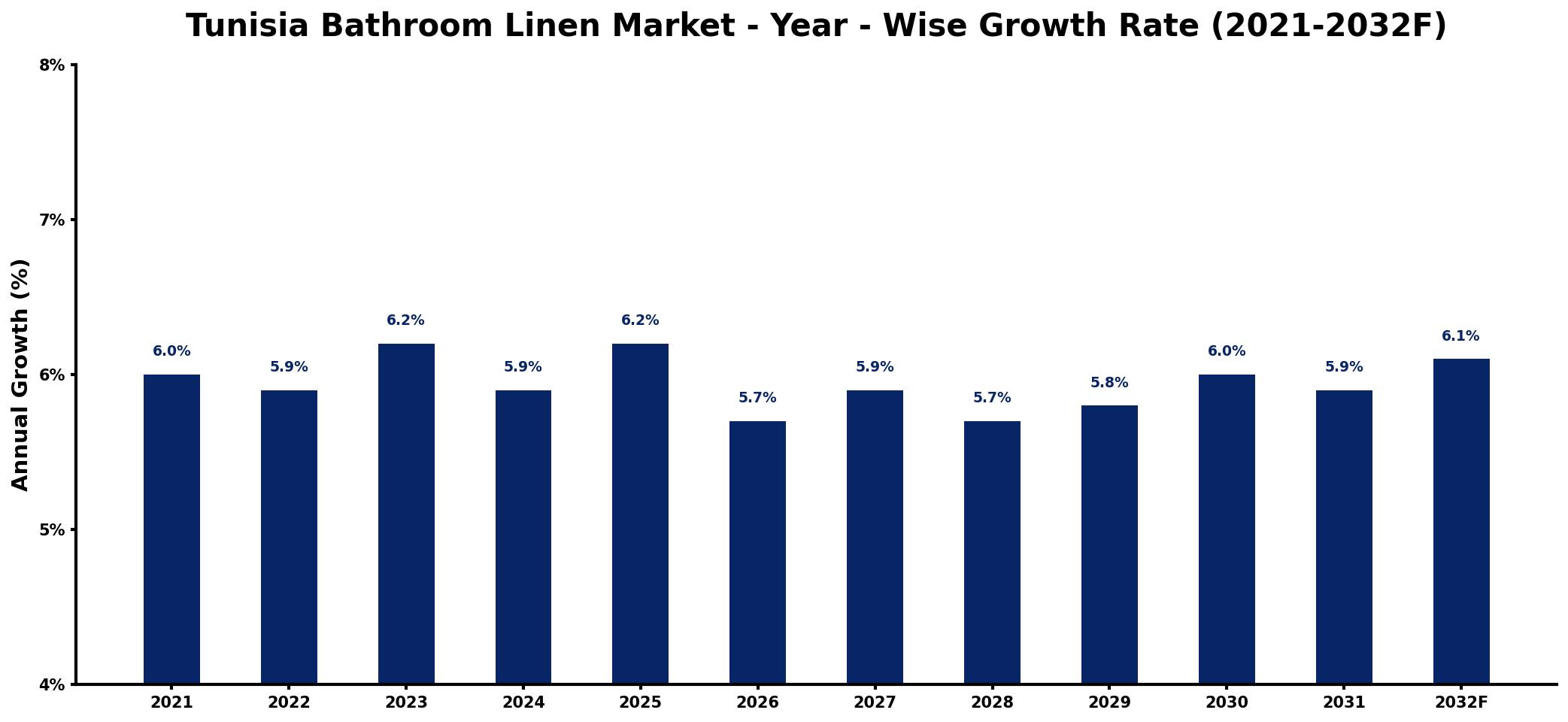
The table below presents the year‑wise growth rates along with the key drivers influencing the market
| Year | Growth Rate | Major Drivers |
| 2021 | 6.0% | Rising consumer spending on textiles |
| 2022 | 5.9% | Increased home renovation projects |
| 2023 | 6.2% | Expansion of e-commerce platforms |
| 2024 | 5.9% | Growth in hospitality sector demand |
| 2025 | 6.2% | Surge in tourism activities |
| 2026 | 5.7% | Innovations in sustainable materials |
| 2027 | 5.9% | Higher disposable income levels |
| 2028 | 5.7% | Increase in online shopping trends |
| 2029 | 5.8% | Focus on home aesthetics improvement |
| 2030 | 6.0% | Development of local manufacturing facilities |
| 2031 | 5.9% | Rising awareness of hygiene standards |
| 2032 | 6.1% | Emergence of new design trends |
Note: Market size estimations and growth projections presented in this report are based on 6Wresearch's proprietary forecasting methodology, utilizing the latest available industry data, government publications, and primary research inputs.
Tunisia Bathroom Linen Market Synopsis
In recent years, the Tunisia Bathroom Linen Market has experienced a noteworthy transformation, characterized by a heightened consumer emphasis on aesthetics and comfort. The demand for stylish towels, bathrobes, and other bathroom textiles reflects a broader trend where personal care and home decor are intricately linked.
This market is increasingly defined by a preference for sustainable materials, as consumers become more environmentally conscious. Local manufacturers are not only rising to meet these demands but are also innovating in design and technology, ensuring that the offerings are both visually appealing and functionally superior.
Tunisia Bathroom Linen Market Key Takeaways
- The market is witnessing a shift towards eco-friendly and sustainable bathroom linens, as consumers increasingly favor organic and ethically sourced materials.
- Luxury bathroom products are gaining traction, with consumers willing to invest in high-quality items that enhance their home aesthetics.
- Online retail channels are becoming a significant part of the market, offering consumers a wider selection and convenience in purchasing.
- Local manufacturers are adapting to competitive pressures by expanding their product lines and improving quality standards.
- The government supports the domestic market through policies aimed at promoting local production and innovation.
Evaluation of Restraints in Tunisia Bathroom Linen Market
While the Tunisia Bathroom Linen Market is on an upward trajectory, it faces several constraints that could hinder growth. One major challenge is the fierce competition from international brands that can often offer lower prices due to economies of scale. This places pressure on local manufacturers, who may struggle to maintain profitability without compromising on quality.
Additionally, fluctuations in raw material prices, particularly for cotton and polyester, pose a risk to production costs. As consumer preferences evolve, manufacturers need to invest in sustainable practices, which could necessitate substantial capital outlay, further complicating market dynamics.
Tunisia Bathroom Linen Market Trends
Currently, the market is influenced by a growing trend toward sustainability, with consumers actively seeking bathroom linens made from organic cotton or bamboo fibers. This shift is not merely a fad; it reflects a deeper awareness of environmental issues among Tunisian consumers. Coupled with this is the increasing demand for luxury products that promise both quality and comfort.
Innovative designs and textures are becoming key differentiators in the market. Manufacturers are responding to consumer desires for unique and stylish products, while e-commerce platforms are enhancing accessibility, allowing consumers to explore diverse options conveniently.
Tunisia Bathroom Linen Market Opportunities
The Tunisia Bathroom Linen Market is ripe with investment opportunities, particularly in the high-end and eco-friendly segments. With a demographic shift leaning towards luxury, brands that focus on premium offerings—such as plush towels and elegant bathrobes—stand to capture the interest of affluent consumers.
There is also a significant opportunity for brands that prioritize sustainability. By investing in innovative materials and eco-conscious manufacturing processes, businesses can meet the growing consumer demand for environmentally friendly products, thereby distinguishing themselves in a competitive landscape.
Government Initiatives in the Tunisia Bathroom Linen Market
The Tunisian government is actively promoting local production in the Bathroom Linen Market, implementing various policies aimed at supporting small businesses. There are tariffs designed to shield domestic manufacturers from international competition, alongside financial incentives for innovation and quality improvement. These initiatives are crucial for enhancing the overall competitiveness of the local market and stimulating economic growth.
Future Insights of the Tunisia Bathroom Linen Market
Looking ahead to the period between 2026 and 2032, the Tunisia Bathroom Linen Market is expected to thrive. Factors such as urbanization, rising disposable incomes, and a deepening interest in home decor will drive demand for stylish and high-quality bathroom textiles. The emphasis on sustainability will likely intensify, pushing more consumers to prioritize eco-friendly options when making purchasing decisions.
E-commerce will continue to revolutionize the market, providing an essential platform for brands to reach their customers effectively and efficiently. Overall, the future appears promising, underscored by evolving consumer preferences and dynamic market conditions.
Tunisia Bathroom Linen Market Latest Developments (2025 - 2026)
Recent developments in the Tunisia Bathroom Linen Market suggest a strong focus on product innovation and sustainability. Companies are increasingly launching new lines of bathroom textiles that feature eco-friendly materials and stylish designs, responding to shifting consumer preferences. Furthermore, e-commerce platforms have reported a surge in traffic, highlighting a consumer trend toward online shopping for home goods.
Tunisia Bathroom Linen Market - Key Attractiveness of the Report
- 10 Years of Market Numbers
- Historical Data Starting from 2022 to 2025
- Base Year: 2025
- Forecast Data until 2032
- Key Performance Indicators Impacting the Market
- Major Upcoming Developments and Projects
Key Highlights of the Report:
- Tunisia Bathroom Linen Market Outlook
- Market Size of Tunisia Bathroom Linen Market, 2025
- Forecast of Tunisia Bathroom Linen Market, 2032
- Historical Data and Forecast of Tunisia Bathroom Linen Revenues & Volume for the Period 2022-2032F
- Tunisia Bathroom Linen Market Trend Evolution
- Tunisia Bathroom Linen Market Drivers and Challenges
- Tunisia Bathroom Linen Price Trends
- Tunisia Bathroom Linen Porter's Five Forces
- Tunisia Bathroom Linen Industry Life Cycle
- Historical Data and Forecast of Tunisia Bathroom Linen Market Revenues & Volume By Product for the Period 2022-2032F
- Historical Data and Forecast of Tunisia Bathroom Linen Market Revenues & Volume By Bath Towels for the Period 2022-2032F
- Historical Data and Forecast of Tunisia Bathroom Linen Market Revenues & Volume By Bathrobes for the Period 2022-2032F
- Historical Data and Forecast of Tunisia Bathroom Linen Market Revenues & Volume By Others for the Period 2022-2032F
- Tunisia Bathroom Linen Import Export Trade Statistics
- Market Opportunity Assessment By Product
- Tunisia Bathroom Linen Top Companies Market Share
- Tunisia Bathroom Linen Competitive Benchmarking By Technical and Operational Parameters
- Tunisia Bathroom Linen Company Profiles
- Tunisia Bathroom Linen Key Strategic Recommendations






































