United Arab Emirates (UAE) Television Market Summary
The united arab emirates (uae) television market was estimated at USD 771 Million in 2025 and is projected to reach USD 1285 Million by 2032, growing at a CAGR of 8.7% from 2026 to 2032.
United Arab Emirates (UAE) Television Market Year-wise Growth Rate and Key Drivers
This graph highlights how the United Arab Emirates (UAE) Television Market has steadily grown over the past five years, supported by major growth factors.
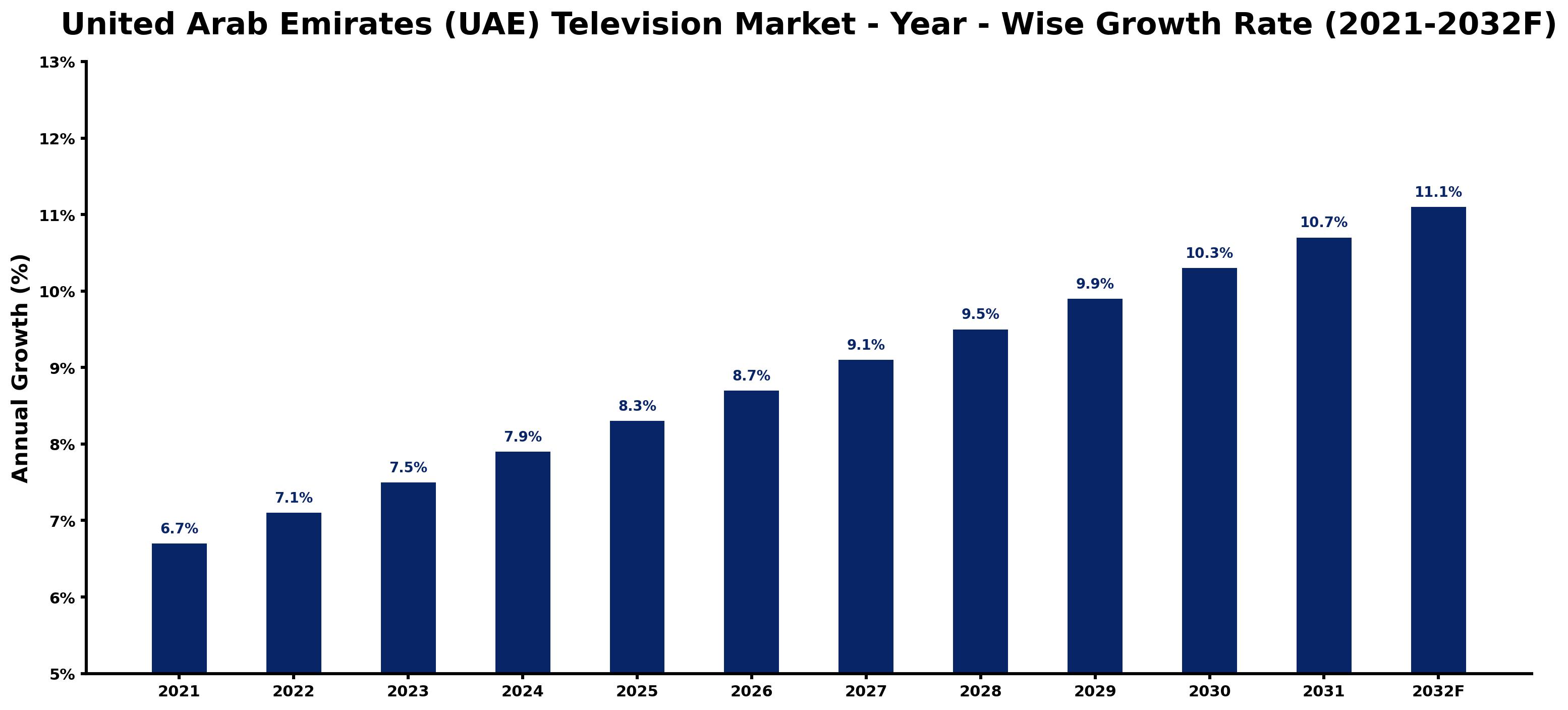
The table below presents the year wise growth rates along with the key drivers influencing the market
| Year | Growth Rate | Major Drivers |
| 2021 | 6.7% | Emerging streaming platforms reshaped viewer habits, influencing traditional TV engagement levels. |
| 2022 | 7.1% | Competition among local content creators intensified with diverse, culturally relevant programming options. |
| 2023 | 7.5% | Increased internet penetration facilitated higher access to video-on-demand services across demographics. |
| 2024 | 7.9% | Investment in 5G infrastructure allowed seamless streaming experiences, boosting viewer satisfaction significantly. |
| 2025 | 8.3% | Collaboration between global media giants and local channels enhanced content variety and quality. |
| 2026 | 8.7% | Cultural events and festivals served as major content opportunities, engaging broader audiences regionally. |
| 2027 | 9.1% | Changing consumer preferences shifted focus to personalized viewing experiences, shaping content strategies. |
| 2028 | 9.5% | Advancements in smart TVs promoted integrated experiences, encouraging more interactive content consumption. |
| 2029 | 9.9% | Local productions gained international acclaim, prompting increased export of Emirati television content. |
| 2030 | 10.3% | Major advertising spend moved towards digital platforms, reflecting evolving viewer engagement metrics. |
| 2031 | 10.7% | Emerging technologies like AI-driven content recommendations transformed viewer engagement patterns significantly. |
| 2032 | 11.1% | Sustainability trends prompted eco-friendly production practices in television, resonating with conscious consumers. |
Note - Market size estimations and growth projections presented in this report are based on 6Wresearch's advanced forecasting approach, validated with industry datasets as of June 2026.
United Arab Emirates (UAE) Television Market Synopsis
The United Arab Emirates (UAE) Television Market is projected to reach 8.7% and witness significant growth during the forecast period (2026-2032). This expansion is primarily fueled by rising disposable incomes, urbanization trends, and a robust expatriate demographic that shapes the entertainment landscape. The UAE's diverse media and entertainment sector underscores the importance of television as a prominent source of leisure for local citizens and expatriates alike.
United Arab Emirates (UAE) Television Market Growth Drivers
Several key factors are propelling the growth of the UAE television market. The strong economic performance has translated into increased household earnings, allowing consumers greater access to advanced entertainment options. Furthermore, urbanization across the nation has led to a concentration of media services in metropolitan areas, providing residents with enhanced viewing experiences.
- Increasing disposable income levels have encouraged consumers to invest in sophisticated television services, including premium cable and satellite subscriptions.
- The burgeoning expatriate population has fostered a demand for multilingual programming, significantly boosting the need for both international and regional content offerings.
- Technological advancements, especially the rise of smart TVs, have transformed traditional viewing habits, enabling seamless access to high-definition and Ultra HD programming.
- Diverse content delivery platforms, including IPTV and OTT services, are becoming increasingly prevalent, further driving viewer engagement in the television sector.
- Growing investments in content localization efforts aim to cater to the unique preferences of different demographic groups, enhancing consumer satisfaction and loyalty.
United Arab Emirates (UAE) Television Market Challenges and Restraints
While the UAE television market is on an upward trajectory, it faces several challenges that could impact future growth. Strict content regulations imposed by the government often result in the censorship of programming, inhibiting the diversity of content available to viewers. This limitation not only stifles creative expression but may also deter potential investments in local content production.
- Content censorship can restrict the variety of shows and channels offered, reducing overall viewer satisfaction and engagement.
- The increasing popularity of digital streaming platforms poses a substantial threat to traditional television services, as consumers favor on-demand content over scheduled programming.
- Market fragmentation from a wide array of service providers complicates viewer choice, potentially overwhelming consumers aiming to navigate their options.
- The ongoing economic challenges, particularly in light of global uncertainties, might affect consumer confidence and spending on entertainment services.
- Disruptions in content production due to unforeseen global events can lead to content shortages, negatively impacting network programming schedules and advertising revenues.
United Arab Emirates (UAE) Television Market COVID-19 Impact
The COVID-19 pandemic significantly influenced the dynamics of the UAE television market. With lockdown measures and social distancing protocols in place, television consumption surged as people sought entertainment during prolonged periods at home. This increase in viewership led to a temporary rise in advertising revenues for many television channels as brands adapted to shifting consumer habits.
- Viewership metrics escalated as audiences turned to television for news and entertainment amidst global uncertainties.
- Despite the surge in demand, pandemic-related disruptions adversely affected content production, resulting in delayed releases and modified programming plans.
- Economic contractions prompted tightening of advertising budgets, influencing overall revenue streams for television networks during the pandemic.
- As the market adapted, hybrid viewing patterns began to emerge, blending traditional television consumption with digital opportunities.
- Long-term strategic shifts in programming and advertising strategies became necessary to align with evolving consumer preferences post-pandemic.
United Arab Emirates (UAE) Television Market Government Investment and Initiatives
The UAE government plays a pivotal role in shaping the television market through various investments and initiatives aimed at fostering industry growth. Policies promoting technological advancements and infrastructure development provide a solid foundation for enhancing broadcasting capabilities. Public spending initiatives in media production seek to elevate local content creation, aiming to stimulate both economic growth and cultural representation.
- Government incentives aimed at enhancing media infrastructure are vital for improving broadcast quality and service delivery across the nation.
- Various initiatives encourage public-private partnerships in the media sector, fostering innovation in content production and distribution.
- Investment in digital broadcasting technology aligns with the global shift toward advanced audiovisual experiences, ensuring competitiveness on the international stage.
- The UAE's Vision 2021 encourages the promotion of cultural industries, including television, as a vital component of the national economy.
- Regulatory frameworks continuously adapt to accommodate emerging trends, facilitating a more dynamic and responsive television market landscape.
United Arab Emirates (UAE) Television Market Latest Developments (May 2025 - June 2026)
The television landscape in the UAE continues to evolve, with notable developments emerging between May 2025 and June 2026. The focus on enhancing viewer experiences through innovative technologies and diverse programming options has intensified. Efforts to invest in high-quality original content production have gained traction, aligning with the growing demand for unique programming among both local and expatriate viewers.
- The integration of artificial intelligence into content delivery systems is being explored to personalize viewing experiences for audiences, reflecting individual preferences.
- Collaborative initiatives among broadcasters and streaming platforms are on the rise, aiming to expand content offerings and reach broader demographics.
- Mobile TV services are gaining momentum, driven by changing consumer behaviors favoring on-the-go consumption of media content.
- Enhanced focus on local storytelling is evident, as networks seek to resonate with cultural narratives and engage the national audience more effectively.
- Regulatory discussions surrounding content rights and distribution models are ongoing, aiming to adapt to the rapidly changing media environment.
United Arab Emirates (UAE) Television Market - Key Attractiveness of the Report
- 10 Years of Market Numbers
- Historical Data Starting from 2022 to 2025
- Base Year: 2025
- Forecast Data until 2032
- Key Performance Indicators Impacting the Market
- Major Upcoming Developments and Projects
Key Highlights of the Report:
- United Arab Emirates (UAE) Television Market Outlook
- Market Size of United Arab Emirates (UAE) Television Market, 2025
- Forecast of United Arab Emirates (UAE) Television Market, 2032
- Historical Data and Forecast of United Arab Emirates (UAE) Television Revenues & Volume for the Period 2022-2032F
- United Arab Emirates (UAE) Television Market Trend Evolution
- United Arab Emirates (UAE) Television Market Drivers and Challenges
- United Arab Emirates (UAE) Television Price Trends
- United Arab Emirates (UAE) Television Porter's Five Forces
- United Arab Emirates (UAE) Television Industry Life Cycle
- Historical Data and Forecast of United Arab Emirates (UAE) Television Market Revenues & Volume By Resolution for the Period 2022-2032F
- Historical Data and Forecast of United Arab Emirates (UAE) Television Market Revenues & Volume By LCD TVs for the Period 2022-2032F
- Historical Data and Forecast of United Arab Emirates (UAE) Television Market Revenues & Volume By OLED TVs for the Period 2022-2032F
- Historical Data and Forecast of United Arab Emirates (UAE) Television Market Revenues & Volume By Types for the Period 2022-2032F
- Historical Data and Forecast of United Arab Emirates (UAE) Television Market Revenues & Volume By 2D TVs for the Period 2022-2032F
- Historical Data and Forecast of United Arab Emirates (UAE) Television Market Revenues & Volume By 3D TVs for the Period 2022-2032F
- United Arab Emirates (UAE) Television Import Export Trade Statistics
- Market Opportunity Assessment By Resolution
- Market Opportunity Assessment By Types
- United Arab Emirates (UAE) Television Top Companies Market Share
- United Arab Emirates (UAE) Television Competitive Benchmarking By Technical and Operational Parameters
- United Arab Emirates (UAE) Television Company Profiles
- United Arab Emirates (UAE) Television Key Strategic Recommendations






































