China Implantable Electronics Market Size & Growth Rate
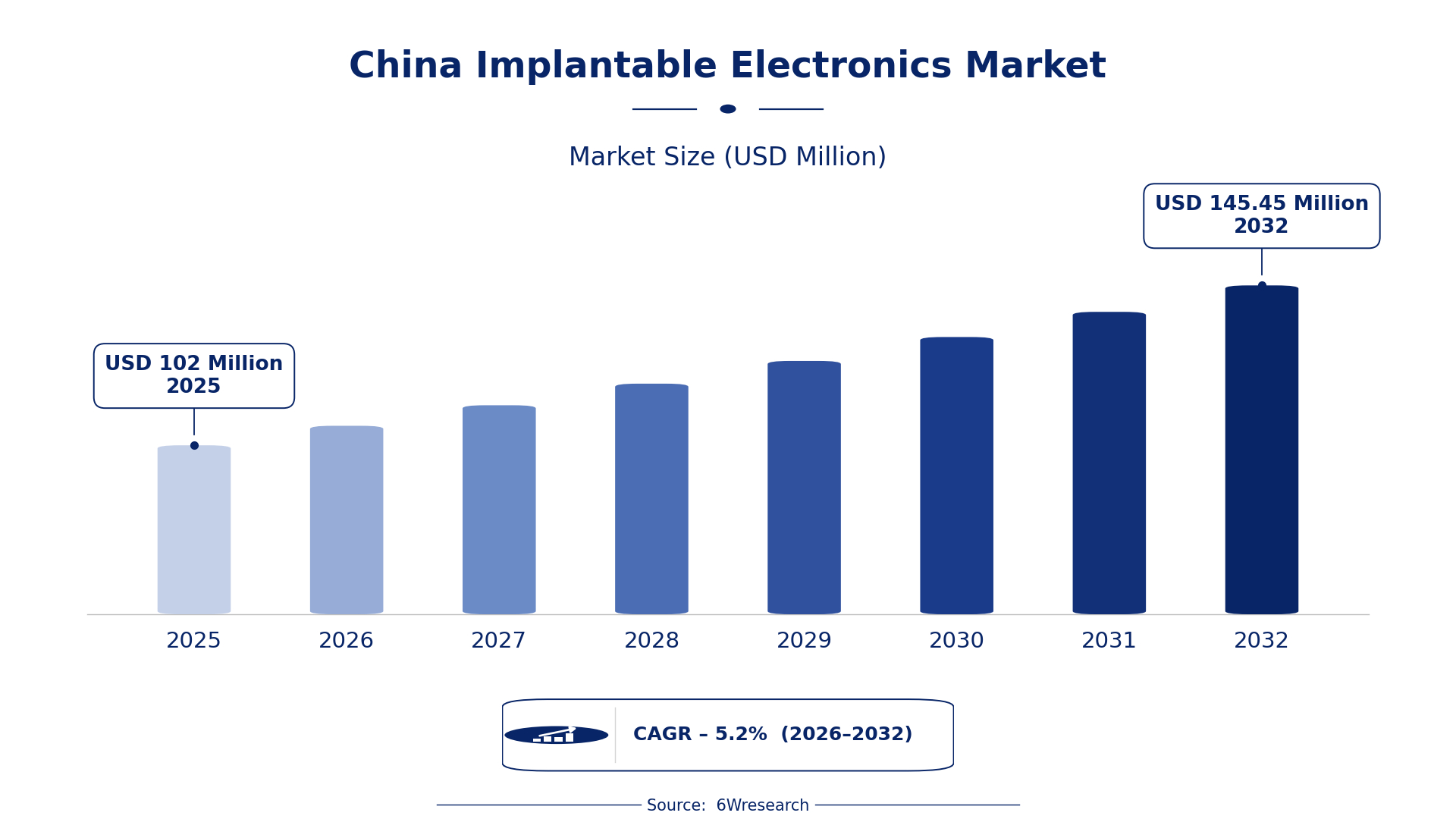
According to 6Wresearch internal database and industry insights, the China Implantable Electronics Market was valued at USD 102.0 million in 2025 and is projected to reach USD 145.45 million by 2032, growing at a CAGR of approximately 5.2% during 2026–2032.
China Implantable Electronics Market Highlights
| Report Metric | Details |
| Report Name | China Implantable Electronics Market |
| Market Size 2025 | USD 102.0 million |
| Market Size 2032 | USD 145.45 million |
| Absolute Growth 2025–2032 | USD 43.45 million |
| CAGR 2026–2032 | 5.2% |
| Peak Annual Growth | 7.9% in 2032 |
| Forecast Period | 2026–2032 |
| Historical Data | 2022–2025 |
| Base Year | 2025 |
| Leading Component Type, 2025 | Neural Sensors (52% share) |
| Leading Functionality, 2025 | Brain Signal Monitoring (51% share) |
| Leading Connectivity Mode, 2025 | Wireless/Optical (38% share) |
| Leading End User, 2025 | Research Institutions (51% share) |
| Fastest-Growing Component Type | Heart Rhythm Monitors (7.4% CAGR) |
| Fastest-Growing Functionality | Arrhythmia Detection (6.2% CAGR) |
| Fastest-Growing Connectivity Mode | Bluetooth/IoT (7.6% CAGR) |
| Fastest-Growing End User | Cardiac Centers (6.3% CAGR) |
| Growing Sector | Chronic Disease Management |
| Key End Users | Healthcare providers, Research institutions, Cardiac centers, Specialized clinics |
China Implantable Electronics Market Year-wise Growth Rate and Key Drivers (2022–2032)
This graph illustrates the annual growth rates of the market from 2022 to 2032, highlighting a steady upward trajectory and projected market expansion over the forecast period.
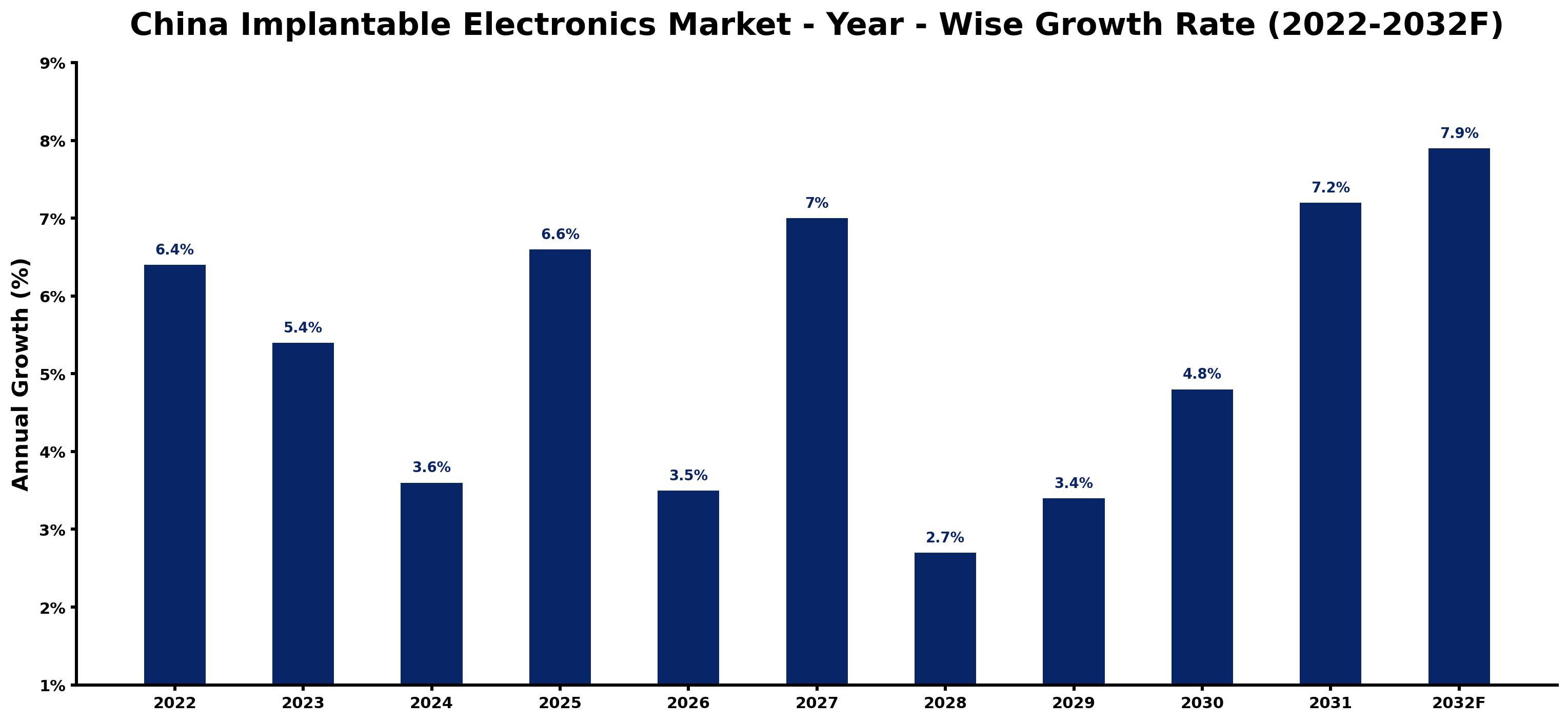
Below, each year's estimated growth is shown next to the factor that most influenced it.
| Year | Estimated Annual Growth (%) | Market Rationale |
| 2022 | 6.4 | The market experienced steady growth due to the 'Healthy China 2030' plan promoting healthcare access. |
| 2023 | 5.4 | Growth slowed as the market adjusted to the 'Medical Device Innovation Action Plan' regulatory changes. |
| 2024 | 3.6 | A further slowdown occurred as manufacturers faced challenges in meeting updated national standards. |
| 2025 | 6.6 | Growth accelerated again due to rising demand from cardiac centers for heart rhythm monitors. |
| 2026 | 3.5 | The market saw a slight slowdown as competition intensified among implantable device suppliers. |
| 2027 | 7.0 | Demand increased as research institutions advanced neural sensor technologies, boosting innovation. |
| 2028 | 2.7 | A slowdown was noted as the market adjusted to evolving consumer preferences for devices. |
| 2029 | 3.4 | Growth picked up as diabetic patients sought more glucose monitoring solutions for better management. |
| 2030 | 4.8 | Demand rose with the integration of IoT technology in healthcare applications, enhancing monitoring. |
| 2031 | 7.2 | The market expanded as cardiac centers increased their adoption of heart rhythm monitors to improve care. |
| 2032 | 7.9 | Growth peaked as the demand for advanced implantable electronics surged, driven by chronic disease management. |
Note: Market size estimations and growth projections presented in this report are based on 6Wresearch's proprietary forecasting methodology, utilizing the latest available industry data, government publications, and primary research inputs.
China Implantable Electronics Market Synopsis
Implantable Electronics in China consist of sophisticated medical devices intended for insertion into the human body to monitor health and provide therapeutic interventions. Constructed from biocompatible materials, these devices track vital signs and administer medications. The China Implantable Electronics Market is expanding due to increasing demand from healthcare providers and research institutions. With a population nearing 1.4 billion, the need for advanced solutions is on the rise, particularly in managing chronic conditions like diabetes, which fuels the demand for glucose monitoring devices.
Market Dynamics Impact Analysis (2026–2032)
| Factor | Type | Impact | Primary Segment Affected |
| Increasing prevalence of chronic diseases drives demand for monitoring devices. | Driver | High | Glucose/Lactate Monitoring |
| Rising investments in healthcare infrastructure boost the adoption of implantable devices. | Driver | High | Heart Rhythm Monitors |
| Growing number of specialized clinics creates opportunities for new product offerings. | Opportunity | High | Implantable Biosensors |
| Expansion of research institutions leads to increased demand for neural sensors. | Opportunity | Medium | Neural Sensors |
| Stringent regulatory requirements can delay product approvals. | Restraint | High | Drug Delivery Chips |
| Limited awareness about implantable technologies in rural areas hinders market growth. | Restraint | Medium | Controlled Release |
| The China Implantable Electronics Market faces challenges from high production costs. | Challenge | High | Heart Rhythm Monitors |
| Competition from alternative therapies can affect market share. | Challenge | Medium | Implantable Biosensors |
Evaluation of Drivers in China Implantable Electronics Market (2026–2032)
Key forces behind demand, with the segment each one moves most, are listed below.
| Drivers | Primary Segment Affected | Why It Matters (Evidence) |
| Rising diabetes prevalence increases demand for glucose monitoring devices. | Glucose/Lactate Monitoring | With over 140 million diabetes patients, healthcare providers are purchasing more monitoring devices. |
| Growing cardiac care facilities increase the need for heart rhythm monitors. | Heart Rhythm Monitors | The presence of over 1,000 cardiac centers drives procurement of advanced monitoring solutions. |
| Increased healthcare investments support the development of implantable technologies. | Implantable Biosensors | The government allocated 500 million RMB for medical device innovation, boosting production. |
| Research institutions are advancing neural sensor technologies. | Neural Sensors | Institutions in Beijing are leading developments, prompting higher demand for innovative products. |
| The integration of IoT technology in healthcare encourages new device adoption. | Drug Delivery Chips | The 2023 national strategy promotes IoT in healthcare, increasing demand for smart devices. |
Market growth for Implantable Electronics in China is underpinned by rising diabetes prevalence, increasing healthcare investments, and advancements in technology. With over 140 million diabetes patients, demand for glucose monitoring devices is surging. Over 1,000 cardiac centers are driving the need for heart rhythm monitors. Research institutions are advancing neural sensor technologies, further increasing market demand.
Evaluation of Restraints in China Implantable Electronics Market
The main factors holding the market back are set out below.
| Market Restraint | Primary Segment Affected | Why It Matters (Evidence) |
| High production costs limit the affordability of implantable devices. | Heart Rhythm Monitors | Manufacturers face increased costs, impacting pricing strategies for cardiac devices. |
| Regulatory delays can hinder the timely introduction of new products. | Drug Delivery Chips | Stringent approval processes slow down the launch of new drug delivery technologies. |
| Limited awareness of implantable technologies in rural areas restricts market reach. | Controlled Release | Patients in rural regions may not seek advanced treatment options due to lack of information. |
| Competition from alternative therapies affects market penetration. | Implantable Biosensors | Patients may opt for non-invasive solutions, limiting the adoption of biosensors. |
| Supply chain disruptions can delay production timelines. | Neural Sensors | Global supply chain issues have impacted the availability of critical components for devices. |
China Implantable Electronics Market Challenges
The China Implantable Electronics Market faces fierce competition from both local and international manufacturers, which pressures producers to lower prices and diminishes profit margins. Rapid technological advancements in implantable devices create challenges for manufacturers, causing potential delays in product launches and loss of market share. Development costs can exceed 20 million RMB for new devices, straining smaller firms and limiting their innovation capabilities. A shortage of skilled professionals in medical device engineering hampers production efficiency, delaying product availability for suppliers and ultimately restricting patient access to advanced healthcare solutions.
Trends in the China Implantable Electronics Market
Buyers and suppliers in the China Implantable Electronics Market are adjusting to the following trends.
- Shift towards Advanced Drug Delivery Systems: The 2023 'Medical Device Innovation Action Plan' promotes advanced drug delivery systems in China, aiming to improve patient outcomes. This initiative is set to boost the adoption of drug delivery chips.
- Transition from Traditional to Smart Monitoring Devices: Since 2023, the incorporation of IoT technology in healthcare has transformed monitoring devices. This transition is reflected in the rising demand for smart glucose monitoring solutions.
- Emergence of Specialized Clinics for Implantable Technologies: In urban areas, the number of specialised clinics providing implantable electronics services is on the rise. This trend supports the growing demand for heart rhythm monitors and biosensors.
- Growing Focus on Chronic Disease Management Solutions: With an ageing population, there is an increased emphasis on chronic disease management solutions. This is driving the demand for implantable electronics, especially in diabetes care.
Investment Opportunities in the China Implantable Electronics Market
Several openings in the China Implantable Electronics Market merit attention from investors.
- Research Institutions Seeking Advanced Solutions: Research institutions in Beijing are actively looking for advanced neural sensors to support their studies. This presents an opportunity for suppliers to meet their needs with effective products.
- Cardiac Centers Expanding Device Offerings: Cardiac centers in Shanghai are expanding their offerings of heart rhythm monitors. This growth creates an opportunity for manufacturers to supply advanced monitoring technologies.
- Rural Healthcare Facilities Needing Implantable Devices: Rural healthcare facilities are increasingly seeking affordable implantable devices to improve patient care. This presents an opportunity for partnerships to develop cost-effective solutions.
- Growing Demand from Diabetes Care Units: Diabetes care units are actively seeking advanced glucose monitoring solutions. Suppliers can enter this market by collaborating with healthcare providers to meet rising demand.
Government Initiatives in the China Implantable Electronics Market
The 'Healthy China 2030' plan, introduced by the National Health Commission in 2021, aims to improve healthcare access, particularly in rural areas, by promoting the use of implantable devices. This initiative is designed to increase the adoption of these technologies among healthcare providers. The 'Medical Device Innovation Action Plan' initiated in 2022 by the China Food and Drug Administration focuses on the safety and efficacy of implantable electronics, streamlining approval processes for new products.
The Ministry of Science and Technology's 'National Key Research and Development Program' launched in 2022 allocates 1 billion RMB to fund projects related to implantable electronics. This funding supports innovation and encourages research institutions to develop new technologies. The State Administration for Market Regulation oversees the compliance of implantable devices with national standards, ensuring that products meet safety requirements before reaching the market.
Future Insight of the China Implantable Electronics Market
The China Implantable Electronics Market will experience transformative changes by 2032, primarily driven by the integration of IoT technology in healthcare systems. The Ministry of Science and Technology's initiative on neural implants will enhance research capabilities, encouraging innovation in this sector. As the number of specialized clinics offering implantable electronics services is projected to rise, suppliers will need to broaden their product lines to cater to evolving healthcare needs. With over 140 million diabetes patients in China, buyers can anticipate improved access to advanced glucose monitoring devices and other innovative solutions.
Market Segmentation Analysis
The report offers a comprehensive study of the following market segments and their leading categories in the market.
By Component Type – Neural Sensors Dominated, Heart Rhythm Monitors Expected to Grow Fastest
According to Sachin Kumar Rai, Senior Research Analyst at 6Wresearch, Neural Sensors held a 52% share of the China Implantable Electronics Market by component type in 2025. Neural sensors lead the China implantable electronics market due to their critical role in monitoring brain activity, primarily used in hospitals and research institutions. Their importance in neurological assessments has established a strong demand among healthcare providers. Heart Rhythm Monitors are projected to grow fastest, at a CAGR of 7.4% during 2026–2032. Heart rhythm monitors are experiencing rapid growth as they are essential for detecting arrhythmias, particularly in the ageing population. The increase in cardiac centers across China is projected to further enhance their adoption, widening the lead in this segment. Suppliers should focus on ensuring the availability of heart rhythm monitors to effectively meet the growing demand from healthcare facilities.
By Functionality – Brain Signal Monitoring Dominated, Arrhythmia Detection Expected to Grow Fastest
Brain Signal Monitoring accounted for a 51% market share by functionality in 2025. Brain signal monitoring holds the largest market share as it directly addresses the need for evaluating neurological conditions, especially in clinical and research settings. The increasing emphasis on neurological health in China has made these devices indispensable for healthcare providers. The quickest growth will come from Arrhythmia Detection, forecast to expand at a CAGR of 6.2% between 2026 and 2032. Arrhythmia detection is the fastest-growing functionality, driven by the urgent need for timely intervention in heart conditions, particularly with the rising prevalence of cardiovascular diseases. The focus on cardiac care facilities significantly supports this rapid growth. Buyers should prioritise acquiring arrhythmia detection devices to ensure timely care for patients with heart conditions.
By Connectivity Mode – Wireless/Optical Dominated, Bluetooth/IoT Expected to Grow Fastest
The largest connectivity mode category in 2025 was Wireless/Optical, with a 38% share of total revenue. Wireless/optical connectivity types dominate the market share as they are integral to advanced monitoring applications, enabling seamless data collection in clinical environments. Their integration into various implantable devices enhances patient care and monitoring efficiency. Over 2026–2032, Bluetooth/IoT is expected to post the fastest growth, at a CAGR of 7.6%. Bluetooth/IoT connectivity is witnessing rapid growth due to the integration of smart technology in healthcare, facilitating real-time data transfer for effective patient monitoring. This trend aligns with national strategies promoting IoT in healthcare, driving further demand. Suppliers must invest in Bluetooth/IoT technologies to remain competitive in the evolving implantable electronics market.
By End User – Research Institutions Dominated, Cardiac Centers Expected to Grow Fastest
In 2025, Research Institutions led the end user split with a 51% share. Research institutions command the largest market share as they are the primary users of implantable electronics for experimental and clinical research purposes. Their significant role in advancing medical technology ensures sustained demand for these devices. Cardiac Centers are set to record the highest CAGR in this split, 6.3% over 2026–2032. Cardiac centers are the fastest-growing end users, primarily due to the increasing focus on heart health and the rising number of patients requiring implantable devices. The demand for effective cardiac care solutions is propelling this growth. Suppliers should align their strategies to meet the growing needs of cardiac centers for implantable electronics.
Key Attractiveness of the Report
- 10 Years of Market Numbers
- Historical Data Starting from 2022 to 2025
- Base Year 2025
- Forecast Data until 2032
- Key Performance Indicators Impacting the Market
- Major Upcoming Developments and Projects
Key Highlights of the Report:
- China Implantable Electronics Market Outlook
- Market Size of China Implantable Electronics Market, 2025
- Forecast of China Implantable Electronics Market, 2032
- Historical Data and Forecast of China Implantable Electronics Revenues & Volume for the Period 2022 - 2032F
- China Implantable Electronics Market Trend Evolution
- China Implantable Electronics Market Drivers and Challenges
- China Implantable Electronics Price Trends
- China Implantable Electronics Porter's Five Forces
- China Implantable Electronics Industry Life Cycle
- Historical Data and Forecast of China Implantable Electronics Market Revenues & Volume By Component Type for the Period 2022 - 2032F
- Historical Data and Forecast of China Implantable Electronics Market Revenues & Volume By Neural Sensors for the Period 2022 - 2032F
- Historical Data and Forecast of China Implantable Electronics Market Revenues & Volume By Heart Rhythm Monitors for the Period 2022 - 2032F
- Historical Data and Forecast of China Implantable Electronics Market Revenues & Volume By Drug Delivery Chips for the Period 2022 - 2032F
- Historical Data and Forecast of China Implantable Electronics Market Revenues & Volume By Implantable Biosensors for the Period 2022 - 2032F
- Historical Data and Forecast of China Implantable Electronics Market Revenues & Volume By Functionality for the Period 2022 - 2032F
- Historical Data and Forecast of China Implantable Electronics Market Revenues & Volume By Brain Signal Monitoring for the Period 2022 - 2032F
- Historical Data and Forecast of China Implantable Electronics Market Revenues & Volume By Arrhythmia Detection for the Period 2022 - 2032F
- Historical Data and Forecast of China Implantable Electronics Market Revenues & Volume By Controlled Release for the Period 2022 - 2032F
- Historical Data and Forecast of China Implantable Electronics Market Revenues & Volume By Glucose/Lactate Monitoring for the Period 2022 - 2032F
- Historical Data and Forecast of China Implantable Electronics Market Revenues & Volume By Connectivity Mode for the Period 2022 - 2032F
- Historical Data and Forecast of China Implantable Electronics Market Revenues & Volume By Wireless/Optical for the Period 2022 - 2032F
- Historical Data and Forecast of China Implantable Electronics Market Revenues & Volume By Bluetooth/IoT for the Period 2022 - 2032F
- Historical Data and Forecast of China Implantable Electronics Market Revenues & Volume By NFC for the Period 2022 - 2032F
- Historical Data and Forecast of China Implantable Electronics Market Revenues & Volume By Wireless Transmission for the Period 2022 - 2032F
- Historical Data and Forecast of China Implantable Electronics Market Revenues & Volume By End User for the Period 2022 - 2032F
- Historical Data and Forecast of China Implantable Electronics Market Revenues & Volume By Research Institutions for the Period 2022 - 2032F
- Historical Data and Forecast of China Implantable Electronics Market Revenues & Volume By Cardiac Centers for the Period 2022 - 2032F
- Historical Data and Forecast of China Implantable Electronics Market Revenues & Volume By Specialized Clinics for the Period 2022 - 2032F
- Historical Data and Forecast of China Implantable Electronics Market Revenues & Volume By Chronic Disease Care Units for the Period 2022 - 2032F
- China Implantable Electronics Import Export Trade Statistics
- Market Opportunity Assessment By Component Type
- Market Opportunity Assessment By Functionality
- Market Opportunity Assessment By Connectivity Mode
- Market Opportunity Assessment By End User
- China Implantable Electronics Top Companies Market Share
- China Implantable Electronics Competitive Benchmarking By Technical and Operational Parameters
- China Implantable Electronics Company Profiles
- China Implantable Electronics Key Strategic Recommendations
Market Covered
The report offers an extensive study of the following market segments.
By Component Type
- Neural Sensors
- Heart Rhythm Monitors
- Drug Delivery Chips
- Implantable Biosensors
By Functionality
- Brain Signal Monitoring
- Arrhythmia Detection
- Controlled Release
- Glucose/Lactate Monitoring
By Connectivity Mode
- Wireless/Optical
- Bluetooth/IoT
- NFC
- Wireless Transmission
By End User
- Research Institutions
- Cardiac Centers
- Specialized Clinics
- Chronic Disease Care Units































