China Inflammatory Disorders Market Size & Growth Rate
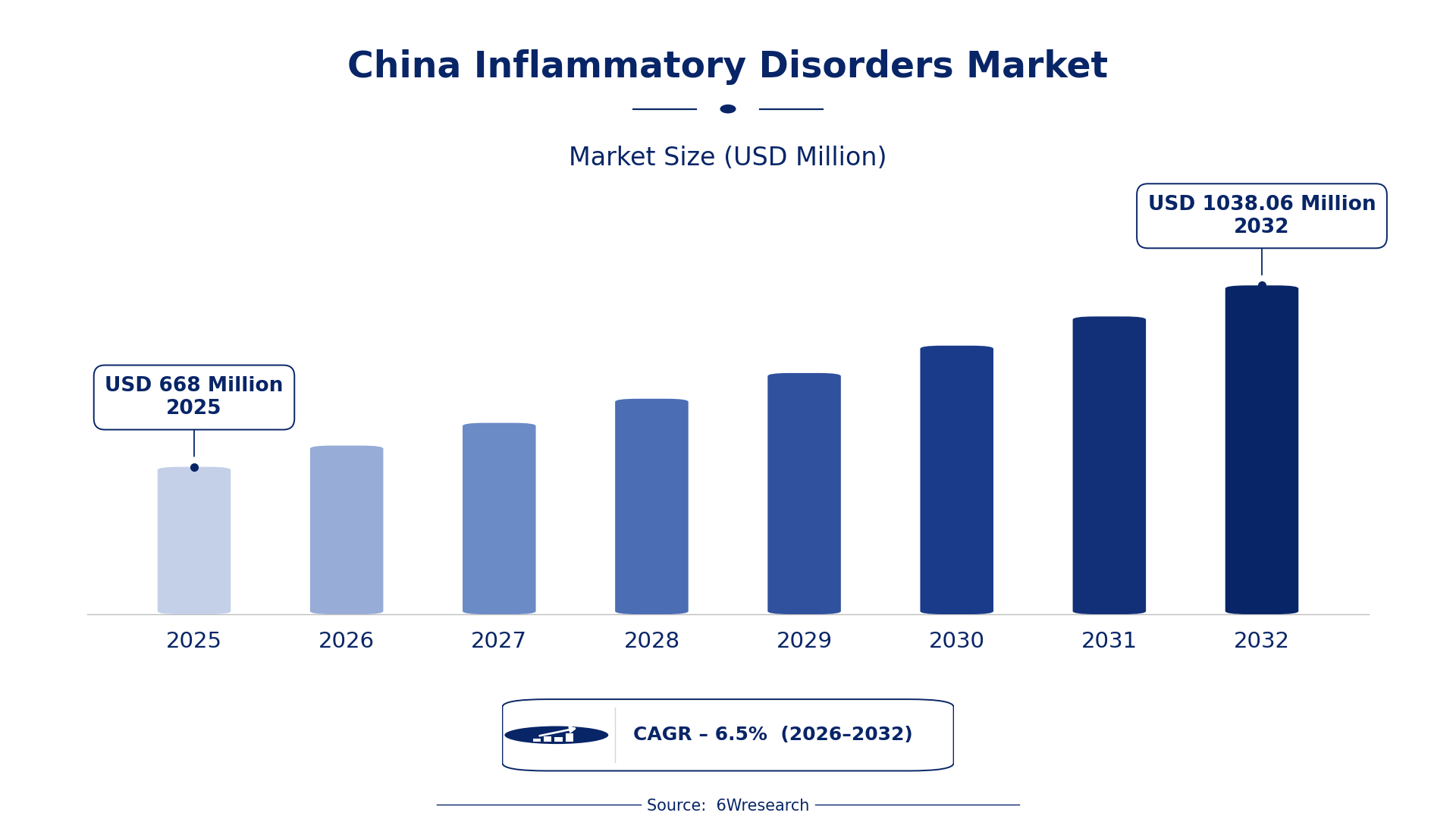
According to 6Wresearch internal database and industry insights, the China Inflammatory Disorders Market was valued at USD 668.0 million in 2025 and is projected to reach USD 1,038.06 million by 2032, growing at a CAGR of approximately 6.5% during 2026–2032.
China Inflammatory Disorders Market Highlights
| Report Metric | Details |
| Report Name | China Inflammatory Disorders Market |
| Market Size 2025 | USD 668.0 million |
| Market Size 2032 | USD 1,038.06 million |
| Absolute Growth 2025–2032 | USD 370.06 million |
| CAGR 2026–2032 | 6.5% |
| Peak Annual Growth | 8.9% in 2030 |
| Forecast Period | 2026–2032 |
| Historical Data | 2022–2025 |
| Base Year | 2025 |
| Leading Disorder Type, 2025 | Acute Inflammatory (43% share) |
| Leading Symptom Pattern, 2025 | Sudden Onset (56% share) |
| Leading Duration, 2025 | 6 Months (42% share) |
| Leading Distribution Channel, 2025 | Emergency Care Units (43% share) |
| Fastest-Growing Disorder Type | Chronic Inflammatory (8.9% CAGR) |
| Fastest-Growing Symptom Pattern | Progressive (7.8% CAGR) |
| Fastest-Growing Duration | Episodic (8.7% CAGR) |
| Fastest-Growing Distribution Channel | Internal Medicine Clinics (7.6% CAGR) |
| Growing Sector | Internal Medicine Clinics |
| Key End Users | 3-4 buyer categories, comma separated, no company names (never empty) |
China Inflammatory Disorders Market Year-wise Growth Rate and Key Drivers (2022–2032)
This graph illustrates the annual growth rates of the market from 2022 to 2032, highlighting a steady upward trajectory and projected market expansion over the forecast period.
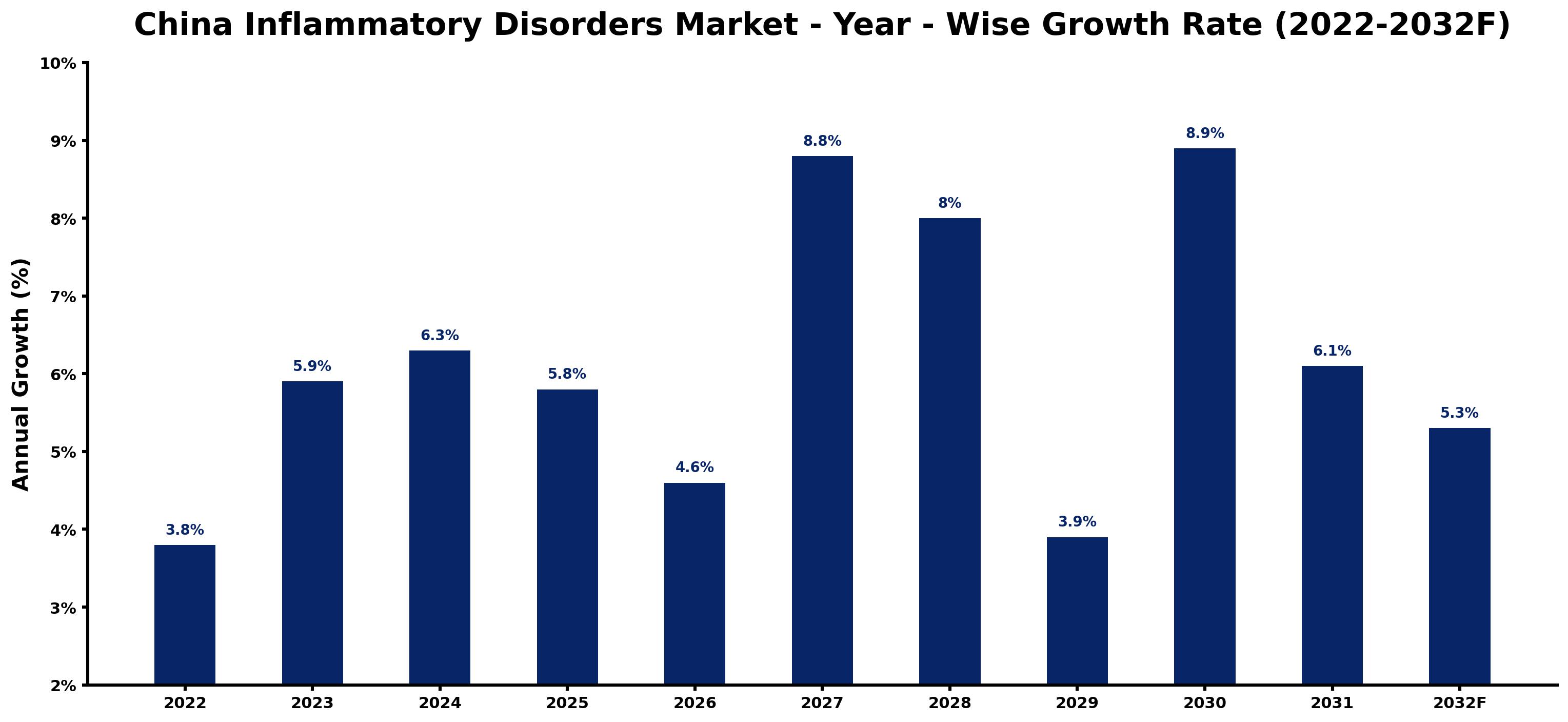
The following table presents the estimated annual growth rate for each year together with the principal factor influencing market performance.
| Year | Estimated Annual Growth (%) | Market Rationale |
| 2022 | 3.8 | The market experienced steady growth due to increasing awareness of inflammatory disorders and the implementation of early diagnosis programs. |
| 2023 | 5.9 | Demand rose as healthcare facilities expanded their treatment capabilities for chronic conditions, particularly in urban areas. |
| 2024 | 6.3 | The introduction of new therapies contributed to higher patient treatment rates, as reflected in updated clinical guidelines. |
| 2025 | 5.8 | Growth slowed as the market adjusted following rapid expansions in previous years, particularly in emergency care services. |
| 2026 | 4.6 | A slowdown in growth is expected as the market stabilises after previous peaks in treatment options. |
| 2027 | 8.8 | Demand surged with the introduction of new treatment options for chronic inflammatory diseases, supported by government funding. |
| 2028 | 8.0 | Growth is projected to decelerate slightly as the market adjusts to new treatment protocols and patient management strategies. |
| 2029 | 3.9 | A further slowdown is anticipated as the market begins to mature, particularly in the chronic inflammatory segment. |
| 2030 | 8.9 | The market is expected to peak with significant investments in research and development for inflammatory disorders, enhancing patient access. |
| 2031 | 6.1 | Growth is projected to slow as the market stabilises after reaching peak demand for treatment options. |
| 2032 | 5.3 | The market will continue to grow, driven by ongoing advancements in treatment and management strategies for inflammatory disorders. |
Note: Market size estimations and growth projections presented in this report are based on 6Wresearch's proprietary forecasting methodology, utilizing the latest available industry data, government publications, and primary research inputs.
China Inflammatory Disorders Market Synopsis
Inflammatory Disorders in China include a range of conditions characterised by inflammation, often stemming from autoimmune responses or infections. Effective treatment and management are crucial for enhancing patients' quality of life. The China Inflammatory Disorders Market is growing, driven by a substantial patient population, with around 200 million individuals affected. Key growth factors include rising healthcare investments and the introduction of new therapies, particularly in major regions like Beijing and Shanghai, where advanced treatment facilities are available.
Market Dynamics Impact Analysis (2026–2032)
| Factor | Type | Impact | Primary Segment Affected |
| Increasing prevalence of autoimmune diseases | Driver | High | Chronic Inflammatory |
| Rising investments in healthcare infrastructure | Driver | High | Acute Inflammatory |
| Growing demand for advanced treatment options | Opportunity | High | Systemic Disorders |
| Expanding telemedicine initiatives for chronic management | Opportunity | Medium | Chronic Inflammatory |
| Limited access to advanced treatment facilities in rural areas | Restraint | High | Localized Inflammatory |
| High costs associated with new therapies | Restraint | Medium | Systemic Disorders |
| Inflammatory Disorders market in China faces regulatory hurdles | Challenge | High | Chronic Inflammatory |
| Shortage of trained healthcare professionals for treatment | Challenge | Medium | Acute Inflammatory |
Evaluation of Drivers in China Inflammatory Disorders Market (2026–2032)
Below mentioned are some major drivers and their influence on market dynamics.
| Drivers | Primary Segment Affected | Why It Matters (Evidence) |
| Increased funding for chronic disease research | Chronic Inflammatory | The government allocated 1 billion CNY for chronic inflammatory disease research in 2023, boosting treatment options and access. |
| Rising prevalence of inflammatory disorders | Acute Inflammatory | Approximately 200 million people in China are affected, leading to higher demand for emergency care services and treatment options. |
| Development of new biologic therapies | Systemic Disorders | The National Drug Administration approved new therapies in 2023, improving treatment effectiveness and patient outcomes. |
| Expansion of healthcare facilities in urban areas | Localized Inflammatory | Beijing and Shanghai have advanced treatment facilities, increasing patient access to necessary care and management options. |
| Growing awareness of early diagnosis and treatment | Chronic Inflammatory | The Ministry of Health promotes early diagnosis programs, encouraging timely patient intervention and improving health outcomes. |
Expansion of the Inflammatory Disorders market in China is backed by increased funding for chronic disease research, with 1 billion CNY allocated in 2023. The rising prevalence of inflammatory disorders, affecting approximately 200 million people, drives demand for emergency care services. The development of new biologic therapies approved in 2023 improves treatment effectiveness, while expanding healthcare facilities in urban areas increases patient access to necessary care.
Evaluation of Restraints in China Inflammatory Disorders Market
Below mentioned are some major restraints and their influence on market dynamics.
| Market Restraint | Primary Segment Affected | Why It Matters (Evidence) |
| Limited access to advanced treatment facilities in rural areas | Localized Inflammatory | Patients in rural regions face challenges accessing advanced care, which affects treatment outcomes and recovery rates. |
| High costs associated with new therapies | Systemic Disorders | The introduction of new therapies often results in increased treatment costs, limiting patient access to necessary care. |
| Regulatory hurdles in drug approval processes | Chronic Inflammatory | Complex approval pathways can delay the availability of new treatments for patients, impacting timely care and management. |
| Shortage of trained healthcare professionals for treatment | Acute Inflammatory | A lack of specialists hampers the effective management of acute inflammatory cases, resulting in longer hospital stays and recovery times. |
| Inconsistent patient follow-up and management | Chronic Inflammatory | Variability in patient adherence to treatment plans can lead to poorer health outcomes and increased healthcare costs. |
China Inflammatory Disorders Market Challenges
The China Inflammatory Disorders Market encounters regulatory challenges, as new therapies face complex approval processes that can delay patient access by up to six months, hindering healthcare facilities' ability to provide timely care. This regulatory environment stems from stringent government guidelines, costing providers valuable time in delivering essential treatments. A shortage of skilled professionals in advanced treatment facilities, particularly in major cities like Beijing and Shanghai, leads to prolonged hospital stays, averaging around 10 days for patients. Rising costs of biologic therapies further limit treatment options for the approximately 200 million individuals affected by these disorders, while supply chain disruptions affect the availability of essential medications, resulting in inconsistent treatment outcomes.
Trends in the China Inflammatory Disorders Market
Several trends are reshaping the China Inflammatory Disorders Market; the most important are set out below.
- Shift from Hospital to Telemedicine: In 2023, the Chinese government endorsed telemedicine initiatives for chronic disease management, enhancing patient access to care. This shift is expected to improve treatment adherence and decrease hospital visits.
- Emergence of Biologic Therapies: The approval of new biologic therapies in 2023 represents a notable advancement in treating systemic inflammatory diseases. This development is anticipated to broaden patient treatment options and enhance health outcomes.
- Focus on Early Diagnosis Initiatives: The Ministry of Health's promotion of early diagnosis programs for inflammatory disorders commenced in 2021, aiming to improve patient outcomes through timely intervention. This initiative is projected to lead to better management of chronic conditions.
- Growth in Chronic Disease Management Programs: The National Health Commission's 2021 initiative to enhance chronic disease management has resulted in increased funding and resources for inflammatory disorder treatment. This focus is expected to elevate overall care standards.
Investment Opportunities in the China Inflammatory Disorders Market
Investors looking at the China Inflammatory Disorders Market should consider the following areas.
- Supply of Advanced Biologic Therapies: The demand for advanced biologic therapies is rising, with a 1 billion CNY investment in chronic disease research. Suppliers can enter the market by partnering with healthcare facilities in urban areas to meet this growing need.
- Development of Telemedicine Solutions: The growing need for telemedicine solutions presents an opportunity for technology providers. Collaborating with healthcare institutions in major cities can facilitate market entry and expansion of services.
- Investment in Training Programs for Healthcare Professionals: There is a pressing need for trained healthcare professionals to manage inflammatory disorders effectively. Investing in training programs can help meet this demand, particularly in underserved regions of China.
- Expansion of Diagnostic Tools and Services: The increasing focus on early diagnosis creates opportunities for diagnostic tool manufacturers. Collaborating with diagnostic centers in urban areas can improve market presence and enhance patient outcomes.
Government Initiatives in the China Inflammatory Disorders Market
The National Health Commission of China implemented the Chronic Disease Management Programme in 2021, allocating 1.5 billion CNY to improve the management of chronic diseases, including inflammatory disorders. This initiative aims to elevate patient care standards and access to treatments. In 2022, the Ministry of Science and Technology launched the Innovative Treatment Initiative for Autoimmune Diseases, concentrating on developing advanced therapies. The National Medical Products Administration updated the approval pathway for biologics targeting inflammatory disorders in 2023, expediting patient access to new treatments. These measures aim to strengthen the healthcare infrastructure and ensure timely interventions for patients.
In 2023, the government allocated 1 billion CNY for research on chronic inflammatory diseases, administered by the National Health Commission. This funding supports the development of new diagnostic tools and treatment methodologies. The Ministry of Health promotes early diagnosis and treatment programs for inflammatory disorders, ensuring healthcare providers are equipped with the latest guidelines. The Chinese Society of Rheumatology's updated clinical guidelines in 2023 enhance care standards for systemic inflammatory diseases, benefiting both patients and healthcare professionals. These initiatives are crucial for improving patient outcomes and advancing treatment options in the country.
Future Insight of the China Inflammatory Disorders Market
By 2032, buyers and suppliers in the China Inflammatory Disorders Market can anticipate notable advancements in telemedicine initiatives, which will improve patient access to care, particularly for those in remote areas. The government's ongoing investment in chronic inflammatory disease research will drive innovation in treatment options. Enhanced diagnostic tools will facilitate earlier detection and management of conditions, benefiting both healthcare providers and patients. Updated clinical guidelines from the Chinese Society of Rheumatology will standardise care practices, improving outcomes for individuals suffering from inflammatory disorders.
Market Segmentation Analysis
Each segment group is reviewed below, with the leader by share and the fastest grower by CAGR.
By Disorder Type – Acute Inflammatory Dominated, Chronic Inflammatory Expected to Grow Fastest
According to Shubham Deep, Research Manager at 6Wresearch, Acute Inflammatory took a 43% share of disorder type in 2025, more than any other category. Acute inflammatory disorders hold the largest market share due to their frequent occurrence in emergency settings, where immediate treatment is essential. For instance, the high incidence of conditions requiring urgent care drives demand in hospitals and emergency care units across China. Chronic Inflammatory is projected to grow fastest, at a CAGR of 8.9% during 2026–2032. Chronic inflammatory disorders are experiencing rapid growth as the population ages and the prevalence of autoimmune diseases rises. The National Health Commission's report of a 20% increase in autoimmune diseases from 2019 to 2022 underscores the urgent need for ongoing management and therapy. Suppliers should focus on developing long-term treatment solutions to meet the increasing demand for chronic inflammatory disorder management.
By Symptom Pattern – Sudden Onset Dominated, Progressive Expected to Grow Fastest
The largest symptom pattern category in 2025 was Sudden Onset, with a 56% share of total revenue. Sudden onset symptoms dominate the market share as they often necessitate immediate medical attention, compelling patients to seek urgent care. This urgency is reflected in the treatment protocols established by healthcare facilities for acute cases. The quickest growth will come from Progressive, forecast to expand at a CAGR of 7.8% between 2026 and 2032. Progressive symptom patterns are growing rapidly as they require long-term treatment plans, aligning with the increasing awareness and management strategies for chronic conditions. The rise in chronic inflammatory diseases further fuels this growth, as patients seek consistent care. Healthcare providers must adapt their services to cater to the rising need for long-term management of progressive inflammatory conditions.
By Duration – 6 Months Dominated, Episodic Expected to Grow Fastest
6 Months accounted for a 42% market share by duration in 2025. The 6-month duration category holds a substantial market share as it includes a variety of inflammatory disorders that necessitate consistent treatment and monitoring. This timeframe aligns with many chronic conditions, making it a priority for healthcare providers in their management strategies. Episodic is set to record the highest CAGR in this split, 8.7% over 2026–2032. Episodic conditions are experiencing rapid growth, particularly in relation to specific inflammatory disorders that demand focused treatment approaches. The heightened awareness of episodic symptoms in chronic diseases is propelling this segment's expansion. Suppliers should focus on developing therapies tailored for episodic conditions to tap into this growing market segment.
By Distribution Channel – Emergency Care Units Dominated, Internal Medicine Clinics Expected to Grow Fastest
With a 43% revenue share in 2025, Emergency Care Units was the largest distribution channel category. Emergency care units hold a substantial share in the China inflammatory disorders market as they serve as the first point of contact for patients with acute conditions. Their critical role in delivering immediate care ensures they remain integral to the healthcare system. Over 2026–2032, Internal Medicine Clinics are expected to post the fastest growth, at a CAGR of 7.6%. Internal medicine clinics are experiencing rapid growth as they become the primary care option for chronic inflammatory conditions, reflecting a broader trend towards outpatient management. This surge is fuelled by the increasing prevalence of chronic diseases necessitating ongoing treatment. Suppliers should focus on enhancing offerings for internal medicine clinics to effectively cater to the rising demand for chronic inflammatory disorder management.
Key Attractiveness of the Report
- 10 Years of Market Numbers
- Historical Data Starting from 2022 to 2025
- Base Year 2025
- Forecast Data until 2032
- Key Performance Indicators Impacting the Market
- Major Upcoming Developments and Projects
Key Highlights of the Report:
- China Inflammatory Disorders Market Outlook
- Market Size of China Inflammatory Disorders Market, 2025
- Forecast of China Inflammatory Disorders Market, 2032
- Historical Data and Forecast of China Inflammatory Disorders Revenues & Volume for the Period 2022 - 2032F
- China Inflammatory Disorders Market Trend Evolution
- China Inflammatory Disorders Market Drivers and Challenges
- China Inflammatory Disorders Price Trends
- China Inflammatory Disorders Porter's Five Forces
- China Inflammatory Disorders Industry Life Cycle
- Historical Data and Forecast of China Inflammatory Disorders Market Revenues & Volume By Disorder Type for the Period 2022 - 2032F
- Historical Data and Forecast of China Inflammatory Disorders Market Revenues & Volume By Acute Inflammatory for the Period 2022 - 2032F
- Historical Data and Forecast of China Inflammatory Disorders Market Revenues & Volume By Chronic Inflammatory for the Period 2022 - 2032F
- Historical Data and Forecast of China Inflammatory Disorders Market Revenues & Volume By Localized Inflammatory for the Period 2022 - 2032F
- Historical Data and Forecast of China Inflammatory Disorders Market Revenues & Volume By Systemic Disorders for the Period 2022 - 2032F
- Historical Data and Forecast of China Inflammatory Disorders Market Revenues & Volume By Symptom Pattern for the Period 2022 - 2032F
- Historical Data and Forecast of China Inflammatory Disorders Market Revenues & Volume By Sudden Onset for the Period 2022 - 2032F
- Historical Data and Forecast of China Inflammatory Disorders Market Revenues & Volume By Progressive for the Period 2022 - 2032F
- Historical Data and Forecast of China Inflammatory Disorders Market Revenues & Volume By Specific Organs for the Period 2022 - 2032F
- Historical Data and Forecast of China Inflammatory Disorders Market Revenues & Volume By Whole Body Involvement for the Period 2022 - 2032F
- Historical Data and Forecast of China Inflammatory Disorders Market Revenues & Volume By Duration for the Period 2022 - 2032F
- Historical Data and Forecast of China Inflammatory Disorders Market Revenues & Volume By <6 Weeks for the Period 2022 - 2032F
- Historical Data and Forecast of China Inflammatory Disorders Market Revenues & Volume By >6 Months for the Period 2022 - 2032F
- Historical Data and Forecast of China Inflammatory Disorders Market Revenues & Volume By Episodic for the Period 2022 - 2032F
- Historical Data and Forecast of China Inflammatory Disorders Market Revenues & Volume By Long-Term for the Period 2022 - 2032F
- Historical Data and Forecast of China Inflammatory Disorders Market Revenues & Volume By Distribution Channel for the Period 2022 - 2032F
- Historical Data and Forecast of China Inflammatory Disorders Market Revenues & Volume By Emergency Care Units for the Period 2022 - 2032F
- Historical Data and Forecast of China Inflammatory Disorders Market Revenues & Volume By Internal Medicine Clinics for the Period 2022 - 2032F
- Historical Data and Forecast of China Inflammatory Disorders Market Revenues & Volume By Diagnostic Centers for the Period 2022 - 2032F
- Historical Data and Forecast of China Inflammatory Disorders Market Revenues & Volume By Multispecialty Hospitals for the Period 2022 - 2032F
- China Inflammatory Disorders Import Export Trade Statistics
- Market Opportunity Assessment By Disorder Type
- Market Opportunity Assessment By Symptom Pattern
- Market Opportunity Assessment By Duration
- Market Opportunity Assessment By Distribution Channel
- China Inflammatory Disorders Top Companies Market Share
- China Inflammatory Disorders Competitive Benchmarking By Technical and Operational Parameters
- China Inflammatory Disorders Company Profiles
- China Inflammatory Disorders Key Strategic Recommendations
Market Covered
This report examines the market across the segments below.
By Disorder Type
- Acute Inflammatory
- Chronic Inflammatory
- Localized Inflammatory
- Systemic Disorders
By Symptom Pattern
- Sudden Onset
- Progressive
- Specific Organs
- Whole Body Involvement
By Duration
- 6 Months
- Episodic
- Long-Term
By Distribution Channel
- Emergency Care Units
- Internal Medicine Clinics
- Diagnostic Centers
- Multispecialty Hospitals































